
- Release Year: 2024
- Platforms: Nintendo Switch, PlayStation 4, PlayStation 5, Windows, Xbox Series
- Publisher: Dragami Games, Ltd
- Developer: Dragami Games, Ltd
- Genre: Action
- Perspective: Behind view
- Game Mode: Single-player
- Gameplay: Hack and Slash
- Setting: North America
- Average Score: 80/100
- Adult Content: Yes
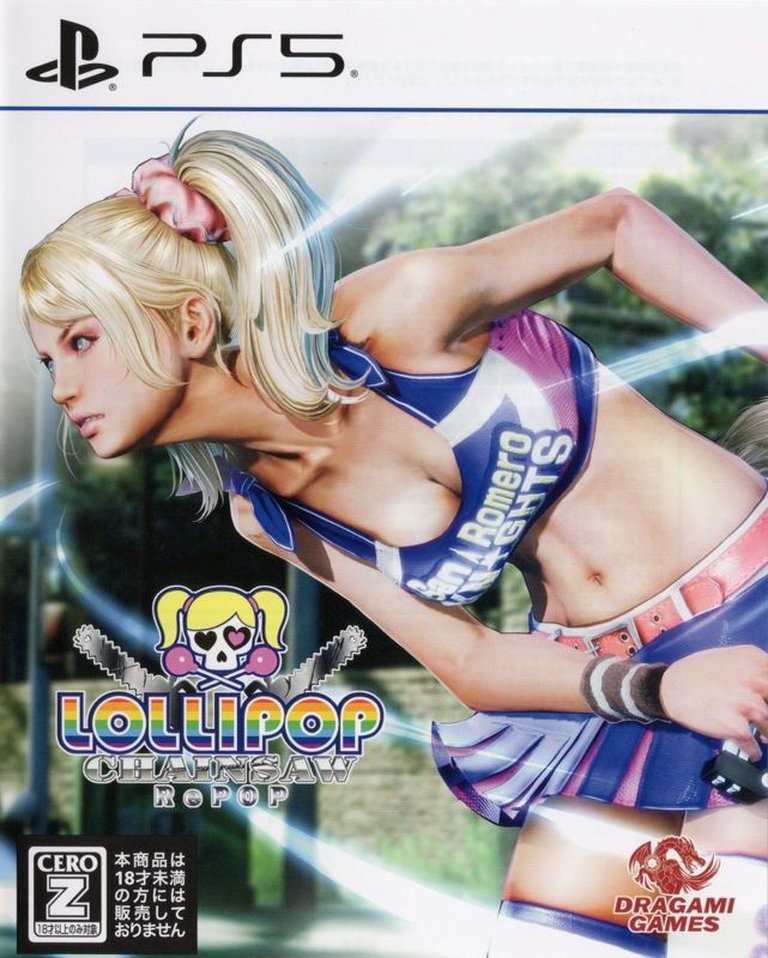
Description
Lollipop Chainsaw: RePop is a remastered version of the 2012 cult classic hack-and-slash game, developed by Dragami Games using Unreal Engine 5. The game follows Juliet Starling, a cheerleader who battles hordes of zombies with her trusty chainsaw to save her high school and uncover the dark secrets behind the undead outbreak. Set in a stylized, horror-comedy version of North America, the game blends over-the-top action, quirky humor, and a vibrant aesthetic, offering players a unique mix of fast-paced combat and offbeat storytelling.
Gameplay Videos
Where to Buy Lollipop Chainsaw: RePop
PC
Lollipop Chainsaw: RePop Free Download
Lollipop Chainsaw: RePop Mods
Lollipop Chainsaw: RePop Guides & Walkthroughs
Lollipop Chainsaw: RePop Reviews & Reception
metacritic.com (80/100): Bloody and stupid: Lollipop Chainsaw RePOP is just as over the top as the original – and that’s why it’s still a hit today.
nintendolife.com : An idiosyncratic collaboration between Suda 51 and filmmaker James Gunn, Lollipop Chainsaw highlights the unique style of both creators.
waytoomany.games : It was written in stone that it would be perverse and dumb. I could sit back, relax, and enjoy the ride for what it is.
gaming.net : A genuinely exciting game nonetheless.
Lollipop Chainsaw: RePop – A Bloody, Bizarre, and Beautifully Flawed Remaster
Introduction
In the pantheon of cult classic video games, few titles are as polarizing, as visually arresting, or as unapologetically weird as Lollipop Chainsaw. Released in 2012 by Grasshopper Manufacture under the creative direction of Goichi “Suda51” Suda and co-written by filmmaker James Gunn, the game was a neon-drenched, chainsaw-wielding love letter to grindhouse horror, cheerleader exploitation flicks, and over-the-top action. It was a game that defied convention, embraced absurdity, and left an indelible mark on those who played it.
Now, over a decade later, Lollipop Chainsaw: RePop has arrived—a remaster (not a remake, as originally planned) that seeks to reintroduce Juliet Starling’s zombie-slaying antics to a new generation of players. But does this RePop live up to the legacy of its predecessor, or is it merely a shallow cash-in on nostalgia? After diving deep into the game’s mechanics, narrative, visuals, and reception, it’s clear that RePop is a fascinating, flawed, and ultimately essential experience for fans of the original—even if it stumbles in its execution.
Development History & Context
From Remake to Remaster: A Shift in Vision
The journey of Lollipop Chainsaw: RePop is almost as chaotic as the game itself. Originally announced in July 2022 by Dragami Games (the successor to Kadokawa Games) as a full remake, the project underwent a significant shift in scope. According to Dragami president Yoshimi Yasuda, the decision to pivot from a remake to a remaster was driven by fan feedback and licensing constraints. As Yasuda stated in an interview with Automaton in 2023:
“The primary goal of the Lollipop Chainsaw Remake project is to make it so that players who wish to play Lollipop Chainsaw can do so easily, not to make a new Lollipop Chainsaw game. While it would be easier to do a remaster to achieve this, it wasn’t possible due to licensing agreements.”
This shift is crucial to understanding RePop’s strengths and weaknesses. Unlike a full remake (such as Resident Evil 2 or Shadow of the Colossus), which reimagines a game from the ground up with modern mechanics and visuals, RePop is a more conservative effort. It retains the original game’s core structure, dialogue, and level design while implementing modest upgrades to graphics, performance, and accessibility.
The Absence of the Original Creative Team
One of the most notable aspects of RePop’s development is the absence of the original creative team. Neither Suda51 nor James Gunn were involved in the remaster, a fact both creators publicly acknowledged. This absence raises questions about the remaster’s fidelity to the original vision. However, Yasuda has repeatedly emphasized that the team at Dragami Games worked directly from the original script and design documents, ensuring that RePop remains true to the 2012 release.
Technological Upgrades: Unreal Engine 5 and Modern Hardware
RePop marks the first time Lollipop Chainsaw has been ported to modern hardware, including the PlayStation 5, Xbox Series X/S, Nintendo Switch, and—most significantly—PC. The original game ran on Unreal Engine 3, but RePop has been rebuilt in Unreal Engine 5, allowing for improved lighting, textures, and effects. However, the upgrade is not as dramatic as one might expect from a next-gen remaster. Many assets, particularly character models and environmental details, retain a distinctly “last-gen” aesthetic, leading to a somewhat uneven visual presentation.
The Licensing Quandary: Missing Music and Costumes
Perhaps the most controversial aspect of RePop’s development is the absence of licensed music and certain costumes from the original game. The 2012 release featured a soundtrack that included tracks from artists like Jimmy Urine of Mindless Self Indulgence, as well as licensed anime costumes for Juliet (such as those from Highschool of the Dead and Deadman Wonderland). Due to expired licensing agreements, these elements are missing from RePop, replaced with original compositions and new costume designs. While the new soundtrack is competent, it lacks the eclectic, punk-rock energy of the original, and the absence of the anime costumes will disappoint longtime fans.
Narrative & Thematic Deep Dive
Plot Summary: A Birthday Gone to Hell
Lollipop Chainsaw’s story is a delightfully absurd blend of horror, comedy, and high school drama. The game follows Juliet Starling, an 18-year-old cheerleader and secret zombie hunter, as she battles a zombie outbreak at San Romero High School on her birthday. After her boyfriend, Nick Carlyle, is bitten by a zombie, Juliet decapitates him to prevent his transformation, only to discover that he remains alive as a disembodied head. With Nick’s head attached to her belt (and occasionally mounted on zombie bodies for comedic effect), Juliet embarks on a quest to stop the zombie apocalypse, uncovering a conspiracy involving the Dark Purveyors, a group of rock-themed zombie lords summoned by the gothic villain Swan.
The narrative is structured as a series of over-the-top set pieces, each tied to a different musical genre (punk, viking metal, psychedelic rock, etc.). The writing is a mix of self-aware satire, crass humor, and genuine emotional beats, particularly in Juliet and Nick’s relationship. The game’s tone oscillates between grindhouse horror and teen comedy, making it a unique entry in the hack-and-slash genre.
Themes: Feminism, Exploitation, and Subversion
At its core, Lollipop Chainsaw is a game about subverting expectations. Juliet Starling is a protagonist who defies the “damsel in distress” trope—she’s a cheerleader who wields a chainsaw, a blonde bombshell who’s also a skilled warrior, and a character who embraces her sexuality without being reduced to it. The game’s use of fan service (such as Juliet’s revealing outfits and exaggerated physics) is intentionally provocative, but it’s also part of the game’s commentary on exploitation cinema and female agency.
James Gunn, in interviews about the original game, described Juliet as a character who “owns her sexuality” rather than being exploited by it. This theme is reinforced by the game’s meta-narrative, which frequently breaks the fourth wall and pokes fun at horror tropes. For example, Juliet’s family—her zombie-hunting sisters Cordelia and Rosalind and her father Gideon—are all named after characters from Shakespeare’s King Lear, adding a layer of literary absurdity to the proceedings.
Character Analysis: Juliet and Nick
- Juliet Starling: Voiced by Tara Strong in English and Yoko Hikasa/Eri Kitamura in Japanese, Juliet is one of gaming’s most memorable protagonists. She’s confident, witty, and unapologetically feminine, yet she’s also a skilled warrior who takes her role as a zombie hunter seriously. Her relationship with Nick is central to the story, and their banter provides much of the game’s humor.
- Nick Carlyle: Voiced by Sean Gunn, Nick serves as Juliet’s comic relief and emotional anchor. Despite being a severed head for most of the game, he remains a fully realized character, offering strategic advice and emotional support. His eventual resurrection (in the body of Juliet’s mentor, Junji Morikawa) is one of the game’s most bizarre yet oddly touching moments.
Dialogue and Writing: A Mix of Genius and Cringe
The writing in Lollipop Chainsaw is a double-edged sword. At its best, it’s hilariously self-aware, with sharp wit and clever references to horror and pop culture. At its worst, it can feel juvenile or overly crass, relying on shock humor that doesn’t always land. The game’s dialogue is packed with innuendo, pop culture references, and absurd one-liners, which will either delight or alienate players depending on their taste.
One of the most interesting aspects of the writing is its satirical edge. The game frequently mocks zombie tropes, high school clichés, and even video game conventions. For example, Juliet’s chainsaw upgrades are purchased at a store called Chop2Shop.zom, and her health is restored by lollipops, a nod to the game’s title and its blend of cuteness and gore.
Gameplay Mechanics & Systems
Core Gameplay Loop: Hack, Slash, and Sparkle Hunt
Lollipop Chainsaw is, at its heart, a hack-and-slash game in the vein of Devil May Cry or Bayonetta. Players control Juliet as she battles waves of zombies using a combination of melee attacks, dodges, and special moves. The combat is fast-paced and combo-driven, with an emphasis on stylish execution and high scores.
The game’s most unique mechanic is Sparkle Hunting, which rewards players for chaining together kills in quick succession. Successful Sparkle Hunts yield Platinum Medals, which can be spent on new moves, costumes, and upgrades at the Chop2Shop.zom stores scattered throughout each level.
Combat and Controls: A Mix of Old and New
RePop retains the original game’s combat system but introduces several quality-of-life improvements:
– Faster Chainsaw Attacks: The remaster speeds up Juliet’s chainsaw swings, making combat feel more responsive.
– Improved Camera: The original game’s camera was often criticized for being clunky and obstructive, particularly in tight spaces. RePop attempts to address this with smoother camera movement, though it’s not a perfect fix.
– Optional QTEs: Quick-Time Events (QTEs) were a staple of the original game, appearing during boss fights and scripted sequences. In RePop, these are disabled by default but can be re-enabled for players who prefer the original experience.
Despite these improvements, the combat still feels dated in some ways. The lock-on system is finicky, and the hit detection can be inconsistent, particularly during boss fights. The game’s difficulty curve is also uneven, with some sections feeling too easy and others frustratingly punishing.
Progression and Upgrades: Customizing Juliet
Juliet’s abilities can be upgraded using Gold and Platinum Medals earned from defeating enemies and completing challenges. The Chop2Shop.zom stores offer a variety of upgrades, including:
– New Combat Moves: Such as the Chainsaw Dash (a charging attack) and the Chainsaw Blaster (a ranged weapon).
– Stat Boosts: Increased health, attack power, and defense.
– Costumes and Accessories: RePop includes over 30 costumes for Juliet, including new designs and returning favorites (though some licensed costumes are missing).
The progression system is simple but effective, allowing players to tailor Juliet’s playstyle to their preferences. However, the lack of depth in the upgrade system means that combat can feel repetitive over time.
Boss Fights: Spectacle Over Substance
The boss fights in Lollipop Chainsaw are visually spectacular but mechanically shallow. Each of the Dark Purveyors represents a different musical genre, and their designs are creative and over-the-top. For example:
– Zed (Punk Rock): A mohawk-sporting zombie who rides a motorcycle.
– Vikke (Viking Metal): A hulking warrior who battles Juliet on a flying longship.
– Mariska (Psychedelic Rock): A trippy, hallucinogenic boss who distorts reality.
However, the boss fights suffer from repetitive patterns and uninspired mechanics. Many bosses rely on quick-time events or scripted sequences rather than skill-based combat, which can make them feel more like interactive cutscenes than actual challenges.
RePOP Mode: A Controversial Addition
One of the most talked-about features of RePop is the RePOP Mode, an optional setting that censors the game’s violence by replacing blood and gore with cartoonish, pop-art effects. This mode is clearly aimed at making the game more accessible to a wider audience, but it has been met with mixed reactions from fans. Some appreciate the option, while others see it as unnecessary or even detrimental to the game’s tone.
World-Building, Art & Sound
Setting: San Romero High School and Beyond
Lollipop Chainsaw takes place in the fictional San Romero High School, a sprawling campus that serves as the epicenter of the zombie outbreak. The game’s levels are thematically diverse, ranging from school hallways to amusement parks to a gothic cathedral. Each area is designed to reflect the musical theme of its corresponding boss, creating a visually cohesive (if somewhat surreal) world.
The remaster’s Unreal Engine 5 upgrade brings improved lighting and textures, but the level design remains largely unchanged from the original. This means that some areas still feel cramped or poorly optimized, particularly in sections with tight corridors or awkward camera angles.
Visual Style: A Clash of Cute and Gore
Lollipop Chainsaw’s art direction is a deliberate contrast between cuteness and brutality. Juliet’s cheerleader outfit, pastel color palette, and bubblegum aesthetic are juxtaposed with graphic violence, dismemberment, and zombie gore. This dichotomy is central to the game’s identity, and RePop preserves it faithfully.
However, the remaster’s visual upgrades are inconsistent. While Juliet’s model has been given a high-resolution makeover, many NPCs and environmental assets still look dated, creating a jarring disparity in quality. The RePOP Mode’s censored effects also feel out of place, clashing with the game’s grindhouse aesthetic.
Sound Design: A Mixed Bag
The original Lollipop Chainsaw featured a pulse-pounding soundtrack that blended punk rock, metal, and electronic music. The boss battle themes, composed by Jimmy Urine, were particularly memorable, with each track reflecting the musical genre of its corresponding boss.
Unfortunately, RePop’s soundtrack is a shadow of its predecessor. Due to licensing issues, many of the original tracks have been replaced with new compositions that, while competent, lack the raw energy of the originals. The voice acting, however, remains excellent, with Tara Strong and Sean Gunn reprising their roles as Juliet and Nick.
Reception & Legacy
Critical Reception: A Divisive Remaster
Lollipop Chainsaw: RePop has received mixed reviews from critics, with an average score of 66% on Metacritic. The remaster’s reception can be summarized as follows:
Praise:
– Faithful to the Original: Critics appreciate that RePop retains the charm, humor, and absurdity of the 2012 release.
– Improved Performance: The remaster runs smoother on modern hardware, with faster load times and more stable framerates.
– Accessibility Options: The optional QTEs and RePOP Mode make the game more approachable for new players.
Criticism:
– Lack of Innovation: Many reviewers argue that RePop does little to modernize the original game’s dated mechanics.
– Missing Content: The absence of licensed music and anime costumes is a major disappointment for fans.
– Technical Issues: Some players have reported bugs, glitches, and performance hiccups, particularly on Nintendo Switch.
Commercial Performance: A Niche Success
Despite its mixed reception, Lollipop Chainsaw: RePop has been a commercial success, selling over 260,000 copies within its first year. This strong performance has led to announcements of a new game and anime adaptation, confirming that the Lollipop Chainsaw franchise is far from dead.
Legacy: A Cult Classic Revisited
The original Lollipop Chainsaw was a cult classic, beloved by fans for its unique tone, memorable characters, and unapologetic weirdness. *RePop serves as both a *celebration of that legacy and a reminder of the game’s flaws. While it may not be the definitive version of *Lollipop Chainsaw, it’s an essential experience for fans of the original and a worthy introduction for newcomers.
Conclusion: A Flawed but Essential Remaster
Lollipop Chainsaw: RePop is a fascinating contradiction—a game that is both a loving tribute and a missed opportunity. It faithfully recreates the chaos, charm, and absurdity of the original while making just enough improvements to justify its existence. However, its technical shortcomings, missing content, and lack of innovation prevent it from being the definitive version of Lollipop Chainsaw.
Final Verdict: 7.5/10 – A Bloody, Bizarre, and Beautifully Flawed Remaster
Who Should Play It?
– Fans of the Original: If you loved Lollipop Chainsaw in 2012, RePop is a worthy way to revisit Juliet’s adventure.
– Newcomers to the Series: If you’ve never played the original, RePop is the most accessible version available.
– Hack-and-Slash Enthusiasts: If you enjoy fast-paced, combo-driven combat, RePop delivers plenty of action.
Who Should Skip It?
– Purists Who Own the Original: If you already have the 2012 release and aren’t bothered by its technical limitations, RePop may not offer enough new content to justify a purchase.
– Players Seeking a Modernized Experience: If you were hoping for a full remake with rebuilt mechanics, RePop will likely disappoint.
In the end, Lollipop Chainsaw: RePop is a remaster that knows exactly what it is—a loving, flawed, and unapologetically weird celebration of one of gaming’s most unique titles. It’s not perfect, but in a world of safe, sanitized AAA games, its bold, bizarre, and bloody approach is a breath of fresh air. Juliet Starling’s chainsaw is still sharp—even if the remaster could use a little more polish.