
- Release Year: 2002
- Platforms: Windows
- Publisher: Anuman Interactive SA, Strategy First, Inc., Wanadoo Edition
- Developer: Wanadoo Edition
- Genre: Action
- Perspective: Third-person
- Game Mode: Single-player
- Gameplay: Combat, Lock-picking, Puzzle-solving, Stealth
- Setting: City – Paris, Fantasy, Medieval Europe
- Average Score: 66/100
Description
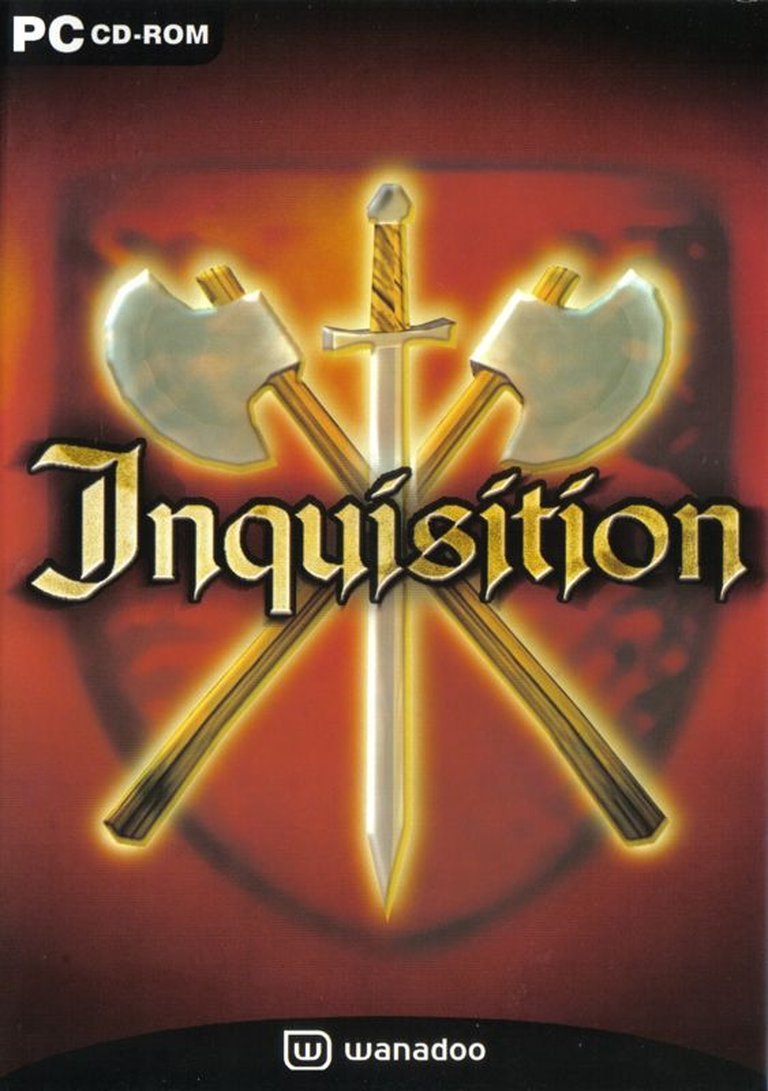
Inquisition: Chronicle of the Black Death is a stealth-action game set in 14th-century France during the reign of the Holy Inquisition. Players assume the role of Matthew, a thief imprisoned in Paris who stumbles upon the legend of the ‘Treasure of the Templar Knights’ and embarks on a perilous quest to uncover it. Navigating through the treacherous streets and sewers of medieval Paris, players must rely on stealth, cunning, and combat skills to evade guards, pick locks, and survive encounters with deadly foes. The game emphasizes strategic movement, weapon use, and thief tools, with increasing challenges as the story progresses.
Inquisition: Chronicle of the Black Death Cracks & Fixes
Inquisition: Chronicle of the Black Death Patches & Updates
Inquisition: Chronicle of the Black Death Reviews & Reception
mobygames.com (56/100): A solid stealth game with a historical setting, though it has its flaws.
en.wikipedia.org (64/100): A mixed reception with some critics praising its setting but noting its technical issues.
metacritic.com : Inquisition could’ve been a solid third-person sneaker if the developers took enough time to work on the visuals, the enemy AI, controls, as well as the camera movement.
myabandonware.com (80/100): An above-average stealth title in its time, though buggy and frustrating at points.
Inquisition: Chronicle of the Black Death Cheats & Codes
PC
Press the ~ (tilde) key to open the console and enter the commands.
| Code | Effect |
|---|---|
| \givenewitem item | Add item to inventory (replace ‘item’ with the proper item name) |
| \givemoney # | Increase money by # amount |
| \addexp # | Increase experience by # amount |
| \addskillpts # | Increase skill points by # amount |
| \addattribpts # | Increase attribute points by # amount |
| \addbeing_afriend being -1 -1 | Add being to map at player position |
| \tdolby | Use science skill to affect enemy vision, if female character |
Inquisition: Chronicle of the Black Death – A Flawed but Fascinating Stealth Adventure
Introduction: A Thief’s Tale in the Shadow of the Inquisition
Inquisition: Chronicle of the Black Death (2002) is a game that exists in the shadow of giants. Released in an era dominated by Thief: The Dark Project and Metal Gear Solid, this French-developed stealth-action title dared to carve its own niche in the medieval underworld of 14th-century Paris. While it never achieved the critical acclaim or commercial success of its contemporaries, Inquisition remains a curious artifact—a game that, despite its many flaws, offers a glimpse into an ambitious vision of historical stealth gameplay.
At its core, Inquisition is the story of Matthew, a petty thief whose life takes a dramatic turn when he stumbles upon the secret of the Templar Knights’ treasure. The game’s premise is compelling: a blend of historical intrigue, conspiracy, and survival in a world where the Holy Inquisition’s iron grip makes every shadow a potential threat. Yet, as with many games of its time, Inquisition struggles to fully realize its potential, hampered by technical limitations, clunky design choices, and a lack of polish.
This review will dissect Inquisition in exhaustive detail, exploring its development history, narrative depth, gameplay mechanics, and lasting legacy. Was it a misunderstood gem, or a cautionary tale of ambition outpacing execution? Let’s delve into the dark, rat-infested streets of medieval Paris to find out.
Development History & Context: A French Vision of Medieval Stealth
The Studio Behind the Shadows
Inquisition was developed by Wanadoo Edition, a French studio that, despite its name, was not primarily known for gaming. Wanadoo was originally the internet service provider arm of France Télécom, and its foray into game development was part of a broader push into multimedia entertainment in the early 2000s. The game was published by Strategy First in North America and Anuman Interactive in Europe, with Microïds (a subsidiary of Anuman) handling distribution in some regions.
The development team was led by Jérôme Cukier as project manager, with Vincent Hamache serving as lead designer. The game’s author, Jacques Simian, crafted the narrative, while the art direction was helmed by Frédéric Chappart. Notably, the team included several history graduates and enthusiasts, which influenced the game’s setting and tone.
Technological Constraints and Design Philosophy
Inquisition was built using the Phoenix3D engine, a proprietary tool that, while capable of rendering detailed 3D environments, was not without its limitations. The game’s lack of mouse support—a baffling omission for a PC title in 2002—was a deliberate choice, as the team opted for a keyboard-only control scheme to emphasize precision and tactical movement. This decision, while perhaps intended to evoke the feel of classic adventure games, ultimately alienated many players accustomed to the fluidity of mouse-driven controls.
In an interview with Action Vault, Jérôme Cukier revealed that the team’s primary goal was to create a historically grounded stealth experience that diverged from the fantasy tropes of games like Thief. The developers drew inspiration from medieval films, comics, and historical texts, aiming to depict a Paris that felt authentic yet accessible. However, they quickly realized that strict historical accuracy would hinder gameplay. For example:
– Street widths were expanded to prevent claustrophobic navigation.
– Tables and chairs were added to environments, despite their rarity in 14th-century households, to make spaces feel more familiar to players.
– Rats were overrepresented (and given adorable animations) to enhance the game’s grimy atmosphere, even though their historical prevalence was exaggerated.
The Gaming Landscape of 2002
Inquisition arrived in a crowded market. The stealth genre was at its peak, with Metal Gear Solid 2: Sons of Liberty (2001) and Tom Clancy’s Splinter Cell (2002) setting new standards for the genre. Meanwhile, Thief II: The Metal Age (2000) had already perfected the first-person stealth formula, making Inquisition’s third-person perspective feel like a step backward to some.
The game’s November 2002 release (in France) and April 2003 worldwide launch also coincided with the rise of action-adventure hybrids like Prince of Persia: The Sands of Time (2003), which blended stealth, combat, and platforming with far greater polish. In this context, Inquisition’s linear level design, stiff controls, and repetitive gameplay made it difficult to stand out.
The PlayStation 2 Connection
Interestingly, Inquisition was originally planned as a cross-platform release for both PC and PlayStation 2. However, the PS2 version was canceled, leaving the PC version as the sole survivor. This explains some of the game’s console-like design choices, such as:
– Fixed camera angles that often struggled to keep up with the player.
– Limited save points, forcing players to restart entire sections after death.
– Simplified combat mechanics that lacked the depth of PC-exclusive stealth games.
Narrative & Thematic Deep Dive: Conspiracy, Survival, and the Weight of History
Plot Summary: From Prisoner to Treasure Hunter
Inquisition opens in 1348 Paris, a city ravaged by the Black Death, poverty, and the oppressive rule of the Holy Inquisition. The protagonist, Matthew, is a young thief arrested after a botched robbery and thrown into the Châtelet prison, a notorious dungeon where prisoners face torture and execution.
While attempting to escape, Matthew witnesses the interrogation of Jacques, a former Knight Templar, who is being brutally questioned by the Inquisition. Before dying, Jacques entrusts Matthew with a seal—a clue leading to the legendary Treasure of the Templars. This sets Matthew on a dual quest:
1. Escape the prison and evade the Inquisition’s relentless pursuit.
2. Uncover the Templar treasure, which promises wealth and power beyond imagination.
The narrative unfolds across Parisian slums, sewers, cathedrals, and hidden Templar vaults, with Matthew navigating a web of betrayal, conspiracy, and supernatural intrigue. Along the way, he encounters:
– The Court of Miracles, a haven for thieves and beggars.
– Corrupt clergy who exploit the poor in the name of God.
– Templar remnants who guard their secrets with fanatical devotion.
Themes: Power, Corruption, and the Illusion of Freedom
Inquisition is, at its heart, a critique of institutional oppression. The game’s themes include:
1. The Abuse of Power
– The Holy Inquisition is depicted as a brutal, unaccountable force, torturing and executing innocents under the guise of religious purity.
– The Templar Knights, though disbanded, wield influence from the shadows, their treasure symbolizing the corrupting allure of wealth.
2. Survival in a Hostile World
– Matthew is not a hero but a survivor, forced to steal, lie, and kill to stay alive.
– The game’s stealth mechanics reinforce this theme—visibility equals death, and trust is a liability.
3. The Myth of the Templar Treasure
– The treasure serves as both a MacGuffin and a symbol of false hope. Even if Matthew finds it, the world around him remains unchanged.
– This reflects the game’s nihilistic undertone: no matter what Matthew accomplishes, the Inquisition’s reign continues.
Characters: A Rogue’s Gallery of the Damned
While Inquisition’s character roster is not as deep as modern narratives, it features a few memorable figures:
– Matthew: A reluctant antihero whose motivations shift from survival to greed. His lack of a voice (outside of grunts and whispers) makes him a blank slate, allowing players to project their own interpretations.
– Jacques (the Templar): A tragic figure whose dying words set the plot in motion. His brief appearance leaves a lasting impact, embodying the lost glory of the Templars.
– The Grand Inquisitor: A faceless villain whose presence looms over the entire game. His agents are everywhere, making Paris feel like a prison without walls.
– The Court of Miracles’ Leader: A charismatic but morally ambiguous figure who aids Matthew—for a price.
Dialogue and Writing: A Mixed Bag
The game’s dialogue is a blend of historical authenticity and melodrama. While some exchanges feel stiff and overly formal, others capture the gritty, desperate tone of medieval life. The French voice acting (in the original release) is well-delivered, though the English localization suffers from awkward phrasing.
One of the game’s most interesting narrative choices is its lack of a grand finale. Unlike many adventure games, Inquisition does not end with Matthew saving the world or toppling the Inquisition. Instead, the story concludes on a quiet, ambiguous note, reinforcing the game’s themes of futility and survival.
Gameplay Mechanics & Systems: Stealth, Combat, and Frustration
Core Gameplay Loop: Sneak, Steal, Survive
Inquisition is a third-person stealth game with light RPG and adventure elements. The gameplay revolves around:
1. Stealth and Infiltration
– Sneaking past guards using shadows, distractions (like whistling), and environmental cover.
– Pickpocketing unsuspecting NPCs for coins and items.
– Lockpicking doors and chests to access restricted areas.
2. Combat: A Last Resort
– Melee combat is clunky but necessary when stealth fails.
– Weapons include daggers, swords, and improvised tools (like crowbars).
– No ranged weapons, making direct confrontation risky.
3. Platforming and Exploration
– Jumping across rooftops, climbing ledges, and navigating sewer systems.
– Environmental puzzles, such as moving crates or triggering mechanisms.
The Good: What Works
- Atmospheric Stealth: When the game’s lighting and sound design align, sneaking through dark alleys and abandoned cathedrals feels tense and immersive.
- Variety in Tools: Matthew’s thief tools (lockpicks, grappling hooks, and disguises) add depth to gameplay.
- Historical Setting: The medieval Paris setting is richly detailed, with authentic architecture and period-appropriate clothing.
The Bad: What Doesn’t
- Clunky Controls
- No mouse support makes navigation awkward and imprecise.
- Fixed camera angles often obstruct the player’s view, leading to cheap deaths.
- No strafe or backward movement, forcing players to turn 180 degrees to retreat.
- Unforgiving Difficulty
- Limited save points mean losing 20+ minutes of progress after a single mistake.
- Enemy AI is inconsistent—some guards are blind and deaf, while others spot Matthew from impossible distances.
- Combat is weightless and unsatisfying, with no real strategy beyond mashing the attack button.
- Repetitive Level Design
- Many areas reuse assets, making the world feel smaller than it is.
- Puzzles are often trivial, relying on fetch quests or simple switch-flipping.
- Technical Issues
- Bugs and glitches (e.g., NPCs getting stuck, collision detection failures) plague the experience.
- Poor optimization leads to frame rate drops in larger areas.
Character Progression: A Missed Opportunity
Inquisition features minimal RPG mechanics:
– No skill trees or character customization.
– Weapons and tools are found in the world, not upgraded.
– Health is restored via food, which must be stolen or purchased.
This lack of progression makes the game feel static—Matthew at the end is no more capable than he was at the beginning, which undermines the sense of growth that defines great adventure games.
UI and HUD: Functional but Uninspired
The user interface is minimalist, with:
– A health bar and stamina meter.
– An inventory system that is clunky to navigate.
– No map or objective tracker, forcing players to memorize layouts or rely on trial and error.
World-Building, Art & Sound: A Dark Medieval Tapestry
Setting: Paris in the Shadow of the Plague
Inquisition’s greatest strength is its atmospheric world-building. The game’s medieval Paris is a living, breathing nightmare:
– The Streets: Narrow, filth-ridden alleys where beggars and cutthroats lurk in the shadows.
– The Châtelet Prison: A dank, oppressive dungeon filled with torture devices and desperate inmates.
– The Sewers: A labyrinth of rat-infested tunnels, where one wrong turn can lead to a gruesome death.
– The Cathedrals: Towering Gothic structures hiding Templar secrets beneath their holy facades.
The game does not shy away from the brutality of the era:
– Public executions are commonplace.
– The Black Death is ever-present, with corpses piled in the streets.
– The Inquisition’s influence is inescapable, with spies and informants everywhere.
Visual Design: Gritty but Dated
The art direction aims for historical realism but is held back by technical limitations:
– Character models are stiff and low-poly, with limited animations.
– Textures are muddy, making environments blend together.
– Lighting is used effectively in some areas, creating tense, shadowy corridors, but fails in others, leaving players struggling to see.
Despite these flaws, the game’s attention to historical detail is commendable:
– Clothing and armor are period-accurate.
– Architecture reflects 14th-century Paris, from half-timbered houses to Gothic cathedrals.
– Weapons and tools are faithfully recreated, from daggers to lockpicks.
Sound Design: A Haunting Soundtrack
The audio design is one of Inquisition’s strongest aspects:
– Ambient sounds (dripping water, distant screams, rat squeaks) create an oppressive atmosphere.
– Voice acting (in French) is well-done, though the English dub suffers.
– Laurent Parisi’s soundtrack is moody and atmospheric, blending Gregorian chants with dark, orchestral themes.
However, the sound mixing is inconsistent:
– Footsteps are often inaudible, making stealth unpredictable.
– Combat sounds lack impact, making fights feel weightless.
Reception & Legacy: A Forgotten Relic of the Stealth Genre
Critical Reception: Mixed Reviews and Harsh Criticism
Inquisition received largely negative to mixed reviews, with critics praising its ambition and atmosphere but condemning its execution. Here’s a breakdown of the critical consensus:
| Publication | Score | Key Praise | Key Criticism |
|---|---|---|---|
| 7Wolf Magazine | 84% | “A thrilling blend of stealth and history” | “Controls take getting used to” |
| GameSpot (BE/NL) | 69% | “Great medieval atmosphere” | “Repetitive gameplay” |
| PC Games (Germany) | 64% | “Strong narrative and voice acting” | “Poor AI and sterile environments” |
| Jeuxvideo.com | 60% | “Interesting setting” | “Not for stealth fans” |
| ActionTrip | 48% | “Decent thief mechanics” | “No mouse support, bad camera” |
| GameStar (Germany) | 43% | “Dark, immersive world” | “Unplayable controls and save system” |
| Games.cz | 40% | “Unique premise” | “Buggy, boring, and broken” |
Common Praise:
– Atmospheric and immersive setting.
– Historically rich world-building.
– Intriguing premise (Templar treasure hunt).
Common Criticisms:
– Clunky, keyboard-only controls.
– Unforgiving difficulty (limited saves, cheap deaths).
– Repetitive and buggy gameplay.
– Poor enemy AI (guards are either blind or omniscient).
– Lack of polish compared to contemporaries like Thief or Splinter Cell.
Player Reception: A Cult Following?
Player scores on MobyGames (2.9/5) suggest that Inquisition was not well-received by the general audience. However, it has since developed a small but dedicated cult following, particularly among:
– Fans of obscure stealth games.
– History buffs who appreciate its medieval setting.
– Retro gamers who enjoy flawed but ambitious titles.
Legacy: Did It Influence the Genre?
Inquisition’s impact on the stealth genre is minimal. Unlike Thief or Splinter Cell, it did not innovate mechanics or inspire imitators. However, it paved the way for later historical stealth games, such as:
– Assassin’s Creed (2007) – Medieval conspiracy themes.
– A Plague Tale: Innocence (2019) – Black Death setting.
– The Dark Mod (fan-made Thief successor) – Stealth in historical environments.
Why Did It Fail?
Several factors contributed to Inquisition’s lack of success:
1. Poor Controls: The keyboard-only scheme was outdated by 2002 standards.
2. Technical Issues: Bugs, glitches, and performance problems plagued the experience.
3. Lack of Polish: Compared to AAA stealth games, Inquisition felt unfinished.
4. Weak Marketing: The game lacked strong publisher support, especially outside Europe.
5. Tough Competition: Released alongside superior stealth games, it struggled to stand out.
Conclusion: A Flawed Gem Worth Remembering
Inquisition: Chronicle of the Black Death is not a great game—but it is a fascinating one. It is a product of its time, reflecting both the ambition and the limitations of early 2000s game development. While it fails in execution, it succeeds in atmosphere, offering a gritty, immersive journey through a medieval underworld that few games have attempted since.
Final Verdict: 6/10 – A Cautionary Tale with Hidden Depths
- For History Buffs & Stealth Enthusiasts: Worth a playthrough for its unique setting and narrative ambition.
- For Casual Gamers: Avoid—the clunky controls and punishing difficulty make it frustrating.
- For Retro Collectors: A curiosity piece, best experienced with patches and mods to improve playability.
Inquisition is not a lost classic, but it is not a complete failure either. It is a flawed experiment, a game that dared to be different in an era where different wasn’t always rewarded. For those willing to look past its rough edges, it offers a dark, compelling glimpse into a world where survival is the only treasure.
Final Thought:
If Inquisition had been given more time, better controls, and stronger AI, it could have been a contender. Instead, it remains a footnote—a game that tried to crawl out of the shadows but was dragged back by its own limitations.
Would you risk the Inquisition’s wrath for the Templar treasure? Or is this one relic best left buried?