
- Release Year: 2008
- Platforms: Windows
- Publisher: Akella
- Developer: Openoko Entertainment Sp. z o.o.
- Genre: Action, Survival horror
- Perspective: 1st-person
- Game Mode: Single-player
- Gameplay: Shooter, Survival horror
- Setting: City – Moscow, Zombies
- Average Score: 53/100
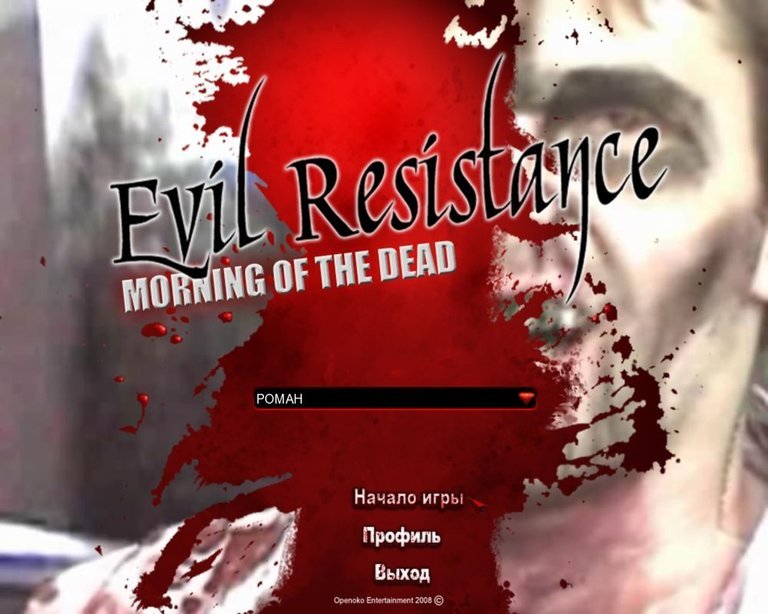
Description
Evil Resistance: Morning of the Dead is a survival horror first-person shooter set in a modern Moscow overrun by a zombie apocalypse. Players take on the role of policewoman Natalia Budnik, battling hordes of infected citizens and policemen across various locations, from city streets to a massive mall. The game features a variety of weapons, from melee tools like knives and chainsaws to firearms such as assault and sniper rifles, alongside collectible cards that unlock bonus content. With a focus on intense combat and survival, the game blends action and horror in a gritty urban setting.
Gameplay Videos
Evil Resistance: Morning of the Dead Cracks & Fixes
Evil Resistance: Morning of the Dead Patches & Updates
Evil Resistance: Morning of the Dead Mods
Evil Resistance: Morning of the Dead Reviews & Reception
gamepressure.com (47/100): Shooter with zombies in the main role reminiscent of gore films.
myabandonware.com (93/100): Evil Resistance: Morning of the Dead (aka Evil Resistance: Москва и мертвецы) is a video game published in 2008 on Windows by Akella. It’s an action game, set in a horror, shooter, survival horror and zombies themes.
mobygames.com (20/100): Evil Resistance: Morning of the Dead is a survival horror-FPS in modern Moscow setting.
Evil Resistance: Morning of the Dead: A Forgotten Relic of Survival Horror
Introduction
In the annals of survival horror, few games are as enigmatic—or as maligned—as Evil Resistance: Morning of the Dead. Released in 2008 by the short-lived Polish studio Openoko Entertainment and published by Russian giant Akella, this first-person shooter (FPS) dared to blend the visceral chaos of a zombie apocalypse with the gritty, often overlooked backdrop of Moscow. Yet, despite its ambitious premise, the game was met with near-universal disdain, earning a staggering 1% critic score on MobyGames and a player rating of just 1.1/5. Was it truly a catastrophic failure, or an underappreciated cult oddity lost to the sands of time?
This review seeks to dissect Evil Resistance in exhaustive detail, exploring its development, narrative, gameplay, and legacy. We’ll examine why it floundered critically, how it fits into the broader landscape of survival horror, and whether it deserves a second look—or a merciful burial.
Development History & Context
The Studio Behind the Game
Openoko Entertainment was a fledgling Polish developer with a brief, turbulent existence. Founded in the mid-2000s, the studio released only three games before dissolving in 2009. Evil Resistance was their second title, sandwiched between G.B.R: Fast Response Group (a tactical shooter) and IronOne: Republic Crusaders (a sci-fi FPS). The team was small but experienced, with key figures like Jacek Babiński (Creative Director) and Marcin Rogucki (Technical Director) bringing prior industry knowledge.
The game’s development was hampered by technological constraints of the era. Built on the Ogre 3D engine, Evil Resistance relied on PhysX for its ragdoll physics—a cutting-edge feature at the time but one that often led to janky, unpredictable interactions. The studio also grappled with StarForce DRM, a notoriously invasive copy protection system that later rendered the game unplayable on modern Windows versions without workarounds.
The Gaming Landscape of 2008
2008 was a pivotal year for survival horror and FPS hybrids. Left 4 Dead had just redefined cooperative zombie-slaying, while Dead Space elevated sci-fi horror to new heights. Meanwhile, Resident Evil 5 was on the horizon, promising a more action-oriented take on the genre. Into this crowded field stepped Evil Resistance, a game that borrowed heavily from Resident Evil’s tension and Doom’s relentless combat but lacked the polish or innovation of its contemporaries.
The game’s Russian setting was another point of differentiation. While Western developers often defaulted to American or European locales, Evil Resistance embraced Moscow’s urban decay, complete with Soviet-era architecture and a protagonist who was a female police officer—a rarity in FPS games of the time.
The Vision vs. Reality
The developers envisioned a gore-soaked, cinematic survival experience, blending live-action cutscenes with brutal combat. However, budgetary limitations and tight deadlines forced compromises. The live-action sequences, while ambitious, suffered from stiff acting and poor production values, undercutting the game’s attempts at gravitas. The AI, physics, and level design all showed signs of rushed development, leading to a final product that felt more like a tech demo than a fully realized game.
Narrative & Thematic Deep Dive
Plot Summary
The story follows Natalia Budnik, a newly promoted lieutenant in the Politsiya Rossii (Russian police), as she navigates a Moscow overrun by zombies. After a car accident leaves her stranded in the city, she awakens to find the streets teeming with the undead. Her mission? Survive the night, uncover the truth behind the outbreak, and escape.
The narrative is minimalist to a fault. There’s no grand conspiracy, no shadowy corporation, and no explanation for the zombie virus—just Natalia, her guns, and waves of shambling horrors. The game’s excuse plot (as TV Tropes aptly describes it) serves as little more than a framework for combat, with no character development, no meaningful dialogue, and no resolution beyond a terse “Mission Complete” screen.
Themes & Influences
Despite its narrative shortcomings, Evil Resistance taps into several intriguing themes:
1. Isolation & Survival – Natalia is utterly alone, with only sporadic assistance from doomed allies.
2. Urban Decay – Moscow is rendered as a blood-soaked wasteland, with shattered glass, abandoned vehicles, and corpses littering the streets.
3. Female Agency – Natalia is a competent, no-nonsense protagonist, though her character is never explored beyond her role as a gun-wielding survivor.
The game’s gore aesthetic is heavily inspired by American splatter films, particularly the works of George A. Romero and early 2000s horror like 28 Days Later. However, the execution lacks the atmospheric dread of its influences, instead opting for relentless, mindless violence.
Characters & Dialogue
- Natalia Budnik – A Jill Valentine expy, complete with a similar hairstyle and tactical outfit. Her voice acting (in the English translation) is wooden and unemotional, robbing her of any personality.
- Supporting Cast – The few NPCs Natalia encounters (police officers, firefighters) are either useless cannon fodder or AI-controlled liabilities who frequently block gunfire or charge into zombies.
- Zombies – The undead come in 28 varieties, from standard shamblers to fat zombies and armed police zombies. Their designs are generic, lacking the grotesque creativity of Resident Evil’s mutants.
Gameplay Mechanics & Systems
Core Gameplay Loop
Evil Resistance is, at its heart, a corridor shooter with survival horror elements. The player moves through linear levels (Moscow streets, a mall, a police station), shooting zombies, solving rudimentary puzzles, and scavenging for weapons.
- Combat – The game offers 26 weapons, from kitchen knives and drills to assault rifles and chainsaws. Gunplay is clunky, with imprecise hit detection and unresponsive controls.
- Melee Weapons – A rare highlight, melee combat is visceral and satisfying, especially with the katana (an odd inclusion in a Moscow setting) and fire axe.
- Physics & Ragdoll – The PhysX integration leads to hilariously over-the-top gibs, with zombies flying apart in exaggerated fashion. However, the physics also cause frequent glitches, such as bodies clipping through walls or Natalia getting stuck on debris.
AI & Enemy Behavior
The zombie AI is basic but functional—they shamble toward the player, occasionally lunging or crawling. However, the human allies are dumber than the undead, often:
– Running into Natalia’s line of fire
– Getting stuck on geometry
– Ignoring zombies until it’s too late
The armed zombie variants (police and Spetsnaz) are a mixed bag—they can shoot back, but their accuracy is so poor that they pose little threat.
Progression & Upgrades
- Weapon Unlocks – Players collect bonus cards hidden throughout levels to unlock new weapons (e.g., the chainsaw, sniper rifle).
- No Skill Tree – Unlike Resident Evil 4 or Dead Space, there’s no character progression—Natalia’s stats remain static.
- Health System – Health is restored via medkits, which are sparse, forcing players to scavenge carefully.
UI & HUD
The UI is functional but ugly, with a cluttered inventory system and poorly labeled objectives. The map system is nearly useless, offering little guidance in the game’s maze-like levels.
World-Building, Art & Sound
Setting & Atmosphere
Moscow is rendered with a mix of realism and absurdity:
– Streets are littered with abandoned cars, broken glass, and bloodstains.
– Interiors (mall, police station) are dark and claustrophobic, though lighting is inconsistent.
– Night Vision Sections – A green-tinted filter makes navigation harder, not easier.
The game fails to capitalize on its setting—there’s little sense of Russian culture beyond the architecture. The zombie apocalypse could have happened anywhere.
Visual Design
- Character Models – Natalia and the zombies are low-poly by 2008 standards, with stiff animations.
- Gore Effects – The blood and dismemberment are exaggerated, leaning into B-movie camp rather than horror.
- Textures – Many surfaces are blurry or repetitive, betraying the game’s low budget.
Sound Design & Music
- Gunfire & Zombie Groans – The sound effects are serviceable, though the zombie noises lack variety.
- Voice Acting – The English dub is painfully stiff, with Natalia delivering lines like “Some people think a woman can’t be tough enough to make a good cop. But they’re wrong.” with zero conviction.
- Music – The score is forgettable, consisting of generic action cues that do little to build tension.
Reception & Legacy
Critical & Commercial Failure
Evil Resistance was savaged by critics:
– Absolute Games (AG.ru) gave it a 1/100, calling it “another Moscow-themed disaster” in a long line of shoddy Russian games.
– Players on MobyGames rated it 1.1/5, with many citing bugs, poor AI, and repetitive gameplay.
– The game sold poorly, disappearing into obscurity shortly after release.
Why Did It Fail?
- Technical Issues – StarForce DRM, crashes, and physics glitches made the game unplayable for many.
- Lack of Polish – The game felt unfinished, with rushed level design and broken mechanics.
- No Innovation – It brought nothing new to the survival horror genre, instead copying better games (Resident Evil 4, Left 4 Dead) without their strengths.
- Weak Narrative – The nonexistent story and wooden characters gave players no reason to care.
Cult Following & Modding
Despite its flaws, Evil Resistance has a small but dedicated fanbase:
– Modders have created patches to remove StarForce and improve stability.
– Abandonware sites (MyAbandonware) keep the game accessible for curious players.
– Some appreciate its so-bad-it’s-good charm, particularly the over-the-top gore and janky physics.
Influence on Later Games
Evil Resistance had no discernible impact on the industry. However, it serves as a cautionary tale about:
– Overambition on a shoestring budget
– The dangers of rushed development
– How not to design AI in a survival horror game
Conclusion: A Flawed, Forgotten Experiment
Evil Resistance: Morning of the Dead is not a good game by any conventional metric. Its clunky controls, broken AI, and nonexistent story relegate it to the bargain bin of history. Yet, there’s a perverse fascination in its unapologetic jank, its B-movie sensibilities, and its audacious attempt to blend Moscow with zombies.
Final Verdict: 3/10 – A Fascinating Failure
– For Survival Horror Fans? Only if you’re a completionist or enjoy trainwrecks.
– For FPS Enthusiasts? Avoid—there are dozens of better zombie shooters.
– For Cult Game Collectors? Worth a look for its so-bad-it’s-good appeal.
Evil Resistance is not a lost classic, but it’s a curious artifact—a game that tried, failed, and vanished, leaving behind only a handful of memes and modders to keep its legacy alive. In the grand tapestry of survival horror, it’s a footnote, but one that reminds us that even the most ambitious ideas can crumble under poor execution.
Should you play it? Only if you’re prepared for frustration—and maybe a few laughs.
Final Score Breakdown:
– Gameplay: 4/10
– Narrative: 2/10
– Visuals: 5/10
– Sound: 3/10
– Replayability: 2/10
– Overall: 3/10 – “Morning” Never Comes