
- Release Year: 1996
- Platforms: Windows
- Publisher: Electronic Arts, Inc.
- Developer: Chaos Works
- Genre: Action, Shooter
- Perspective: Isometric
- Game Mode: LAN, Single-player
- Gameplay: Isometric scrolling, Secret objectives, Shooter, Side missions
- Setting: Sci-fi, Space
- Average Score: 71/100
Description
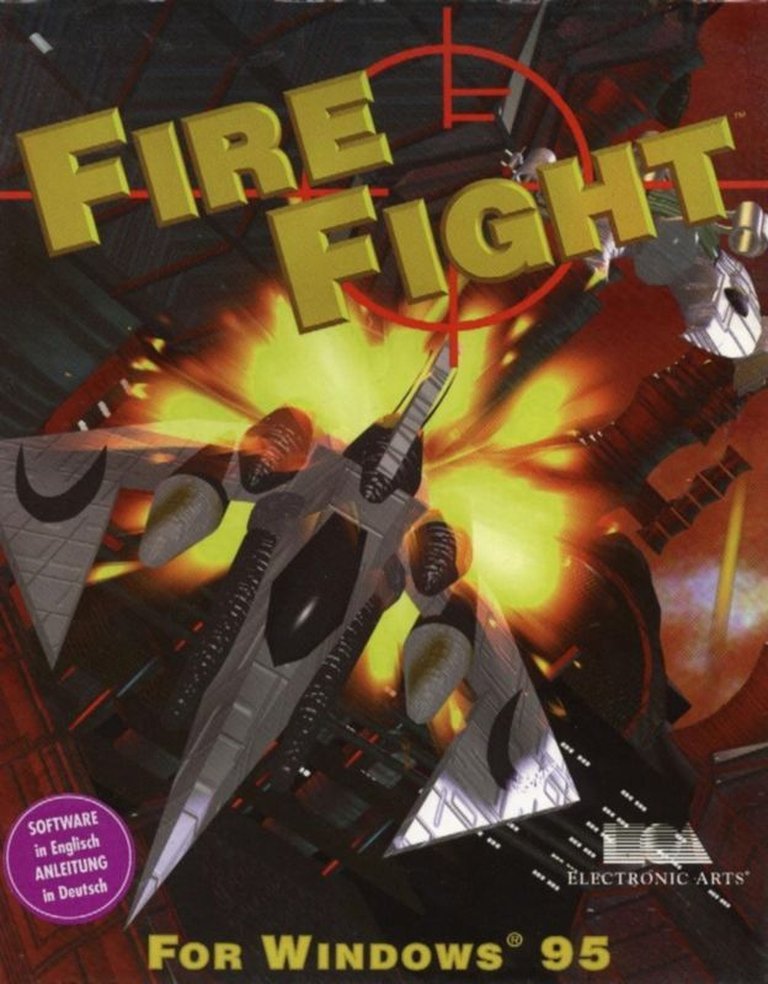
Fire Fight is an isometric 8-way scrolling shoot ’em up game released in 1996 for Windows. Players take control of a low-flying spacecraft, navigating through various missions to hunt down and destroy key objectives. The game features multiple weapons, diverse stages, and a variety of enemies, along with secret objectives and hidden areas to explore. With its crisp graphics, smooth action, and engaging gameplay, Fire Fight offers an exciting challenge for fans of the shooter genre.
Gameplay Videos
Fire Fight Free Download
Fire Fight Patches & Updates
Fire Fight Mods
Fire Fight Reviews & Reception
mobygames.com (74/100): One of the best, and also one of the last, isometric shooters to come along. With smooth action and great graphics, this game should be in the shelf of everyone who enjoys such genre.
en.wikipedia.org (68/100): Next Generation gave four stars out of five, commending the gameplay, action, intuitive controls, and weapon selection.
gamesreviews2010.com : Overall, Fire Fight is an excellent shoot ’em up. It is a unique and challenging game that will appeal to fans of the genre.
Fire Fight Cheats & Codes
PC
Enter codes during gameplay.
| Code | Effect |
|---|---|
| C + W + [Keypad Plus] | Activates cheat menu with options for full shields, full weapons, or invulnerability. Press [F12] to select and confirm with [Enter] or [Esc]. |
Fire Fight: A Forgotten Gem of the Isometric Shooter Genre
Introduction
In the mid-1990s, the gaming landscape was dominated by first-person shooters like Doom and Quake, but a lesser-known title, Fire Fight, carved out its own niche with its unique isometric perspective and fast-paced action. Developed by Chaos Works and published by Electronic Arts in 1996, Fire Fight is a game that deserves recognition for its innovative gameplay, impressive visuals, and challenging missions. This review delves deep into the game’s development, narrative, gameplay mechanics, and its lasting impact on the gaming industry.
Development History & Context
The Studio and Creators’ Vision
Fire Fight was developed by Chaos Works, a Polish studio that was relatively unknown at the time. The game was produced by Epic MegaGames, a company renowned for its shareware titles like Jazz Jackrabbit and One Must Fall: 2097. The collaboration between Chaos Works and Epic MegaGames brought together a blend of European creativity and American gaming expertise.
The creators’ vision for Fire Fight was to create an isometric shooter that combined the tactical depth of games like Desert Strike with the fast-paced action of arcade shooters. The game was designed to be accessible yet challenging, with a focus on mission-based gameplay and a variety of weapons and enemies.
Technological Constraints and Innovations
Developed for Windows 95, Fire Fight pushed the boundaries of what was possible with the technology of the time. The game featured smooth parallax scrolling, high-resolution graphics, and a dynamic sound system that enhanced the immersive experience. However, the developers faced challenges in optimizing the game for the hardware limitations of the mid-1990s, particularly in ensuring smooth performance on lower-end systems.
One of the standout features of Fire Fight was its use of an isometric perspective, which provided a unique viewpoint compared to the top-down shooters that were prevalent at the time. This perspective allowed for more strategic gameplay, as players had to navigate their spacecraft through complex environments while managing their weapons and avoiding enemy fire.
The Gaming Landscape of 1996
The mid-1990s were a golden age for PC gaming, with titles like Command & Conquer, Diablo, and Quake dominating the market. Fire Fight entered this competitive landscape as a niche title, appealing to fans of arcade-style shooters and tactical gameplay. While it didn’t achieve the same level of commercial success as some of its contemporaries, it garnered a dedicated fanbase and critical acclaim for its innovative design and engaging gameplay.
Narrative & Thematic Deep Dive
Plot and Setting
Fire Fight is set in a distant future where the player takes on the role of a pilot working for the autocratic “Phantom Council.” The game’s narrative revolves around the player’s mission to suppress the forces of La Résistance, a rebel group fighting for independence from the Phantom Council. This premise sets up a morally complex scenario, as the player is not fighting against a clear-cut evil empire but rather a bureaucratic and inefficient government.
The game’s setting spans various planets, each with its own unique environment and challenges. The missions range from destroying ground and air targets to rescuing hostages and capturing enemy bases. The narrative is delivered through mission briefings and radio communications, providing a sense of urgency and immersion.
Characters and Dialogue
While Fire Fight does not feature deeply developed characters, the dialogue and mission briefings are well-written and contribute to the game’s atmosphere. The player’s character, Jaxon, is a skilled pilot who receives orders from a variety of commanders, each with their own distinct personalities. The interactions between Jaxon and his superiors add a layer of depth to the game’s narrative, even if the characters themselves are not fully fleshed out.
Themes and Moral Complexity
One of the most intriguing aspects of Fire Fight is its exploration of moral complexity. Unlike many shooters of the time, where the player is clearly on the side of good, Fire Fight presents a more nuanced scenario. The Phantom Council is not an evil empire but a flawed government, and La Résistance is not a heroic group of freedom fighters but a collection of rebels with their own agendas. This moral ambiguity adds depth to the game’s narrative and challenges the player to question their own motives.
Gameplay Mechanics & Systems
Core Gameplay Loop
At its core, Fire Fight is a mission-based shooter where the player controls a futuristic spacecraft and must complete a variety of objectives. The game features 18 missions, each with its own unique challenges and objectives. The core gameplay loop involves navigating the spacecraft through the environment, engaging in combat with enemy forces, and completing mission objectives.
The game’s isometric perspective allows for a more tactical approach to combat, as players must manage their position and weapons to avoid enemy fire and achieve their objectives. The controls are responsive and intuitive, with a focus on precision and strategy.
Combat and Weapons
Fire Fight features a variety of weapons, including lasers, missiles, and bombs. Each weapon has its own strengths and weaknesses, and players must choose the right weapon for the situation. The game also includes special abilities, such as a speed boost and a cloaking device, which add an extra layer of strategy to the combat.
The enemies in Fire Fight are varied and challenging, ranging from ground troops to air units and bosses. Each enemy type requires a different approach, and players must adapt their strategies to overcome them. The game’s difficulty is well-balanced, providing a challenge without being overly frustrating.
Character Progression and UI
While Fire Fight does not feature a deep character progression system, the game does include a variety of power-ups and upgrades that can be collected during missions. These power-ups include homing missiles, space mines, cloaking devices, and electric shockwaves, each of which adds a new dimension to the gameplay.
The game’s user interface is clean and intuitive, providing all the necessary information without overwhelming the player. The HUD includes a radar that shows the player’s position and the location of enemies and objectives, as well as a health bar and weapon selection interface.
Multiplayer Mode
Fire Fight includes a multiplayer mode that allows up to four players to engage in competitive or cooperative gameplay. The multiplayer mode features six dedicated maps and a variety of customizable rules, providing a fun and engaging experience for players who want to test their skills against others.
World-Building, Art & Sound
Setting and Atmosphere
Fire Fight features a variety of environments, each with its own unique atmosphere and challenges. The game’s isometric perspective allows for detailed and immersive environments, with smooth parallax scrolling and high-resolution graphics. The environments range from lush planets to industrial complexes, each with its own distinct visual style.
The game’s atmosphere is enhanced by its dynamic sound system, which includes realistic sound effects and a catchy soundtrack. The sound effects are well-designed and contribute to the immersive experience, while the soundtrack adds a sense of urgency and excitement to the gameplay.
Visual Direction
The visual direction of Fire Fight is one of its standout features. The game’s isometric perspective provides a unique viewpoint that sets it apart from other shooters of the time. The high-resolution graphics and smooth parallax scrolling create a visually stunning experience, with detailed environments and well-designed spacecraft.
The game’s visual style is a blend of futuristic and industrial elements, with a focus on realism and detail. The spacecraft and enemies are well-designed, with a variety of visual effects that enhance the combat experience.
Sound Design
The sound design of Fire Fight is another highlight of the game. The sound effects are realistic and immersive, with a variety of weapon sounds, explosion effects, and environmental sounds. The soundtrack is catchy and atmospheric, with a mix of electronic and orchestral elements that enhance the game’s atmosphere.
Reception & Legacy
Critical and Commercial Reception
Fire Fight received generally positive reviews from critics, with an average score of 74% based on 16 ratings. Critics praised the game’s innovative isometric perspective, smooth gameplay, and impressive visuals. However, some critics noted that the game’s missions could be repetitive and that the narrative was not as developed as it could have been.
Commercially, Fire Fight did not achieve the same level of success as some of its contemporaries, but it garnered a dedicated fanbase and remains a beloved title among fans of isometric shooters.
Evolution of Reputation
Over the years, Fire Fight has gained a reputation as a forgotten gem of the isometric shooter genre. While it may not have achieved the same level of commercial success as some of its contemporaries, it is remembered fondly by those who played it and is often cited as an innovative and engaging title.
Influence on Subsequent Games
Fire Fight influenced subsequent games in the isometric shooter genre, with its unique perspective and tactical gameplay serving as a template for future titles. The game’s focus on mission-based gameplay and varied environments also influenced the design of later shooters, particularly those that emphasized strategy and precision.
Conclusion
Fire Fight is a game that deserves recognition for its innovative design, engaging gameplay, and impressive visuals. While it may not have achieved the same level of commercial success as some of its contemporaries, it remains a beloved title among fans of isometric shooters. Its unique perspective, challenging missions, and moral complexity set it apart from other shooters of the time, and its influence can be seen in subsequent games in the genre.
In the annals of video game history, Fire Fight stands as a testament to the creativity and innovation of its developers. It is a game that pushed the boundaries of what was possible with the technology of the time and provided a unique and engaging experience for players. For those who appreciate the art of game design and the evolution of the shooter genre, Fire Fight is a title that is well worth revisiting.