
- Release Year: 2005
- Platforms: Macintosh, PlayStation 2, Wii, Windows, Xbox
- Publisher: ak tronic Software & Services GmbH, Buka Entertainment, MC2 France, MC2-Microïds, Namco Hometek Inc., Rebellion Developments Ltd., Reef Entertainment Ltd.
- Developer: Rebellion Developments Ltd.
- Genre: Action, Simulation
- Perspective: Third-person
- Game Mode: Online PVP, Single-player
- Gameplay: Shooter, Stealth
- Setting: Historical events, World War II
- Average Score: 73/100
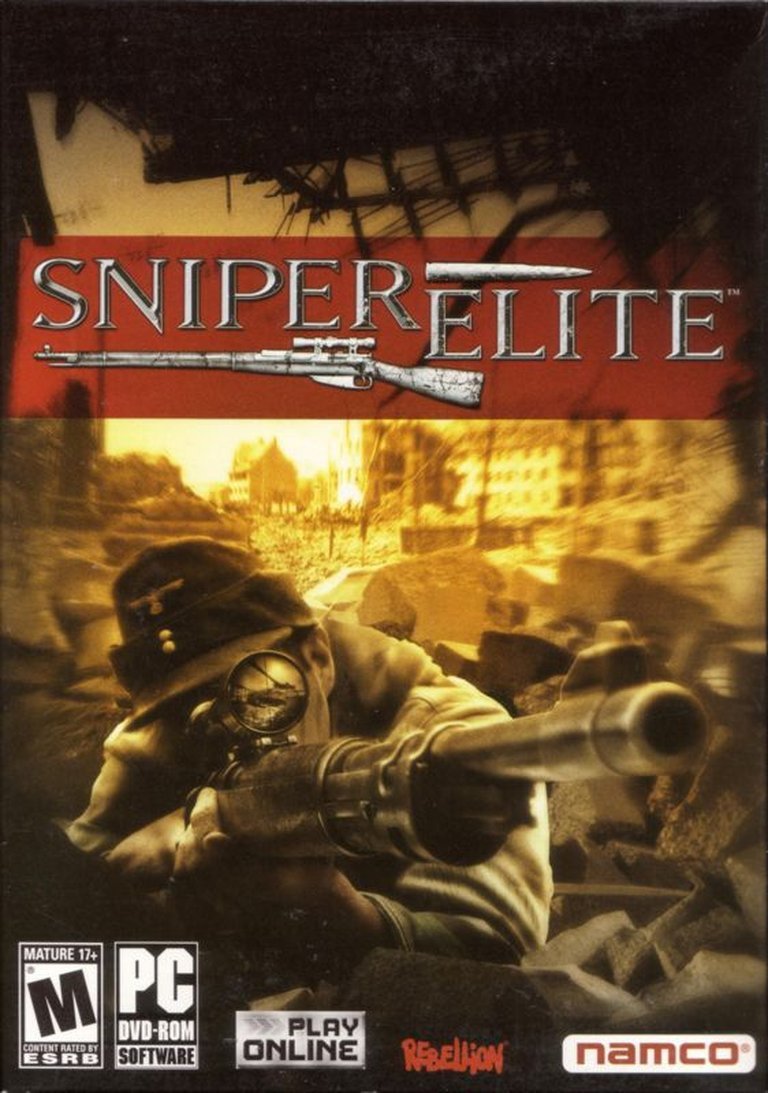
Description
Sniper Elite is a tactical third-person shooter set in Berlin during the final days of World War II, where players assume the role of an American OSS agent tasked with preventing Soviet forces from acquiring German nuclear research. The game emphasizes stealth and precision sniping, with realistic factors like wind and noise affecting shots, and features a ‘bullet cam’ that dramatically follows successful kills in slow motion. The single-player campaign spans 28 missions, while multiplayer modes offer additional challenges.
Gameplay Videos
Where to Buy Sniper Elite
PC
Sniper Elite Free Download
Sniper Elite Cracks & Fixes
Sniper Elite Mods
Sniper Elite Guides & Walkthroughs
Sniper Elite Reviews & Reception
metacritic.com (77/100): Quite simply, Sniper Elite is one of the finest World War II era shooters that I have ever played.
oldpcgaming.net : Look past these ridiculous aspects and you’ll find a great tactical shooter that lends a lot of weight on stealth and precision.
imdb.com (70/100): This is tense, fun and fair.
Sniper Elite Cheats & Codes
PC
Enter one of the following profile names
| Code | Effect |
|---|---|
| Panzer | Exploding bullets |
| Ratbomb | Rats explode when shot |
| Stealth | Silent sniper bullets |
| reb00 | Shows all cheat codes in Menu of game |
PlayStation 2
Enter one of the following profile names
| Code | Effect |
|---|---|
| Panzer | Exploding bullets |
| Stealth | Silent sniper bullets |
| Ratbomb | Exploding rats |
Sniper Elite: A Tactical Masterpiece in the Shadows of War
Introduction: The Birth of a Sniper’s Legacy
In the crowded landscape of World War II shooters, Sniper Elite (2005) emerged as a bold departure from the run-and-gun formula, carving a niche for itself as a methodical, tension-filled tactical experience. Developed by Rebellion Developments, this game dared to ask: What if the sniper wasn’t just a tool, but the entire game? The result was a flawed yet groundbreaking title that redefined stealth and precision in first-person shooters. While it didn’t achieve the commercial dominance of Call of Duty or Medal of Honor, Sniper Elite laid the foundation for a franchise that would grow into a beloved series, selling over 30 million copies worldwide. This review dissects its development, gameplay innovations, narrative ambitions, and enduring legacy.
Development History & Context: A Studio’s Vision in a Crowded War
Rebellion’s Gambit
Founded by brothers Jason and Chris Kingsley, Rebellion Developments was no stranger to ambitious projects, having worked on Aliens vs. Predator (1999) and Judge Dredd: Dredd vs. Death (2003). With Sniper Elite, they sought to capitalize on the WWII shooter craze while differentiating themselves through realism and stealth. Jason Kingsley, in interviews, emphasized the studio’s fascination with historical sniper tactics, particularly the Allied efforts to seize German technology post-war. The game’s development spanned two to three years, with a team of 79 developers working on Rebellion’s proprietary Asura Engine, which powered physics and AI systems.
Technological Constraints & Innovations
The early 2000s were a transitional period for game engines, and Sniper Elite pushed the limits of what was possible on the PlayStation 2, Xbox, and PC. Key challenges included:
– Realistic Ballistics: The game simulated bullet drop, wind resistance, and even the sniper’s heartbeat, requiring players to adjust their aim manually—a stark contrast to the auto-aim prevalent in contemporaries like Medal of Honor: Frontline.
– Stealth Mechanics: Unlike linear shooters, Sniper Elite encouraged players to crawl through rubble, use shadows, and time shots with environmental noise (e.g., artillery fire) to mask their presence.
– The Bullet Cam: A defining feature, this slow-motion sequence followed the bullet’s trajectory upon a successful headshot, offering a visceral, almost cinematic reward for precision.
The WWII Shooter Landscape
By 2005, the market was saturated with WWII games (Call of Duty 2, Brothers in Arms, Medal of Honor: European Assault). Sniper Elite stood out by focusing on a single role—the sniper—rather than squad-based combat. However, its release was overshadowed by bigger titles, and its marketing was minimal, a fact lamented by critics who felt the game deserved more attention.
Narrative & Thematic Deep Dive: Espionage in the Ruins of Berlin
Plot Overview
Sniper Elite thrusts players into the role of Karl Fairburne, a German-born American OSS operative disguised as a Wehrmacht sniper. The game’s 28 missions unfold during the Battle of Berlin (April 1945), as the Soviet Red Army closes in on the crumbling Third Reich. Fairburne’s mission: prevent Soviet forces (specifically the NKVD) from capturing Nazi nuclear secrets, including scientists, V-2 rocket technology, and heavy water supplies.
Key missions include:
– Assassinating Martin Bormann, Hitler’s secretary, as he attempts to defect to the Soviets.
– Rescuing Dr. Max Lohmann, a nuclear scientist, from NKVD custody.
– Sabotaging the Nordsig Heavy Water Plant, a critical node in Germany’s atomic program.
– Escaping Berlin via Tempelhof Airport, a climactic finale involving a daring plane extraction.
Themes & Historical Context
- The Cold War’s Shadow: The game’s premise—preventing Soviet acquisition of Nazi tech—reflects the real-life Operation Paperclip and the early tensions of the Cold War. Fairburne’s mission isn’t just about winning WWII but shaping the post-war world.
- Moral Ambiguity: Fairburne operates in a gray zone, disguised as the enemy, assassinating high-value targets, and sometimes leaving allies behind. The game rarely moralizes, instead presenting war as a series of calculated, often brutal choices.
- The Sniper’s Isolation: Unlike games where players lead squads, Sniper Elite emphasizes solitude. Fairburne is often alone, relying on stealth and patience—a stark contrast to the brotherhood themes in Band of Brothers or Call of Duty.
Characters & Dialogue
- Karl Fairburne: A cipher with minimal backstory, Fairburne’s German accent (voiced by an uncredited actor) and stoic demeanor reinforce his role as a lone operative. His lack of personality, however, makes him a blank slate rather than a compelling protagonist.
- Supporting Cast: NPCs like German Resistance fighters and OSS contacts provide mission briefings but lack depth. The game’s strength lies in its environmental storytelling—ruined Berlin streets, NKVD interrogations, and desperate last stands—rather than character-driven drama.
- Villains: Martin Bormann and NKVD officer Vasily Kralovek serve as primary antagonists, though their screen time is limited. The real enemy is the chaos of war itself, with Soviet, Nazi, and Resistance forces all posing threats.
Narrative Strengths & Weaknesses
| Strengths | Weaknesses |
|---|---|
| Authentic WWII setting with historical nods (e.g., V-2 rockets, NKVD operations). | Mission objectives often feel disjointed, lacking a cohesive overarching plot. |
| Tension-filled scenarios (e.g., crawling through U-Bahn tunnels, ambushes in the Reichstag). | Underdeveloped characters; Fairburne is a tool, not a hero. |
| Themes of espionage and Cold War intrigue add depth beyond typical “shoot Nazis” tropes. | Some missions devolve into repetitive sabotage/assassination loops. |
Gameplay Mechanics & Systems: The Art of the Kill
Core Gameplay Loop
Sniper Elite is a third-person tactical shooter with first-person sniping, blending stealth, patience, and precision. The gameplay can be broken into three phases:
1. Infiltration: Crawling through ruins, avoiding patrols, and finding optimal sniper nests.
2. Execution: Lining up shots, accounting for wind/bullet drop, and eliminating targets.
3. Exfiltration: Escaping under fire, often requiring improvised tactics (e.g., booby traps, distractions).
Sniping Mechanics: A Study in Realism
- Bullet Physics:
- Wind & Gravity: Shots at long range require adjusting for wind direction (visible via environmental cues like swaying trees) and bullet drop (compensated via scope notches).
- Breathing & Heart Rate: Holding breath steadies the scope, but prolonged tension increases heartbeat, causing sway.
- Penetration: Bullets can pierce thin cover (e.g., wood, sheet metal) or multiple enemies in a line.
- The Bullet Cam: Triggered by headshots or skilled kills, this slow-motion sequence was revolutionary, offering a visceral payoff for precision. Later entries would refine it with the X-Ray Kill Cam, but the 2005 version remains iconic.
Stealth & AI
- Detection System: Enemies react to noise, line of sight, and dead bodies. A camouflage index (percentage-based) indicates visibility.
- AI Behavior: Guards investigate disturbances, call for backup, and flank the player. However, the AI is inconsistent—sometimes brutally efficient, other times oblivious.
- Distractions: Players can throw rocks, shoot fuel tanks, or use artillery fire to mask gunshots.
Combat & Progression
- Weapons:
- Sniper Rifles: Gewehr 43, SVT-40, Mosin-Nagant (each with distinct ballistics).
- Secondary Weapons: MP40 (SMG), Luger P08 (pistol), Panzerfaust (anti-tank).
- Explosives: Tripwire grenades, TNT, and land mines for sabotage.
- Close-Quarters Combat: Clunky and unrewarding; the game discourages direct engagement.
- Health System: No regen—players rely on medkits and bandages, emphasizing caution.
Mission Design & Pacing
- Open-Ended Approach: Many missions allow multiple routes (e.g., sneaking through sewers vs. rooftop sniping).
- Repetition: Some objectives (e.g., “destroy X generators”) grow tedious, and the lack of checkpoints forces restarts after failed attempts.
- Difficulty Spikes: Later missions (e.g., Nordsig Heavy Water Plant) are punishing, with overwhelming enemy numbers and limited save points.
Multiplayer: A Missed Opportunity
- Modes: Deathmatch, Team Deathmatch, and Assassination (VIP escort).
- Issues: Laggy servers (originally via GameSpy), small player caps (8 max), and unbalanced maps.
- Legacy: The Wii version omitted multiplayer entirely, a curious omission given its potential.
World-Building, Art & Sound: Berlin in Flames
Setting & Atmosphere
Sniper Elite excels in environmental storytelling, with Berlin rendered as a war-torn hellscape:
– Key Locations:
– Reichstag: A fortified Nazi stronghold, with snipers nestled in its ruins.
– U-Bahn Tunnels: Claustrophobic, dark corridors used for covert movement.
– Tempelhof Airport: The game’s climax, featuring a desperate escape under AA gun fire.
– Historical Accuracy: While not a perfect recreation, the game captures the chaos of April 1945, with Soviet shells raining down, NKVD patrols, and desperate German holdouts.
Visual Design: A Product of Its Time
- Graphics: By 2005 standards, the game was adequate but not groundbreaking. Textures are muddy, character models stiff, and animations janky (e.g., enemies ragdolling unrealistically).
- Art Direction: The grays and browns of ruined Berlin create a oppressive mood, though the color palette grows monotonous.
- UI/UX: The HUD is functional but cluttered, with excessive on-screen prompts (e.g., “PRESS X TO CRAWL”).
Sound Design: The Unsung Hero
- Ambient Noise: Distant gunfire, mortar shells, and German/NKVD chatter immerse players in the battlefield.
- Weapon Sounds: Authentic WWII firearms (e.g., the Mosin-Nagant’s crack, the MP40’s rattle) add realism.
- Music: Composed by Tom Bible, the score is subtle and tense, using orchestral strings and percussion to underscore stealth sequences. The main theme is memorable but underutilized.
Reception & Legacy: A Cult Classic’s Journey
Critical Reception (2005)
Sniper Elite received generally favorable reviews, with Metacritic scores of 76-77 across platforms. Critics praised its innovative sniping mechanics but criticized its clunky controls, repetitive missions, and technical issues.
| Publication | Score | Key Praise | Key Criticism |
|---|---|---|---|
| IGN | 7.7/10 | “Rewardingly deep sniping system.” | “Frustrating difficulty spikes, janky CQC.” |
| GameSpot | 7.6/10 | “Tense, methodical gameplay.” | “Repetitive objectives, stiff animations.” |
| Eurogamer | 7/10 | “A refreshing take on WWII shooters.” | “Lack of polish, underwhelming presentation.” |
| PC Gamer | 78% | “Bullet cam is a game-changer.” | “AI is hit-or-miss, missions drag.” |
Player Reception
- Praise: Fans loved the realistic sniping, stealth tension, and historical setting.
- Criticism: Many found the controls unwieldy, the AI unfair, and the lack of checkpoints punishing.
Commercial Performance & Awards
- Sales: While not a blockbuster, Sniper Elite sold well enough to justify sequels, eventually becoming a multi-million-selling franchise.
- Awards: Won “Best PC/Console Game” at the 2005 TIGA Awards.
Legacy & Influence
- Franchise Foundation: Sniper Elite spawned a series that refined its formula:
- Sniper Elite V2 (2012): A remake/sequel with improved graphics and the X-Ray Kill Cam.
- Sniper Elite III (2014): Expanded to North Africa, introducing open-ended levels.
- Sniper Elite 4 (2017) & 5 (2022): Larger sandboxes, more stealth options, and co-op.
- Industry Impact:
- Proved there was demand for tactical, slow-paced shooters in a market dominated by arcade-style action.
- Influenced later games like Hitman (2016) and Ghost Recon Wildlands in their emphasis on player agency and environmental interaction.
- Cultural Footprint:
- The Bullet Cam became a signature feature, parodied and homaged in games like Far Cry and Battlefield.
- The series’ historical authenticity (e.g., real WWII weapons, locations) earned praise from military historians.
Conclusion: A Flawed Gem That Changed the Game
Sniper Elite (2005) was far from perfect—its janky controls, repetitive missions, and technical rough edges hold it back from true greatness. Yet, its bold vision—a WWII shooter where patience, precision, and stealth mattered more than reflexes—set it apart. It was a game that demanded respect for the sniper’s craft, rewarding players who embraced its methodical pace.
Final Verdict: 8/10 – A Pioneering, if Flawed, Masterpiece
While later entries in the series would refine its mechanics, the original Sniper Elite remains a cult classic—a testament to Rebellion’s ambition and a reminder that sometimes, one shot is all you need.
Where It Stands Today:
– For History Buffs: A fascinating (if loose) take on Cold War espionage and WWII’s final days.
– For Sniper Enthusiasts: The grandfather of modern sniper sims, warts and all.
– For Modern Gamers: A rough but rewarding experience, best played with patience and nostalgia.
In the end, Sniper Elite wasn’t just about pulling the trigger—it was about the weight of that trigger pull, and the chaos that followed. And in that, it succeeded where so many shooters failed.