
- Release Year: 2016
- Platforms: Windows
- Publisher: EnsenaSoft, S.A. de C.V.
- Developer: EnsenaSoft, S.A. de C.V.
- Genre: Action
- Perspective: 3rd-person
- Game Mode: Single-player
- Gameplay: Platform
- Average Score: 43/100
Description
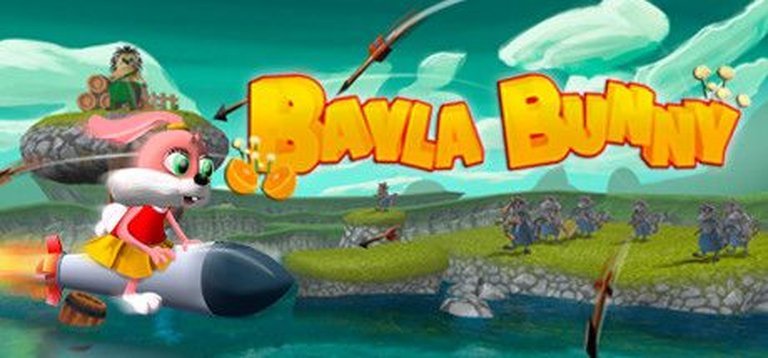
Bayla Bunny is a fast-paced 2D platformer where players guide the energetic Bayla through 27 challenging levels filled with obstacles, enemies, and treasures. After discovering a book of magical maps, Bayla embarks on an adventure to collect coins, keys, and treasure chests while dodging hazards like raccoons, porcupines, and dynamite. The game blends platforming and runner mechanics, rewarding speed and precision with higher rankings.
Where to Buy Bayla Bunny
PC
Bayla Bunny Guides & Walkthroughs
Bayla Bunny Reviews & Reception
steambase.io (43/100): Bayla Bunny has earned a Player Score of 43 / 100.
Bayla Bunny: A Forgotten Gem or a Flawed Relic of the Platformer Renaissance?
Introduction: The Enigma of Bayla Bunny
In the vast, ever-expanding ocean of indie platformers, Bayla Bunny (2016) emerges as a curious artifact—a game that straddles the line between charming nostalgia and frustrating obscurity. Developed by Mexico-based EnsenaSoft, this 2D scrolling platformer-runner hybrid arrived during a golden age of indie games, where titles like Shovel Knight and Celeste redefined the genre. Yet, Bayla Bunny remains a footnote, a game that slipped through the cracks of mainstream recognition despite its ambitious blend of speedrunning mechanics and treasure-hunting adventure.
This review seeks to unearth the truth behind Bayla Bunny: Is it an underappreciated diamond in the rough, or a well-intentioned but flawed experiment? Through an exhaustive analysis of its development, gameplay, narrative, and legacy, we will determine whether this game deserves a second look—or if it’s better left buried in the annals of indie obscurity.
Development History & Context: The Birth of a Bunny’s Quest
The Studio Behind the Rabbit: EnsenaSoft’s Ambitions
EnsenaSoft, a Mexican developer and publisher, has a portfolio that leans heavily toward casual and family-friendly games. Titles like Pepe Porcupine and Barnyard Mahjong 3 suggest a studio comfortable with accessible, lightweight experiences. Bayla Bunny, however, represents a rare foray into the more demanding realm of action-platformers.
The game was designed by Samuel DenHartog, a figure with credits on over 20 other titles, many of which are casual or puzzle-oriented. This background raises an immediate question: Was Bayla Bunny an attempt to break into a more competitive genre, or simply an experiment in blending EnsenaSoft’s usual charm with faster-paced gameplay?
Technological Constraints & the Unity Engine
Built using Unity, Bayla Bunny leverages the engine’s flexibility to create a 2D scrolling world with a behind-view perspective—a hybrid of classic side-scrolling and modern auto-running mechanics. The choice of Unity was pragmatic; it allowed a small team to develop a visually appealing game without the need for a proprietary engine. However, the game’s technical limitations are evident in its minimal system requirements (a mere 1.0 GHz processor and 1 GB of RAM), suggesting a game optimized for broad accessibility rather than graphical fidelity.
The Gaming Landscape of 2016: A Crowded Platformer Market
2016 was a pivotal year for indie platformers:
– Inside (Playdead) redefined atmospheric storytelling.
– Salt and Sanctuary merged Metroidvania progression with Souls-like combat.
– Owlboy showcased the potential of hand-drawn animation in platforming.
Against this backdrop, Bayla Bunny entered the fray as a budget-friendly, casual-friendly alternative—a game that prioritized pick-up-and-play accessibility over depth or innovation. Its $1.99 price point on Steam positioned it as an impulse buy, but in a market saturated with more polished competitors, it struggled to carve out a niche.
Narrative & Thematic Deep Dive: A Treasure Hunt Without a Story
The Premise: A Book, a Bunny, and a Quest for Loot
Bayla Bunny’s narrative is minimalist to the point of nonexistence. The official description tells us:
“Bayla Bunny has discovered a book full of maps to magical treasures and loot, and sets out on an exciting adventure to discover them all.”
This is the entirety of the game’s setup. There is no dialogue, no cutscenes, no character development—just a bunny running through levels, collecting coins, and avoiding obstacles. The lack of narrative depth is not inherently a flaw (after all, Super Mario Bros. thrived on simplicity), but in an era where even indie platformers like Hollow Knight and Ori and the Blind Forest wove rich lore into their worlds, Bayla Bunny feels starkly barebones.
Themes: Greed, Speed, and the Illusion of Reward
The game’s central theme revolves around acquisition—Bayla is driven by the promise of treasure, and the player is incentivized by high scores and rankings. Yet, the treasures themselves are meaningless; they serve no purpose beyond increasing a numerical score. This creates a hollow feedback loop:
– Collect coins → Unlock treasure chests → Get a higher rank → Repeat.
– There is no progression system, no upgrades, no new abilities—just the same mechanics repackaged across 27 levels.
This design choice reflects a casual gaming philosophy, where the joy comes from mastery of movement rather than narrative payoff. However, without any emotional or thematic anchor, the experience feels mechanical rather than magical.
The Silent Protagonist: Bayla as a Blank Slate
Bayla herself is a cute but forgettable protagonist. Unlike iconic platformer heroes (Mario’s plucky determination, Sonic’s rebellious speed, or Shovel Knight’s chivalric charm), Bayla has no personality. She is a vessel for the player’s actions, devoid of quirks, voice lines, or even expressive animations beyond basic jumps and ducks.
This absence of character makes it difficult for players to connect with her journey. In a genre where personality is often as important as gameplay, Bayla’s silence is a missed opportunity.
Gameplay Mechanics & Systems: A Frenetic, Flawed Platformer
Core Gameplay Loop: The Runner-Platformer Hybrid
Bayla Bunny bills itself as a fusion of platformer and runner mechanics, but in practice, it leans heavily toward the latter. The game is structured as a time-trial challenge:
– 27 levels, each with a three-star ranking system based on completion speed.
– Auto-scrolling sections force constant forward momentum.
– Precision platforming is required to avoid obstacles and enemies.
The controls are simple:
– Arrow keys/WASD for movement.
– Spacebar to jump.
– Down arrow to duck.
However, the physics and hitboxes are where the game stumbles.
The Good: Fluid Movement and Varied Obstacles
When Bayla Bunny works, it feels satisfying. The bunny’s movement is light and responsive, allowing for quick jumps and mid-air adjustments. The obstacle variety is impressive:
– Rolling barrels (a nod to Donkey Kong).
– Flying arrows (reminiscent of Castlevania).
– Dancing fireballs and cannonballs (classic platformer hazards).
– Enemies like raccoons, porcupines, and frog kings add personality to the chaos.
The vehicle sections (boats, rockets) introduce welcome variety, though they are clunky in execution.
The Bad: Frustrating Design Choices
Despite its charm, Bayla Bunny suffers from several critical flaws:
-
Unforgiving Hit Detection
- Collision boxes are inconsistent, leading to cheap deaths.
- Some obstacles (like flying arrows) are nearly impossible to dodge due to erratic movement patterns.
-
Lack of Checkpoints
- Levels are short, but the absence of mid-level checkpoints means one mistake sends you back to the start.
- This punishes players for learning the layout, a design choice that feels outdated in 2016.
-
Repetitive Level Design
- While the visual themes change (jungles, caves, castles), the core mechanics remain identical.
- There are no new abilities or power-ups—just the same jumps and ducks, repackaged.
-
Boat Levels: A Special Kind of Hell
- The boat sections (noted in Steam community discussions) are particularly frustrating.
- Tight spaces, erratic rock placement, and limited lives make these levels more tedious than fun.
Progression & Replayability: A Shallow Experience
- No unlockable content (no new characters, no skins, no bonus levels).
- No skill tree or upgrades—Bayla’s abilities never evolve.
- Leaderboards are the only real incentive for replaying, but with no online multiplayer or competitive modes, they feel meaningless.
The game’s lack of depth makes it hard to recommend beyond a single playthrough.
World-Building, Art & Sound: Aesthetic Charm with Technical Limits
Visual Design: Cute but Unmemorable
Bayla Bunny’s art style is bright, colorful, and cartoonish, fitting its family-friendly appeal. The character designs (Bayla, the raccoons, the frog kings) are whimsical, but they lack the polish of contemporaries like Rayman Legends or Yooka-Laylee.
- Backgrounds are static and repetitive, with little environmental storytelling.
- Animations are basic—Bayla’s run cycle is smooth, but enemy animations are stiff.
- The Unity engine’s limitations are visible in the lack of dynamic lighting or particle effects.
Sound Design: A Mixed Bag
- The music is upbeat and cheerful, fitting the game’s tone, but repetitive—expect to hear the same loops ad nauseam.
- Sound effects (jumps, coin collections, enemy hits) are functional but unremarkable.
- There is no voice acting, which, given the lack of narrative, is not a significant loss.
Atmosphere: A Hollow Treasure Hunt
The game fails to create a sense of adventure. Despite the premise of a treasure hunt, the levels feel disconnected—there is no overworld map, no sense of progression, no lore or environmental clues to make the world feel alive.
Compare this to Donkey Kong Country: Tropical Freeze, where each level feels like a distinct ecosystem, or Spyro Reignited Trilogy, where treasure hunting feels rewarding. In Bayla Bunny, the treasures are just numbers on a screen.
Reception & Legacy: The Game That Time Forgot
Critical Reception: A Lack of Attention
Bayla Bunny received almost no professional reviews. On Metacritic, it has no critic scores, and MobyGames lists it as having no approved description or reviews.
Steam user reviews paint a mixed picture:
– 43/100 Steambase Player Score (as of 2026).
– 60 positive reviews vs. 79 negative reviews—a Mixed rating.
– Common complaints:
– “Frustrating controls.”
– “Repetitive and shallow.”
– “Feels like a mobile game ported to PC.”
However, a small but vocal fanbase exists:
– Some players praise its “charming simplicity” and “addictive speedrunning potential.”
– A few Steam community posts call it “underrated” and “a hidden gem.”
Commercial Performance: A Budget Title with Limited Reach
- Price: $1.99 on Steam (frequently discounted).
- Player base: ~552,000 estimated owners (per PlayTracker), but only ~3,000 active players.
- Playtime stats: 3.9 hours average total playtime—suggesting most players finish it quickly and move on.
Legacy: Did It Influence Anything?
Bayla Bunny left no discernible mark on the platformer genre. It did not spawn sequels, inspire imitators, or introduce innovative mechanics. Its only legacy is as a curiosity—a game that tried to blend runner and platformer elements but failed to stand out.
Conclusion: A Flawed but Fascinating Relic
The Final Verdict: Worth a Play, But Not a Masterpiece
Bayla Bunny is not a bad game, but it is far from great. It suffers from:
✅ Charming visuals and a fun premise.
✅ Responsive controls and varied obstacles.
❌ Repetitive level design and lack of progression.
❌ Frustrating hit detection and cheap deaths.
❌ No narrative depth or emotional engagement.
Who should play it?
– Casual gamers looking for a short, cheap platformer.
– Speedrun enthusiasts who enjoy mastering flawed mechanics.
– Collectors of obscure indie games.
Who should avoid it?
– Fans of deep narrative or Metroidvania progression.
– Players who dislike repetitive or punishing gameplay.
– Those expecting a polished, modern platformer.
Its Place in Video Game History: A Footnote, Not a Landmark
Bayla Bunny is not a lost classic, but it is not without merit. It represents:
– A small studio’s attempt to compete in a crowded genre.
– A casual-friendly take on precision platforming.
– A reminder that charm alone is not enough to sustain a game.
In the grand tapestry of platformer history, Bayla Bunny is a minor thread—one that flickers with potential but ultimately fades into obscurity. It is worth experiencing for completists and curious gamers, but it will never be remembered alongside the greats.
Final Score: 5.5/10 – “Flawed but Fun”
A decent but forgettable platformer that could have been more with better level design, progression systems, and polish. Play it if you find it on sale, but don’t expect a revolutionary experience.
Bayla Bunny is a game that tries hard but stumbles often—a bunny that runs fast but never quite reaches the finish line.