
- Release Year: 2019
- Platforms: Linux, Macintosh, Windows
- Publisher: Chop Chop Games
- Developer: Chop Chop Games
- Genre: Action
- Perspective: Side view
- Game Mode: Single-player
- Gameplay: Platform, Puzzle elements
- Average Score: 100/100
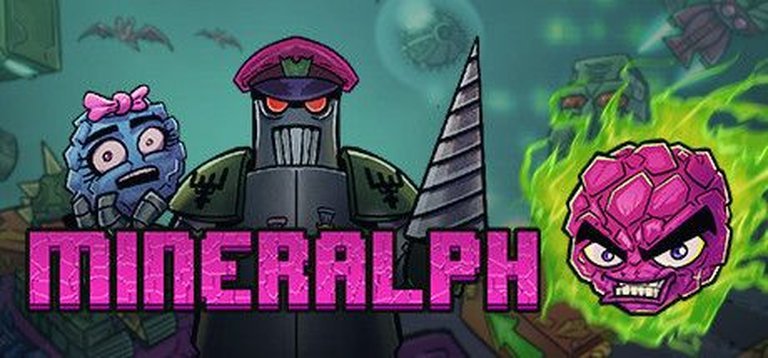
Description
MineRalph is a fast-paced, physics-based platformer that blends the high-speed action of Sonic the Hedgehog with the punishing difficulty of Super Meat Boy. Players navigate a rolling ball through 33 handcrafted levels filled with moving terrain, secret rooms, and retro pixel art, all while battling a robot uprising in a deep underground mine. With tight controls, co-op multiplayer, and a focus on momentum and precision, the game challenges players to master its twitch-based gameplay, offering leaderboards, unlockable skins, and near-impossible bonus levels for those seeking the ultimate test of skill.
Where to Buy MineRalph
PC
MineRalph Patches & Updates
MineRalph Guides & Walkthroughs
MineRalph Reviews & Reception
store.steampowered.com (100/100): A triumphant return to form for the series.
steambase.io (100/100): MineRalph has earned a Player Score of 100 / 100.
MineRalph: A Precision Platformer That Rolls Against the Grain
Introduction: The Unyielding Allure of a Rolling Challenge
In an era where video games often prioritize accessibility and forgiving mechanics, MineRalph emerges as a defiant throwback—a relentless, high-speed physics-platformer that demands precision, patience, and perseverance. Developed by the indie studio Chop Chop Games and released on August 5, 2019, MineRalph is a love letter to the golden age of punishing platformers like Super Meat Boy and Sonic the Hedgehog, yet it carves its own niche with a unique control scheme and a relentless focus on momentum-based gameplay. This review dissects MineRalph in exhaustive detail, exploring its development, narrative quirks, gameplay mechanics, artistic direction, and lasting impact on the indie gaming landscape.
Development History & Context: From Game Jam to Full Release
The Birth of a Hardcore Vision
MineRalph began as a modest game jam project in 2018, where Chop Chop Games experimented with a deceptively simple premise: controlling a rolling ball with a mouse. The demo, released on itch.io in September 2018, garnered immediate attention for its tight controls and brutal difficulty. The positive reception—despite its punishing nature—convinced the developers to expand the concept into a full-fledged title.
The studio’s vision was clear: to create a game that embraced difficulty not as a barrier, but as a core design philosophy. Inspired by the “hard but fair” ethos of classics like Super Meat Boy and Celeste, Chop Chop Games sought to craft an experience where every death felt like a lesson, not a frustration. The Unity engine provided the flexibility needed to refine the game’s physics and level design, while the retro pixel art aesthetic paid homage to the 16-bit era.
Technological Constraints and Design Choices
Developing a physics-based platformer with mouse controls presented unique challenges. The team had to ensure that the ball’s movement felt responsive and predictable, even at high speeds. The absence of randomness in the game’s mechanics—no procedural generation, no unpredictable enemy patterns—was a deliberate choice to maintain fairness. This design philosophy extended to the game’s lack of cutscenes, ensuring that players remained immersed in the action without unnecessary interruptions.
The game’s multiplatform release (Windows, macOS, Linux) also required careful optimization. Early builds faced technical hiccups, particularly on macOS and Linux, where crashes and resolution issues were reported. However, the developers remained responsive to community feedback, iteratively improving stability and performance.
The Gaming Landscape in 2019
MineRalph arrived during a renaissance of indie platformers, with titles like Celeste and Dead Cells redefining the genre’s boundaries. Yet, MineRalph distinguished itself through its unconventional control scheme—using a mouse to guide a rolling ball—and its unapologetic difficulty. While many modern platformers incorporated accessibility features, MineRalph doubled down on the “git gud” mentality, appealing to a niche but dedicated audience of hardcore gamers.
Narrative & Thematic Deep Dive: A Story You Can Ignore (But Shouldn’t)
Plot Overview: Robots, Mines, and Rock Puns
MineRalph’s narrative is minimalist yet charming. The game is set in a subterranean mine overrun by robots, where the protagonist—a sentient, rolling ball named Ralph—must navigate treacherous terrain to thwart the mechanical uprising. The story is delivered through brief, humorous text snippets and environmental storytelling, with a self-aware tone that acknowledges its own absurdity.
The developers’ playful approach to storytelling is evident in the game’s secret rooms, which contain “awesome rock puns” (e.g., “Don’t take life for granite”). These moments of levity contrast with the game’s punishing difficulty, offering players a breather between bouts of frustration.
Themes: Persistence, Mastery, and the Joy of Struggle
At its core, MineRalph is a meditation on perseverance. The game’s difficulty is not arbitrary; it is a deliberate test of the player’s ability to learn, adapt, and overcome. Each level is a puzzle of momentum and timing, where success is earned through repetition and refinement.
The thematic undercurrent of MineRalph aligns with the broader indie gaming movement’s celebration of challenge. Unlike AAA titles that often prioritize cinematic storytelling, MineRalph derives its narrative weight from the player’s personal journey—each death and subsequent victory becomes a story in itself.
Gameplay Mechanics & Systems: The Art of Rolling Precision
Core Gameplay Loop: Momentum as a Weapon
MineRalph’s gameplay revolves around a single, deceptively complex mechanic: controlling Ralph’s movement with the mouse. Players click and drag to propel the ball, with the direction and force of the click determining Ralph’s trajectory. The physics-based movement system means that every jump, bounce, and roll is governed by realistic inertia, requiring players to account for momentum in their strategies.
The game’s levels are designed as a series of obstacles that demand split-second timing and precise angles. Unlike traditional platformers where players can stop and assess their surroundings, MineRalph forces constant motion. Standing still is often the quickest path to failure.
Level Design: A Masterclass in Sadism
The 33 handcrafted levels in MineRalph are a testament to the developers’ understanding of pacing and challenge. Early levels introduce basic mechanics, such as navigating simple gaps and avoiding stationary hazards. As the game progresses, the difficulty ramps up exponentially, introducing moving platforms, crushing mechanisms, and labyrinthine paths that require flawless execution.
The game’s bonus levels—unlocked by finding secret rooms—are particularly brutal, designed for only the most skilled players. These levels eschew traditional platforming conventions, instead presenting players with near-impossible sequences that demand frame-perfect inputs.
Progression and Replayability
MineRalph includes a robust progression system, with leaderboards, time trials, and unlockable skins providing incentives for mastery. The built-in timer and split tracking encourage speedrunning, while the absence of randomness ensures that world records are a testament to skill rather than luck.
The game’s co-op multiplayer mode adds a layer of chaotic fun, allowing friends to tackle levels together. However, the lack of online multiplayer means that co-op is limited to local play, which may disappoint some players.
UI and Accessibility
The game’s UI is minimalist, with a focus on clarity and functionality. The HUD displays essential information—such as time, boost meter, and checkpoint status—without cluttering the screen. However, some players have noted that the lack of visual or auditory cues for certain mechanics (e.g., boost recharge) can lead to frustration.
Accessibility options are limited, reflecting the game’s hardcore design philosophy. There are no difficulty sliders or assist modes, reinforcing the developers’ commitment to uncompromising challenge.
World-Building, Art & Sound: A Retro Aesthetic with Modern Polish
Visual Design: Pixel Perfection
MineRalph’s art style is a loving homage to retro platformers, featuring vibrant pixel art and a color palette reminiscent of 16-bit classics. The underground mine setting is rendered with meticulous detail, from the jagged rock formations to the mechanical menaces that populate the levels.
The game’s animations are fluid, with Ralph’s rolling motion conveying a satisfying sense of weight and momentum. The visual feedback for successful jumps and near-misses is particularly well-executed, reinforcing the game’s emphasis on precision.
Sound Design: A Pulse-Pounding Soundtrack
The game’s 11 original music tracks are a standout feature, blending chiptune melodies with modern electronic beats. The soundtrack dynamically shifts to match the on-screen action, with faster tempos accompanying high-speed sequences and more subdued tracks during puzzle sections.
Sound effects are equally polished, with each bounce, crash, and boost providing clear auditory feedback. The absence of voice acting ensures that the game’s minimalist narrative remains unobtrusive, allowing the gameplay to take center stage.
Reception & Legacy: A Cult Classic in the Making
Critical and Commercial Reception
MineRalph received overwhelmingly positive reviews from players, with a 100% positive rating on Steam based on 34 user reviews. Critics praised the game’s tight controls, inventive level design, and unapologetic difficulty. However, the lack of mainstream coverage—evidenced by the absence of Metacritic reviews—suggests that MineRalph remained a niche title, appealing primarily to hardcore platformer enthusiasts.
Commercially, the game’s modest price point ($9.99) and multiplatform availability contributed to its accessibility. While exact sales figures are unavailable, the game’s steady stream of updates and community engagement indicate a dedicated fanbase.
Influence and Legacy
MineRalph’s influence can be seen in the growing subgenre of precision platformers that prioritize skill-based mechanics over narrative depth. Games like Ultra Jump and Jump King share MineRalph’s emphasis on mastery and repetition, suggesting that the appetite for punishing yet fair platformers remains strong.
The game’s development journey—from a game jam prototype to a full release—also serves as an inspiring case study for indie developers. Chop Chop Games’ willingness to iterate based on community feedback and their commitment to refining the core gameplay loop demonstrate the power of player-driven design.
Conclusion: A Rolling Triumph of Skill and Determination
MineRalph is not a game for the faint of heart. It is a brutal, unrelenting test of precision and perseverance, designed for players who revel in the challenge of mastery. Its unique control scheme, meticulously crafted levels, and retro aesthetic combine to create an experience that is as rewarding as it is punishing.
While its niche appeal and lack of mainstream recognition may relegate it to cult classic status, MineRalph stands as a testament to the enduring allure of hardcore platformers. For those willing to embrace its challenges, it offers a deeply satisfying journey—one where every death is a lesson, and every victory is a triumph.
Final Verdict: 9/10 – A Masterpiece of Precision Platforming
MineRalph is a must-play for fans of difficult games, offering a perfect blend of tight controls, inventive level design, and retro charm. Its uncompromising difficulty and lack of accessibility options may deter casual players, but for those who seek a true test of skill, it is an unforgettable experience.