
- Release Year: 2022
- Platforms: Linux, Windows
- Publisher: Amaxang Games
- Developer: Amaxang Games
- Genre: Action
- Perspective: Diagonal-down
- Game Mode: Single-player
- Gameplay: Survival horror
- Average Score: 78/100
Description
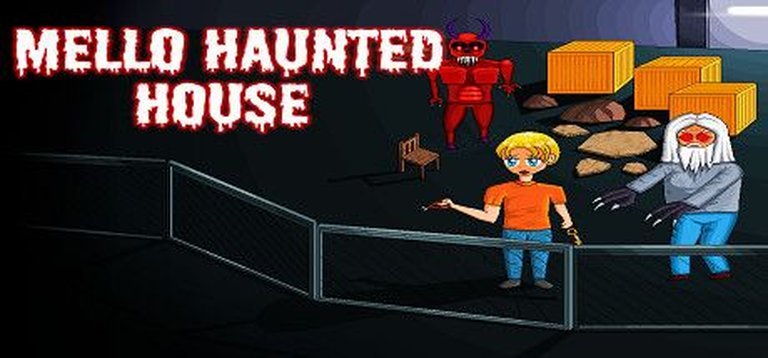
Mello Haunted House is a 2D survival horror game set in an abandoned Indiana home built in the 1960s by Daniel Mello, a reclusive and troubled man whose spirit is said to haunt the property after his suicide. Players take on the role of a paranormal investigator exploring the eerie house, uncovering its dark history, and confronting supernatural entities, including Mello’s vengeful ghost. The game features exploration of the haunted mansion, its dark basement, and a parallel world, with puzzles involving item collection like keys and bolt cutters, all while enduring the chilling atmosphere of the cursed location.
Where to Buy Mello Haunted House
PC
Mello Haunted House Guides & Walkthroughs
Mello Haunted House Reviews & Reception
steambase.io (78/100): Mello Haunted House has earned a Player Score of 78 / 100.
Mello Haunted House: A Hauntingly Ambitious Indie Experiment
Introduction: The Ghost of a Forgotten Man
In the vast, crowded landscape of indie horror games, Mello Haunted House (2022) emerges as a curious artifact—a short, atmospheric survival horror experience crafted by a lone developer, Anamik Majumdar, under the banner of Amaxang Games. At first glance, it appears to be another low-budget haunted house simulator, but beneath its pixelated surface lies a fascinating case study in indie game development, narrative minimalism, and the enduring appeal of urban legends. This review will dissect Mello Haunted House in exhaustive detail, examining its development, design, reception, and legacy within the broader context of survival horror and indie gaming.
Thesis: Mello Haunted House is a flawed yet intriguing experiment in micro-horror, a game that transcends its technical limitations through sheer atmospheric commitment and the raw passion of its solo creator. While it may not redefine the genre, it stands as a testament to the power of personal storytelling in video games.
Development History & Context: The Birth of a Ghost Story
The Solo Developer’s Vision
Anamik Majumdar, the sole architect of Mello Haunted House, is a figure emblematic of the modern indie game development scene—a one-person army handling programming, art, animation, and level design, with only the music outsourced. In a 2022 Steam FAQ, Majumdar described the game as a “weird experimental survival horror game,” a phrase that encapsulates its ethos. The project was built using GameMaker Studio, a tool often associated with accessible, 2D-focused game creation, which allowed Majumdar to iterate quickly and bring his vision to life without a large team or budget.
The game’s development was notably transparent, with Majumdar engaging directly with potential players on Steam forums and Reddit, even self-promoting on r/GameDeals in accordance with subreddit rules. This grassroots approach to marketing reflects the realities of indie development in the 2020s, where visibility is as much a challenge as creation itself.
Technological Constraints and Design Philosophy
Mello Haunted House is a product of its tools and constraints. The diagonal-down, 2D scrolling perspective harkens back to classic survival horror games like Haunted House (1982) for the Atari 2600, a clear influence given the game’s inclusion in multiple “Haunted House” bundles on Steam. The pixel art style, while simple, is deliberate, evoking the retro aesthetic that has become a staple of indie horror. The game’s modest 50 MB footprint and minimal system requirements (compatible with Windows XP and Ubuntu 14.04) ensure accessibility, a priority for a developer targeting a broad audience.
The decision to limit the game’s length to approximately 30 minutes (or up to an hour, depending on playstyle) is another deliberate choice. Majumdar’s focus was on delivering a tight, atmospheric experience rather than a sprawling epic. This brevity aligns with the rise of “micro-horror” games—short, intense experiences designed for a single sitting, often distributed as part of larger bundles (as seen with Mello Haunted House’s inclusion in the Indie Horror Games Bundle and Mini Horror Games Bundle on Steam).
The Gaming Landscape of 2022
Mello Haunted House arrived in a year dominated by high-profile horror releases like Signalis and The Mortuary Assistant, as well as the continued popularity of streaming-friendly indie horror games. The market was (and remains) saturated with haunted house simulators, but Majumdar’s game carved a niche by leaning into its urban legend-inspired narrative and minimalist design. The $0.99 launch price (later reduced to $0.55 during sales) positioned it as an impulse buy, a low-risk experiment for horror enthusiasts.
The game’s Linux support at launch also reflects a growing trend in indie development, where cross-platform compatibility is increasingly prioritized to maximize audience reach. This decision, combined with the game’s presence on itch.io and ModDB, underscores Majumdar’s commitment to accessibility and community engagement.
Narrative & Thematic Deep Dive: The Tragedy of Daniel Mello
Plot Summary: A House Built on Sorrow
Mello Haunted House is, at its core, a ghost story—one that draws from the well-worn tropes of urban legends and paranormal investigation. The game’s premise is deceptively simple:
- The House’s History: Built in the 1960s by Daniel Mello, a reclusive, depressed man whose bitterness and aggression alienated his neighbors. His suicide—leaping from the third floor—left the house abandoned, a vessel for his lingering rage.
- The Haunting: Over the years, passersby report laughing noises and sightings of a glowing red-eyed figure in the third-floor window. A news broadcast amplifies the legend, attracting paranormal enthusiasts.
- The Player’s Role: You assume the role of one such investigator, entering the house on the night of a new moon to uncover the truth.
The narrative is delivered through environmental storytelling—notes, audio logs, and the house’s decaying architecture—rather than cutscenes or extensive dialogue. This approach immerses the player in the mystery, allowing them to piece together Daniel Mello’s tragic life through exploration.
Themes: Isolation, Depression, and the Weight of the Past
Beneath its supernatural trappings, Mello Haunted House grapples with mental health and isolation, themes that resonate deeply in the post-pandemic era. Daniel Mello’s story is one of unaddressed depression, his anger a symptom of profound loneliness. The house, left to rot, becomes a physical manifestation of his psychological state—a prison of his own making.
The game also explores the ethics of paranormal investigation. The player, as an outsider, invades a space steeped in personal tragedy, treating it as a spectacle. This tension between curiosity and exploitation is a subtle but effective critique of true-crime and ghost-hunting culture, where real human suffering is often commodified for entertainment.
Characters and Dialogue: The Absence of Voice
Mello Haunted House is notable for its lack of traditional characters. Daniel Mello exists only as a backstory, his presence felt through environmental clues and the occasional supernatural encounter. The player character is a blank slate, a silent protagonist whose motivations are left ambiguous. This minimalist approach forces the player to project their own fears and interpretations onto the experience, enhancing the game’s psychological impact.
The dialogue is sparse, limited to a few text-based interactions and the occasional audio cue. This restraint is a strength—it allows the atmosphere to dominate, making the rare moments of communication (such as the laughing noises or whispers) all the more unsettling.
Gameplay Mechanics & Systems: Survival Horror in Miniature
Core Gameplay Loop: Exploration and Survival
Mello Haunted House distills survival horror to its essence:
- Exploration: The player navigates the house, uncovering its secrets through key items (keys, bolt cutters) and environmental clues.
- Stealth and Avoidance: The house is inhabited by Daniel Mello’s spirit and other entities, which must be evaded. Direct confrontation is often fatal.
- Puzzle-Solving: Progress requires solving simple puzzles, such as finding the correct key for a locked door or locating a hidden object.
The game’s top-down, 2D perspective limits the player’s field of view, creating tension as threats lurk just outside the screen. The direct control scheme is intuitive, with movement and interaction mapped to standard keyboard or controller inputs.
Combat and Progression: The Illusion of Power
Unlike traditional survival horror games, Mello Haunted House lacks combat mechanics. The player is defenseless, forced to rely on stealth and quick thinking. This design choice amplifies the horror—there is no way to fight back, only to flee or hide.
Progression is linear, with the player moving from the ground floor to the basement and eventually the third floor, where Daniel Mello’s spirit resides. The parallel world mentioned in the game’s description is a brief but effective sequence, warping the house’s layout and introducing surreal, dreamlike imagery.
UI and Inventory: Minimalism as a Virtue
The user interface is stripped down to the essentials:
- Inventory: A simple grid displaying collected items.
- Health/Stamina: Represented by a basic meter, though the game’s short length means these mechanics are underutilized.
- Map: Absent, forcing the player to memorize the house’s layout.
This minimalism reinforces the game’s immersive simulation approach—there are no hand-holding tutorials or excessive HUD elements to break the tension.
Innovations and Flaws
Innovations:
– Atmospheric Sound Design: The game’s audio (discussed in detail later) is its strongest asset, creating a sense of dread through ambient noise and sudden cues.
– Brevity as a Feature: The 30-minute runtime ensures the experience doesn’t overstay its welcome, a rarity in a genre often padded with filler.
Flaws:
– Repetitive Gameplay: The lack of mechanical depth means the core loop grows stale quickly.
– Limited Replayability: Once the house’s secrets are uncovered, there’s little incentive to return.
– Technical Roughness: Occasional bugs and clipping issues (noted in Steam discussions) betray the game’s indie origins.
World-Building, Art & Sound: Crafting a Haunted Atmosphere
Setting and Atmosphere: The House as a Character
The Mello Haunted House is the game’s sole setting, but it is rendered with remarkable attention to detail. The pixel art evokes a retro horror aesthetic, with flickering lights, peeling wallpaper, and eerie shadows. The diagonal-down perspective enhances the claustrophobia, making the house feel like a labyrinth despite its modest size.
Key areas include:
– The Ground Floor: A decaying foyer and living space, littered with clues about Daniel Mello’s life.
– The Basement: A dark, oppressive space where the game’s most unsettling encounters occur.
– The Third Floor: The site of Daniel’s suicide, now a nexus of supernatural activity.
The house’s design is functional but effective, with each room telling a part of the story. The parallel world sequence is a standout, warping the environment into a nightmarish version of itself, complete with distorted visuals and disorienting layout changes.
Art Direction: Retro Horror Meets Modern Indie
The game’s pixel art is simple but evocative, drawing inspiration from 16-bit survival horror while incorporating modern indie sensibilities. The color palette is muted, dominated by grays, browns, and sickly greens, with red accents (such as Daniel’s glowing eyes) used sparingly for maximum impact.
The character sprites are minimalist, with the player represented as a small, vulnerable figure dwarfed by the house’s oppressive architecture. The ghostly entities are designed to be uncanny rather than grotesque, their pixelated forms flickering in and out of view.
Sound Design: The Language of Fear
Where Mello Haunted House truly excels is in its sound design. The game’s audio is a masterclass in atmospheric horror, using ambient noise, sudden cues, and silence to create tension.
- Ambient Sounds: The house creaks, groans, and whispers, with distant laughter and footsteps hinting at unseen presences.
- Jump Scares: Used sparingly but effectively, often triggered by environmental interactions (e.g., opening a door to reveal a ghostly figure).
- Music: The outsourced soundtrack is minimal, relying on droning, dissonant tones to underscore the horror. It swells during key moments but otherwise remains subdued, allowing the ambient sounds to dominate.
The lack of voice acting is a deliberate choice—it forces the player to fill in the gaps, making the horror more personal and unsettling.
Reception & Legacy: A Ghost in the Machine
Critical and Commercial Reception
Mello Haunted House launched to little fanfare, a common fate for indie games in a saturated market. On Steam, it holds a “Mostly Positive” rating based on 9 user reviews (as of 2026), with a Steambase Player Score of 78/100. Critics, however, largely ignored it—Metacritic lists no critic reviews, and major gaming outlets did not cover its release.
Commercially, the game has sold 24 copies on Steam (per Raijin.gg), with 240 wishlists indicating modest interest. Its $0.55 price point (during sales) has likely contributed to its niche appeal, positioning it as an impulse buy for horror enthusiasts rather than a mainstream hit.
Community and Bundles: The Power of Curation
Despite its limited sales, Mello Haunted House has found a second life through Steam bundles, where it is often packaged with similar indie horror titles. Its inclusion in bundles like:
– Indie Horror Games Bundle – All Games
– Mini Horror Games Bundle
– Anamiks Indie Games #11
…has introduced it to a wider audience, albeit as part of a larger collection rather than a standalone experience.
The game’s Linux support and presence on itch.io have also earned it a small but dedicated following among open-source gaming enthusiasts, a testament to Majumdar’s commitment to accessibility.
Influence and Industry Impact
Mello Haunted House is unlikely to be remembered as a genre-defining title, but its existence is significant for several reasons:
- Proof of Concept for Solo Developers: It demonstrates that a single developer can create a cohesive, atmospheric horror experience with limited resources.
- The Rise of Micro-Horror: The game’s short runtime and low price point reflect a growing trend in indie horror, where bite-sized experiences are increasingly viable.
- Urban Legend Storytelling: Its narrative structure—rooted in a localized ghost story—has inspired similar projects, proving that personal, place-based horror can resonate with players.
While it may not have spawned direct imitators, Mello Haunted House stands as a cultural artifact of the 2020s indie horror scene—a game that punches above its weight through sheer atmospheric commitment.
Conclusion: A Haunting Worth Remembering
Mello Haunted House is not a perfect game. Its repetitive gameplay, technical rough edges, and lack of replayability prevent it from standing alongside indie horror greats like Signalis or Faith. Yet, it is a remarkable achievement for a solo developer—a game that transcends its limitations through atmosphere, storytelling, and raw passion.
Final Verdict: Mello Haunted House is a flawed gem, a short but memorable experiment in micro-horror that deserves recognition for its ambition and atmosphere. It may not redefine the genre, but it proves that even the smallest games can leave a lasting impression.
Score: 7/10 – A hauntingly effective indie experiment, best experienced in a single, tense sitting.
Legacy: While it may fade into obscurity, Mello Haunted House will remain a testament to the power of solo development and the enduring appeal of urban legend horror. For those willing to explore its creaking halls, it offers a brief but chilling glimpse into the mind of a tormented soul—and the house that refuses to let him go.
Post-Script: As of 2026, Anamik Majumdar has hinted at a potential sequel, though nothing has been confirmed. If Mello Haunted House taught us anything, it’s that even the smallest ghosts can linger—and sometimes, they demand to be heard.