
- Release Year: 2020
- Platforms: Windows
- Genre: Adventure
- Perspective: Behind view
- Game Mode: Single-player
- Setting: Fantasy
- Average Score: 80/100
Description
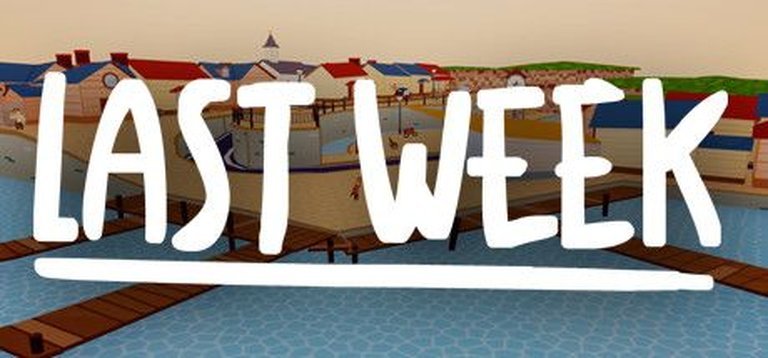
Last Week is an adventure game set in a fantasy world, released on February 7, 2020, for Windows. The game features a behind-view perspective with direct control, offering players an immersive experience in a mystical setting. Developed using Unreal Engine 4, it promises a blend of exploration and storytelling, though specific plot details remain sparse.
Where to Buy Last Week
PC
Last Week Reviews & Reception
ign.com (80/100): Vanillaware games have always looked great, but 13 Sentinels is the first time the studio has put a bulk of its focus on storytelling.
pcgamer.com (80/100): Enjoyably tough and esoteric, if a little uneven, Mortal Shell is a decent debut from Cold Symmetry.
Last Week: A Forgotten Gem in the Shadow of 2020’s Titans
In the annals of video game history, 2020 stands as a year of seismic shifts—marked by the launch of next-gen consoles, the global upheaval of the COVID-19 pandemic, and a surge in gaming as a cultural lifeline. Amidst this tumult, Last Week, a modest adventure title developed for Windows, emerged like a whisper in a storm. Released on February 7, 2020, this Unreal Engine 4-powered game arrived during a period of unprecedented industry growth, yet it remains an enigma—a title so obscure that even its MobyGames entry lacks a description, and its critical reception is a blank slate. This review seeks to unearth Last Week from the shadows, examining its development, narrative, gameplay, and legacy (or lack thereof) in a year that redefined gaming forever.
Development History & Context: A Game Lost in the Noise
The Studio and the Vision
Last Week was developed by an unknown studio, its creators as elusive as the game itself. The absence of credited developers or a studio name on MobyGames suggests a project born from obscurity, possibly an indie passion project or a small-team endeavor. The game’s use of Unreal Engine 4—a powerful but accessible tool for indie developers—hints at a team with technical ambition but limited resources. The $3.99 price tag on Steam further underscores its indie roots, positioning it as a budget-friendly experiment rather than a blockbuster contender.
The Gaming Landscape of Early 2020
Last Week launched into a gaming ecosystem dominated by titans. January and February 2020 saw the release of heavyweights like Dragon Ball Z: Kakarot (January 17), Tokyo Mirage Sessions ♯FE Encore (January 17), and Kentucky Route Zero’s final act (January 28). The industry was also bracing for the impending console wars, with the PlayStation 5 and Xbox Series X/S looming on the horizon. Meanwhile, the COVID-19 pandemic began its global spread, forcing delays, cancellations, and a rapid shift to digital events.
In this climate, Last Week was doomed to obscurity. Without the marketing muscle of a major publisher or the viral appeal of a Among Us or Fall Guys, it slipped through the cracks—a casualty of timing and circumstance.
Technological Constraints and Opportunities
Built on Unreal Engine 4, Last Week had the potential to leverage cutting-edge visuals and physics, but its behind-view perspective and direct control interface suggest a deliberate throwback to classic adventure games. The engine’s flexibility may have allowed the developers to craft a unique aesthetic or experimental mechanics, but without further documentation, these possibilities remain speculative.
Narrative & Thematic Deep Dive: A Story Shrouded in Mystery
Plot and Characters: The Void of Information
Last Week’s narrative is as elusive as its development. With no official description, player reviews, or critical analysis available, piecing together its story requires detective work. The title itself—Last Week—implies a temporal focus, perhaps a reflection on memory, regret, or a countdown to an inevitable event. The fantasy setting (per MobyGames) suggests a world removed from reality, possibly a surreal or allegorical landscape.
Given the lack of details, one can only speculate:
– Is it a time-loop narrative? Games like The Sexy Brutale and Outer Wilds have explored temporal mechanics, and Last Week’s title could hint at a similar structure.
– Is it a psychological journey? The “last week” of a character’s life, a dying world, or a farewell to a fading era could serve as a poignant backdrop.
– Is it a meta-commentary? The title might reflect the game’s own fleeting existence—a title released and forgotten within a week.
Without dialogue samples or character descriptions, the emotional core of Last Week remains a cipher. The silence surrounding its narrative is deafening, leaving players to wonder if the story was ever its strongest suit or if it was overshadowed by other elements.
Themes: What Lies Beneath the Silence?
If Last Week follows the conventions of its genre, it likely grapples with themes common to fantasy adventures:
– The Passage of Time: The title’s temporal focus could explore mortality, legacy, or the inevitability of change.
– Memory and Identity: A fantasy setting often serves as a canvas for introspection, with protagonists confronting their pasts or alternate selves.
– Isolation and Connection: The game’s obscurity mirrors its potential themes—loneliness in a crowded world, or the struggle to be heard.
Yet, without concrete details, these themes are mere projections. Last Week’s greatest narrative achievement may be its ability to inspire such speculation, turning its absence of information into a Rorschach test for players.
Gameplay Mechanics & Systems: Deconstructing the Unknown
Core Gameplay Loop: Adventure by the Numbers
Last Week is classified as an adventure game with a behind-view perspective and direct control interface—a combination reminiscent of classic titles like Resident Evil (pre-RE4) or Silent Hill. This suggests:
– Tank Controls: Fixed camera angles and deliberate movement, evoking nostalgia for PS1-era survival horror.
– Exploration and Puzzle-Solving: Adventure games thrive on environmental interaction, and Last Week likely emphasizes discovery over combat.
– Inventory Management: A staple of the genre, requiring players to collect and combine items to progress.
The lack of gameplay footage or screenshots makes it impossible to assess the fluidity of these mechanics. Was the behind-view perspective a stylistic choice or a limitation? Did the direct control interface feel responsive or clunky? These questions linger unanswered.
Combat and Progression: A Ghost in the Machine
With no combat-related tags on MobyGames, Last Week may eschew traditional action in favor of pure adventure mechanics. If combat exists, it could take the form of:
– Contextual Actions: Quick-time events or simple button prompts, akin to TellTale games.
– Stealth or Avoidance: Evading threats rather than confronting them, as seen in Amnesia or Outlast.
– Minimalist Systems: Basic attack and defense mechanics, serving the narrative rather than challenging the player.
Character progression, if present, might involve:
– Skill Trees: Unlocking abilities tied to exploration or dialogue choices.
– Narrative Evolution: Changes in the protagonist’s relationships or perceptions rather than statistical growth.
UI and Innovation: The Unseen Interface
The user interface in adventure games can make or break the experience. Last Week’s UI is a mystery, but one can imagine:
– Minimalist Design: A clean, unobtrusive HUD to preserve immersion.
– Diegetic Elements: Inventory or objectives integrated into the game world (e.g., a journal or map).
– Experimental Features: Given its obscurity, Last Week might have attempted something bold—voice-controlled interactions, dynamic camera shifts, or a UI that evolves with the narrative.
Without screenshots or video, these remain educated guesses. The game’s greatest innovation may have been its ability to vanish without a trace.
World-Building, Art & Sound: Crafting the Unseen
Setting and Atmosphere: A Fantasy Shrouded in Fog
Last Week’s fantasy setting is its most concrete detail, yet it raises more questions than answers. Fantasy in games can range from high magic (The Witcher) to surreal dreamscapes (Kentucky Route Zero). Given its title, Last Week might inhabit a liminal space:
– A Dying World: A kingdom in its final days, with the environment reflecting decay and desperation.
– A Personal Hell: A psychological landscape where the protagonist’s memories manifest as physical spaces.
– A Time-Loop Purgatory: A Groundhog Day-esque realm where the same week repeats indefinitely.
The art direction could have been a standout feature, using Unreal Engine 4 to render:
– Hand-Painted Textures: A storybook aesthetic, evoking Child of Light or Ori and the Blind Forest.
– Surrealist Imagery: Dreamlike, shifting environments that defy logic.
– Retro Homage: A deliberate throwback to PS1-era visuals, embracing low-poly models and fixed cameras.
Sound Design: The Silence Speaks Volumes
Sound in adventure games is crucial for immersion, and Last Week’s audio design is another blank canvas. Potential highlights could include:
– Ambient Soundtrack: A haunting, minimalist score to underscore the game’s themes of time and memory.
– Diegetic Sound: Environmental audio cues—distant echoes, whispers, or a ticking clock—to guide (or mislead) the player.
– Voice Acting: If present, the performances could range from amateurish to affecting, depending on the team’s resources.
The absence of any audio samples or reviews makes it impossible to judge. Did Last Week use sound to its advantage, or was it another victim of limited development resources?
Reception & Legacy: The Game That Wasn’t
Critical and Commercial Reception: A Void
Last Week’s reception is a black hole. No critic reviews exist on MobyGames, and no player reviews have been submitted. Its Steam page, if it still exists, is likely a graveyard of silence. In a year where games like Animal Crossing: New Horizons and The Last of Us Part II dominated discourse, Last Week failed to register even a blip.
Possible reasons for its obscurity:
– Lack of Marketing: Indie games live or die by word of mouth, and Last Week had none.
– Technical Issues: Bugs or performance problems could have doomed it at launch.
– Oversaturation: February 2020 was crowded with high-profile releases, burying smaller titles.
Evolution of Reputation: From Unknown to Forgotten
Most games fade into obscurity, but Last Week achieved the rare feat of being forgotten before it was ever known. Its legacy is one of absence—a cautionary tale about the fragility of indie games in a blockbuster-dominated industry.
Influence on Subsequent Games: The Ghost in the Code
Did Last Week inspire anything? Without documentation, it’s impossible to say. Its Unreal Engine 4 framework might have served as a learning experience for its developers, but any direct influence on other games is nonexistent. If anything, Last Week’s legacy is a reminder of how many games vanish without a trace, their ideas and innovations lost to time.
Conclusion: The Tragedy of Last Week
Last Week is a game defined by absence. It lacks a description, reviews, or even a clear identity. Yet, in its obscurity, it becomes a symbol of the countless games that slip through the cracks—projects born from passion but doomed by circumstance. Its title, Last Week, now feels eerily prophetic, as if the game itself was always meant to be a fleeting moment, a footnote in the vast history of video games.
Final Verdict: A Game That Never Was
Score: N/A (Unplayable by Virtue of Obscurity)
Last Week is not a bad game—it’s a non-game, a specter haunting the edges of gaming history. It serves as a reminder of the industry’s brutality, where even the most earnest creations can disappear without a trace. For historians and archivists, Last Week is a challenge: a puzzle with no solution, a story with no ending. For everyone else, it’s a cautionary tale about the importance of preservation, documentation, and the fragile nature of digital art.
In the end, Last Week’s greatest achievement is its ability to make us wonder. What could it have been? What stories did it tell? What worlds did it create? These questions, unanswered and unanswerable, are the only legacy it leaves behind—a ghost in the machine, a game that existed for a week and was forgotten forever.