
- Release Year: 2006
- Platforms: Windows
- Publisher: Eidos Interactive Limited, Noviy Disk, SimBin Studios AB
- Developer: SimBin Development Team AB
- Genre: Driving, Racing, Simulation
- Perspective: 1st-person
- Game Mode: LAN, Online PVP, Single-player
- Gameplay: Car damage, Championship Mode, Realistic Physics, Time Attack
- Setting: City, Macau
- Average Score: 79/100
Description
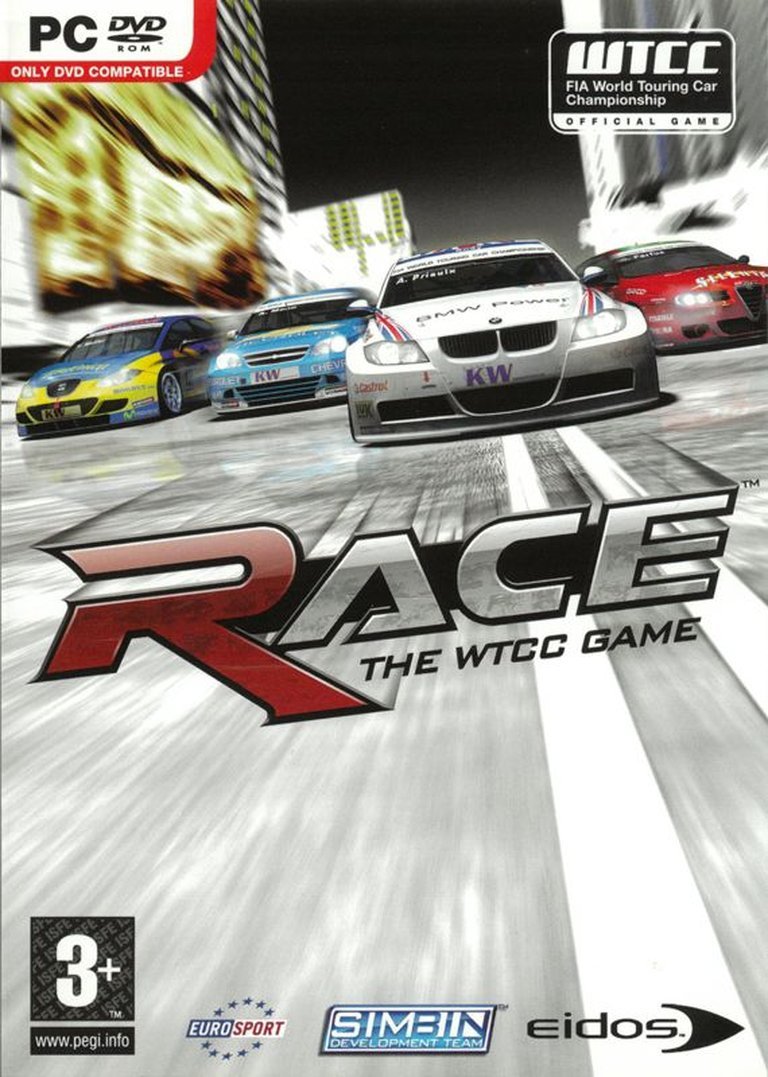
Race: The Official WTCC Game is a realistic racing simulation based on the World Touring Car Championship, featuring modified saloon cars from manufacturers like BMW, SEAT, Alfa Romeo, and Chevrolet. The game emphasizes authentic driving mechanics, including cadence braking and realistic damage systems, with races held on global circuits, primarily in Europe. Players can compete in full seasons, individual races, or Time Attack mode, with a points system mirroring Formula One. The game also includes dynamic weather effects, functional car features like windscreen wipers, and a presentation style inspired by Eurosport’s coverage.
Gameplay Videos
Race: The Official WTCC Game Cracks & Fixes
Race: The Official WTCC Game Patches & Updates
Race: The Official WTCC Game Guides & Walkthroughs
Race: The Official WTCC Game Reviews & Reception
en.wikipedia.org (88/100): Simbin follows up its GTR 2 success with another great PC racing sim, this time set in the World Touring Car series.
metacritic.com (81/100): There’s plenty of fun to be had with Race, and if you’re partial to serious racing games, like the idea of experiencing an authentic re-creation of touring-car racing, and own at the very least a steering wheel peripheral, you won’t want to miss out.
touringcartimes.com : The car is so easy controllable but still challenging and fun.
gamepressure.com (74/100): RACE: The WTCC Game is an extremely realistic simulation, the production of which is the responsibility of the well-known and respected Swedish development studio SimBin Development Team.
Race: The Official WTCC Game: A Deep Dive into SimBin’s Touring Car Masterpiece
Introduction
In the mid-2000s, the racing simulation genre was dominated by titles like Gran Turismo and Forza Motorsport, but a Swedish studio named SimBin was quietly carving out a niche for itself with hyper-realistic, physics-driven racing experiences. Race: The Official WTCC Game, released in November 2006, was their ambitious foray into the World Touring Car Championship (WTCC), a series that had long been overshadowed by the glitz of Formula 1. This game wasn’t just another racing sim—it was a meticulously crafted love letter to touring car racing, blending authenticity with accessibility in a way few games had attempted before.
At its core, Race was an attempt to bring the raw, unfiltered intensity of WTCC to the PC gaming audience. Unlike the high-downforce, open-wheel machines of F1, touring cars were modified production vehicles—BMWs, SEATs, Alfas, and Chevrolets—that raced wheel-to-wheel on tight, technical circuits. SimBin’s challenge was to capture the unique handling characteristics of these front-wheel-drive beasts while making the experience engaging for both hardcore sim racers and casual players. The result was a game that, despite its flaws, remains a cult classic in the sim racing community.
This review will explore Race: The Official WTCC Game in exhaustive detail, examining its development, gameplay mechanics, technical achievements, and lasting legacy. We’ll dissect what made it a standout title in 2006, where it fell short, and why it still holds a special place in the hearts of touring car enthusiasts.
Development History & Context
The Rise of SimBin Studios
SimBin Studios, founded in 2003, was a relatively young developer when Race was released, but it had already made a name for itself with GTR: FIA GT Racing Game (2005) and GT Legends (2005). These titles were praised for their uncompromising realism, particularly in their physics engines, which simulated the nuances of GT racing with remarkable accuracy. GTR 2, released just a week before Race, further cemented SimBin’s reputation as a studio that prioritized authenticity over arcade-style accessibility.
The decision to tackle the WTCC was a natural progression for SimBin. The studio had a deep connection to real-world motorsport—co-founder Henrik Roos was a former GT racer—and this insider knowledge informed their development philosophy. For Race, SimBin collaborated closely with the WTCC teams, even inviting drivers like Rickard Rydell to test early builds and provide feedback on handling, track accuracy, and car behavior. This hands-on approach ensured that Race wasn’t just a licensed product but a true simulation of the sport.
Technological Constraints and Innovations
Race was built on SimBin’s proprietary ISImotor engine, which had been refined through GTR and GT Legends. The engine was designed to handle the complex physics of racing cars, including tire deformation, suspension dynamics, and aerodynamic effects. For Race, the team had to adapt the engine to accommodate the front-wheel-drive layout of WTCC cars, which behaved very differently from the rear-wheel-drive GT cars in their previous games.
One of the most notable technical achievements in Race was its dynamic weather system. Unlike many racing games of the era, which featured static weather conditions, Race allowed weather to change mid-race, forcing players to adapt their driving style on the fly. Rain could start pouring halfway through a race, turning a dry track into a slippery nightmare. The game also introduced functional windshield wipers—a small but immersive detail that added to the realism.
Another innovation was the damage model. Cars in Race could sustain realistic damage from collisions, with body panels deforming, wheels detaching, and debris scattering across the track. Running over this debris could further damage your car, adding a layer of strategy to races. The game also simulated environmental effects like dirt, rain, and even insects splattering on the windshield, all of which could obstruct the player’s view.
The Gaming Landscape in 2006
When Race launched in late 2006, the racing genre was in a state of flux. Console racing games like Gran Turismo 4 and Forza Motorsport 2 were dominating the market with their polished presentations and accessible gameplay. On PC, however, the sim racing scene was more fragmented. Live for Speed and rFactor were popular among hardcore sim racers, but there was a gap in the market for a game that balanced realism with mainstream appeal.
Race arrived at a time when the WTCC itself was gaining traction. The championship had been revived in 2005 after a 15-year hiatus, and its mix of manufacturer-backed teams and privateer entries was creating exciting, unpredictable racing. SimBin saw an opportunity to capitalize on this growing interest, and Race was their attempt to bring the WTCC to a global audience.
The game’s release was somewhat overshadowed by GTR 2, which launched just a week earlier. This proximity led some critics to dismiss Race as a rushed cash-in, but in reality, the two games were developed in parallel, with Race benefiting from many of the same technological advancements as GTR 2.
Narrative & Thematic Deep Dive
The Story of the WTCC
Race: The Official WTCC Game doesn’t have a traditional narrative in the sense of a scripted campaign or character-driven storyline. Instead, its “narrative” is the story of the 2006 WTCC season itself. The game faithfully recreates the championship’s structure, with all the real-world drivers, teams, and tracks from that year. Players can step into the shoes of legends like Andy Priaulx (BMW), Gabriele Tarquini (Alfa Romeo), and Yvan Muller (SEAT), reliving the battles that defined the season.
The WTCC’s two-race format is a central theme of the game. Unlike other racing series where a single race determines the winner, WTCC events consist of two races per weekend. The first race sets the grid for the second, with the top eight finishers reversed—meaning the eighth-place finisher from Race 1 starts on pole for Race 2. This format encourages aggressive driving and strategic thinking, as players must balance the risk of pushing hard in Race 1 with the reward of a better starting position in Race 2.
Themes of Realism and Accessibility
At its heart, Race is a game about the tension between realism and accessibility. SimBin wanted to create a simulation that would satisfy hardcore racing fans while also being approachable for newcomers. This duality is reflected in the game’s difficulty settings, which allow players to toggle driving aids like traction control, ABS, and stability control. The “Pro” difficulty setting strips away all assists, forcing players to rely on raw skill and precision.
The game’s handling model is a testament to this philosophy. WTCC cars are front-wheel-drive, which means they handle very differently from the rear-wheel-drive GT cars in GTR 2. They understeer more, require careful throttle control, and demand a smoother driving style. SimBin’s physics engine captures these nuances, making the cars feel heavy and planted but also prone to dramatic oversteer if pushed too hard.
Another key theme is the idea of “feeling” the car. Real-world WTCC drivers often talk about the importance of sensing the car’s weight transfer, tire grip, and suspension movement. Race attempts to replicate this through its force feedback system, which provides subtle cues about the car’s behavior. For example, the steering wheel vibrates differently when the tires are at the limit of grip, giving players a tactile sense of when they’re about to lose control.
The Role of Presentation
Race’s presentation is heavily influenced by its real-world counterpart. The game’s UI and broadcast-style replays are designed to mimic the coverage of WTCC races on Eurosport, complete with on-screen graphics, driver standings, and race commentary. This attention to detail extends to the game’s menus, which feature a clean, professional aesthetic that reflects the WTCC’s corporate image.
The game also includes a “Time Attack” mode, where players can compete against the real-world lap times set by WTCC drivers. This feature blurs the line between simulation and reality, allowing players to measure their skills against the pros. It’s a subtle but effective way of reinforcing the game’s authenticity.
Gameplay Mechanics & Systems
Core Gameplay Loop
Race’s core gameplay revolves around mastering the unique handling characteristics of WTCC cars. The game offers several modes:
- Quick Race: A single race on any track with customizable settings.
- Race Weekend: A full WTCC event, including practice, qualifying, and two races.
- Championship: A full season of WTCC racing, with points awarded based on real-world rules.
- Time Attack: A mode where players compete against real-world lap times.
- Multiplayer: Online races for up to 24 players.
The championship mode is the most immersive, as it replicates the structure of the 2006 WTCC season. Players must manage their car’s setup, tire wear, and fuel strategy over the course of a race weekend. The two-race format adds a layer of strategy, as a strong performance in Race 1 can set up a dominant position in Race 2.
Handling and Physics
The handling model in Race is one of its most praised—and criticized—aspects. The game’s physics engine simulates the behavior of front-wheel-drive cars with remarkable accuracy. Key features include:
- Understeer and Oversteer: WTCC cars are prone to understeer (where the car doesn’t turn as much as the driver intends) due to their front-wheel-drive layout. However, aggressive throttle application can induce oversteer, where the rear of the car slides out.
- Tire Wear: Tires degrade over the course of a race, affecting grip and handling. Players must manage their tire usage, especially in longer races.
- Weight Transfer: The game simulates the shift in weight during acceleration, braking, and cornering, which affects the car’s balance.
- Cadence Braking: Unlike arcade racers, where players can slam on the brakes, Race requires players to use cadence braking—pumping the brakes to avoid locking up the wheels.
The physics engine is unforgiving, especially on the “Pro” difficulty setting. Players who are used to arcade-style handling will struggle with the car’s tendency to understeer and its sensitivity to throttle inputs. However, for those willing to learn, the handling model is deeply rewarding, offering a level of realism that few games of the era could match.
Damage and Environmental Effects
Race’s damage model is one of its most impressive features. Cars can sustain realistic damage from collisions, including:
- Body Panel Deformation: Bumps and scrapes cause the car’s body to deform, affecting aerodynamics and handling.
- Wheel Detachment: Hard impacts can knock wheels off, leaving the car undriveable.
- Debris: Loose parts from damaged cars can scatter across the track, creating hazards for other drivers.
The game also simulates environmental effects that can impact visibility and handling:
- Dirt and Rain: Mud and water can spray onto the windshield, obscuring the player’s view. The game’s functional windshield wipers help clear the screen, but heavy rain can still make driving challenging.
- Insects: Bugs can splatter on the windshield, adding another layer of realism (and annoyance).
- Stone Chips: Small rocks kicked up by other cars can crack the windshield, further reducing visibility.
These effects are more than just cosmetic—they actively influence the gameplay. A cracked windshield can make it difficult to see the track, while debris on the road can cause unexpected spins.
AI and Multiplayer
The AI in Race is generally well-regarded, though not without its quirks. The AI drivers are aggressive but fair, often putting up a strong fight in races. However, they can be overly cautious in some situations, particularly when avoiding collisions. This can lead to moments where the AI seems to “give up” a position rather than risk contact.
Multiplayer is where Race truly shines. The game supports up to 24 players online, with dedicated servers and a ranking system. The online races are intense, with the close competition and realistic handling making for thrilling wheel-to-wheel battles. However, the multiplayer experience was marred by bugs at launch, including issues with grid positioning and race starts.
Customization and Car Setup
Race offers a deep car setup system, allowing players to tweak various aspects of their vehicle, including:
- Suspension: Adjusting ride height, spring rates, and damping.
- Aerodynamics: Modifying wing angles and downforce levels.
- Tires: Choosing between different compounds and pressures.
- Gearing: Fine-tuning gear ratios for different tracks.
These options give players a high degree of control over their car’s performance, but they can be overwhelming for newcomers. The game includes preset setups for each track, which is helpful for players who don’t want to dive into the complexities of car tuning.
World-Building, Art & Sound
Track Design and Atmosphere
Race features 10 tracks from the 2006 WTCC season, including iconic circuits like Macau, Monza, and Brands Hatch. Each track is meticulously recreated, with accurate elevations, curbs, and trackside details. The game’s track design is one of its strongest points, as the circuits are not only visually impressive but also challenging to drive.
The atmosphere in Race is heavily influenced by its real-world counterpart. The game’s presentation mimics the broadcast style of WTCC races, with Eurosport-style graphics and commentary. The tracks are populated with realistic crowds, sponsor banners, and pit crews, adding to the immersion.
Visual Fidelity
For a 2006 game, Race’s graphics are impressive. The car models are highly detailed, with accurate liveries and interior cockpits. The tracks are equally well-rendered, with realistic textures and lighting effects. However, the game’s visuals are not without their flaws. The environmental details, such as crowds and trackside objects, are somewhat basic, and the game’s draw distance is limited, leading to pop-in textures in some areas.
The game’s cockpit view is particularly well-done, offering a realistic perspective from inside the car. The interior details, such as the dashboard and steering wheel, are accurately modeled, and the view is unobstructed, allowing players to focus on the road ahead.
Sound Design
The sound design in Race is outstanding, particularly the engine noises. Each car has a distinct sound profile, with the BMWs, SEATs, and Alfas all sounding different. The game’s audio team recorded the real-world cars to ensure accuracy, and the result is a symphony of mechanical roar that immerses players in the racing experience.
The game also features realistic tire screeches, gear shifts, and ambient track noises. The sound of rain hitting the windshield and the wipers clearing it away is a small but effective detail that adds to the immersion.
Reception & Legacy
Critical Reception
Race: The Official WTCC Game received generally positive reviews from critics, with an average score of 79% on MobyGames and an 81 Metacritic score. Critics praised the game’s realistic handling, detailed damage model, and faithful recreation of the WTCC experience. However, the game was also criticized for its limited car selection, lack of a career mode, and occasional bugs.
GameSpot awarded the game an 8.8/10, calling it “a benchmark PC racing title” and praising its authenticity. Other outlets, such as PC Gamer UK and Eurogamer, were more mixed, noting that while the game was technically impressive, it lacked the polish and depth of SimBin’s previous titles.
Commercial Performance
Race was not a commercial blockbuster, but it found a dedicated audience among sim racing enthusiasts. The game’s niche appeal—focusing on a relatively obscure racing series—limited its mainstream success, but it became a cult favorite among fans of touring car racing.
Legacy and Influence
Race’s legacy is somewhat overshadowed by its successor, Race 07, which improved on many of the original’s flaws. However, Race remains an important title in the history of sim racing. It was one of the first games to accurately simulate front-wheel-drive racing cars, and its dynamic weather system and damage model set new standards for realism.
The game also paved the way for future WTCC simulations, including Race 07 and RaceRoom Racing Experience. Its emphasis on authenticity over accessibility influenced later sim racing titles, such as Assetto Corsa and iRacing.
Conclusion
Race: The Official WTCC Game is a flawed but fascinating entry in the sim racing genre. It captures the essence of touring car racing with remarkable accuracy, offering a level of realism that few games of its era could match. While it lacks the polish and depth of SimBin’s later titles, its faithful recreation of the 2006 WTCC season, combined with its innovative physics and damage systems, makes it a standout title in the history of racing simulations.
For hardcore sim racers, Race is a must-play, offering a unique and challenging driving experience. For casual players, the game’s steep learning curve and occasional bugs may be off-putting, but those willing to invest the time will find a deeply rewarding experience.
In the end, Race is a testament to SimBin’s commitment to authenticity and their passion for motorsport. It may not be the most polished or accessible racing game ever made, but it remains one of the most authentic simulations of touring car racing—a true gem in the sim racing crown.