
- Release Year: 2013
- Platforms: Android, iPad, iPhone, Macintosh, Windows
- Publisher: Anuman Interactive SA, Namco Bandai Games Europe SAS
- Developer: Vetasoft BVBA
- Genre: Action
- Perspective: Side view
- Game Mode: Single-player
- Gameplay: 2D scrolling
- Setting: Licensed
- Average Score: 75/100
Description
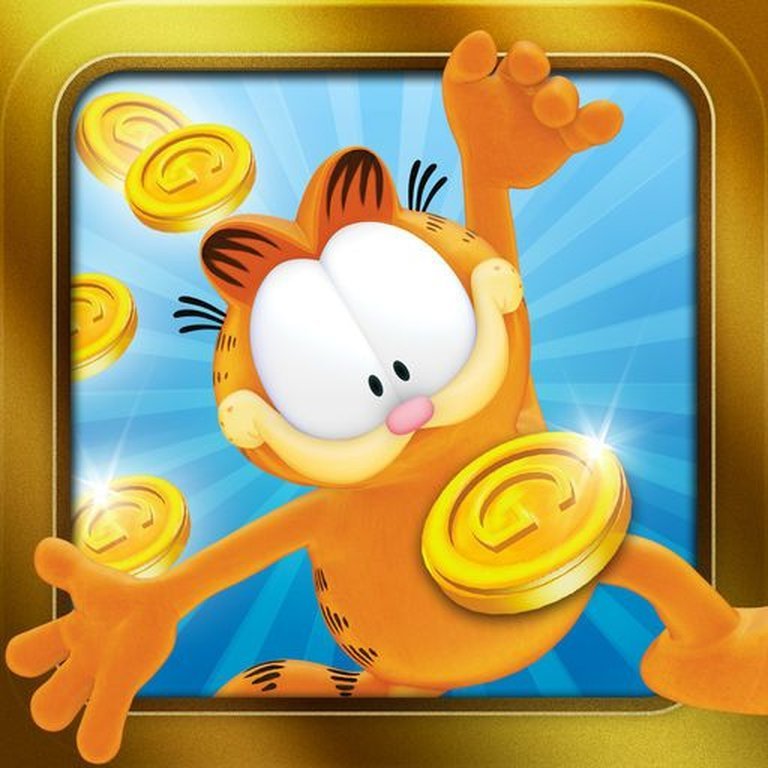
Garfield’s Wild Ride is an action-packed 2D side-scrolling game where players join the lazy yet adventurous cat in his dream-filled escapades. As Garfield sleeps, he gains the ability to fly, navigating through vibrant, ever-changing worlds while avoiding obstacles and collecting coins and lasagna. The game features intuitive touch controls, customizable accessories, power-ups, and an endless mode across four distinct worlds with 45 missions. With its colorful cartoon aesthetic and dynamic soundtrack, the game offers a lighthearted, family-friendly experience.
Gameplay Videos
Garfield’s Wild Ride Free Download
Garfield’s Wild Ride Reviews & Reception
metacritic.com (70/100): A whole heap of fun to be had without spending a single penny over the initial purchase price.
familyfriendlygaming.com (80/100): Garfield’s Wild Ride is a fun little endless runner that stands apart from the crowd.
entertainment-focus.com : Garfield’s Wild Ride is a game that could have been much more.
gamesasylum.com : It adds virtually nothing of its own.
Garfield’s Wild Ride Cheats & Codes
PC
While playing, type the code to access the cheat menu.
| Code | Effect |
|---|---|
| holyheck! | Accesses Larry’s cheat menu with keypad cheats and other features |
Garfield’s Wild Ride: A Dreamy but Derivative Dash Through the Lasagna-Fueled Subconscious
Introduction: The Cat Who Learned to Fly (In His Sleep)
Garfield, the lasagna-loving, Monday-hating, perpetually napping feline, has been a pop culture staple since his comic strip debut in 1978. Over the decades, he’s starred in TV shows, movies, and a plethora of video games—some forgettable, others fondly remembered. Garfield’s Wild Ride (2013), developed by Vetasoft and published by Namco Bandai, is one of the more curious entries in his digital legacy. A mobile endless runner set within the orange tabby’s dreams, the game tasks players with guiding a surprisingly athletic Garfield through a surreal obstacle course of floating pillows, rogue cars, and, of course, lasagna.
At first glance, Wild Ride appears to be a charming, family-friendly romp—a perfect fit for the Garfield brand. But beneath its colorful, cartoonish veneer lies a game that struggles to escape the shadow of its obvious inspiration, Jetpack Joyride. While it offers moments of whimsy and a few clever twists, it ultimately feels like a missed opportunity to innovate within the endless runner genre. This review will dissect Garfield’s Wild Ride from every angle: its development, narrative quirks, gameplay mechanics, artistic choices, and its place in gaming history.
Development History & Context: A Mobile Game Born in the Shadow of Giants
The Studio Behind the Ride: Vetasoft’s Mobile Ambitions
Garfield’s Wild Ride was developed by Vetasoft, a Belgian studio with a portfolio heavily skewed toward licensed mobile games. Their résumé includes titles like Lucky Luke: Shoot & Hit and The Quest for Excalibur: Puy du Fou, suggesting a specialization in adapting established IPs for casual audiences. The game was published by Namco Bandai Games Europe (now Bandai Namco Entertainment), a publisher with a long history of both original hits (Pac-Man, Tekken) and licensed cash-ins (Dragon Ball Z games, Ben 10 titles).
The collaboration between Vetasoft and Namco Bandai was likely a strategic one: Namco Bandai held the rights to Garfield’s digital adaptations at the time, and Vetasoft had the technical chops to churn out a polished mobile title. The game was built using Unity, a engine that, by 2013, had become the go-to tool for mobile developers due to its cross-platform flexibility.
The Mobile Gaming Landscape in 2013: Endless Runners Everywhere
2013 was the golden age of the endless runner. Temple Run (2011) had already proven the genre’s profitability, and Jetpack Joyride (2011) had refined its mechanics to near-perfection. The App Store and Google Play were flooded with clones, each trying to carve out a niche with a unique hook—whether it was Subway Surfers’ urban parkour or Rayman Jungle Run’s platforming precision.
Garfield’s Wild Ride entered this crowded market with a simple pitch: “What if Garfield could fly in his dreams?” The concept was undeniably marketable—Garfield’s laziness juxtaposed with high-speed aerial acrobatics—but the execution struggled to differentiate itself. The game’s June 27, 2013 release on iOS (followed by Android, Windows, and Mac in 2014) positioned it as a latecomer to the trend, arriving after the genre’s peak innovation.
Technological Constraints & Design Choices
Given the hardware limitations of early 2010s smartphones, Wild Ride opted for a 2D side-scrolling perspective, a wise choice that ensured smooth performance across devices. The Unity engine allowed for cross-platform compatibility, but the game’s simplicity suggests it was designed first and foremost for touchscreens.
One of the most notable design decisions was the single-tap control scheme: press to ascend, release to descend. This was a direct lift from Jetpack Joyride, and while it worked well for accessibility, it also made Wild Ride feel like a mechanical clone rather than a fresh take. The developers attempted to add variety with power-ups (like riding Odie or skateboarding), but these felt more like superficial additions than meaningful evolutions.
Narrative & Thematic Deep Dive: The Dream Logic of a Lasagna-Addled Mind
Plot: A Cat’s Subconscious Adventure
Garfield’s Wild Ride doesn’t bother with a complex narrative. The premise is delivered in a single sentence:
“Garfield can finally do what he does best: sleep! But little does the fat cat know that his favorite lazy pastime is the key to excitement and adventure.”
The game’s “story” is essentially an excuse to justify its dreamlike setting. Garfield, ever the sloth, drifts off into a surreal world where he gains the power of flight, dodging obstacles that range from the mundane (cars, pillows) to the absurd (flying witches, UFOs). The dream framing device is a clever way to handwave the game’s lack of logical cohesion—why is Garfield flying? Why are there floating mattresses? Because it’s a dream, of course!
Characters & Cameos: The Garfield Universe in Miniature
While Garfield is the sole playable character, the game sprinkles in familiar faces from the comic strip:
– Odie appears as a rideable power-up, allowing Garfield to barrel through obstacles.
– Jon Arbuckle and Nermal are conspicuously absent, which is a missed opportunity—imagine a level where Nermal taunts Garfield from the sidelines!
– Lasagna serves as both a collectible and a currency, reinforcing Garfield’s gluttonous persona.
The lack of deeper character interaction is a shame. A few voice clips or comic-style cutscenes could have added personality, but Wild Ride treats its cast as little more than set dressing.
Themes: The Duality of Garfield’s Existence
At its core, Garfield’s Wild Ride plays with the duality of Garfield’s character:
1. The Lazy vs. The Athletic – In reality, Garfield is a couch potato; in his dreams, he’s an agile, high-flying daredevil. This contrast is amusing but underdeveloped.
2. The Mundane vs. The Absurd – The game’s obstacles blend everyday hazards (traffic) with surreal dream logic (giant flies, floating pillows).
3. Consumerism & Customization – The game’s microtransactions and unlockable costumes subtly reinforce Garfield’s materialistic side (he does love his stuff).
Unfortunately, these themes are never explored beyond their surface-level execution. The dream setting could have been a playground for meta-commentary (e.g., Garfield’s subconscious fears of being woken up), but the game settles for being a shallow, if visually pleasant, distraction.
Gameplay Mechanics & Systems: A Jetpack Joyride in Orange Fur
Core Gameplay Loop: Tap, Float, Repeat
Garfield’s Wild Ride is, at its heart, an endless runner with verticality. The controls are simplicity itself:
– Tap the screen → Garfield ascends.
– Release → Garfield descends.
– Hold → Garfield hovers at a fixed height.
This one-button mechanic is intuitive but lacks depth. Unlike Jetpack Joyride, which introduced weapons, vehicles, and varied enemy patterns, Wild Ride keeps things monotonous. The only real challenge comes from timing your ascents and descents to avoid obstacles, which quickly becomes repetitive.
Obstacles & Hazards: A Surreal Gauntlet
The game’s obstacles are a mix of grounded and bizarre:
– Pillows – The most frequent hazard. Hitting one “wakes Garfield up,” ending the run.
– Cars & Trucks – Standard endless runner fare.
– Flying Witches & UFOs – Because why not?
– Giant Flies – A nod to Garfield’s hatred of Mondays (and presumably bugs).
The randomness of obstacle placement makes the game feel unfair at times. Unlike Jetpack Joyride, which had predictable patterns, Wild Ride often throws hazards at the player with little warning, leading to cheap deaths.
Power-Ups & Vehicles: Temporary Thrills
To break up the monotony, the game includes power-ups:
– Odie Ride – Garfield hops onto Odie’s back, becoming temporarily invincible.
– Skateboard – Speeds up movement but reduces control.
– Magnet – Attracts coins automatically.
– Shield – Grants brief invulnerability.
These are fun in the moment but don’t fundamentally change the gameplay. The Odie Ride is the standout, if only because it’s amusing to see Garfield clinging to his dim-witted canine friend.
Progression & Unlockables: The Grind for Lasagna
Wild Ride employs a dual-currency system:
– Coins – Used to buy costumes and power-ups.
– Lasagna – Used to unlock “trophies” (gold Garfield statues).
The customization options are the game’s biggest draw:
– Hats (Santa hat, space helmet)
– Outfits (superhero cape, pirate gear)
– Special Effects (trails, particle effects)
However, unlocking these items is a grind. The cheapest theme costs 100,000 coins, an amount that would take hours of play to earn naturally—or a £1.99 microtransaction. This aggressive monetization strategy was par for the course in 2013 mobile gaming, but it still feels exploitative, especially for a game marketed toward kids.
Mission Structure: Three Goals, Endless Repetition
Each run assigns the player three random missions, such as:
– “Collect 50 coins”
– “Use a power-up”
– “Travel 500 meters”
Completing these earns bonus rewards, but the missions repeat ad nauseam, making progression feel stagnant.
Endless Mode & World Variety: A False Promise
The game boasts five different worlds, but only one (the street theme) is unlocked by default. The others must be purchased with coins, meaning most players will only ever see the same backdrop. This lack of variety makes the game visually tedious after just a few runs.
World-Building, Art & Sound: A Colorful but Shallow Dreamscape
Visual Design: Cartoonish Charm with Little Depth
Garfield’s Wild Ride adopts a bright, cartoonish aesthetic that faithfully recreates the look of the comic strip. The character animations are smooth, and Garfield’s expressions (especially when he crashes) are humorous.
However, the backgrounds are disappointingly static. Unlike Rayman Jungle Run, which used parallax scrolling and lush details, Wild Ride’s environments feel flat and repetitive. The “dream” setting could have allowed for surreal, shifting landscapes, but instead, we get the same street over and over, with only minor palette swaps for purchased themes.
Sound Design & Music: Jolly but Forgettable
The game’s soundtrack is upbeat and cheerful, fitting Garfield’s lighthearted tone. The sound effects (Garfield’s meows, coin collection jingles) are adequate but nothing special.
One interesting touch is the “ever-changing experience” mentioned in the marketing—music and sound effects randomly shuffle between runs. While this adds a tiny bit of variety, it’s not enough to make the audio memorable.
Atmosphere: A Dream That Feels More Like a Fever Dream
The game’s dream logic is its strongest thematic element, but it’s wasted. A truly surreal, evolving dreamscape (think Psychonauts or Katamari Damacy) could have made Wild Ride stand out. Instead, the dream setting feels like an afterthought, a thin justification for the game’s lack of narrative cohesion.
Reception & Legacy: A Forgotten Footnote in Garfield’s Gaming History
Critical Reception: Mixed Reviews and Comparisons to Jetpack Joyride
Garfield’s Wild Ride received tepid reviews upon release. Critics praised its accessibility and charm but derided its lack of originality.
- TouchArcade (70/100) – “If you don’t like endless runners, you won’t like this, but if you do, there’s fun to be had without spending extra.”
- XGN (50/100) – “Beautifully animated but difficult for children due to its trial-and-error design.”
- DarkZero (40/100) – “Can’t overcome the licensed app blues… underwhelming and frustrating.”
- Family Friendly Gaming (80/100) – “A fun little endless runner that stands apart from the crowd… enhanced the genre in some neat ways.”
The most common criticism was that it felt like a Jetpack Joyride clone—a sentiment echoed by Games Asylum, which called it “a slightly pale imitation.”
Commercial Performance: A Niche Success
The game didn’t set the world on fire, but it found an audience among Garfield fans and casual mobile gamers. Its free-to-play model (with a £0.69 upfront cost on iOS) likely helped, though the aggressive microtransactions may have turned some players off.
Legacy: A Minor Blip in the Endless Runner Boom
Garfield’s Wild Ride is not remembered as a classic, nor did it influence the genre in any meaningful way. It remains a curiosity—a competent but unremarkable entry in both Garfield’s gaming history and the endless runner pantheon.
Its biggest impact may be as a cautionary tale about licensed mobile games: even with a beloved IP, lack of innovation can doom a game to obscurity.
Conclusion: A Dream That Could Have Been So Much More
Garfield’s Wild Ride is not a bad game, but it’s far from a great one. It’s a serviceable endless runner with charming visuals and a fun premise, but it fails to capitalize on its potential.
The Good:
✅ Accessible controls – Easy to pick up, hard to master.
✅ Faithful to Garfield’s humor – The dream setting is a clever hook.
✅ Decent customization – Unlockable costumes add replay value.
The Bad:
❌ Derivative gameplay – Feels like Jetpack Joyride with a reskin.
❌ Repetitive obstacles – Lack of variety makes runs feel samey.
❌ Aggressive monetization – Unlocking content is a grind.
❌ Wasted potential – The dream setting could have been far weirder.
Final Verdict: 6/10 – A Mildly Enjoyable, Ultimately Forgettable Ride
Garfield’s Wild Ride is the video game equivalent of a Sunday comic strip—fun in the moment, but quickly forgotten. It’s not a disaster, but it’s not essential either. If you’re a die-hard Garfield fan or craving a simple endless runner, it might be worth a discount purchase. But if you’re looking for innovation, depth, or lasting appeal, you’d be better off revisiting Jetpack Joyride or trying Rayman Jungle Run.
In the grand tapestry of Garfield games, Wild Ride is neither the best nor the worst—just a dream that fades as soon as you wake up.
Would I recommend it?
– For Garfield fans: Maybe, if you’re curious.
– For endless runner enthusiasts: Only if you’ve exhausted better options.
– For everyone else: Skip it—there are far more imaginative games out there.
Final Thought:
Garfield deserves better than this. Here’s hoping his next gaming adventure dares to be as bold as his appetite for lasagna. 🍝🐱