
- Release Year: 1999
- Platforms: Windows
- Publisher: Wizard Soft Ltd.
- Developer: Sonnori Co., Ltd.
- Genre: Role-playing (RPG), Strategy, Tactics
- Perspective: Diagonal-down
- Game Mode: Single-player
- Gameplay: Real-time strategy, Tactical RPG, Turn-based combat
- Setting: Alternate 19th century, Steampunk
- Average Score: 77/100
Description
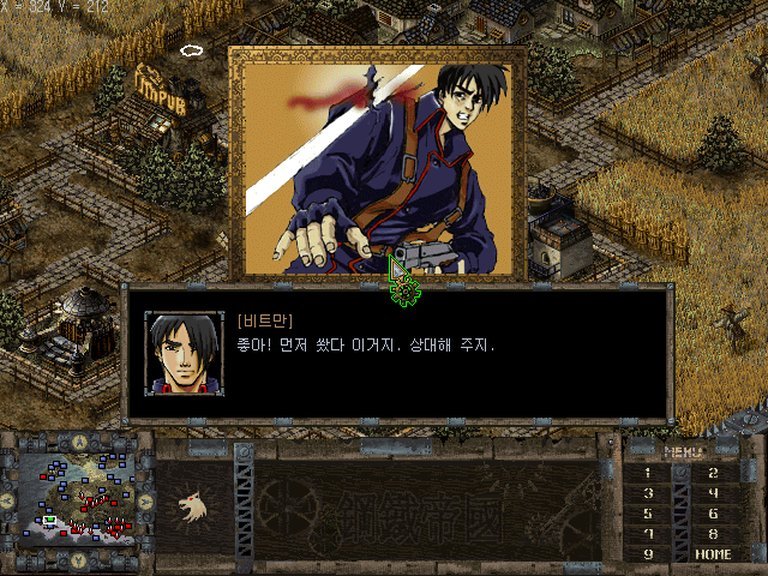
Steel Empire is a steampunk-themed strategy RPG set in an alternate 19th century where advanced steam technology has sparked brutal resource wars. Following the assassination of the Republic of Grand Hill’s leader, the continent of Ashirama descends into factional conflict, giving rise to mercenary groups. Players assume the role of a mercenary leader, blending real-time strategic planning with turn-based tactical battles to navigate the war-torn landscape and secure dominance.
Gameplay Videos
Where to Buy Steel Empire
PC
Steel Empire Guides & Walkthroughs
Steel Empire Reviews & Reception
metacritic.com (72/100): A very welcome respite for 3DS owners tired of kiddie-focused games.
store.steampowered.com (89/100): Amazing gameplay, great replay value, excellent remastering work and a premium presentation is the best way to define Steel Empire.
fusionrgamer.com : Fans of the genre will appreciate Steel Empire’s attention to detail and newcomers will enjoy the theatrical romp through the skies.
Steel Empire Cheats & Codes
Genesis
Enter codes at the specified screens (e.g., Ship Selection, Options). Some require a second controller.
| Code | Effect |
|---|---|
| C, A, C, A, Start, B | 99 bombs |
| 1, 1, 9, 2, 2 | Level select (Round entry appears in options) |
| Hold B and press Start | Start at level 2 |
| C | Level skip (press during gameplay on controller two) |
PC
Hex edits for save file (CYBSAVE.DAT).
| Code | Effect |
|---|---|
| 00000021: 00 FE | Set 16676496 money for 1st player |
| 00000041: 00 FE | Set 16676496 money for 2nd player |
| 00000061: 00 FE | Set 16676496 money for 3rd player |
| 00000081: 00 FE | Set 16676496 money for 4th player |
| 000000A1: 00 FE | Set 16676496 money for 5th player |
Steel Empire: A Steampunk Masterpiece Revisited
Introduction
In the pantheon of classic shoot ’em ups, few titles stand out as boldly as Steel Empire. Released in 1992 for the Sega Genesis, this steampunk-themed horizontal shooter defied the conventions of its era, swapping out the ubiquitous space operatics for a world of riveted iron, hissing steam, and propeller-driven warfare. Developed by HOT・B and helmed by visionary designer Yoshinori Satake, Steel Empire carved a niche for itself with its distinctive aesthetic, innovative mechanics, and a narrative that blended alternate history with dieselpunk grandeur. Over three decades later, its legacy endures through multiple ports, remakes, and a devoted cult following. This review delves deep into the game’s development, narrative, gameplay, and cultural impact, exploring why Steel Empire remains a beloved anomaly in the shooter genre.
Development History & Context
The Birth of a Steampunk Vision
Steel Empire emerged from the creative mind of Yoshinori Satake, who sought to break away from the sci-fi dominance of the early ’90s shooter scene. Inspired by Hayao Miyazaki’s Laputa: Castle in the Sky and Future Boy Conan, Satake envisioned a world where steam power reigned supreme, and the skies were ruled by colossal airships and biplanes. The game’s development began as an arcade prototype in the late 1980s, but technical and logistical challenges led to its transition to the Sega Genesis, where it could leverage the console’s capabilities to create a visually rich and mechanically deep experience.
Technological Constraints and Innovations
The Genesis hardware presented both limitations and opportunities. The game’s detailed pixel art, with its intricate depictions of steam-powered machinery, pushed the boundaries of the console’s 16-bit palette. The decision to allow players to fire both forward and backward—a rarity in shooters of the time—added a layer of strategic depth, while the inclusion of a persistent leveling system (where firepower upgrades were retained even after death) made the game more accessible to novices. However, these innovations came at a cost: the loss of the original arcade source code complicated future ports, and some of the game’s more ambitious visual effects, such as the high-speed escape sequence in Stage 2, occasionally caused slowdown.
The Gaming Landscape of 1992
Steel Empire arrived during a golden age for shoot ’em ups, competing with titles like R-Type III, Gaiares, and Lords of Thunder. Yet, its steampunk setting set it apart, offering a refreshing alternative to the genre’s typical space operatics. The game’s release was met with mixed critical reception—praised for its unique aesthetic but criticized for its familiarity in gameplay. Despite this, it cultivated a dedicated following, particularly in Japan, where its blend of retro-futurism and cinematic presentation resonated deeply.
Narrative & Thematic Deep Dive
The Age of Steel: A World of Alternate History
Steel Empire is set in the year “18XX,” an alternate 19th century where steam technology has advanced to near-magical proportions. The world is divided between the oppressive Motorhead Empire, led by the tyrannical General Styron, and the last free nation, the Republic of Silverhead. The Motorheads, with their steam-powered war machines and industrial might, have conquered most of the globe, leaving Silverhead as the sole bastion of resistance. The game’s narrative unfolds through sepia-toned cutscenes, evoking the aesthetic of a 1940s pulp serial, and culminates in a dramatic showdown that takes the player from the depths of subterranean caverns to the surface of the moon.
Themes of Tyranny and Resistance
At its core, Steel Empire is a story of defiance against oppression. The Motorhead Empire, with its relentless industrialization and militarization, embodies the dangers of unchecked technological progress and authoritarian rule. In contrast, Silverhead represents hope and innovation, wielding advanced energy sources like cold fusion and geothermal power to counter the empire’s steam-driven tyranny. The game’s climax, where the player confronts General Styron’s orbital superweapon, the Lunanaught, underscores the theme of technological hubris, as both factions push the boundaries of their respective technologies in a bid for dominance.
Characters and Symbolism
The player assumes the role of an unnamed Silverhead pilot, tasked with defending the republic’s mining city of Rahl and ultimately bringing down the Motorhead Empire. The two playable aircraft—the agile Striker biplane and the durable Z-01 zeppelin—serve as extensions of the player’s identity, each offering a distinct playstyle that reflects the broader conflict between speed and power. The game’s bosses, from the railgun-equipped trains to the colossal airships, are not merely obstacles but symbols of the Motorhead Empire’s industrial might, each designed to evoke a sense of awe and dread.
Gameplay Mechanics & Systems
Core Gameplay Loop
Steel Empire is a horizontal scrolling shooter with a linear progression, where the player navigates through seven stages, each culminating in a boss battle. The game’s uniqueness lies in its dual-directional firing system, allowing players to shoot both forward and backward, a feature that adds strategic depth to the combat. The player’s aircraft is equipped with a health bar, and losing all health results in the loss of a life, though the game is forgiving in that the player respawns at the point of death with partial health restored.
Power-Ups and Leveling System
The game features a persistent leveling system, where collecting “P” icons increases the player’s firepower up to a maximum of 20 levels. This system was designed to be accessible to unskilled players, allowing them to gradually build up their firepower even if they struggled with earlier stages. Other power-ups include:
– Option Items: Deploy outrigger planes that provide additional firepower.
– Bomb Items: Replenish the player’s stock of Lightning Bombs, a screen-clearing weapon that is particularly effective against the Motorhead Empire’s conductive metal ships.
– Vitality Items: Restore the player’s health.
– Speed Items: Temporarily boost the aircraft’s maneuverability.
– 1-Up Items: Grant an extra life.
Selectable Aircraft and Playstyles
The game offers two distinct aircraft, each with its own strengths and weaknesses:
– Striker (Etopirika): A nimble biplane optimized for ground assaults, with a wide forward firing arc and the ability to launch bombs diagonally downward.
– Z-01 Zeppelin: A slower but more durable airship, equipped with front- and rear-firing missiles and upward-launching aerial mines, making it better suited for aerial combat and boss battles.
The choice of aircraft influences the player’s approach to each stage, with the Striker favoring speed and agility, and the Z-01 emphasizing endurance and firepower.
Boss Encounters and Level Design
Steel Empire‘s bosses are among its most memorable features, each designed to evoke the game’s steampunk aesthetic. From the railgun-equipped trains of the first stage to the orbital superweapon of the final stage, each boss presents a unique challenge that requires the player to exploit weak points and adapt their strategy. The game’s levels are equally diverse, ranging from mountainous railways to subterranean caverns and lunar landscapes, each filled with environmental hazards and enemy formations that test the player’s reflexes and strategic thinking.
World-Building, Art & Sound
Visual Design and Aesthetic
Steel Empire‘s visual design is a masterclass in steampunk world-building. The game’s pixel art is rich in detail, with intricate depictions of riveted metal, exposed gears, and billowing steam. The use of sepia tones and limited color palettes evokes a sense of nostalgia, while the game’s parallax scrolling and dynamic animations—such as the fluid rotation of propellers—create a sense of depth and immersion. The game’s bosses, in particular, are designed to convey a sense of weight and scale, with multi-part ironclad battleships and colossal airships that dominate the screen.
Sound Design and Music
The game’s soundtrack, composed by Isao Mizoguchi, Yoshiaki Kubotera, and Noriyuki Iwadare, is a standout feature, leveraging the Genesis’s YM2612 FM synthesis chip to create a rich, orchestral sound. The music is dynamic, shifting in intensity to match the gameplay, and the sound effects—from the hissing of steam to the rumble of explosions—enhance the game’s industrial atmosphere. Later ports, such as the 3DS and Steam versions, have refined the audio with stereo processing and high-fidelity remastering, preserving the original’s charm while improving clarity and depth.
Reception & Legacy
Critical Reception and Commercial Performance
Upon its release in 1992, Steel Empire received mixed reviews. Critics praised its unique steampunk aesthetic and innovative mechanics but criticized its familiarity in gameplay and repetitive level structures. Despite this, the game achieved modest commercial success and cultivated a dedicated cult following, particularly in Japan. Over time, its reputation has grown, with modern retrospectives highlighting its enduring charm and influence on the steampunk genre.
Ports, Remakes, and Sequels
Steel Empire has seen multiple ports and remakes, each building on the original’s foundation while introducing new features and improvements:
– Game Boy Advance (2004): A faithful recreation with redrawn sprites and adjusted boss patterns to accommodate the handheld’s smaller screen.
– Nintendo 3DS (2014): A enhanced remake with stereoscopic 3D effects, improved visuals, and minor tweaks to the aspect ratio.
– Steam (2018): A digital port based on the 3DS version, with high-resolution visuals, widescreen support, and Steam integration features.
– Nintendo Switch (2024): An enhanced remake titled The Legend of Steel Empire, featuring high-definition visuals, rewind functionality, and quality-of-life improvements.
Despite the loss of the original arcade source code, these ports and remakes have ensured that Steel Empire remains accessible to new generations of players.
Influence and Cultural Impact
Steel Empire has had a lasting influence on the shooter genre, particularly in its use of steampunk aesthetics and innovative mechanics. Its blend of alternate history and dieselpunk grandeur has inspired subsequent titles, and its persistent leveling system and dual-directional firing have become staples of the genre. The game’s cult following has also led to a vibrant fan community, with ROM hacks, speedrunning efforts, and competitive play keeping the game alive in the modern era.
Conclusion
Steel Empire is a testament to the power of innovation and creativity in game design. Its unique steampunk setting, innovative mechanics, and rich narrative have ensured its place as a beloved classic in the shooter genre. While its gameplay may feel familiar to modern players, its aesthetic and thematic depth continue to captivate audiences, making it a timeless masterpiece that deserves to be revisited and celebrated. Whether you’re a veteran of the genre or a newcomer looking for a taste of retro-futurism, Steel Empire offers an experience that is as rewarding as it is unforgettable.
Final Verdict: A steampunk masterpiece that stands the test of time, Steel Empire is a must-play for fans of the shooter genre and a shining example of how innovation can elevate a familiar formula into something truly extraordinary. 9/10