
- Release Year: 2022
- Platforms: Windows
- Publisher: Adrian Systems
- Developer: Adrian Systems
- Genre: Adventure, Puzzle
- Perspective: 1st-person
- Game Mode: Single-player
- Gameplay: Hidden object, Mini-games
- Setting: Futuristic, Sci-fi
- Average Score: 61/100
Description
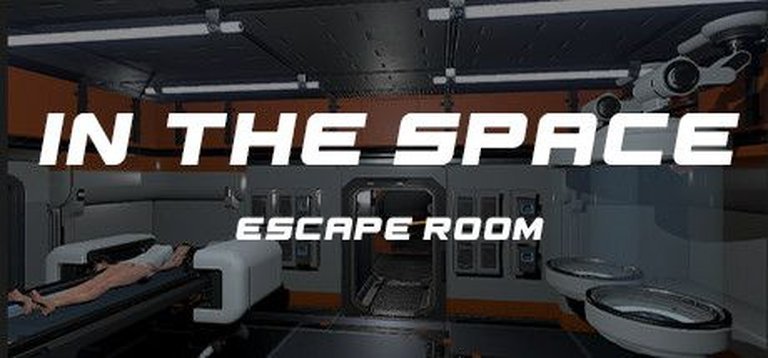
In The Space: Escape Room is a first-person puzzle-adventure game set in a mysterious sci-fi spaceship. Players awaken from hibernation and must explore the vessel, solving intricate puzzles, deciphering codes, and uncovering hidden objects to reveal the dark experiments being conducted on humanity. With a mix of hidden object challenges, mini-games, and logic-based enigmas, the game immerses players in a futuristic escape room experience where every clue brings them closer to unraveling the ship’s secrets.
Where to Buy In The Space: Escape Room
PC
In The Space: Escape Room Guides & Walkthroughs
In The Space: Escape Room Reviews & Reception
steambase.io (61/100): This score is calculated from 18 total reviews which give it a rating of Mixed.
In The Space: Escape Room – A Cosmic Conundrum of Puzzles and Paranoia
Introduction: A Mysterious Voyage into the Unknown
In The Space: Escape Room is a first-person puzzle-adventure game that thrusts players into the claustrophobic confines of a derelict spaceship, where every locked door and encrypted terminal hides another layer of a sinister conspiracy. Released in June 2022 by the indie studio Adrian Systems, this title is a love letter to classic escape room mechanics, wrapped in a sci-fi narrative that blends 2001: A Space Odyssey’s eerie isolation with the cerebral challenge of The Witness. But does it transcend its genre trappings, or does it remain a niche curiosity in the vast expanse of puzzle games?
This review will dissect In The Space from every angle—its development, narrative depth, gameplay systems, atmospheric design, and legacy—to determine whether it’s a forgotten gem or a flawed experiment.
Development History & Context: The Birth of a Puzzle Odyssey
The Studio Behind the Stars
Adrian Systems, the one-person development team behind In The Space, is a relatively obscure name in the gaming industry. Little is known about the studio’s background, but their focus on puzzle-driven experiences is evident. The game was built using the Unity engine, a common choice for indie developers due to its accessibility and flexibility. Given the game’s modest scope and budget, Unity allowed Adrian Systems to craft a visually coherent, if not groundbreaking, sci-fi environment.
The Vision: A Sci-Fi Escape Room
The core vision of In The Space was to merge the tactile satisfaction of physical escape rooms with the immersive potential of video games. Unlike many digital escape room games that rely on simplistic point-and-click interactions, In The Space aimed for a more involved experience, requiring players to manipulate objects, decode ciphers, and navigate a labyrinthine spaceship. The developer’s goal was to create a game where logic and observation were paramount, with minimal hand-holding—a philosophy that would later become a double-edged sword in its reception.
Technological Constraints & Design Choices
Released in 2022, In The Space faced the challenge of standing out in an oversaturated market of puzzle and escape room games. The game’s technical requirements are modest (Windows 7, 4GB RAM, and a mid-range GPU), ensuring broad accessibility. However, this also meant that the game’s visuals and interactions were limited by its budget. The first-person perspective and free camera movement were likely chosen to enhance immersion, but the lack of advanced physics or dynamic lighting kept the experience grounded in a more static, puzzle-focused design.
The Gaming Landscape at Launch
2022 was a banner year for indie puzzle games, with titles like The Case of the Golden Idol and Norco redefining narrative-driven problem-solving. In The Space entered this competitive space with a more traditional approach, eschewing branching narratives or complex character interactions in favor of pure, unadulterated puzzle-solving. This decision positioned it as a throwback to classic adventure games, but also risked alienating players accustomed to more modern design sensibilities.
Narrative & Thematic Deep Dive: Unraveling the Spaceship’s Secrets
Plot Overview: A Spy in the Stars
In The Space casts players as an unnamed operative who infiltrates a mysterious spaceship conducting unethical experiments on humanity. The premise is deliberately vague, with the narrative unfolding through environmental storytelling, scattered diary entries, and cryptic notes. The game’s structure is linear, with players progressing through distinct sections of the ship—Hibernation, Space Hall, Laboratory, Command Center, Experimentation, and Special Projects—each revealing another layer of the ship’s dark purpose.
Characters & Dialogue: The Silence of the Void
One of the game’s most striking narrative choices is its lack of traditional characters. There are no NPCs to interact with, no voiced dialogue, and no cutscenes. Instead, the story is conveyed through:
– Diary Entries: Found throughout the ship, these provide fragmented insights into the lives of the crew and the experiments being conducted.
– Audio Logs: Rare but atmospheric, these recordings hint at the ship’s descent into madness.
– Environmental Clues: From bloodstains on the walls to malfunctioning machinery, the ship itself tells a story of failure and desperation.
This minimalist approach creates a sense of isolation and mystery, but it also leaves much of the narrative open to interpretation. Players who crave a clear, cohesive story may find In The Space frustratingly ambiguous.
Themes: Science, Ethics, and the Cost of Progress
Beneath its puzzle-driven surface, In The Space grapples with weighty themes:
1. The Ethics of Experimentation: The ship’s logs reveal experiments involving human cloning, psychological manipulation, and genetic engineering. The game questions how far science should go in the name of progress.
2. Isolation and Paranoia: The empty corridors and eerie silence amplify the player’s sense of being alone in a hostile environment. The lack of human contact reinforces the theme of abandonment.
3. The Illusion of Control: Many puzzles involve manipulating systems that were once controlled by the ship’s crew, now long gone. This mirrors the player’s own struggle to make sense of a world they were never meant to understand.
Narrative Strengths & Weaknesses
Strengths:
– Atmospheric Storytelling: The game excels at creating a sense of dread and curiosity through its environment.
– Player-Driven Discovery: The lack of hand-holding means that every clue feels like a genuine revelation.
Weaknesses:
– Lack of Payoff: The narrative builds intrigue but never delivers a satisfying conclusion. The experiments are hinted at but never fully explained.
– Minimal Character Development: Without NPCs or deeper lore, the story feels more like a backdrop for puzzles than a compelling drama.
Gameplay Mechanics & Systems: The Art of the Puzzle
Core Gameplay Loop: Observe, Deduct, Escape
In The Space is, at its heart, a puzzle box. The gameplay revolves around:
1. Exploration: Players navigate the ship’s interconnected rooms, searching for clues and interactive objects.
2. Puzzle-Solving: Each room contains a series of puzzles that must be solved to progress. These range from simple sliding tiles to complex ciphers.
3. Inventory Management: Players collect items (keys, notes, tools) that are used to solve puzzles in other areas.
The game’s structure is reminiscent of Myst or The Room, where progression is gated by the player’s ability to decipher increasingly obscure challenges.
Puzzle Design: A Mixed Bag of Brilliance and Frustration
The puzzles in In The Space are its defining feature, but they are also its most polarizing element. Below is a breakdown of the puzzle types and their effectiveness:
| Puzzle Type | Example | Strengths | Weaknesses |
|---|---|---|---|
| Sliding Tile Puzzles | Rearranging numbered tiles | Tactile and satisfying | Can feel repetitive |
| Cipher Puzzles | Pigpen cipher, symbol substitution | Encourages pattern recognition | Some solutions are overly obscure |
| Logic Puzzles | Lever sequences, weight-based locks | Rewards careful observation | Lack of feedback can lead to guesswork |
| Environmental Puzzles | Matching symbols in the environment | Integrates world-building | Some clues are easy to miss |
| Math-Based Puzzles | Number sequences, arithmetic | Appeals to analytical players | Can feel arbitrary without clear rules |
Notable Puzzles:
– The “Hi Howard” Sliding Tile Puzzle: A clever introduction that teaches players to look for patterns in seemingly random arrangements.
– The Pigpen Cipher: A well-implemented code that requires players to cross-reference multiple clues.
– The Lever Sequences: These puzzles are visually engaging but can be frustrating due to trial-and-error mechanics.
Combat & Progression: The Absence of Action
In The Space is a purely non-violent experience. There are no enemies, no combat mechanics, and no fail states beyond being stuck on a puzzle. Progression is entirely tied to the player’s ability to solve puzzles, which can be both liberating and limiting. Players who enjoy methodical, cerebral challenges will thrive, while those seeking action or urgency may find the experience tedious.
UI & Interaction Design: Functional but Uninspired
The game’s interface is minimalist, with a simple point-and-click system for interacting with objects. The inventory is straightforward, allowing players to examine and combine items with ease. However, the lack of a hint system is a glaring omission. Many puzzles rely on lateral thinking, and without any guidance, players can easily become stuck, resorting to external walkthroughs (as evidenced by the extensive guides available online).
Innovation & Flaws
Innovations:
– Multi-Layered Puzzles: Some puzzles require information from multiple rooms, encouraging thorough exploration.
– Environmental Integration: Clues are often hidden in the ship’s decor, rewarding attentive players.
Flaws:
– Obscure Logic: Several puzzles (e.g., the “dominos adding” puzzle) rely on logic that isn’t intuitively clear, leading to frustration.
– Lack of Feedback: Failed attempts often provide no indication of why a solution was incorrect, forcing players to brute-force their way through.
World-Building, Art & Sound: Crafting a Cosmic Prison
Setting & Atmosphere: A Ship of Secrets
The spaceship in In The Space is a character in its own right. The game’s environments are divided into themed sections:
– Hibernation: A cold, clinical area with cryogenic pods.
– Laboratory: A high-tech research facility filled with scientific equipment.
– Command Center: The ship’s nerve center, with control panels and maps.
– Experimentation & Special Projects: The most sinister areas, hinting at the ship’s dark purpose.
The art direction is functional but not groundbreaking. The ship’s interiors are rendered in a clean, futuristic style, with a color palette dominated by whites, blues, and metallic grays. While the visuals are competent, they lack the polish of AAA titles or even some indie darlings like The Talos Principle.
Sound Design: The Silence of Space
Sound plays a crucial role in In The Space, with ambient noise and sparse audio logs contributing to the atmosphere. The game’s soundtrack is subtle, featuring eerie electronic tones that enhance the sense of isolation. However, the sound design is underutilized—there are moments where a more dynamic audio experience (e.g., distant machinery hums, alarm sounds) could have heightened tension.
Atmospheric Strengths & Weaknesses
Strengths:
– Immersive Isolation: The empty corridors and lack of music create a palpable sense of loneliness.
– Environmental Storytelling: The ship’s decay and scattered notes tell a story without words.
Weaknesses:
– Repetitive Visuals: The ship’s interiors can feel samey after a while, with little visual variety.
– Underwhelming Audio: The soundtrack is forgettable, and the lack of voice acting limits emotional engagement.
Reception & Legacy: A Polarizing Puzzle Experience
Critical & Commercial Reception
In The Space received a Mixed rating on Steam, with a 50% positive review score based on 10 user reviews. This polarization is evident in player feedback:
– Positive Reviews praise the game’s challenging puzzles and immersive atmosphere.
– Negative Reviews criticize its obscure logic, lack of hints, and underwhelming narrative payoff.
The game’s commercial performance is difficult to gauge, but its modest price ($9.99 on Steam) and niche appeal suggest it found a small but dedicated audience.
Evolution of Reputation
Since its release, In The Space has remained a cult favorite among puzzle enthusiasts. Its reputation has been bolstered by:
– Extensive Walkthroughs: Websites like The Walkthrough King have provided detailed guides, helping players navigate its most obscure puzzles.
– Community Discussions: Steam forums and Reddit threads debate the game’s narrative ambiguities and puzzle designs, keeping it alive in the collective consciousness.
Influence on the Genre
While In The Space hasn’t spawned direct imitators, it contributes to the ongoing trend of narrative-driven escape room games. Its emphasis on environmental storytelling and multi-layered puzzles can be seen in later titles like Biohazard: Escape Room (2024) and The Lab: Escape Room (2023). However, its lack of mainstream success means its influence is more subtle than revolutionary.
Conclusion: A Flawed but Fascinating Journey
In The Space: Escape Room is a game of contradictions. It is brilliant in its puzzle design but frustrating in its obscurity. It excels at atmospheric storytelling but fails to deliver a satisfying narrative conclusion. It is a love letter to classic adventure games but lacks the polish of modern equivalents.
Final Verdict: 7/10 – A Niche Masterpiece
For puzzle aficionados who relish a challenge and don’t mind occasional frustration, In The Space is a rewarding experience. Its strengths lie in its meticulously crafted puzzles and immersive sci-fi setting, but its lack of guidance and narrative depth prevent it from achieving greatness.
Who Should Play It?
– Fans of Myst, The Room, or The Witness.
– Players who enjoy logic puzzles, ciphers, and environmental storytelling.
– Those who don’t mind occasional obscurity and are willing to consult guides.
Who Should Avoid It?
– Players seeking action, combat, or traditional storytelling.
– Those who prefer hand-holding or clear narrative payoffs.
– Gamers who dislike trial-and-error puzzle-solving.
In the grand tapestry of video game history, In The Space: Escape Room is a small but intriguing thread—a testament to the enduring appeal of cerebral challenges in an era dominated by spectacle. It may not be a masterpiece, but it is a fascinating experiment—one that reminds us of the joy of unraveling a mystery, one puzzle at a time.
Final Score: 7/10 – A cosmic conundrum worth solving, if you have the patience.