
- Release Year: 2017
- Platforms: Android, iPad, iPhone, Macintosh, Nintendo Switch, Windows Apps, Windows
- Publisher: Alawar Five-BN
- Developer: Alawar Five-BN
- Genre: Adventure, Puzzle
- Perspective: 1st-person
- Game Mode: Single-player
- Gameplay: Hidden object, Point and select
- Setting: Fantasy
- Average Score: 84/100
Description
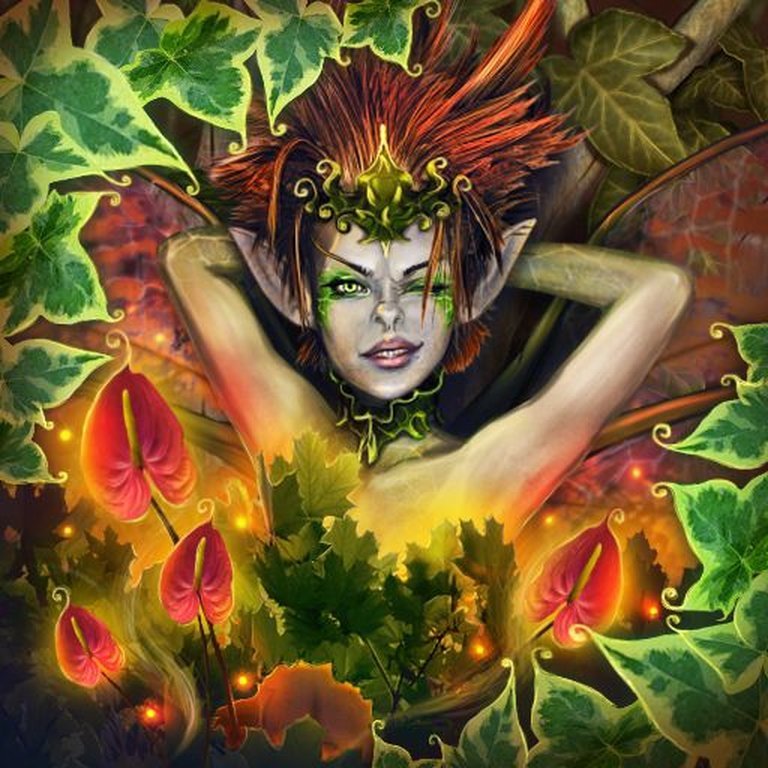
Lost Lands: Ice Spell is a fantasy adventure puzzle game where Susan, the protagonist, finds herself entangled in an epic crisis within the Lost Lands. The game blends hidden object gameplay with a first-person perspective, challenging players to solve puzzles and uncover secrets in a magical, ice-bound setting. Developed by Alawar Five-BN, it is the fifth installment in the Lost Lands series, offering a mix of exploration, storytelling, and intricate puzzles across multiple platforms.
Gameplay Videos
Where to Buy Lost Lands: Ice Spell
PC
Lost Lands: Ice Spell Patches & Updates
Lost Lands: Ice Spell Guides & Walkthroughs
Lost Lands: Ice Spell Reviews & Reception
mobygames.com (74/100): A fantasy-world adventure game with lots of hidden-objects, mini-games and puzzles to solve.
gamezebo.com (90/100): A heavily entertaining hidden object game with a great story and solid mini-games.
ign.com (90/100): Recommended by users with a score of 9.
completionist.me (83/100): A well-received game with a high completion rate and positive player feedback.
Lost Lands: Ice Spell: A Frozen Masterpiece of Hidden Object Adventure
Introduction: A Chilling Call to Adventure
Lost Lands: Ice Spell (2017) is a hidden object puzzle adventure (HOPA) that plunges players into a world where summer has been stolen by an ancient, icy curse. Developed by FIVE-BN Games and published by Big Fish Games, this fifth installment in the Lost Lands series continues the saga of Susan, a reluctant heroine pulled from her mundane life into a fantastical realm teetering on the brink of eternal winter. With its atmospheric storytelling, intricate puzzles, and a sprawling fantasy world, Ice Spell stands as a testament to the enduring appeal of the HOPA genre, blending classic mechanics with modern sensibilities.
This review will dissect Lost Lands: Ice Spell across its narrative depth, gameplay systems, artistic design, and legacy, arguing that it is not merely another entry in a crowded genre but a polished, immersive experience that elevates the standards of hidden object adventures.
Development History & Context: The Evolution of a Genre Staple
The Studio Behind the Frost: FIVE-BN Games
FIVE-BN Games, a Russian developer with a prolific portfolio in the casual gaming space, has been a key player in the HOPA genre since the mid-2010s. Known for titles like The Legacy and Twisted Lands, the studio has honed a signature style: richly detailed fantasy settings, intricate puzzles, and a penchant for mythological storytelling. Lost Lands: Ice Spell is a product of this expertise, built on the foundation of its predecessors while introducing new mechanical twists and a more expansive world.
The game was released in December 2017 on mobile platforms (Android, iOS) before expanding to PC, Mac, and eventually Nintendo Switch in 2021. This multi-platform approach reflects the studio’s understanding of the HOPA audience, which spans casual mobile gamers and dedicated PC adventure enthusiasts.
Technological Constraints & Design Philosophy
Developed during a period when mobile gaming was rapidly evolving, Ice Spell had to balance visual fidelity with performance across devices. The game employs a 2.5D perspective, blending pre-rendered backgrounds with interactive elements—a common technique in HOPAs that allows for detailed environments without the computational demand of full 3D.
The point-and-click interface is optimized for both touchscreen and mouse controls, ensuring accessibility. The hidden object scenes (HOPs) and mini-games are designed to be intuitive yet challenging, catering to players who enjoy methodical problem-solving without the frustration of obscure solutions.
The HOPA Landscape in 2017
By 2017, the hidden object genre had matured significantly. Early titles like Mystery Case Files had given way to narrative-driven experiences such as Dark Parables and Grim Legends. Lost Lands: Ice Spell entered this competitive space with a distinct identity:
– A focus on world-building over isolated puzzles.
– A protagonist with emotional stakes (Susan’s repeated summons to the Lost Lands add weight to her journey).
– A blend of fantasy and mythology that feels cohesive and immersive.
Unlike many HOPAs that rely on generic “haunted mansion” tropes, Ice Spell crafts a unique lore, drawing from Norse-inspired frost mythology and ancient curses, making it stand out in a sea of similar titles.
Narrative & Thematic Deep Dive: A Tale of Ice and Legacy
Plot Overview: The Frozen Cataclysm
The game opens with a cinematic urgency: Susan, once again, is yanked from her ordinary life into the Lost Lands, a parallel world now gripped by an unnatural winter. The premise is simple yet effective:
– A world out of balance: Summer has been replaced by perpetual frost, crops are dead, and creatures flee in terror.
– An ancient evil awakened: The elders blame the “spirit of the Frozen Mountains,” but the truth is far more complex, tied to forgotten history and a betrayal from the past.
– Susan’s reluctant heroism: Unlike many HOPA protagonists who are passive observers, Susan is actively resistant to her role, adding depth to her character.
The story unfolds across six chapters, each revealing layers of lore through:
– Environmental storytelling (frozen ruins, abandoned villages).
– Dialogue with NPCs (Maaron the wizard, the enigmatic Nomianna).
– Collectible manuscripts that expand the world’s history.
Themes: Frost as a Metaphor for Stagnation
Ice Spell uses its frozen setting to explore themes of:
1. The Past’s Grip on the Present: The curse is not just magical but historical, a sin from an ancient era resurfacing. This mirrors real-world ideas of cyclical history and unresolved traumas.
2. Sacrifice and Redemption: Many characters, including Susan, are haunted by past choices, and the game questions whether redemption is possible.
3. The Fragility of Nature: The ecological collapse of the Lost Lands serves as a subtle allegory for climate change, though the game never preaches.
Characters & Dialogue: More Than Just Quest Givers
While HOPA games are rarely known for deep characterization, Ice Spell makes a conscious effort to give its cast personality and motivation:
– Susan: Unlike the blank-slate protagonists of many HOPAs, Susan is vocally reluctant, often complaining about being dragged into danger. Her sarcastic quips (e.g., “Why me? Again?!”) make her relatable.
– Maaron: The wise but secretive wizard serves as Susan’s guide, but his past mistakes (revealed through lore) make him morally ambiguous.
– Nomianna: A mysterious shopkeeper who trades in rare artifacts, she adds whimsy and intrigue, hinting at a larger role in the series’ mythology.
The dialogue is functional rather than Shakespearean, but it avoids the stiff, exposition-heavy writing that plagues many HOPAs. Instead, it feels natural, with humor and urgency where appropriate.
Storytelling Strengths & Weaknesses
Strengths:
✅ A cohesive, multi-layered narrative that rewards exploration.
✅ Environmental lore (manuscripts, ruins) that makes the world feel lived-in.
✅ A protagonist with agency—Susan isn’t just a puppet for the player.
Weaknesses:
❌ Some plot twists are predictable (e.g., the “ancient betrayal” trope).
❌ Side characters lack depth—many NPCs exist only to advance the plot.
❌ The ending, while satisfying, feels rushed compared to the methodical pacing of earlier chapters.
Gameplay Mechanics & Systems: The Heart of the Frost
Core Gameplay Loop: Exploration, Puzzles, and Progression
Lost Lands: Ice Spell follows the classic HOPA structure:
1. Explore a location (e.g., a frozen village, a dwarf dungeon).
2. Solve puzzles to unlock new areas.
3. Complete hidden object scenes (HOPs) to gather items.
4. Use inventory items to overcome obstacles.
5. Uncover lore through collectibles and dialogue.
However, the game elevates this formula through:
– A fast-travel map that reduces backtracking frustration.
– Interactive inventory items (e.g., combining a rag and tar to make a torch).
– Mini-games that feel *integrated into the world* (e.g., repairing a dwarf mechanism to open a door).
Hidden Object Scenes (HOPs): A Test of Observation
The HOPs in Ice Spell are well-designed, avoiding the cheap tricks (e.g., tiny, pixel-sized objects) that frustrate players. Instead, they emphasize:
– Logical item placement (e.g., a shovel in a toolshed, not hidden in a tree).
– Interactive elements (e.g., opening a drawer to reveal a hidden object).
– Silhouette-based challenges that test pattern recognition rather than pure luck.
Critique:
✔ Fair but challenging—items are hidden but not unfairly so.
✔ Varied locations (from ice caves to ancient temples).
❌ Some scenes reuse assets, leading to visual repetition.
Mini-Games & Puzzles: Brain Teasers in the Snow
The game features over 40 mini-games, ranging from:
– Logic puzzles (e.g., sliding tiles, match-3 variants).
– Mechanical challenges (e.g., repairing a broken cart wheel).
– Quick-time events (e.g., sneaking past frost wolves).
Standout Puzzles:
– The Rune Stone Assembly: A multi-step puzzle requiring players to find fragments, clean them, and reassemble an ancient artifact.
– The Dwarf Crypt Mechanism: A gear-based challenge that feels tactile and satisfying.
– The Ice Bridge: A physics-based puzzle where players must balance weights to cross safely.
Critique:
✔ Diverse and engaging—no two puzzles feel the same.
✔ Difficulty scaling—early puzzles are simple, while later ones require genuine thought.
❌ Some solutions are trial-and-error, leading to frustration without hints.
Inventory & Item Combination: Crafting in a Fantasy World
Unlike many HOPAs where items are used once and discarded, Ice Spell encourages creative combination:
– Example 1: Rag + Tar = Torch (used to light dark areas).
– Example 2: Snow + Hot Water = Melted Path (clears obstacles).
– Example 3: Glowing Mushrooms + Crimson Stone = Potion Ingredient.
This system rewards experimentation and makes the inventory feel dynamic rather than a static list of keys and gears.
Progression & Difficulty: A Balanced Challenge
The game offers three difficulty modes:
1. Casual: Sparkling hints, faster recharge on skip buttons.
2. Advanced: Slower hints, more complex puzzles.
3. Hardcore: No hints, no skips, pure challenge.
Achievements & Collectibles:
– Morphing Objects: Hidden items that change over time, encouraging revisiting locations.
– Manuscripts: Lore fragments that expand the world’s history.
– Collections: Themed sets (e.g., owl statues, icicles) that unlock bonuses.
Critique:
✔ Rewards exploration—players who search thoroughly are rewarded with lore and achievements.
❌ Some collectibles are **too well-hidden, leading to tedious pixel-hunting.
UI & Quality of Life: Smooth as Ice
The user interface is clean and intuitive:
– Inventory: Organized and easy to navigate.
– Map: Fast travel reduces backtracking.
– Hint System: Subtle but helpful—points to general areas rather than exact solutions.
Mobile vs. PC Controls:
– Touchscreen: Optimized for precision, though smaller objects can be tricky.
– Mouse/Keyboard: More comfortable for long sessions, especially for puzzle-solving.
World-Building, Art & Sound: A Frozen Wonderland
Setting & Atmosphere: The Lost Lands in Winter
The game’s fantasy world is its greatest strength. The Lost Lands are a mythical realm where:
– Ancient ruins hint at forgotten civilizations.
– Magical creatures (frost wolves, basilisks) pose real threats.
– Dwarven dungeons and elven glades feel distinct and immersive.
The frozen aesthetic is more than just a gimmick—it reinforces the narrative:
– Dead crops and frozen rivers visually represent the curse.
– Ice-covered puzzles (e.g., melting barriers with hot water) integrate the theme into gameplay.
Visual Design: A Feast for the Eyes
The art direction is lush and detailed:
– Hand-painted backgrounds with depth and texture.
– Character designs that avoid the “uncanny valley” of some HOPAs.
– Lighting effects (e.g., torchlight flickering in caves) that enhance immersion.
Critique:
✔ Stunning environments—each location feels unique.
❌ Some character animations are stiff, especially in cutscenes.
Sound Design & Music: The Chill in the Air
The audio experience is understated but effective:
– Ambient sounds: Howling wind, cracking ice, distant wolf growls sell the frozen setting.
– Music: A melodic, orchestral score that swells during key moments but never overpowers.
– Voice Acting: Competent but not exceptional—Susan’s sarcastic tone is the highlight.
Standout Tracks:
– The Frozen Mountains Theme: A haunting, slow-building melody that evokes isolation.
– The Dwarf Dungeon Track: A deep, rhythmic piece that feels ancient and mysterious.
Reception & Legacy: A Warm Welcome in a Cold Genre
Critical & Commercial Reception
Lost Lands: Ice Spell was well-received upon release, though it didn’t redefine the genre:
– Metacritic: No critic scores, but user reviews (where available) average around 7-8/10.
– Steam: 83% positive reviews, with players praising its story, puzzles, and atmosphere.
– Mobile Platforms: Consistently rated 4/5, with casual gamers enjoying its accessibility.
Common Praise:
✔ “A hidden object game with actual depth.”
✔ “The world feels alive—unlike many HOPAs.”
✔ “Puzzles are challenging but fair.”
Common Criticisms:
❌ “Some backtracking feels unnecessary.”
❌ “The story starts strong but loses steam near the end.”
Influence & Legacy
While Ice Spell didn’t revolutionize the HOPA genre, it set a standard for:
– Narrative-driven hidden object games.
– World-building in casual adventures.
– Integrating puzzles into the environment (rather than arbitrary roadblocks).
Its success led to two sequels (Lost Lands: Mistakes of the Past in 2018 and Lost Lands: Redemption in 2020), proving that players crave depth in a genre often dismissed as “casual.”
Conclusion: A Frozen Gem in the HOPA Crown
Lost Lands: Ice Spell is more than just another hidden object game—it’s a meticulously crafted adventure that respects its players’ intelligence while delivering a compelling fantasy narrative. Its strengths lie in:
✅ A rich, immersive world that feels alive.
✅ Well-designed puzzles that challenge without frustrating.
✅ A protagonist with personality in a genre often lacking depth.
Weaknesses such as predictable plot twists and occasional backtracking don’t detract from the overall experience, which remains one of the best in the HOPA genre.
Final Verdict: 8.5/10 – “A Must-Play for Adventure Fans”
Lost Lands: Ice Spell is essential for fans of hidden object games, but its strong narrative and world-building make it appealing even to those outside the genre. It proves that casual games can be **deep, atmospheric, and rewarding—a frozen masterpiece worth thawing out.
Where to Play:
– Steam ($9.99)
– Nintendo Switch ($13.99)
– Mobile (iOS/Android) (Free with in-app purchases)
If you enjoyed this, try:
– Dark Parables series (for fairy tale depth).
– Grim Legends series (for dark fantasy themes).
– The Legacy: Tree of Might (for similar puzzle design).
Lost Lands: Ice Spell isn’t just a game—it’s an invitation to a world worth exploring, one frozen puzzle at a time. ❄️🔍