
- Release Year: 2011
- Platforms: Windows
- Publisher: Falco Software, OtakuMaker.com
- Developer: Falco Software
- Genre: Action
- Perspective: Diagonal-down
- Game Mode: Single-player
- Gameplay: Arcade, giant robot, Mecha, Shooter, Survival horror, Vehicular
- Setting: Horror, Interwar
- Average Score: 50/100
Description
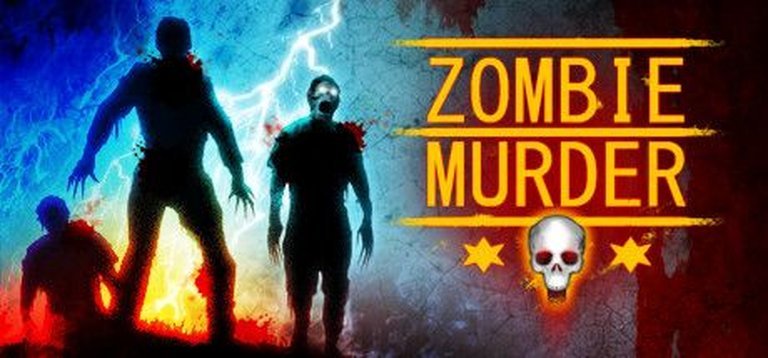
Zombie Murder is an action-packed survival horror game set in an interwar period, where players battle hordes of the undead in a diagonal-down perspective. Combining arcade-style shooter mechanics with mecha/giant robot elements, the game immerses players in a terrifying, zombie-infested world where survival is key.
Where to Buy Zombie Murder
PC
Zombie Murder Reviews & Reception
steambase.io (50/100): Zombie Murder has earned a Player Score of 50 / 100.
niklasnotes.com (50/100): 50% (26) ~ 1.6h
Zombie Murder Cheats & Codes
PC
To enable cheat codes is necessary to type letters on the keyboard during the game. If you use the cheats while in Gun Mode, the effects will not show up until you begin Campaign Mode by using the ‘Complete Level’ cheat.
| Code | Effect |
|---|---|
| cheate | Level Skip |
| cheath | Add Health |
| cheatw | All Weapons |
| cheata | Add Ammo |
| cheatm | Add Credits (Enter at Shop Screen) |
| cheats | +50 speed skill |
| st1 | 15,000 HP |
| stammo | Ammunition |
| stshop | Download shop on the level |
| stexp | Gain experience for next level |
| cheatexp | Gain experience for next level |
| st2 | Invincibility |
| stk9 | Kill all monsters on map |
| stkk | Kills all monsters within 1,000 pixels |
| stwnn | Level skip |
| remgamma | Remove gamma |
| stmusstop | Stop current track |
Zombie Murder: A Brutal, Blood-Soaked Relic of the Early 2010s Indie Shooter Scene
Introduction: The Forgotten Mecha-Zombie Shooter
In the vast, crowded graveyard of indie horror shooters, Zombie Murder (2011) stands as a curious artifact—a game that embraced the era’s obsession with zombies, gore, and over-the-top action, yet remained largely overlooked in the shadow of giants like Resident Evil and Left 4 Dead. Developed by Falco Software and published on Steam in 2018 (despite its 2011 origins), Zombie Murder is a diagonal-down arcade shooter that pits players against hordes of the undead—not as a lone survivor, but as the pilot of a heavily armed battle mech. With its promise of “seas of blood and explosions,” the game is a visceral, unapologetic celebration of early 2010s indie excess. Yet, beneath its gory spectacle lies a game that struggles to transcend its own simplicity, leaving it as a fascinating but flawed relic of its time.
This review will dissect Zombie Murder in exhaustive detail, examining its development context, narrative (or lack thereof), gameplay mechanics, artistic direction, and its place in the broader history of zombie games. By the end, we’ll determine whether it deserves resurrection—or if it’s better left buried.
Development History & Context: The Rise of the Indie Zombie Shooter
The Studio: Falco Software’s Niche in the Indie Scene
Falco Software, the developer behind Zombie Murder, is a relatively obscure studio with a portfolio of budget-friendly, often retro-inspired games. Their output includes titles like Virus Z, Mission of Hero, and Turtle Lu, all of which share a similar aesthetic: simple mechanics, bold visuals, and a focus on action. Zombie Murder fits neatly into this mold, offering a no-frills, high-octane experience designed for quick bursts of gameplay.
The game’s original 2011 release predates its Steam debut by seven years, suggesting it may have initially been a smaller, possibly browser-based or direct-download title before being repackaged for modern platforms. This delay in reaching a wider audience likely contributed to its obscurity, as the indie zombie shooter market had already become saturated by the time it arrived on Steam in 2018.
The Zombie Game Landscape in the Early 2010s
The early 2010s were a golden age for zombie games, with the genre exploding in popularity thanks to:
– The Resident Evil and Dead Rising franchises, which had cemented zombies as a staple of survival horror and action-horror hybrids.
– Valve’s Left 4 Dead series (2008–2009), which revolutionized cooperative zombie-slaying with its AI Director and dynamic hordes.
– The rise of indie horror, with games like Zombie Panic! Source (2007) and Killing Floor (2009) proving that smaller studios could deliver compelling undead experiences.
Zombie Murder arrived at the tail end of this boom, offering a unique twist: mecha combat. While mechs and zombies had been combined before (e.g., Metal Wolf Chaos, Zone of the Enders), Zombie Murder’s diagonal-down perspective and arcade-style gameplay set it apart from more narrative-driven or survival-focused titles.
Technological Constraints and Design Philosophy
The game’s technical limitations are evident in its simplicity. The diagonal-down perspective (a rarity in modern shooters) harkens back to classic arcade games like Robotron: 2084 or Smash TV, emphasizing twitch reflexes over tactical depth. The graphics, while “beautiful and realistic” by the developer’s standards, are rudimentary by 2010s AAA standards, relying on bold colors, exaggerated gore effects, and a minimalist UI to convey its brutal tone.
This stripped-down approach was likely a deliberate choice, catering to an audience that valued immediate gratification over complexity. The game’s Steam description promises “a large arsenal of weapons” and “crowds of monsters,” suggesting a focus on spectacle over substance—a philosophy that aligns with the era’s indie shooter trends.
Narrative & Thematic Deep Dive: A Story as Thin as a Zombie’s Skin
Plot: The Bare Minimum
Zombie Murder’s narrative is virtually nonexistent. The Steam description provides the only lore:
“The sun had set over the horizon, and darkness enveloped the town. They suddenly appeared from the darkness—half dead, half alive—Zombies! They are coming at you, red bloody eyes bulging, and they think only about one thing—to eat your heart.”
This is the entirety of the game’s setup. There are no characters, no dialogue, no explanation for the zombie outbreak, and no overarching goal beyond survival. The player is a faceless mech pilot, mowing down waves of zombies in a series of increasingly chaotic levels.
Themes: Mindless Violence as Catharsis
While Zombie Murder lacks the depth of games like The Last of Us or Resident Evil, its themes are clear:
1. Power Fantasy: The mech’s overwhelming firepower (machine guns, rockets, flamethrowers, lasers) turns the player into an unstoppable force, contrasting with the helplessness typical of survival horror.
2. Senseless Destruction: The game revels in gore, with zombies exploding into “seas of blood.” This aligns with the early 2010s trend of ultra-violent indie games (e.g., Hotline Miami, Serious Sam), where excess was part of the appeal.
3. Arcade Nostalgia: The diagonal-down perspective and wave-based structure evoke classic arcade shooters, appealing to players seeking a retro fix.
Missed Opportunities
The game’s lack of narrative is its greatest weakness. Even a minimalist story—such as a scientist’s experiment gone wrong or a military cover-up—could have elevated it from a mindless shooter to a cult classic. Instead, it relies entirely on its gameplay loop, which, while fun in short bursts, grows repetitive.
Gameplay Mechanics & Systems: A Mech’s Work Is Never Done
Core Gameplay Loop: Shoot, Explode, Repeat
Zombie Murder’s gameplay is straightforward:
1. Pilot a Mech: The player controls a giant robot equipped with dual weapons (e.g., machine guns, flamethrowers, lasers).
2. Survive Waves: Zombies spawn in increasing numbers, with variants like chainsaw zombies, acid-spitting zombies, and giant zombies adding variety.
3. Unlock Weapons: Progressing through levels grants access to new armaments, though the game lacks deep customization.
The diagonal-down perspective forces players to constantly maneuver, dodging zombies while unleashing hell. The controls are simple (movement + shooting), but the challenge ramps up quickly as hordes overwhelm the screen.
Combat & Enemy Variety
The game’s zombie types are its sole attempt at depth:
– Standard Zombies: Slow, shambling fodder.
– Chainsaw Zombies: Faster, requiring quick reactions.
– Acid-Spitting Zombies: Ranged attackers that force repositioning.
– Giant Zombies: Tanky mini-bosses that demand focused fire.
While these variants add tactical variety, the lack of a dodge or cover mechanic means combat devolves into spray-and-pray chaos. The mech’s durability ensures survival, but the absence of risk undermines tension.
Progression & Replayability
- Linear Levels: Each stage is a self-contained arena, with no exploration or secrets.
- Weapon Unlocks: New guns are earned by surviving waves, but there’s no permanent upgrades or skill trees.
- Score Attack: The game encourages high scores, but without leaderboards or online features, replayability is limited.
UI & Feedback
The UI is minimalist, with health and ammo displays taking a backseat to the onscreen carnage. The lack of hit indicators or damage numbers makes it hard to gauge effectiveness, and the sound design (while “hard-edged”) lacks the audio cues that define great shooters.
Flaws & Frustrations
- Repetition: The core loop grows stale after a few levels.
- Lack of Depth: No upgrades, no story, no strategy—just shooting.
- Technical Roughness: The diagonal-down perspective can make aiming imprecise, and the hitboxes feel inconsistent.
World-Building, Art & Sound: A Gory, Retro Aesthetic
Setting & Atmosphere
Zombie Murder takes place in a generic, darkness-shrouded town, with levels that resemble abandoned streets, warehouses, and graveyards. The lack of environmental storytelling means the world feels empty and interchangeable, serving only as a backdrop for violence.
Visual Design: Blood and Pixels
- Gore Effects: The game’s defining feature is its excessive blood and explosions, with zombies disintegrating in satisfying (if repetitive) ways.
- Mech Design: The player’s robot is bulky and industrial, fitting the brutalist aesthetic.
- Zombie Design: The undead are cartoonishly grotesque, with exaggerated features (bulging eyes, gaping mouths) that lean into B-movie horror.
Sound & Music
- Soundtrack: The “hard-edged music” is a mix of industrial metal and synthwave, reinforcing the game’s arcade action vibe.
- Sound Effects: Gunfire, explosions, and zombie groans are loud and punchy, though the lack of spatial audio makes it hard to track threats.
Atmosphere: A Love Letter to Grindhouse Horror
The game’s over-the-top violence and minimalist storytelling evoke grindhouse films—think Peter Jackson’s *Dead Alive or Troma Entertainment’s *The Toxic Avenger. It’s a game that doesn’t take itself seriously, and that’s part of its charm.
Reception & Legacy: The Forgotten Mech-Zombie Shooter
Critical & Commercial Reception
Zombie Murder has no MobyGames score and only 4 user reviews on Steam, with a 50/100 “Mixed” rating on Steambase. Players praise its:
– Fast-paced action.
– Satisfying gore effects.
– Retro arcade feel.
But criticisms focus on:
– Repetitive gameplay.
– Lack of depth.
– Technical roughness.
The game’s obscurity means it never made a commercial or cultural impact, remaining a niche curiosity for fans of indie shooters.
Influence & Legacy
Zombie Murder’s legacy is minimal, but it reflects broader trends:
1. The Indie Zombie Boom: It’s a footnote in the early 2010s indie horror explosion.
2. Mecha-Zombie Hybrids: While not the first, it’s a rare example of mechs vs. zombies, a subgenre that remains underutilized.
3. Arcade Revival: Its diagonal-down shooter design harkens back to classic arcade games, proving that retro mechanics still have appeal.
Comparison to Peers
| Game | Release Year | Perspective | Narrative Depth | Gameplay Depth | Reception |
|---|---|---|---|---|---|
| Zombie Murder | 2011/2018 | Diagonal-down | None | Low | Mixed |
| Left 4 Dead | 2008 | First-person | Minimal | High | Acclaimed |
| Dead Rising | 2006 | Third-person | Moderate | High | Acclaimed |
| Resident Evil 4 | 2005 | Over-the-shoulder | High | High | Acclaimed |
Zombie Murder pales in comparison to its peers, but it carves out a unique niche as a mech-based zombie arcade shooter.
Conclusion: A Flawed but Fun Relic of Indie Excess
Zombie Murder is a game of contradictions:
– Brutal and blood-soaked, yet shallow and repetitive.
– Nostalgic and retro, yet technically rough.
– A mech power fantasy, yet lacking depth.
It’s not a great game, but it’s a fun one—at least for a few hours. Its greatest sin is its lack of ambition; with a stronger narrative, deeper mechanics, or more varied levels, it could have been a cult classic. Instead, it remains a forgotten curiosity, a relic of the early 2010s indie scene’s obsession with zombies, gore, and arcade action.
Final Verdict: 5.5/10 – “A Bloody, Mindless Diversion”
- Play if: You love retro shooters, mechs, or over-the-top gore.
- Avoid if: You seek story, depth, or replayability.
Zombie Murder is the video game equivalent of a B-movie horror flick—entertaining in the moment, but ultimately disposable. It’s a game that doesn’t aim for greatness, and in that, it succeeds. For fans of indie arcade shooters, it’s worth the $1.99 asking price. For everyone else, it’s a curio best left in the graveyard of forgotten games.
Post-Script: The Zombie Genre’s Evolution
Zombie Murder’s obscurity highlights how the zombie genre has evolved. Modern games like The Last of Us Part II and Dying Light 2 emphasize narrative, survival mechanics, and open-world exploration, leaving little room for pure arcade shooters. Yet, there’s still a place for mindless, gory fun—and in that niche, Zombie Murder stands as a bloody, unapologetic relic of a bygone era.
Would it benefit from a remaster or sequel? Perhaps—but only if it embraced modern design sensibilities while retaining its retro charm. Until then, it remains a cult oddity, waiting for the right audience to rediscover it.