
- Release Year: 1997
- Platforms: Windows
- Publisher: JRC Interactive
- Developer: JRC Interactive
- Genre: Adventure
- Perspective: 3rd-person
- Game Mode: Single-player
- Gameplay: Graphic adventure, Puzzle elements
- Setting: Fantasy, Science fiction
Description
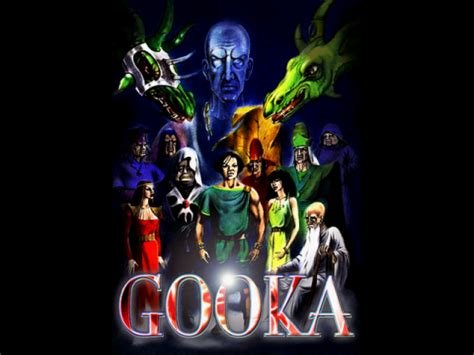
Gooka is a 1997 Czech adventure game developed by JRC Interactive, based on the novel ‘Gooka and Dragon People’ by Vlado Ríša. Players assume the role of Gooka, a protagonist falsely accused of murdering his father, and must embark on a quest to clear his name while unraveling a deeper conspiracy that threatens the fantasy world of Janatris. Blending traditional adventure gameplay with puzzle elements and a mix of fantasy and sci-fi themes, Gooka was notable as the first Czech adventure game designed exclusively for Windows, though it remained a regional release limited to the Czech Republic.
Gooka Patches & Updates
Gooka Reviews & Reception
gameboomers.com : Confused? Yes, I was. Thankfully, once I started playing the game, things got better.
Gooka: A Forgotten Gem of Czech Adventure Gaming
Introduction
In the vast tapestry of video game history, certain titles emerge as cultural touchstones, while others fade into obscurity, known only to a dedicated few. Gooka, a 1997 Czech adventure game developed and published by JRC Interactive, falls into the latter category—a hidden gem that deserves rediscovery. Based on the novel Gooka a Dračí lidé (Gooka and Dragon People) by Vlado Ríša (writing under the pseudonym Richard D. Evans), Gooka is a unique blend of fantasy and science fiction, wrapped in the trappings of a classic point-and-click adventure. This review aims to shed light on Gooka‘s legacy, its narrative depth, gameplay mechanics, and its place in the broader context of adventure gaming.
Development History & Context
The Studio and Creators
JRC Interactive, the studio behind Gooka, was a relatively small but ambitious Czech developer in the late 1990s. The game was a labor of love, with a team of 34 people contributing to its creation. Notably, Vlado Ríša, the author of the source novel, was deeply involved in the game’s script, ensuring that the adaptation remained faithful to his vision. The collaboration between Ríša and the development team, including scenario writers Miroslav Fídler and Mirek Papež (Miroslav Papež), resulted in a narrative-rich experience that resonated with Czech audiences.
Technological Constraints and Innovations
Gooka was the first Czech adventure game to run exclusively on Windows, a significant milestone for the local gaming industry. At the time, the Czech Republic was still finding its footing in the global gaming market, and Gooka represented a bold step forward. The game’s development was constrained by the technological limitations of the era, particularly in terms of graphics and sound. However, the team leveraged these constraints creatively, crafting a game that relied heavily on its narrative and atmospheric elements to immerse players.
The Gaming Landscape of 1997
The late 1990s were a golden age for adventure games, with titles like The Curse of Monkey Island, Grim Fandango, and Blade Runner captivating audiences worldwide. However, the Czech gaming scene was still nascent, with few titles gaining international recognition. Gooka was released into this competitive landscape, where it faced stiff competition from more polished Western titles. Despite its limited reach—it was only sold within the Czech Republic—Gooka carved out a niche for itself, becoming a beloved cult classic among Czech gamers.
Narrative & Thematic Deep Dive
Plot Overview
Gooka places players in the role of the titular character, a man accused of murdering his own father. The game’s narrative unfolds as Gooka seeks to prove his innocence and uncover the true culprit. This personal quest soon expands into a larger struggle for the fate of the world of Janatris, blending personal drama with epic stakes. The story is richly layered, with themes of betrayal, redemption, and the search for truth.
Characters and Dialogue
The characters in Gooka are vividly drawn, each with their own motivations and secrets. Gooka himself is a complex protagonist, torn between his desire for justice and the weight of the accusations against him. The supporting cast, including allies and adversaries, are equally compelling, with dialogue that reflects the game’s literary roots. The voice acting, while somewhat dated by modern standards, adds depth to the characters, making their interactions feel authentic and engaging.
Themes and Symbolism
Gooka explores several profound themes, chief among them the struggle for identity and the consequences of false accusations. The game’s blend of fantasy and science fiction elements serves as a metaphor for the clash between tradition and progress, a theme that resonates strongly in the context of post-communist Czech society. The world of Janatris, with its mix of medieval and futuristic elements, reflects this tension, creating a setting that is both familiar and alien.
Gameplay Mechanics & Systems
Core Gameplay Loop
At its heart, Gooka is a classic point-and-click adventure game, with players navigating the world of Janatris, interacting with objects, and solving puzzles to progress the story. The gameplay is driven by exploration and discovery, with a strong emphasis on narrative progression. Players must gather clues, interrogate characters, and piece together the mystery of Gooka’s father’s murder.
Combat and Character Progression
While Gooka is primarily an adventure game, it incorporates elements of combat and character progression. The combat system is turn-based, with players engaging in strategic battles that require careful planning and resource management. Gooka’s abilities can be upgraded through a system that allows players to shift power between physical and mental attributes, adding a layer of customization to the gameplay.
Puzzle Design
The puzzles in Gooka are varied and challenging, ranging from inventory-based conundrums to environmental puzzles that require keen observation and logical thinking. Some puzzles are timed, adding a sense of urgency to the gameplay. The dice game, in particular, stands out as a unique and memorable challenge, though its rules may be obscure to players unfamiliar with the game’s mechanics.
User Interface and Controls
The user interface in Gooka is functional but somewhat dated, reflecting the technological constraints of the era. The game relies heavily on mouse controls, with keyboard alternatives available for certain actions. The inventory system is straightforward, allowing players to manage items and use them in the appropriate contexts. While the UI may feel clunky by modern standards, it is intuitive enough to avoid frustrating players.
World-Building, Art & Sound
Setting and Atmosphere
The world of Janatris is a richly imagined setting, blending fantasy and science fiction elements to create a unique and immersive environment. The game’s art direction reflects this duality, with medieval castles and futuristic technology coexisting in a seamless fusion. The atmosphere is dark and moody, with a sense of mystery and danger permeating every corner of the world.
Visual Direction
The graphics in Gooka are a product of their time, with pre-rendered backgrounds and 2D character sprites. While the visuals may not hold up to modern standards, they are effective in conveying the game’s atmosphere and setting. The character designs are detailed and expressive, with animations that, while somewhat stiff, manage to convey emotion and intent.
Sound Design and Music
The sound design in Gooka is understated but effective, with ambient sounds and subtle effects that enhance the game’s atmosphere. The music, composed by Ondřej Mihula, is a standout feature, with a haunting and melodic score that complements the game’s narrative and setting. The voice acting, while not always polished, adds depth to the characters and helps to immerse players in the story.
Reception & Legacy
Critical and Commercial Reception
Upon its release in 1997, Gooka received mixed reviews from critics. While praised for its narrative depth and atmospheric setting, the game was criticized for its dated graphics and clunky controls. Commercially, Gooka was a modest success, selling primarily within the Czech Republic and gaining a dedicated fanbase. Its limited international release meant that it remained largely unknown outside of its home country.
Evolution of Reputation
Over the years, Gooka has gained a cult following among adventure game enthusiasts, particularly those with an interest in Czech gaming history. The game’s unique blend of fantasy and science fiction, combined with its rich narrative, has earned it a place in the hearts of many players. While it may not have achieved the same level of recognition as other adventure games of its era, Gooka is remembered fondly by those who experienced it.
Influence on Subsequent Games
Gooka paved the way for future Czech adventure games, demonstrating that locally developed titles could compete with international releases. Its success inspired other Czech developers to explore narrative-driven gaming, leading to a flourishing of the genre in the region. The game’s sequel, Gooka: The Mystery of Janatris, released in 2004, built upon the original’s foundations, incorporating new technologies and expanding the game’s scope.
Conclusion
Gooka is a game that deserves to be remembered. While it may not have achieved the same level of fame as other adventure games of its era, its rich narrative, unique setting, and challenging gameplay make it a standout title in the genre. For those willing to look beyond its dated graphics and clunky controls, Gooka offers a deeply immersive and rewarding experience. It is a testament to the creativity and passion of its developers, and a reminder of the rich history of Czech gaming. In the pantheon of adventure games, Gooka may be a forgotten gem, but it is one that shines brightly for those who take the time to discover it.