
- Release Year: 2013
- Platforms: Windows
- Publisher: S.A.D. Software Vertriebs- und Produktions GmbH
- Developer: Alawar Friday’s Games
- Genre: Adventure
- Perspective: 1st-person
- Game Mode: Single-player
- Gameplay: Hidden object, Mini-games, Point and select
- Setting: Detective, Mystery
- Average Score: 90/100
Description
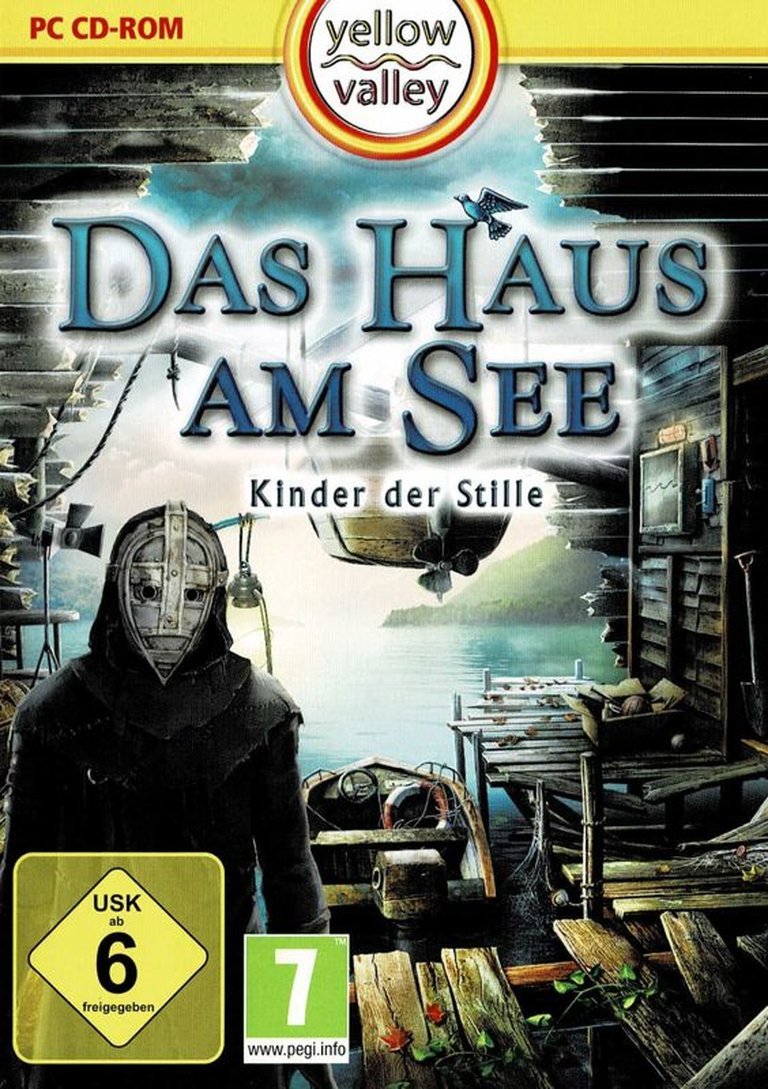
The Lake House: Children of Silence is a first-person adventure and hidden object game set in a creepy, abandoned lakeside town. Players uncover a chilling mystery involving a sinister masked antagonist while exploring eerie environments, solving puzzles, and piecing together the dark history of the town. The game blends detective storytelling with atmospheric horror, offering a mix of hidden object challenges and mini-games to progress through the unsettling narrative.
Gameplay Videos
The Lake House: Children of Silence Free Download
The Lake House: Children of Silence Guides & Walkthroughs
The Lake House: Children of Silence Reviews & Reception
flyingomelette.com : A triumphant return to form for the series.
gametop.com (80/100): The Lake House: Children of Silence delivers an atmospheric and emotionally charged adventure that will resonate with fans of hidden-object games.
gamezebo.com : Lake House: Children of Silence is moody, atmospheric, and one amazing hidden object adventure game.
everythingisamiracleblog.wordpress.com (100/100): A very intriguing mystery thriller which starts as a romance and quickly turns into a nightmare.
The Lake House: Children of Silence – A Haunting Masterpiece of Hidden Object Storytelling
Introduction: A Mystery That Lingers Like Fog on the Lake
The Lake House: Children of Silence (2013) is more than just a hidden object game—it’s a psychological descent into the shadows of memory, grief, and the uncanny. Developed by Alawar Friday’s Games and published by S.A.D. Software, this title stands as a haunting testament to how atmospheric storytelling and meticulous world-building can elevate a genre often dismissed as casual. With its eerie lakeside setting, a protagonist grappling with repressed trauma, and a masked antagonist who embodies childhood nightmares, The Lake House crafts an experience that lingers in the mind long after the final puzzle is solved.
At its core, the game is a detective/mystery narrative wrapped in the mechanics of a first-person hidden object adventure, but its true power lies in its ability to weave a Gothic horror tapestry from seemingly mundane objects—a burned photograph, a rusted toy, a mask left behind in a child’s room. The game’s legacy is one of unfulfilled potential, however, marred by publisher mismanagement (notably the missing Collector’s Edition content in some releases) and a lack of critical recognition at launch. Yet, for those who seek it out, The Lake House remains a cult classic in the hidden object genre, a game that proves how deeply emotional and unsettling the medium can be.
Development History & Context: A Game Born from the Shadows
The Studio & Vision: Alawar’s Foray into Psychological Horror
Alawar Friday’s Games, a subsidiary of Alawar Entertainment, was known for producing casual hidden object games with a focus on accessibility and atmospheric storytelling. The Lake House represented a departure from their more whimsical titles, embracing a darker, more mature tone inspired by Gothic literature and psychological horror. The game’s creative team drew from influences like Silent Hill (particularly its use of childhood trauma and abandoned spaces) and classic film noir mysteries, aiming to craft a narrative where the environment itself felt like a character.
The game’s art director reportedly sketched over 50 mask designs before settling on the final, unsettling visage that would become the game’s iconic antagonist. This attention to detail extended to the environmental storytelling, with every location—from the rotting lake house to the abandoned theater—designed to evoke a sense of decay and forgotten sorrow.
Technological Constraints & the Casual Game Landscape of 2013
Released in March 2013, The Lake House arrived during a golden age of hidden object games, a time when titles like Mystery Case Files and Dark Parables dominated digital storefronts. The game was built using Adobe Flash, a now-defunct technology that powered many casual games of the era. While this allowed for smooth animations and interactive elements, it also meant the game was tethered to an aging platform, leading to compatibility issues in later years (as seen with the Steam bundle debacle).
The fixed/flip-screen perspective and point-and-click interface were standard for the genre, but The Lake House distinguished itself through:
– A non-linear exploration system (via a map that tracked active areas).
– Multi-layered puzzles that required logical item combinations rather than arbitrary trial-and-error.
– A dual difficulty mode (Casual vs. Expert), catering to both newcomers and veteran HOG players.
The Collector’s Edition Controversy: A Tale of Lost Content
One of the most infamous aspects of The Lake House’s history is the disappearance of its Collector’s Edition content in certain releases. The bonus chapter, which explained the origins of the evil mask and provided narrative closure, was accidentally omitted from the English version of the Steam 6-in-1 bundle after a 2022 update. This oversight was never officially addressed by Alawar, leaving many players with an incomplete story.
The Collector’s Edition also included:
– Concept art and developer commentary (revealing the game’s inspirations).
– A strategy guide (helpful for the game’s more obscure puzzles).
– High-resolution wallpapers (showcasing the game’s moody aesthetic).
This debacle underscores a larger issue in casual game preservation—many titles from this era are lost to time due to abandoned platforms, missing updates, and publisher negligence.
Narrative & Thematic Deep Dive: A Story of Memory, Loss, and the Uncanny
Plot Summary: A Wedding Proposal Turned Nightmare
The game opens with Henry proposing to his fiancée, Ann, in a dimly lit café. Their joy is shattered when Ann receives a mysterious package—a burned photograph of her long-dead brother, Tommy, who vanished 15 years prior. The couple travels to Ann’s abandoned childhood home, a lake house shrouded in fog, where they hope to uncover the truth. Almost immediately, Ann is kidnapped by a masked figure, and Henry must piece together the past to save her.
As Henry explores the decaying house and the nearby town, he uncovers:
– Home movies revealing Tommy’s obsession with masks.
– Journal entries hinting at childhood abuse and repressed memories.
– A secret room where the truth about Tommy’s fate is revealed.
The narrative culminates in a twist ending that blurs the line between reality and hallucination, leaving players questioning what was real and what was a manifestation of trauma.
Themes: The Weight of the Past
The Lake House is a meditation on grief, memory, and the unreliability of perception. Key themes include:
1. The Uncanny in Childhood – The masked antagonist represents childhood fears made manifest, a physical embodiment of Tommy’s unresolved trauma.
2. The Haunting Power of Places – The lake house itself is a character, a repository of memories that refuse to stay buried.
3. Repressed Memory & Psychological Horror – Henry’s fragmented recollections suggest he may have witnessed something horrific as a child.
4. The Illusion of Closure – The bonus chapter (when accessible) complicates the ending, implying that some mysteries should remain unsolved.
Characters & Dialogue: A Study in Subtext
- Henry – The player’s avatar, a man whose calm demeanor masks deep-seated guilt.
- Ann – A woman haunted by her brother’s disappearance, her fragile optimism contrasting with the game’s dark tone.
- The Masked Figure – A silent, spectral presence whose motives remain ambiguous until the finale.
- Tommy (in flashbacks) – A tragic figure, his obsession with masks hinting at something far more sinister.
The dialogue is sparse but effective, relying on environmental storytelling (notes, photographs, objects) to convey emotion. The voice acting, while not AAA-quality, carries a melancholic weight that suits the narrative.
Gameplay Mechanics & Systems: A Masterclass in Hidden Object Design
Core Gameplay Loop: Exploration, Puzzles, and Hidden Objects
The Lake House follows a classic HOG structure but elevates it with clever twists:
1. Point-and-Click Exploration – Players navigate between locations (house, town, docks) using a map that highlights active areas.
2. Hidden Object Scenes – List-based searches with interactive elements (e.g., smashing a jar to reveal an item).
3. Inventory-Based Puzzles – Combining items in logical ways (e.g., using a hammer to break a lock).
4. Mini-Games & Logic Puzzles – Diverse challenges ranging from chess-based puzzles to connect-the-dots drawings.
Innovative Systems
- The Film Projector – Players collect film strips that, when played, reveal backstory through grainy, silent movies.
- The Journal & Map – A dynamic journal updates with clues and objectives, while the map prevents aimless wandering.
- Difficulty Modes –
- Casual: Sparkling hints, faster hint recharge.
- Expert: No sparkles, slower hints, more challenging puzzles.
Flaws & Frustrations
- Some puzzles lack clarity (e.g., the racehorse mini-game is counterintuitive).
- Backtracking can feel tedious in later chapters.
- The lack of a built-in hint system for puzzles (only for hidden objects) frustrates some players.
World-Building, Art & Sound: A Symphony of Dread
Setting & Atmosphere: A Town Frozen in Time
The game’s visual design is its strongest asset:
– The Lake House – A decaying Victorian mansion, its peeling wallpaper and dust-covered furniture evoking gothic horror.
– The Abandoned Town – A fog-choked village with boarded-up shops, a derelict theater, and a docked whaling ship.
– The Mask Kiosk – A creepy stall filled with eerie, expressionless masks, hinting at Tommy’s obsession.
The color palette is muted and desaturated, with blues and grays dominating, reinforcing the melancholic tone.
Sound Design: The Music of Memory
- The Soundtrack – A haunting piano motif recurs throughout, evolving as the mystery deepens.
- Ambient Sounds – Creaking floorboards, distant whispers, and the lapping of lake water create an immersive soundscape.
- Voice Acting – Subdued and natural, avoiding the over-the-top performances common in casual games.
Reception & Legacy: A Cult Classic Overlooked by Critics
Critical Reception: A Mixed Bag
- Gametop (8/10) – Praised its atmosphere and storytelling but noted limited replayability.
- Gamezebo (100/100) – Called it “one of the best hidden object games ever made.”
- JayIsGames (No Score, but Positive) – Highlighted its Silent Hill-esque vibes and clever puzzles.
- Metacritic (No Score) – Lack of reviews suggests it was overshadowed by bigger titles.
Commercial Performance & Fan Reception
- A niche hit among HOG enthusiasts, particularly those who appreciate darker narratives.
- The Collector’s Edition controversy soured some players, but dedicated fans still recommend it highly.
- Influence on Later Games – Its psychological horror elements can be seen in later titles like Dark Arcana: The Carnival and Grim Legends: The Forsaken Bride.
Conclusion: A Haunting Experience Worth Uncovering
The Lake House: Children of Silence is not just a hidden object game—it’s a psychological journey. Its atmospheric storytelling, eerie visuals, and emotional depth set it apart from its peers. While flawed by publisher mismanagement and some opaque puzzles, it remains a must-play for fans of narrative-driven HOGs.
Final Verdict: 8.5/10 – A Masterpiece of Mood, Marred by Missing Content
Where to Play:
– Collector’s Edition (Recommended) – GamersGate, Big Fish Games
– Standard Edition – Steam (but beware missing content!)
For those willing to dive into its foggy depths, The Lake House offers an experience that lingers—like a half-remembered nightmare.