
- Release Year: 2020
- Platforms: Windows
- Publisher: Earthshine
- Developer: Earthshine
- Genre: Simulation, Strategy, Tactics
- Perspective: Diagonal-down
- Game Mode: Online Co-op, Single-player
- Gameplay: City building, construction simulation
- Average Score: 91/100
Description
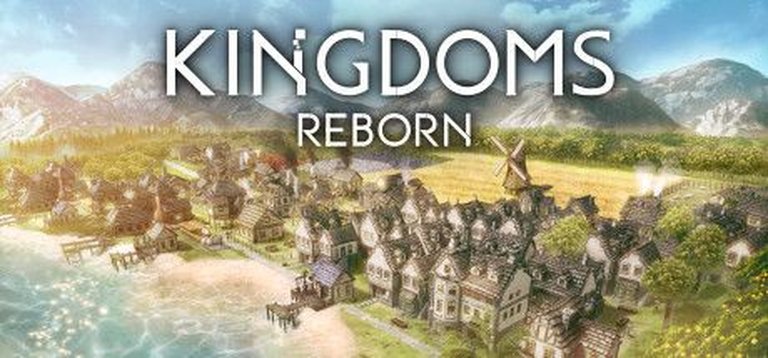
Kingdoms Reborn is a real-time strategy and city-building simulation game set in a post-apocalyptic world where civilization must rebuild after a catastrophic freeze. Players take on the role of a ruler, expanding their kingdom by gathering resources, managing trade, researching technologies, and ensuring the happiness of their citizens. The game features five distinct factions, each with unique strengths and weaknesses, and offers procedural map generation for varied gameplay experiences. With a focus on survival, diplomacy, and strategic planning, players must navigate seasonal challenges, such as food shortages in winter, while competing or cooperating with neighboring nations.
Gameplay Videos
Where to Buy Kingdoms Reborn
PC
Kingdoms Reborn Cracks & Fixes
Kingdoms Reborn Guides & Walkthroughs
Kingdoms Reborn Reviews & Reception
steambase.io (91/100): Kingdoms Reborn has earned a Player Score of 91 / 100.
steamcommunity.com : I have no idea why this game isn’t a lot more popular than it is; it’s fabulous.
Kingdoms Reborn Cheats & Codes
PC (Cheat Engine Table – leonardovac)
Load the table in Cheat Engine and activate the desired functions.
| Code | Effect |
|---|---|
| Bypass Trade Limit | Remove trade limit |
| Free Cards | Free cards |
| Free Land Claim | Free land claims |
| Free Trades | Free trades |
| Free Upgrades | Free upgrades |
| Increase Game Speed | Speed up the game |
PC (Trainer – FLiNG)
Press the corresponding Numpad keys during gameplay to activate cheats.
| Code | Effect |
|---|---|
| Numpad 1 | Edit money |
| Numpad 2 | Obtain all resources |
| Numpad 3 | Obtain all food |
| Numpad 4 | Obtain all luxury items |
| Numpad 5 | Infinite SP |
| Numpad 6 | Infinite research points |
PC (PLITCH)
Use the PLITCH app to enable cheats during gameplay.
| Code | Effect |
|---|---|
| Unlimited money | Infinite money |
| Add Money (1 = 100) | Add money |
| Set Wood | Set wood quantity |
| Set Coal | Set coal quantity |
| Add Science Points (1SP = 15,000) | Add science points |
PC (FearLess Cheat Engine – Sinclair1)
Use the Cheat Evolution app to activate the trainer options.
| Code | Effect |
|---|---|
| Unlimited Gold | Infinite gold |
| Unlimited Resources | Infinite resources |
| Unlimited Research Points | Infinite research points |
| Force Pause | Pause the game |
| Speedhack | Increase game speed |
PC (Cheat Happens Trainer)
Use the trainer during gameplay to activate cheats.
| Code | Effect |
|---|---|
| Unlimited Money | Infinite money |
| Unlimited Research Points | Infinite research points |
| Buy Cards Reroll Are Always Free | Free card rerolls |
| Unlimited Cards | Infinite cards |
| Unlimited SP | Infinite SP |
| Game Speed | Adjust game speed |
PC (Cheat Engine Table – N3rveMods)
Load the table in Cheat Engine and activate the desired functions.
| Code | Effect |
|---|---|
| Unlimited Gold | Infinite gold |
| Unlimited Resources | Infinite resources |
Kingdoms Reborn: A Deep Dive into a Modern City-Building Masterpiece
Introduction: The Renaissance of a Genre
Kingdoms Reborn (2020) emerges as a bold, refreshing entry in the city-building genre, blending the meticulous resource management of Banished, the strategic depth of Civilization, and the aesthetic charm of Anno. Developed by the indie studio Earthshine, this game carves its niche by offering a procedurally generated open world, a dynamic card-based progression system, and a multiplayer experience that fosters both cooperation and competition. At its core, Kingdoms Reborn is a love letter to the golden age of city builders, reimagined for a modern audience with a twist of unpredictability and replayability.
The game’s premise is deceptively simple: guide a fledgling settlement through the Dark Ages into the Industrial Era, managing resources, technology, and citizen needs while navigating the challenges of a post-apocalyptic freeze. Yet, beneath this surface lies a complex, layered experience that rewards patience, strategy, and adaptability. With its Early Access roots still visible in its evolving mechanics, Kingdoms Reborn stands as a testament to the potential of indie development in revitalizing classic genres.
This review will dissect Kingdoms Reborn across its development history, narrative and thematic depth, gameplay mechanics, world-building, reception, and legacy. By the end, we’ll determine whether it’s a fleeting experiment or a lasting contribution to the city-building pantheon.
Development History & Context: The Birth of a Vision
The Studio Behind the Kingdom
Earthshine, a small but ambitious indie studio, embarked on Kingdoms Reborn with a clear mission: to create a city builder that combined the depth of classic titles with modern innovations. The studio’s approach was deeply influenced by community feedback, particularly from its active Discord server, which shaped the game’s direction during its Early Access phase. The lead developer, working initially as a solo creator, leveraged this feedback to refine mechanics, balance factions, and expand the game’s scope.
Technological Foundations
Built on Unreal Engine 4, Kingdoms Reborn benefits from robust visuals and a flexible architecture that allows for procedural world generation. The engine’s capabilities enable the game’s dynamic weather systems, biome diversity, and the intricate simulation of individual citizens—a feature that sets it apart from zone-based city builders like SimCity. However, the choice of UE4 also introduced challenges, particularly in optimization, as some players reported performance issues on lower-end systems.
The Gaming Landscape at Launch
Released in November 2020, Kingdoms Reborn entered a market dominated by established franchises (Anno 1800, Cities: Skylines) and a resurgence of indie city builders (Frostpunk, Against the Storm). Its Early Access model was a double-edged sword: it allowed for iterative development but also risked alienating players wary of unfinished products. The game’s unique selling points—procedural generation, multiplayer, and the card system—helped it stand out, though its niche appeal meant it didn’t achieve mainstream recognition.
The Vision: A Living, Breathing World
The developers envisioned Kingdoms Reborn as more than just a city builder; they wanted a living ecosystem where player choices had tangible consequences. The card system, inspired by tabletop games, was designed to inject unpredictability into each playthrough, ensuring no two games felt identical. Multiplayer was another cornerstone, enabling up to 18 players to collaborate or compete in the same world—a feature rarely seen in the genre.
Narrative & Thematic Deep Dive: Rebuilding Civilization from the Ashes
The Post-Apocalyptic Premise
Kingdoms Reborn opens with a stark premise: a catastrophic freeze has wiped out most of civilization, forcing survivors to rebuild from scratch. This After the End scenario (a trope popularized by games like Frostpunk) serves as the backdrop for the player’s journey, framing every decision as a struggle for survival and progress. The narrative is minimalist, delivered through brief text blurbs and environmental storytelling, but it effectively sets the tone for the game’s challenges.
Factions: Cultural Identity and Gameplay Diversity
The game features five distinct factions, each with unique strengths, weaknesses, and cultural aesthetics:
– Duchies (Western European): Faster research but balanced resources.
– Emirates (Arabic-inspired): Trade-focused with reduced wood-gathering but lower trade fees.
– Norsemen: Cold-resistant with bonus wood yield, ideal for tundra biomes.
– Shogunate (Japanese-inspired): Luxury production specialists with unique units like mecha suits.
– Tlatoa (Aztec-inspired): Reduced food consumption but higher trade building costs.
Each faction’s design reflects historical and cultural influences, adding depth to the gameplay. For example, the Shogunate’s ability to produce Humongous Mecha in the late game is a delightful nod to anime tropes, while the Emirates’ trade bonuses encourage a mercantile playstyle.
Themes: Survival, Progress, and Moral Dilemmas
The game’s themes revolve around rebirth, adaptation, and the cost of progress. Players must balance immediate survival needs (food, fuel, tools) with long-term goals (technology, expansion, luxury). The cannibalism card, unlockable after mass starvation, exemplifies the game’s willingness to explore dark themes. While mechanically useful (turning dead citizens into food), it comes with severe happiness penalties, forcing players to weigh desperation against morality.
Procedural Storytelling
Unlike linear narrative-driven games, Kingdoms Reborn tells its story through emergent gameplay. The procedural world generation, random events, and card draws create unique challenges for each playthrough. A player might start in a lush forest biome only to face a brutal winter that freezes rivers and halts food production, or they might stumble upon a tribe offering rare resources—if they can afford the province.
Gameplay Mechanics & Systems: The Engine of Empire
Core Gameplay Loop: From Hamlet to Empire
The gameplay in Kingdoms Reborn revolves around three pillars:
1. Resource Management: Gather, produce, and trade essential goods (food, fuel, tools, luxuries).
2. Technology and Progression: Research advancements through a sprawling tech tree to unlock new buildings and upgrades.
3. Expansion and Diplomacy: Claim new provinces, interact with AI factions, and compete or cooperate in multiplayer.
The loop begins with survival: securing food, fuel, and shelter for your citizens. As the settlement grows, players must upgrade houses (requiring luxuries), expand into new biomes, and navigate the seven difficulty levels, which increase resource consumption demands.
The Card System: A Game-Changer
The card system is Kingdoms Reborn’s most innovative mechanic. Players draw cards each round, offering:
– Building Cards: Unlock structures like farms, mines, or factories.
– Action Cards: Temporary buffs or events (e.g., “Winter Fishing” for cold-weather food).
– Policy Cards: Permanent bonuses or penalties (e.g., “Cannibalism”).
– Wild Cards: Flexible cards that can be used for any purpose.
This system ensures replayability and strategic variety. A player might draw cards that favor rapid expansion or force them to adapt to scarcity. The randomness can be frustrating (e.g., drawing useless cards in a crisis), but it also creates memorable moments, like discovering a Magic Mushroom Farm card just as your citizens face starvation.
Citizen Simulation: The Heart of the Game
Unlike zone-based city builders, Kingdoms Reborn simulates individual citizens, each with needs, jobs, and behaviors. Citizens:
– Work in assigned buildings (farmers, miners, craftsmen).
– Consume resources (food, fuel, tools).
– Procreate (population growth depends on housing and happiness).
– Die from starvation, cold, or disease.
This simulation adds depth but also complexity. Players must ensure:
– Housing Appeal: Houses near polluting industries (e.g., coal mines) lose appeal, reducing happiness.
– Tool Supply: Without tools, workers slow down or stop entirely.
– Seasonal Challenges: Winter halts farming, forcing reliance on stored food.
Combat and Military: A Work in Progress
Military mechanics in Kingdoms Reborn are underdeveloped compared to its economic systems. Players can train units (e.g., swordsmen, archers) and raid neighboring provinces, but combat lacks depth. The Shogunate’s mecha units are a fun late-game novelty, but overall, warfare feels tacked on—a missed opportunity given the game’s strategic ambitions.
Multiplayer: Cooperation and Competition
Multiplayer supports up to 18 players, allowing for:
– Cooperative Play: Shared kingdoms with combined resources.
– Competitive Play: Vassalization or domination victories.
– Hybrid Modes: Trading, raiding, or alliances.
The multiplayer experience is uniquely social, fostering community-driven gameplay. However, balancing cooperative and competitive elements remains a challenge, and some players report synchronization issues in large games.
UI and Quality of Life
The UI is functional but clunky, particularly in managing large cities. Key issues include:
– Storage Management: Tracking resources across multiple warehouses is cumbersome.
– Card Overload: Late-game card draws can feel overwhelming.
– Pathfinding: Citizens sometimes get stuck, especially in dense cities.
Despite these flaws, the game’s hotkey system (e.g., Ctrl-F for fertility overlay) and build menus streamline construction.
World-Building, Art & Sound: Crafting a Believable Realm
Procedural Generation: A World of Endless Possibilities
The procedurally generated world is Kingdoms Reborn’s crowning achievement. Players can customize:
– Biomes: Tundra, boreal forest, desert, jungle, etc.
– Climate: Temperature, moisture, sea levels.
– Resources: Gold, coal, oil, and rare plants.
Each map seed creates a unique challenge. A desert start forces trade reliance, while a forest biome offers abundant wood but requires careful firewood management. The ruins and tribes scattered across the map add exploration incentives, though their impact on gameplay is limited.
Visual Design: Aesthetic Diversity
The game’s art style is colorful and detailed, with each faction boasting distinct architecture:
– Duchies: Medieval European stone and timber.
– Shogunate: Pagoda roofs and cherry blossoms.
– Tlatoa: Mesoamerican pyramids and vibrant murals.
The biome diversity enhances immersion. Jungles teem with exotic plants, while tundras are stark and unforgiving. However, the camera angles (diagonal-down perspective) can obscure details in dense cities.
Sound Design: The Symphony of Civilization
Composed by Alistair Lindsay (of RimWorld and Prison Architect fame), the soundtrack is atmospheric and dynamic, shifting from serene village themes to tense survival melodies. Ambient sounds—rustling trees, bustling markets, howling winds—further immerse players in the world.
Reception & Legacy: A Cult Classic in the Making?
Critical Reception: A Mixed but Promising Start
Kingdoms Reborn entered Early Access to positive but cautious reviews. Players praised its:
– Depth and replayability (thanks to the card system).
– Multiplayer innovation.
– Procedural world design.
Criticisms focused on:
– Performance issues (optimization for lower-end PCs).
– Underdeveloped combat.
– UI clunkiness.
On Steam, the game holds a Very Positive rating (89% from 4,346 reviews), with players highlighting its relaxing yet challenging gameplay. However, its niche appeal means it hasn’t achieved the mainstream success of titles like Cities: Skylines.
Community and Modding
The Kingdoms Reborn community is small but passionate, with active Discord discussions and player-created guides (e.g., Curl’s Essential Guide). Modding support is limited, but the developers have expressed interest in expanding it post-release.
Influence on the Genre
While not a trendsetter, Kingdoms Reborn contributes to the renaissance of complex city builders. Its card system and multiplayer focus could inspire future titles, much like Banished influenced survival-city hybrids.
Conclusion: A Flawed Gem with Enduring Appeal
Kingdoms Reborn is a bold, ambitious, and flawed city builder that carves its own path in a crowded genre. Its strengths—procedural worlds, deep resource management, and innovative card mechanics—outshine its weaknesses (clunky UI, underdeveloped combat). For fans of Banished, Anno, or Frostpunk, it offers a fresh, challenging, and replayable experience.
Final Verdict: 8.5/10 – A Must-Play for City-Building Enthusiasts
While not perfect, Kingdoms Reborn is a labor of love that rewards patience and strategy. Its Early Access roots are still visible, but its core mechanics are polished enough to deliver hundreds of hours of engaging gameplay. If you crave a city builder that feels alive, this is it.
Recommendation:
– Buy if you enjoy deep resource management, procedural worlds, and multiplayer city builders.
– Wait if you prefer polished, mainstream titles or dislike Early Access quirks.
– Avoid if you want a combat-focused or narrative-driven experience.
Kingdoms Reborn may not be a revolution, but it’s a worthy evolution—one that proves the city-building genre still has room to grow.