
- Release Year: 2018
- Platforms: Windows
- Publisher: Altair Game
- Developer: Crystal Box Team
- Genre: Action
- Perspective: Side view
- Game Mode: Single-player
- Gameplay: Platform
Description
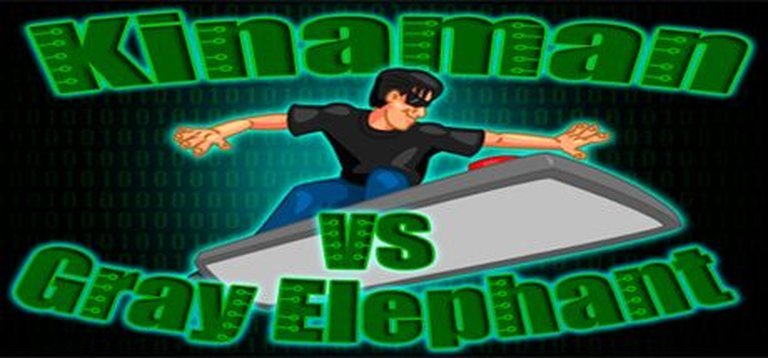
Kinaman vs Gray Elephant is a challenging 2D platformer developed by Crystal Box Team, where protagonist Kinaman and his friends are mysteriously sucked into a video game console after a glitch. Players must navigate large, open levels filled with complex puzzles, relentless enemies, and deadly obstacles in this pixel-art adventure inspired by retro console nostalgia. The game features single-player modes and local co-op for two players, allowing players to choose from three characters while exploring non-linear paths and uncovering hidden secrets.
Gameplay Videos
Where to Buy Kinaman vs Gray Elephant
PC
Kinaman vs Gray Elephant Patches & Updates
Kinaman vs Gray Elephant Guides & Walkthroughs
Kinaman vs Gray Elephant: Review
Introduction
In the crowded landscape of indie platformers, Kinaman vs Gray Elephant emerges as a perplexing artifact—a game both ambitious and deeply flawed. Released in May 2018 by the small studio Crystal Box Team, this title promises a nostalgic journey into pixelated childhood adventures, yet its execution is mired in technical quirks and design contradictions. Inspired by a blogger’s childhood memories, it thrusts players into a surreal world where console lag sucks friends into a digital realm, pitting them against a bizarre antagonist. This review examines how Kinaman vs Gray Elephant balances its core ideas—hardcore challenge, local co-op, and retro aesthetics—against a backdrop of technical instability and uneven design. Ultimately, it stands as a fascinating, frustrating footnote in indie gaming history, a title that simultaneously embraces and subverts the platformer conventions it seeks to revive.
Development History & Context
Studio Vision and Origins
Developed by Crystal Box Team and published by Altair Game (later Conglomerate 5 and Droid Riot), Kinaman vs Gray Elephant was born from a singular, personal inspiration: a blogger’s nostalgic anecdotes about childhood gaming. The team’s vision was unapologetically niche—to create a “hardcore platformer” that evoked the frustration and wonder of classic console-era gaming. This ambition is evident in the game’s focus on punishing difficulty, pixel art aesthetics, and local co-op mechanics. However, the small scale of the studio (evident from the game’s minimal content and polish) suggests limited resources, which may explain the inconsistencies in execution.
Technological Constraints and Engine
Built on the 001 Game Creator engine—a tool accessible to indie developers but lacking the robustness of industry-standard frameworks like Unity or Unreal—Kinaman vs Gray Elephant operates within significant technical constraints. The engine’s limitations manifest in the game’s rigid physics, clunky menu navigation, and reliance on keyboard controls (with only “partial controller support”). The Windows-exclusive release (despite later listings for Mac/Linux) and anachronistic system requirements (Windows 98/XP compatibility) reflect a development timeline stuck in a retro mindset. This choice to prioritize accessibility over modernity, while thematically consistent, resulted in gameplay experiences hampered by dated design paradigms.
The Gaming Landscape of 2018
When Kinaman vs Gray Elephant launched, the indie scene was dominated by polished, emotionally resonant titles like Celeste and Hollow Knight. Games celebrated for their precision, narrative depth, and player-friendly design. In this context, Crystal Box Team’s decision to emphasize “keyboard-breaking” difficulty and minimalist storytelling was a deliberate counter-statement. The game arrived during a surge of co-op platformers (e.g., Streets of Rage 4), but its local-only split-screen mode and shared-life mechanics set it apart. While 2018 saw a boom in nostalgia-driven indies, Kinaman vs Gray Elephant’s unique blend of childhood nostalgia and unapologetic harshness was a gamble that paid off only with a cult audience.
Narrative & Thematic Deep Dive
Plot Premise and Absurdity
The narrative premise is deceptively simple: a group of friends playing a console game called “Kineman” are sucked into the digital world when it lags. The protagonist, “Kinaman,” must navigate this glitch-filled realm, confront the enigmatic “Gray Elephant,” and escape with his friends. This setup leans into surrealism—the Gray Elephant is not just a villain but a manifestation of technological failure, its name evoking both color and pachydermal absurdity. The plot unfolds through sparse environmental storytelling and cryptic dialogue, such as the instruction to “FIND HMUR!” (an anagram for “RUM” or “HUMOR”), leaving players to piece together the story’s fragmented logic.
Characters and Symbolism
The three playable characters (Kinaman, a friend, and a third unnamed figure) are interchangeable beyond sprite swaps, their personalities undefined. This anonymity reinforces the theme of collective childhood experience—players symbolize any group of friends bonding over games. The Gray Elephant, by contrast, is a potent symbol of technological malice. Its gray hue represents the “lag” that traps the heroes, while its elephantine form evokes the heavy, clumsy nature of outdated hardware. The game’s insistence on killing “even a small transistor” underscores a Luddite rage against digital obsolescence, framing the world as a hostile entity worthy of destruction.
Thematic Resonance
At its core, Kinaman vs Gray Elephant explores the duality of nostalgia: the warmth of shared memories versus the frustration of unreliable technology. The game’s “high complexity” is presented not as a flaw but as a tribute to the unfair difficulty of classic games, where progress was earned through persistence. However, this theme is undermined by the player’s inability to save progress seamlessly (see “Gameplay” section). The narrative also hints at meta-commentary—being trapped in a game mirrors the obsessive cycle of play, where real life is sacrificed for digital worlds. Yet, these ideas remain underdeveloped, buried beneath the game’s technical and design challenges.
Gameplay Mechanics & Systems
Core Loop and Platforming
The gameplay is a straightforward platformer loop: jump, dodge enemies, solve puzzles, and collect coins/stars. Levels are large and open, encouraging exploration, but this is undermined by confusing level design and punishing checkpoints. The “air jump” mechanic—allowing a mid-air boost after an accidental fall—is a rare moment of kindness, but it’s insufficient to offset the core frustration. Enemies include saws, transistors, and unnamed hazards, with hit detection so unreliable that players often die without visual contact. This inconsistency transforms challenge into tedium, as success depends less on skill than on memorizing arbitrary kill zones.
Combat and Character Progression
Combat is rudimentary: players can kill enemies by jumping on them, but there’s no depth or variety. Character progression is nonexistent—extra lives are granted sparingly, and coins serve no clear purpose beyond high scores. The three playable characters offer no unique abilities, rendering their selection purely cosmetic. This lack of progression contrasts sharply with the game’s “hardcore” branding, as mastery relies on perseverance rather than skill or growth. The shared-life co-op mechanic is the most innovative feature: two players share a single pool of lives, forcing cooperation. However, altered puzzles in co-op mode are superficial, failing to create meaningful interdependence.
UI and System Flaws
The UI is a labyrinth of poor design. Menues display text in multiple languages simultaneously, and navigation is counterintuitive—exiting settings often forces a full game restart. Save systems are broken; players can respawn in death traps (e.g., inside platforms or under saws), leading to instant-death loops. The lack of sound effects (only music plays) creates a sterile atmosphere, while camera inconsistencies (zooming in on death, pulling back during play) disrupt immersion. These issues aren’t minor bugs but systemic failures that betray the developer’s inexperience. As one reviewer noted, the game “should not be like this,” a sentiment echoed across the community.
World-Building, Art & Sound
Visual Design and Pixel Aesthetics
The art style is unapologetically retro, with pixel graphics reminiscent of 16-bit era games. Levels are dominated by a monochromatic palette—especially the oppressive greens that mimic old console cartridges. While this nods to nostalgia, it results in visual monotony. Enemy designs are generic (saws, floating orbs), and environmental details are sparse. The few Easter eggs (hidden stars, references to old hardware) are rare bright spots, but they’re drowned out by the game’s overall blandness. The “large open locations” promise variety, but in practice, levels feel repetitive, with obstacles recycled ad nauseam.
Sound Design and Atmosphere
Sound is the game’s weakest aspect. The soundtrack consists of cheerful, looped chiptunes that quickly grate, and there are no sound effects—no jumps, deaths, or enemy impacts. This silence creates a dissonant atmosphere, undercutting the tension of platforming challenges. The absence of audio feedback makes it harder to judge distances or enemy movements, exacerbating hit-detection issues. The only audio nuance is the music, which attempts to evoke childhood wonder but fails due to its repetitive nature. The overall soundscape feels incomplete, as if the game was rushed to release without polish.
World-Building and References
The world is built around meta-nostalgia, with levels resembling glitched console screens (e.g., flickering pixels, corrupted textures). References to “old consoles” are skin-deep—no deeper lore is explored beyond the premise of being trapped in a game. The Gray Elephant’s lair is a prime example: a sparse arena with no backstory, reducing the antagonist to a generic boss. This lack of world-building reinforces the game’s identity as a mechanical exercise rather than a living, breathing space. Despite claims of “many references,” the game fails to contextualize them, leaving the world feeling hollow.
Reception & Legacy
Launch Reception
Upon release, Kinaman vs Gray Elephant was met with derision. Steam reviews are “Mostly Negative,” with only 36% positive ratings (as of 2024). Common complaints included broken controls, unfair difficulty, and technical bugs. Positive reviews acknowledged the low price ($0.49–$4.99) and co-op potential but lamented the lack of polish. One player praised the “large space in the levels” and “cheerful music,” while another condemned the “hitboxes” and “inertia from movement.” The gaming press largely ignored it, with only niche outlets like Kotaku featuring screenshots but no substantive coverage. The game’s legacy is thus defined by player frustration, not critical acclaim.
Community and Evolution
The player base is minuscule but dedicated, evidenced by Steam guides and community discussions. Polish players created detailed walkthroughs (e.g., “Menu [PL/ANG]”), highlighting the game’s complexity and bugs. The developer’s attempts at engagement—offering free DLC keys for bug reports—showed goodwill but couldn’t salvage the game’s reputation. Over time, Kinaman vs Gray Elephant became a punchline in indie gaming circles, cited as an example of ambition without execution. Its Steam charts reveal negligible sales, and it’s frequently bundled with obscure titles, further cementing its status as a budget curiosity.
Influence and Historical Context
The game’s influence is negligible. It didn’t spawn imitators or trends, and Crystal Box Team’s subsequent titles (e.g., Super Trashforce) failed to build on its ideas. Instead, it serves as a cautionary tale about the pitfalls of nostalgia-driven development—how reverence for the past can lead to outdated design choices. Its place in history is as a relic of 2018’s indie boom, a time when low barriers to entry flooded Steam with games of varying quality. Unlike contemporaries that defined the era, Kinaman vs Gray Elephant is remembered only by those who braved its challenges, a cult title without cult status.
Conclusion
Kinaman vs Gray Elephant is a study in contradictions: a game that champions childhood nostalgia while frustrating players with unfair mechanics; a title built on co-op cooperation but undermined by technical failures. Its vision—capturing the frustration and joy of classic gaming—is admirable, but its execution is marred by broken systems, poor design, and a lack of polish. The core ideas—hardcore platforming, local co-op, pixel art—have merit, but they’re buried under a mountain of bugs and half-baked features.
For niche enthusiasts of difficult platformers or players seeking a short, co-op experience, Kinaman vs Gray Elephant might hold fleeting value. Its low price and nostalgic charm are genuine, but they’re insufficient to recommend it widely. In the annals of video game history, it stands as a flawed artifact—a reminder that even the most heartfelt ideas can’t compensate for a lack of technical and design expertise. Ultimately, Kinaman vs Gray Elephant is not a bad game, but an unfinished one—a snapshot of ambition undone by the harsh realities of independent development. Its legacy is not one of influence, but of curiosity: a title that dared to dream big, even if it fell short of the dream.