
- Release Year: 2015
- Platforms: Android, Oculus Go, Windows
- Publisher: OZWE Games
- Developer: OZWE Games
- Genre: Action
- Perspective: Behind view
- Game Mode: Single-player
- Gameplay: Direct control, Motion control, Shooter, Space flight
- Setting: Fantasy, Futuristic, Sci-fi
- Average Score: 70/100
- VR Support: Yes
Description
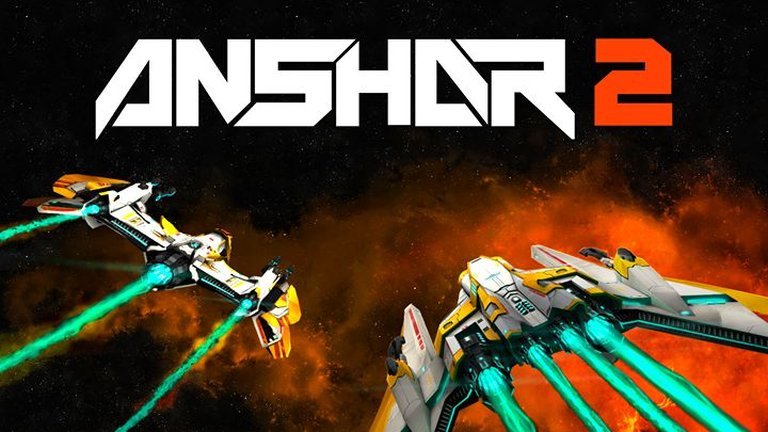
Set in the sci-fi Ansharian Empire ten years after crushing a rebellion, Anshar 2: Hyperdrive casts players as a pilot in Squad Alpha 10 battling a new extraterrestrial threat led by rogue Nergal fighters. This action shooter focuses on intense space dogfighting across a 13-mission campaign featuring diverse objectives like destroying cargo trains, protecting the Ansharian Mothership, and eliminating satellites. Players pilot various ships equipped with unique weapons including missiles, lasers, bombs, and EMP charges, with gameplay emphasizing manual aiming, strategic resource management, and utilizing upgrades dropped by defeated enemies.
Anshar 2 Guides & Walkthroughs
Anshar 2 Reviews & Reception
opencritic.com (70/100): A fun, fast-paced space combat simulator available on what’s essentially a portable VR headset? I don’t know about you, but that sounds good enough to me.
uploadvr.com : Anshar 2: Hyperdrive revives one of modern VR’s oldest games through a Meta Quest remake, offering a fantastic dogfighter.
Anshar 2: Review
Introduction
In the nascent landscape of virtual reality gaming, few titles embody the genre’s experimental spirit as vividly as Anshar 2. Originally launched in 2015 for Android and later expanded to Windows and Oculus Go, this space combat simulator established developer OZWE Games as a pioneer in VR dogfighting. Its 2022 remake, Anshar 2: Hyperdrive, revitalized this legacy for Meta Quest headsets, blending modern hardware with the original’s arcade-inspired thrills. This review deconstructs the game’s journey—from its roots in mobile VR to its current iteration—arguing that Anshar 2 represents a crucial, if imperfect, milestone in VR’s evolution. While its narrative and technical constraints are evident, its core dogfighting mechanics and immersive potential remain a testament to OZWE’s ambition.
Development History & Context
Origins in Mobile VR
Anshar 2 emerged during a pivotal era for VR. Its 2015 Android debut coincided with Samsung Gear VR’s rise, a platform that democratized VR but imposed severe hardware limitations. OZWE, a small independent studio, leveraged mobile chipsets to deliver a console-like space shooter experience—a remarkable feat given the era’s 3DOF (three-degrees-of-freedom) constraints. The original utilized head-tracking for piloting, a limitation necessitated by mobile hardware but which hindered precision combat.
The Quest Renaissance
By 2022, standalone VR headsets like the Meta Quest 2 enabled true 6DOF (six-degrees-of-freedom) movement and graphical sophistication. OZWE seized this opportunity, not merely porting Anshar 2 but remaking it as Hyperdrive. This wasn’t a nostalgia trip; it was a technical recalibration. CEO Stéphane Intissar stated the goal was to avoid a “meaningless straight port,” instead redesigning controls to leverage hand-tracking and overhauling visuals for modern GPUs. The shift from 3DOF to 6DOF symbolized VR’s maturation—transforming a constrained mobile experience into a fully realized, spatially aware dogfighter.
Narrative & Thematic Deep Dive
The plot of Anshar 2 is functional yet unremarkable—a classic sci-fi trope executed competently. Set a decade after the Separation Wars, players join Squad Alpha 10 of the Ansharian Empire to quell a resurgent Nergal faction led by a rogue former ally. The narrative hinges on planetary threats and superweapons, but its predictability is overshadowed by its role as a vehicle for action. Dialogue, while fully voiced, leans toward archetype: the grizzled commander, the stoic pilot. Themes of rebellion, sacrifice, and militarism are present but underdeveloped.
What elevates the story is its integration with gameplay. Missions contextualize objectives—protecting motherships, destroying satellites—turning lore into interactive spectacle. The campaign’s brevity (3–5 hours) prevents narrative fatigue, but its lack of emotional resonance leaves it a backdrop for the stellar combat.
Gameplay Mechanics & Systems
Core Combat Dynamics
Hyperdrive shines in its dogfighting, which balances arcade accessibility with depth. Players pilot three ship archetypes: nimble fighters, heavy bombers, and EMP specialists. Weapons include lock-on missiles, manual-aim lasers, and area-denial EMP charges, each requiring distinct tactics. The removal of auto-aim in Hyperdrive sharpens the challenge, demanding precision with motion-controlled aiming.
Control Revolution
The remake’s masterstroke is its control overhaul. Hyperdrive abandons the original’s head-tracking for hand-based movement:
– Third-person: Motion controls for ship movement, analog sticks for rotation and acceleration. This offers superior situational awareness but risks immersion-breaking disconnect.
– First-person: Players inhabit the cockpit, with controllers functioning as virtual control sticks. This heightens immersion but induces motion sickness for some due to hypersensitive response.
Options to remap buttons and adjust camera sensitivity cater to diverse playstyles, though snap-turning limits remain a minor frustration.
Mission Design & Progression
The 13-mission campaign excels in variety. Objectives range from bombing cargo trains on alien tundras to dodging asteroid fields in orbit. Each mission introduces new environments and weapon loadouts, combating repetition. Optional objectives—like protecting resource convoys—encourage replayability, and a bronze/silver/gold medal system incentivizes mastery. Multiplayer modes (deathmatch, co-op, battle royale) add longevity, though sparse at launch. Leveling unlocks cosmetic ship skins, helmets, and controller accessories—a rewarding progression loop.
World-Building, Art & Sound
Visual Evolution
Anshar 2’s aesthetics evolved alongside technology. The original’s mobile-era assets had a blocky charm but lacked polish. Hyperdrive refreshes everything: textures are sharper, models less angular, and shaders bloom with vibrant color. Environments—from ice planets to space stations—are varied and immersive, though not photorealistic. The comic-book aesthetic persists, favoring stylization over realism, which suits the game’s arcade tone.
Sound Design
Audio is a pillar of immersion in VR. Hyperdrive spatializes sound, allowing players to track enemy ships by direction—a critical mechanic in chaotic dogfights. Explosions resonate through controllers via haptic feedback, while the soundtrack, though unmemorable, complements action sequences. Voice acting is serviceable but occasionally flat, with dialogue often prioritizing exposition over character.
Reception & Legacy
Original Acclaim
The 2015–2016 versions of Anshar 2 were lauded for pushing VR boundaries. VRFocus awarded it 5/5, calling it “the kind of game that Gear VR needs to cement itself as a true platform.” UploadVR praised its “impressive graphics” and gameplay, cementing OZWE’s reputation as a VR innovator.
Hyperdrive’s Mixed Reception
The 2022 remake garnered positive but nuanced reviews. UploadVR commended its “fantastic dogfighting” and praised OZWE for “opting for a remake over a straight port.” WayTooManyGames (7/10) noted its flawed controls but acknowledged the appeal of a “portable VR space combat simulator.” Criticisms centered on the short campaign and underpopulated multiplayer, though the foundation was deemed solid.
Legacy
Anshar 2’s legacy lies in its adaptability. It exemplified the transition from mobile to standalone VR, proving that older concepts could thrive with modern hardware. Its influence is seen in later Quest titles like EVE: Valkyrie, which similarly blend accessibility with depth. While not a genre-defining classic, it remains a vital artifact of VR’s formative years.
Conclusion
Anshar 2: Hyperdrive is a testament to VR’s iterative potential. Its remake transforms a constrained mobile experiment into a polished, if flawed, space combat experience. The core dogfighting remains exhilarating, buoyed by varied missions and intuitive motion controls. Yet, the narrative’s superficiality and campaign brevity prevent true greatness.
For VR enthusiasts, Hyperdrive is a must-play—a nostalgic yet forward-looking showcase of the genre’s strengths. Its flaws—occasional motion sickness, uneven difficulty—remind us of VR’s growing pains, but its joyous combat secures its place in history. As OZWE’s CEO noted, Hyperdrive offers a “refreshing experience” that rewards both veterans and newcomers. In a medium constantly chasing realism, Anshar 2 celebrates VR’s purest fantasy: the dream of flight among the stars, controller in hand, heart pounding.
Final Verdict: A historically significant and thrilling VR space combat simulator, Anshar 2: Hyperdrive is an essential, if imperfect, chapter in virtual reality’s library.