
- Release Year: 2020
- Platforms: Macintosh, Nintendo Switch, PlayStation 4, Windows, Xbox One, Xbox Series
- Publisher: Freedom Games LLC, The Wandering Band LLC
- Developer: The Wandering Band LLC
- Genre: Simulation
- Perspective: 3rd-person (Other)
- Game Mode: Single-player
- Gameplay: City building, construction simulation
- Setting: Fantasy
- Average Score: 77/100
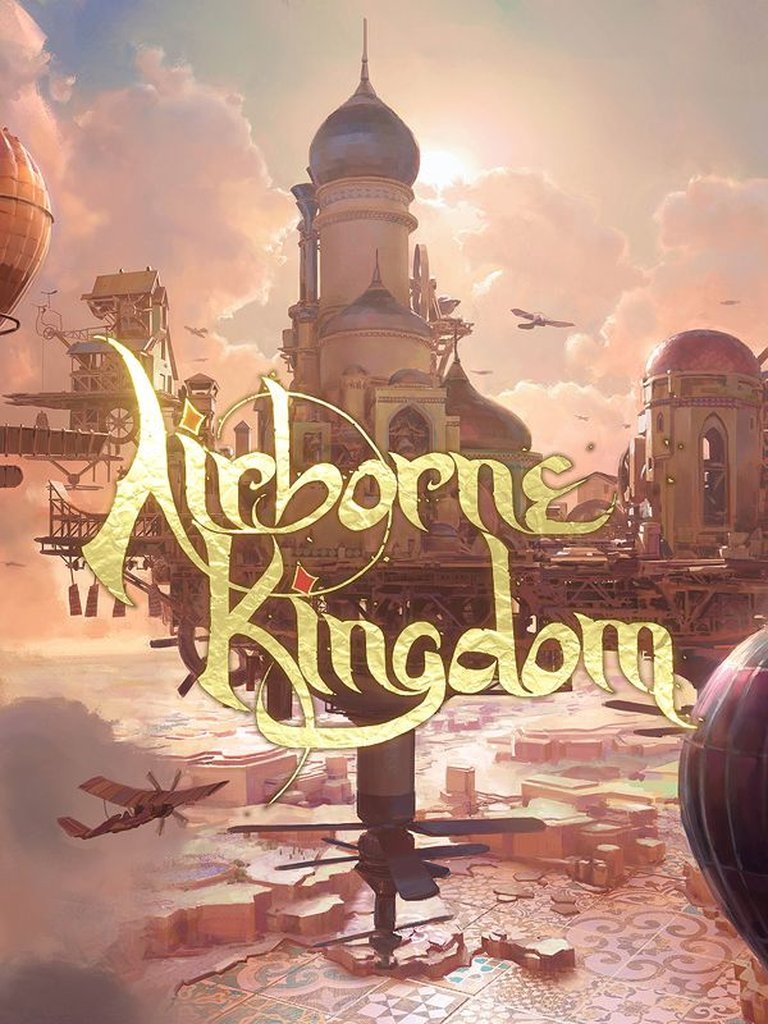
Description
Airborne Kingdom is a city-building simulation set in a fantasy world where players construct and maintain a floating kingdom, carefully balancing its weight and resources to keep it airborne. As you expand your airborne civilization, gather resources, manage infrastructure, and ensure stability, you’ll experience a peaceful, creative journey focused on exploration and mindful development rather than conflict.
Gameplay Videos
Where to Buy Airborne Kingdom
PC
Airborne Kingdom Mods
Airborne Kingdom Guides & Walkthroughs
Airborne Kingdom Reviews & Reception
metacritic.com (76/100): Airborne Kingdom is a work of art and the developers have absolutely nailed the concept to perfection.
pcgamer.com : A smart, hypnotic city builder that won’t leave you tearing out your hair.
opencritic.com (79/100): A smart, hypnotic city builder that won’t leave you tearing out your hair.
windowscentral.com : Airborne Kingdom breathes new life into the city-building genre with its unique concept, innovative mechanics, and enjoyable exploration.
Airborne Kingdom: Review
Introduction
In the vast and often repetitive landscape of city-building simulation games, few concepts soar as high as Airborne Kingdom. Developed by The Wandering Band, this 2020 debut reimagines the genre by placing players at the helm of a flying metropolis, tasked with rebuilding a mythical civilization and uniting a fractured world. Nominated for a BAFTA for Best Debut Game and praised for its innovative mechanics, Airborne Kingdom offers a meditative blend of exploration, resource management, and architectural puzzle-solving. Yet, beneath its enchanting steampunk façade lies a game that prioritizes aesthetic harmony over strategic depth. This review argues that while Airborne Kingdom excels as a visually hypnotic and emotionally resonant experience, its reliance on repetitive loops and a shallow narrative prevents it from achieving the gravitational pull of genre titans like Cities: Skylines or Frostpunk. It is a masterpiece of atmosphere, but a work in progress as a simulation.
Development History & Context
The Wandering Band, founded by veterans of franchises like Dragon Age and Battlefield, emerged as a studio with a clear mission: to innovate within the city-building genre without succumbing to its typical complexities. Their vision, articulated in early previews, was to create a “relaxing, exploration-first experience” where physics-based gameplay would redefine urban planning. Built on the Unity engine, Airborne Kingdom leveraged accessible tools to craft its unique mechanics, though the team faced challenges in balancing scale and performance—optimization issues plagued even high-end PCs late in the game, as noted by critics. Released on December 17, 2020, for Windows and macOS, the game capitalized on the burgeoning indie scene of the era, where titles like Hades and Fall Guys championed fresh concepts over AAA polish. Console ports by Freedom Games followed in November 2021, expanding its reach but also highlighting platform-specific limitations, such as sluggish cameras on the Nintendo Switch. The development context reveals a studio prioritizing artistry and accessibility, yet constrained by the indie budget’s limitations in narrative and mechanical depth.
Narrative & Thematic Deep Dive
At its core, Airborne Kingdom spins a mythic yarn of rebirth and unity. Players assume the role of inheritors of a lost civilization’s technology, tasked with reviving the titular flying kingdom to reunite twelve ground-based factions sundered by the original Airborne Kingdom’s disappearance. The narrative unfolds through sparse, evocative dialogue—each kingdom’s requests for aid (e.g., “purify our contaminated water”) are framed as parables of environmental decay and cultural isolation. Characters exist archetypally: weary desert nomads, proud mountain clans, and marsh dwellers, each offering quests that feel more like errands than chapters in a grand story. The lore, hinted at through relics and ruins, suggests a rich history of technological marvels and geopolitical harmony, yet the game never delves into the darker implications of its premise. Critics like Eurogamer noted its failure to confront the “sinister undertones” of imperialism—why do ground kingdoms welcome a flying hegemon? Why do citizens never question their skybound overlords? Themes of hope and exploration dominate, but the narrative remains a framework rather than a driving force, leaving players to ponder untold stories in the clouds.
Gameplay Mechanics & Systems
Airborne Kingdom’s genius lies in its physics-driven city-building loop. Players begin with a buoyant town center and expand by constructing housing, refineries, and cultural structures, all while meticulously balancing three core mechanics:
– Lift: Generated by wings, balloons, and propellers, lift counteracts the city’s weight. Heavy buildings like foundries demand additional lift, creating a constant resource juggle.
– Tilt: Uneven construction causes the city to list, triggering citizen unhappiness and eventual exodus. Managing weight distribution becomes an architectural puzzle, requiring symmetrical layouts or strategic counterweights.
– Drag: Structures like windmills increase drag, necessitating more propulsion to maintain speed—affecting exploration efficiency.
Resource management follows a streamlined production chain: gather wood, clay, and coal from the ground via scout planes, then process them into refined goods. Citizens, recruited from ground kingdoms, have escalating desires—from basic food and water to luxuries like parks and shrines—driving city expansion. The research tree, free of material costs, allows linear progression into efficiency upgrades and new blueprints, but its simplicity risks depth. Quests for alliances dominate the late game, though they devolve into repetitive fetch tasks (“bring 10 iron ore”). The lack of combat or complex diplomacy leaves the simulation feeling hollow, while the forgiving difficulty—citizens merely leave instead of dying—strikes a meditative tone but sacrifices tension. UI critiques, especially on consoles, highlight clunky menus and a glacial camera that hampers real-time adjustments.
World-Building, Art & Sound
Airborne Kingdom’s world is a triumph of environmental storytelling. Three procedurally generated biomes—a sun-scorched desert, craggy mountains, and misty marshlands—unfurl below, each with distinct flora, ruins, and cultural architecture. The art direction, inspired by Islamic Golden Age aesthetics reimagined through a steampunk lens, features ornate minarets, brass fixtures, and pastel-hued landscapes that evoke Studio Ghibli’s Castle in the Sky. This visual cohesion extends to the city itself, where buildings sway and hum with life, creating a sense of organic dynamism. The soundtrack, composed by Paul Aubry and Simon Desrochers, blends acoustic guitar, violin, and bansuri into a serene yet adventurous tapestry, perfectly mirroring the game’s dual focus on tranquility and discovery. Sound design—from the whirring of propellers to the gentle chime of a shrine—immersed players in the kingdom’s whimsy, though the absence of dynamic audio during resource gathering or citizen complaints slightly mutes the atmosphere. Together, these elements transform routine exploration into a breathtaking journey.
Reception & Legacy
Upon release, Airborne Kingdom garnered acclaim for its unique concept and artistry. PC Gamer lauded it as a “smart, hypnotic city builder,” while Rock Paper Shotgun celebrated its “arabesque steampunk” as more than aesthetic window dressing. Metacritic aggregated a 76% score, with praise for its relaxation-focused design and physics innovation. Yet critiques highlighted its mechanical shallowness; Eurogamer lamented its “lovely, mildly experimental” nature but criticized its failure to explore imperialism’s consequences, and Windows Central noted the lack of difficulty options. Commercially, it found a niche on Steam and consoles, with user reviews oscillating between “Very Positive” and “Mixed”—players adored its visuals but grew weary by its repetitive late game. Its legacy endures as a proof of concept: it influenced titles like Airborne Empire (2025) and demonstrated that accessibility and artistry could drive genre innovation. Though it never achieved the genre-defining status of SimCity, its nomination for BAFTA’s Best Debut cemented The Wandering Band as a studio to watch.
Conclusion
Airborne Kingdom is a paradox: a game soars conceptually yet remains tethered to the earth by its execution. It excels as a sensory experience, where the thrill of balancing a floating city and the joy of discovering a hidden ruin eclipse the genre’s typical stresses. Its Islamic-inspired steampunk aesthetic and physics-based mechanics are landmark achievements, yet the game’s narrative opacity and repetitive quests prevent it from transcending its indie roots. For players seeking a meditative escape, Airborne Kingdom is a resounding success—a “cozy, comfortable delight,” as TechRaptor called it. For simulation purists, it may feel like a beautiful but incomplete blueprint. Ultimately, Airborne Kingdom earns its place in history not as a genre disruptor, but as a poignant reminder that innovation need not come at the cost of tranquility. It is a kingdom worth visiting, even if its citizens never demand much more than a coat of paint and a prayer.