
- Release Year: 2020
- Platforms: Android, Browser, Windows Apps, Windows Phone, Windows, Xbox One
- Publisher: MacroShire
- Developer: MacroShire
- Genre: Action
- Perspective: Diagonal-down
- Game Mode: Single-player
- Gameplay: Arcade
- Setting: Fantasy
Description
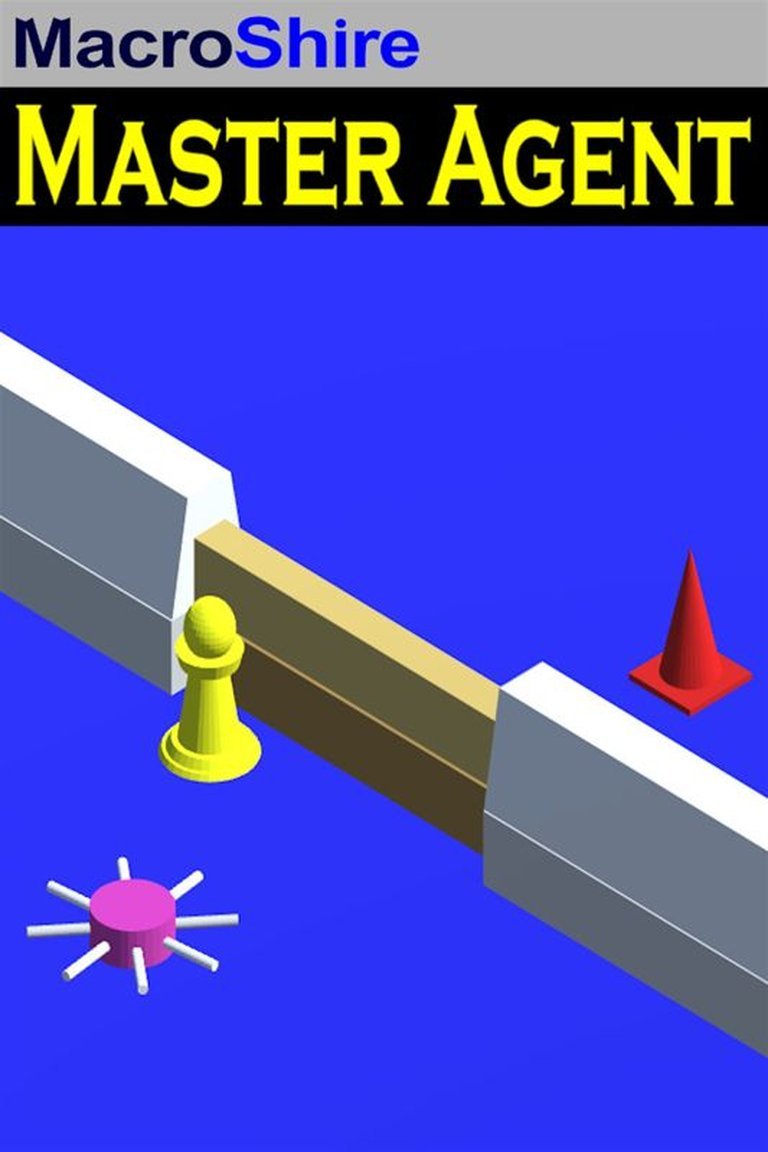
Master Agent is a free action game set in a fantasy world where players control an agent tasked with infiltrating enemy zones to steal treasure. Navigating through hazardous environments filled with adversaries, spikes, and moving obstacles, players choose from six unique agents—each with distinct strengths and weaknesses—all designed as chess-like pieces. The game features 2D scrolling visuals and arcade-style gameplay focused on direct control.
Master Agent: Review
Introduction
In the crowded landscape of 2020’s free-to-play offerings, Master Agent emerged as a quiet anomaly—a distilled arcade experience that traded sprawling narratives for razor-sharp design. Developed by MacroShire and released across Windows, Xbox One, and mobile platforms, this action title thrusts players into the role of an infiltrative agent in a stylized fantasy world. While its premise appears deceptively simple—steal treasure from enemy zones—the game distinguishes itself through a profound conceptual elegance: its six playable agents are meticulously designed as chess-like pieces, each embodying unique tactical strengths and weaknesses. This review argues that Master Agent succeeds not through complexity, but through surgical execution of its core loop, creating a minimalist yet deeply strategic experience that resonates with both classic arcade sensibilities and contemporary free-to-play accessibility.
Development History & Context
Master Agent was conceived by MacroShire, a developer whose portfolio remains modest but focused on streamlined action experiences. The game’s January 2020 release arrived during a pivotal moment for free-to-play models, which were dominating mobile and browser markets while gaining traction on consoles via Xbox’s Game Pass initiative. Built on Unity, Master Agent leveraged the engine’s cross-platform capabilities to deploy across Windows, Xbox One, Android, and even unconventional platforms like Windows Phone—a testament to its ambition for accessibility. MacroShire’s vision prioritized purity of gameplay: the absence of microtransactions or progression gates underscored a commitment to skill-based mastery. This stood in contrast to many 2020 free-to-play titles, which often relied on monetization mechanics. The game’s diagonal-down perspective and 2D scrolling harkened back to golden-age arcade games like Gauntlet, while its fantasy setting and chess-inspired character design positioned it as a niche curiosity in an industry increasingly dominated by open-world extravagance.
Narrative & Thematic Deep Dive
Master Agent rejects traditional storytelling in favor of a purely experiential narrative. Players assume the role of an unnamed agent tasked with infiltrating enemy strongholds to recover treasure. The narrative operates on two levels: the immediate tension of infiltration (avoiding guards, spikes, and moving hazards) and a meta-commentary on strategy through its chess-inspired character design. The six agents—visually represented as distinct chess pieces—function as narrative metaphors for tactical roles: the “Pawn” might be fragile but versatile, the “Rook” offers brute force, while the “Bishop” could excel at traversal. This design choice transforms the game into a physical manifestation of a chess match, where each move requires foresight and adaptability. The absence of dialogue or explicit lore allows the environment and mechanics to convey the core themes: resourcefulness, risk assessment, and the cold calculus of infiltration. Treasure heists become not mere objectives but existential statements about agency in hostile worlds.
Gameplay Mechanics & Systems
The core gameplay loop revolves around precision movement and strategic agent selection. Players navigate labyrinthine zones, avoiding hazards like retracting spikes and enemy patrols while reaching the treasure chest. The six agents provide asymmetric depth: one might have a dash ability to bypass obstacles, another could possess stealth capabilities to evade detection, while a third might offer health regeneration at the cost of slower speed. This encourages experimentation and replayability, as each run demands a different approach. The arcade structure emphasizes high-stakes, short-duration levels, with failure resetting progress—a deliberate nod to classic coin-op design. The UI is admirably minimalist, with direct control schemes suited for both gamepad and touch inputs. However, this simplicity reveals a flaw: the lack of a progression system beyond agent unlocks may cause fatigue for dedicated players seeking long-term goals. Despite this, the collision detection and enemy AI exhibit surprising polish, ensuring that deaths feel fair rather than punitive.
World-Building, Art & Sound
Master Agent’s fantasy setting is rendered in a stylized 2D aesthetic that blends medieval architecture with geometric abstraction. Zones feature muted, earthy tones contrasted with vibrant hazards (e.g., crimson spikes, glowing traps), creating a visual language of danger. The chess-piece character designs are particularly striking—each agent is rendered as a stylized chess figure with subtle animations that hint at their abilities, reinforcing the game’s strategic theme. Sound design is functional yet effective: minimalist chiptune melodies pulse with urgency, while impact sounds for hazards and treasure collection provide satisfying tactile feedback. The audio-visual synergy amplifies the tension of infiltration; for instance, the rhythmic clank of a spike’s descent syncs perfectly with the game’s tempo. Though lacking the cinematic grandeur of contemporaries like Halo, Master Agent achieves a cohesive atmosphere through restraint, proving that focus can outweigh spectacle.
Reception & Legacy
Master Agent flew under the radar of mainstream critics at launch, earning no major reviews or awards—a fate common for free-to-play titles without aggressive marketing. Its niche audience, however, praised its tight controls and strategic depth. On platforms like Xbox, it garnered a small but dedicated following, particularly among players seeking accessible arcade fare. Commercially, its free-to-play model ensured broad reach, though player retention remains undocumented. Its legacy lies in its unapologetic minimalism. Unlike narrative-driven epics of 2020 such as The Last of Us Part II or Cyberpunk 2077, Master Agent offered an alternative vision: that games can thrive through distilled mechanics rather than scale. It never spawned a sequel or community mod scene, but its chess-agent concept influenced indie titles exploring asymmetrical design, such as Chess Ultra. As a historical footnote, it exemplifies the experimental spirit of 2020’s free-to-play renaissance, where small studios could carve identities through bold, focused ideas.
Conclusion
Master Agent stands as a testament to the power of concision in game design. By stripping away extraneous systems and doubling down on a single, potent concept—chess-like infiltration—it delivers an experience that is both intellectually stimulating and viscerally satisfying. While its lack of narrative depth and progression systems prevent it from achieving lasting resonance, its elegance lies in how it transforms a simple premise into a strategic dance. For 15-minute sessions or marathon runs, Master Agent offers consistently engaging gameplay that honors arcade traditions while embracing modern accessibility. It may not rewrite the history of gaming, but it carves a memorable niche: a free gem that proves that sometimes, the most profound experiences come in the smallest packages. In a year defined by ambitious, sprawling epics, Master Agent reminds us that mastery often begins with a single, perfectly executed move.