
- Release Year: 2007
- Platforms: Windows
- Publisher: BRAINPOOL Artist & Content Services GmbH
- Developer: wetain GbR
- Genre: Action, Driving, Racing, Sports
- Perspective: 3rd-person (Other)
- Game Mode: Single-player
- Gameplay: Music, rhythm
- Setting: Office
- Average Score: 46/100
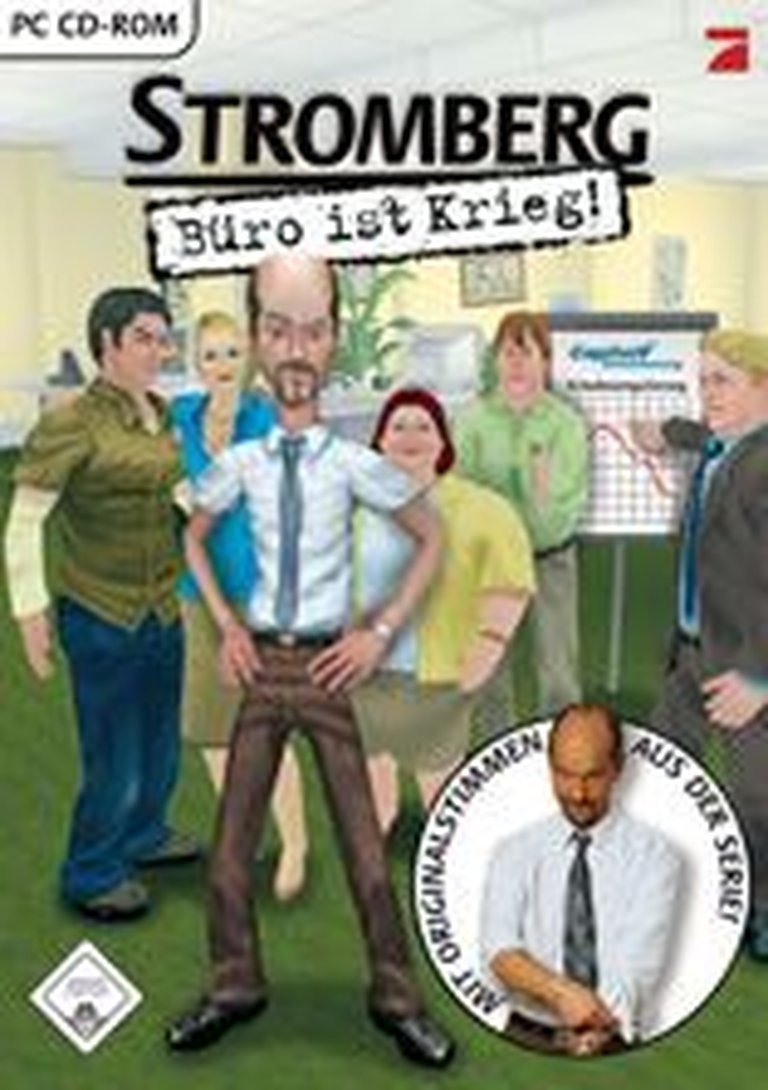
Description
Stromberg: Büro ist Krieg! is an official game based on the German sitcom Stromberg, set in the fictional insurance company Capitol-Versicherung AG. Players explore the office environment and engage in 8 mini-games inspired by the TV series, featuring characters from the show in various humorous office scenarios.
Stromberg: Büro ist Krieg! Reviews & Reception
mobygames.com (46/100): A game adaptation of the German sitcom Stromberg, featuring 8 mini-games based on the TV series.
retro-replay.com : A hilariously tense office environment where backstabbing and brown-nosing go hand in hand.
vgtimes.com : A third-person action game with racing, music and sports elements.
Stromberg: Büro ist Krieg!: Review
Released in March 2007 for Windows, Stromberg: Büro ist Krieg! is the official video game adaptation of the wildly popular German sitcom Stromberg, a workplace comedy that mirrored the UK’s The Office in its awkward, cringe-inducing humor. Developed by wetain GbR and published by BRAINPOOL Artist & Content Services GmbH, the game promised to bring the sardonic world of Bernd Stromberg—a boss you wouldn’t wish on your worst enemy—directly into the interactive space of gaming. But does this office-themed mini-game collection succeed in translating the sitcom’s biting satire into engaging gameplay, or is it another forgettable licensed title destined for the bargain bin?
Development History & Context
Stromberg: Büro ist Krieg! emerged during a unique moment in gaming history. The mid-2000s saw an explosion of licensed games tied to popular TV shows and films, many of which were hastily produced cash-grabs with little regard for quality. However, Stromberg had something different going for it: the developers at wetain GbR weren’t just creating a game—they were collaborating directly with the show’s creators to ensure authenticity.
The development team consisted of 31 people, including Managing Director André Weinhold, Creative Director Jürgen Rabe, and Art Director Dirk Rosenlöcher. What’s particularly interesting is that the mini-games were developed in conjunction with the show’s second season, ensuring that the gameplay experiences were directly tied to specific episodes and character dynamics. This wasn’t just a generic office simulator—it was meant to be an extension of the Stromberg universe.
The game’s release timing was strategic, coinciding with the start of the third season of the TV series. This cross-promotion approach was common in the industry but rarely executed with such apparent care for the source material. The developers clearly understood that Stromberg fans weren’t looking for a traditional narrative game—they wanted to experience the awkward office politics and petty rivalries that made the show so compelling.
Narrative & Thematic Deep Dive
Stromberg: Büro ist Krieg! doesn’t follow a traditional narrative structure. Instead, it presents a series of micro-stories through its eight mini-games, each capturing the essence of workplace absurdity that defined the sitcom. The game’s thematic core revolves around the toxic office environment of Capitol-Versicherung AG, where bullying and sycophancy create an “eerie atmosphere” that players must navigate.
The narrative brilliance lies in its episodic approach. Rather than forcing a linear story, the game allows players to explore the office at their own pace, triggering mini-games with various coworkers. Each encounter feels like a self-contained episode, complete with Stromberg’s signature one-liners and the cringe-worthy dynamics that fans loved. The game world is peppered with insider jokes and character-specific quirks—overhearing Ulf’s moans in the breakroom or catching Tanja’s frustrated mutterings adds layers of authenticity.
Thematically, the game explores the same territory as the TV series: the petty rivalries, passive-aggressive behavior, and absurd power dynamics of office life. Each mini-game becomes a metaphor for workplace conflict—whether it’s the competitive nature of “Bowling Disaster,” the chaotic energy of “Chaos Canteen,” or the backstabbing implied in “Dissuasion Goodbye.” The game doesn’t just recreate the office setting; it distills the show’s commentary on modern workplace culture into playable scenarios.
Gameplay Mechanics & Systems
At its core, Stromberg: Büro ist Krieg! is a collection of eight mini-games, each designed to capture different aspects of office life through the lens of comedy. The gameplay loop is refreshingly simple: explore the office environment as Bernd Stromberg, interact with coworkers, and trigger mini-games based on recognizable situations from the TV series.
The mini-games themselves range from racing (Office Chair Race) to rhythm-based challenges (Disco For Everyone), sports simulations (Badminton Done Differently), and puzzle-solving (Files 1-2-3). Each game lasts only a minute or two, making them perfect for short gaming sessions. The controls are intentionally simple and responsive—whether you’re dodging flying baguettes in “Chaos Canteen” or steering your rolling chair through corridors, the focus remains on the comedic scenarios rather than complex mechanics.
What makes the gameplay interesting is how each coworker’s personality affects the challenge. Tanja might cheat during “Badminton Done Differently,” while Unterhuber’s passive-aggressive comments add tension to any encounter. This character-driven approach to difficulty ensures that each mini-game feels distinct, even when the core mechanics are similar.
The exploration element adds another layer to the gameplay. Players aren’t just jumping from one mini-game to another—they’re encouraged to wander the office, eavesdrop on conversations, and discover character-specific interactions. This creates a sense of place and continuity that many mini-game collections lack. The office becomes more than just a menu screen; it’s a living, breathing environment filled with potential conflicts and comedic moments.
However, the game’s simplicity is also its weakness. After the initial novelty wears off, some mini-games begin to feel repetitive. The lack of progression systems or meaningful rewards means there’s little incentive to master each challenge beyond personal satisfaction. Additionally, several mini-games rely more on luck than skill, which can be frustrating for players seeking a more substantial gaming experience.
World-Building, Art & Sound
Visually, Stromberg: Büro ist Krieg! employs a stylized 3D aesthetic that perfectly captures the drab, fluorescent-lit offices of the TV series. The character models are exaggerated versions of their live-action counterparts, with expressive faces that bring every sneer, eye-roll, and backstab to life. The office environment is meticulously detailed, from cubicle walls and motivational posters to stacks of paperwork that reflect the mundanity of insurance work.
The art direction deserves special praise for its attention to detail. Lighting plays a crucial role in setting the tone—harsh ceiling lamps cast long shadows that accentuate the game’s underlying tension between bullying and sycophancy. Each mini-game features distinct visual themes that signal the comedic shift: “Disco For Everyone” bathes the breakroom in neon purples and greens, while “Bowling Disaster” maintains a clinical, almost sterile atmosphere with its stark lanes and glossy bowling balls.
The sound design is equally impressive. The game features original voice acting from the TV series cast, including Christoph Maria Herbst as Stromberg himself. These authentic voices deliver both classic quotes from the show and new dialogue created specifically for the game. The soundtrack shifts between office-appropriate ambient tracks and more energetic themes during mini-games, maintaining the game’s comedic tone throughout.
Animations are snappy and exaggerated, ensuring that every comedic mishap lands with visual flair. When Stromberg’s bowling ball careens off course or his dance moves fail spectacularly, the screen reacts with slow-motion effects and on-screen text quips reminiscent of the show’s mockumentary style. Despite some occasional clipping around office furniture, the graphics engine runs smoothly on most mid-range systems from the era.
Reception & Legacy
Stromberg: Büro ist Krieg! received mixed reviews upon release, with an average score of 46% based on two major German publications. Computer Bild Spiele gave it a 52% rating, praising the original voice acting and series references but criticizing the repetitive nature of the mini-games and lack of complexity. GameStar (Germany) was even less impressed, awarding it just 40% and calling out the “hacky controls” and “ugly graphics.”
The player reception appears to have been similarly lukewarm. The game’s low MobyScore and limited collection data suggest it didn’t achieve significant commercial success or develop a lasting fanbase. This is perhaps unsurprising given the game’s niche appeal—it was designed specifically for Stromberg fans rather than the broader gaming audience.
However, the game’s legacy is more nuanced than its poor review scores might suggest. It represents an interesting case study in licensed game development, demonstrating how a property’s unique characteristics can be translated into interactive experiences. The collaboration between developers and show creators resulted in a product that felt authentic to the source material, even if the execution wasn’t perfect.
In the broader context of German gaming history, Stromberg: Büro ist Krieg! stands as one of the few examples of a successful TV-to-game adaptation in the German market. While it may not have achieved the cultural impact of games like The Office adaptations in other markets, it paved the way for future licensed titles and demonstrated the potential for comedy properties in gaming.
Conclusion
Stromberg: Büro ist Krieg! is a fascinating artifact of early 2000s licensed game development—a title that aimed high in its ambition to capture the essence of a beloved sitcom but fell short in execution. It’s neither a complete failure nor a hidden gem; instead, it occupies that interesting middle ground of games that tried something different but couldn’t quite stick the landing.
For Stromberg fans, the game offers an authentic experience that captures the show’s humor and character dynamics. The mini-games, while simple, effectively translate workplace scenarios into comedic challenges. The attention to detail in the office environment, the authentic voice acting, and the insider jokes all contribute to a sense of immersion that many licensed games lack.
However, for the broader gaming audience, Stromberg: Büro ist Krieg! offers limited appeal. The mini-game format, while accessible, lacks the depth and progression systems that modern players expect. The absence of a meaningful narrative arc and the reliance on luck-based mechanics in some challenges make it difficult to recommend to anyone who isn’t already invested in the Stromberg universe.
Ultimately, Stromberg: Büro ist Krieg! deserves recognition for its ambitious attempt to bridge the gap between television comedy and interactive entertainment. It may not have achieved widespread acclaim or commercial success, but it represents an important experiment in licensed game development—one that prioritized authenticity and humor over conventional gameplay mechanics. In the pantheon of German video games, it stands as a unique entry that captured a specific cultural moment, even if it couldn’t quite transcend its limitations to become a classic in its own right.