
- Release Year: 2021
- Platforms: Nintendo Switch, Windows
- Publisher: Heideland GameWorks
- Developer: Heideland GameWorks
- Genre: Adventure
- Perspective: Third-person
- Game Mode: Single-player
- Gameplay: Puzzle elements
- Setting: Fantasy, Futuristic, Sci-fi
- Average Score: 58/100
Description
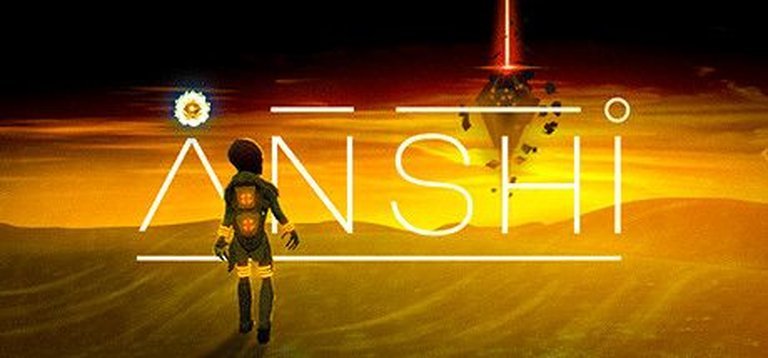
AnShi is a third-person adventure game set in a sci-fi fantasy world where players explore alien landscapes on a high-tech hoverboard after their spaceship crashes on a mysterious planet. Developed as a single developer effort over three years, the game features otherworldly vistas, ancient architecture, and a sweeping soundtrack as players uncover the remains of a long-forgotten civilization.
Gameplay Videos
Where to Buy AnShi
AnShi Cracks & Fixes
AnShi Patches & Updates
AnShi Guides & Walkthroughs
AnShi Reviews & Reception
opencritic.com : AnShi felt like a disjointed, and frequently confusing, a story that was being told TO me, rather than WITH me.
indiegamewebsite.com (40/100): Parallels will be made between AnShi and Journey, which is a bit unfair.
ladiesgamers.com : AnShi seems to have had very lofty goals, but unfortunately, the bar set by Journey was one too high to reach.
AnShi: Review
AnShi is a singular vision realized by developer Andre Ledermüller, a three-year labor of love that blends the ethereal exploration of Journey with the high-speed thrills of a hoverboard. Released in February 2021 on Windows and Nintendo Switch, this cinematic sci-fi adventure invites players to glide across alien deserts, ancient temples, and mysterious caves in search of lost memories. Yet, for all its ambition and breathtaking soundtrack, AnShi struggles to deliver the cohesive, emotionally resonant experience it aspires to be.
Development History & Context
AnShi stands as a testament to solo indie development. Ledermüller, working under the banner of Heideland GameWorks, crafted every aspect of the game—design, development, and even the core concept—over three years of spare-time effort. The project was buoyed by Devel Sullivan’s sweeping orchestral soundtrack, which elevates the game’s atmosphere far beyond its modest technical ambitions. Built on Unreal Engine 4 with FMOD for sound, AnShi was clearly inspired by the likes of Journey and ABZU, aiming to deliver a similarly meditative, visually arresting experience.
However, the gaming landscape of 2021 was crowded with polished, high-budget indie titles. AnShi’s low-poly, PS2-era aesthetic and limited scope made it a harder sell in a market where players expected more technical polish and depth. Its commercial reception was tepid, with a Metacritic score of 40% from critics and a mixed player response. Yet, its very existence as a one-person project is remarkable, and its influence can be seen in later atmospheric exploration games that prioritize mood over mechanics.
Narrative & Thematic Deep Dive
The story of AnShi is deliberately sparse, told through hieroglyphic memory fragments and environmental storytelling. Players control an unnamed alien who crash-lands on a desolate, Earth-like planet. Guided by a glowing energy being called Companion, they seek to uncover the fate of the planet’s vanished civilization. The narrative is fragmented, with each memory revealing a piece of the planet’s tragic past—ancient pyramids, neon-lit ruins, and vast deserts all hint at a once-thriving society now lost to time.
Thematically, AnShi grapples with loneliness, memory, and the passage of time. The game’s title itself, a stylized version of “ancient,” underscores its preoccupation with the past. However, the lack of dialogue or explicit exposition leaves much to interpretation, and for some players, this ambiguity feels more like a gap than a strength. The emotional beats are present—especially in the game’s conclusion—but they’re undercut by the narrative’s meandering structure and the absence of a clear protagonist motivation.
Gameplay Mechanics & Systems
At its core, AnShi is a hoverboarding exploration game. Players can walk, run, or—preferably—ride their high-tech board across the planet’s varied terrain. The controls are simple: A to interact, X to mount or dismount the board, and ZR to run (though running is barely faster than walking). The hoverboard is the star of the show, offering a sense of speed and freedom that walking simply can’t match.
Unfortunately, the gameplay is hampered by several issues. The camera is jittery and prone to snapping during collisions, which can be disorienting and even nauseating for some players. Cutscenes frequently force the player off the board, interrupting the flow and making traversal feel sluggish. The game’s linearity is another sticking point: invisible walls and closed paths behind the player prevent meaningful exploration, despite the game’s open-world appearance.
Puzzle elements are minimal and often automated. Symbols presented by the “elders” arrange themselves without player input, and environmental puzzles rarely require more than basic observation. Collectibles are scattered throughout, but the lack of incentive or reward for finding them diminishes their appeal.
World-Building, Art & Sound
AnShi’s greatest strength lies in its world-building and audiovisual presentation. The game’s environments are a surreal blend of ancient and futuristic—pyramidal ruins entwined with neon cables, kaleidoscopic flora, and vast, golden deserts. The art style, while low-poly, is distinctive and evocative, creating a sense of alien beauty that lingers long after the credits roll.
The soundtrack, composed by Devel Sullivan, is nothing short of extraordinary. Orchestral and atmospheric, it swells during moments of discovery and recedes during quiet exploration, guiding the player’s emotional journey. It’s the one element that consistently elevates the experience, making even the game’s weaker moments feel meaningful.
However, the game’s technical limitations are apparent. Character animations are stiff, and the overall visual fidelity feels dated, even by indie standards. The Switch version, in particular, suffers from graphical glitches and performance issues, with some players reporting clipping and texture errors.
Reception & Legacy
Upon release, AnShi received a mixed critical reception. The Indie Game Website awarded it a 40%, criticizing its camera issues, linearity, and lack of meaningful gameplay, while praising its soundtrack and unique atmosphere. LadiesGamers was even harsher, calling it “disjointed” and “confusing,” and ultimately advising against purchase. On Steam, the game holds a “Mostly Positive” rating of 76%, with players generally appreciating its mood and music despite its flaws.
Commercially, AnShi did not set the world on fire. Its $17.99 price point and short runtime (around 3-4 hours) made it a tough sell for many. Yet, its influence is quietly felt in the indie space, where atmospheric exploration games continue to thrive. AnShi’s commitment to mood and music over traditional gameplay has inspired developers to prioritize emotional resonance in their own projects.
Conclusion
AnShi is a game of contradictions. It’s a breathtaking, emotionally charged journey that’s also frustratingly limited by its own ambition. Its world is beautiful, its music unforgettable, but its gameplay and narrative leave much to be desired. For those willing to look past its flaws, AnShi offers a unique, meditative experience—a glimpse into the creative potential of solo indie development. For others, it may feel like a missed opportunity, a game that reaches for the stars but never quite takes flight.
In the end, AnShi is best approached as an interactive art piece rather than a traditional game. It’s a reminder that sometimes, the journey is more important than the destination—even if that journey is a little bumpy along the way.