
- Release Year: 2012
- Platforms: Windows
- Publisher: astragon Software GmbH
- Developer: Contendo Media GmbH
- Genre: Puzzle
- Perspective: Side view
- Game Mode: Single-player
- Gameplay: City building, construction simulation, Tile matching puzzle
- Setting: Fantasy
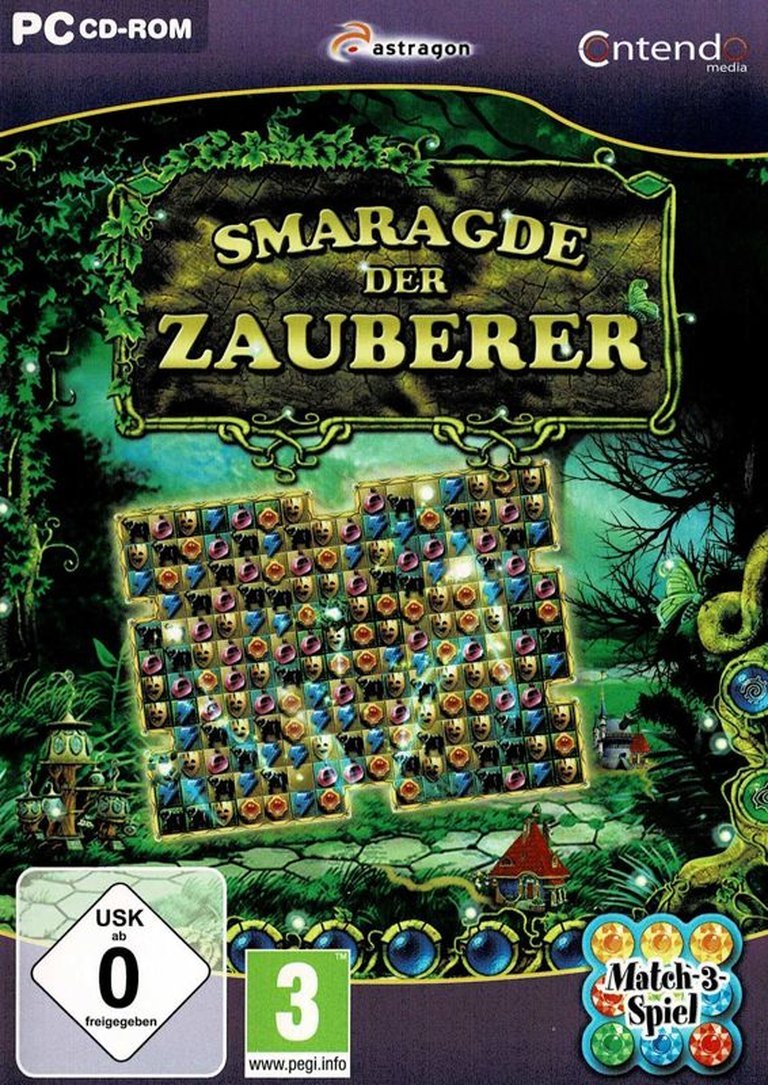
Description
Smaragde der Zauberer is a match-3 puzzle game set in a fantasy world where the player takes on the role of the king’s wizard. The objective is to help the king build a new city by completing match-3 levels to earn building materials and food, which can then be used to construct and decorate the city.
Smaragde der Zauberer Reviews & Reception
spielemagazin.de : Die Grafik tut in den Augen weh, da geht der Spielspaß natürlich flöten! Außerdem fehlt es an Story, wenigstens ein bisschen!
Smaragde der Zauberer: Review
In the crowded landscape of casual match-3 games, Smaragde der Zauberer (2012) attempts to distinguish itself by blending tile-matching puzzles with light city-building mechanics. Published by astragon Software GmbH and developed by Contendo Media GmbH, the game casts players as a young court wizard tasked with constructing a new village for a cash-strapped king. While the concept is charming, the execution leaves much to be desired, resulting in a title that struggles to stand out in an oversaturated genre.
Development History & Context
Released on March 8, 2012, for Windows, Smaragde der Zauberer emerged during a period when match-3 games were dominating the casual gaming market. Titles like Bejeweled and Candy Crush Saga had already established the formula, and developers were experimenting with ways to add depth through meta-game elements. Contendo Media GmbH, a relatively small German studio, sought to combine the addictive puzzle mechanics of match-3 with the incremental satisfaction of city-building, a trend seen in games like Gardenscapes.
The game’s budget pricing (9.99 EUR) and fantasy setting reflect a common strategy for casual titles targeting a broad audience. However, the technological constraints of the era—limited by the capabilities of early-2010s casual game engines—are evident in the game’s dated visuals and lack of polish. The fixed, flip-screen perspective and simplistic animations suggest a focus on accessibility over technical ambition.
Narrative & Thematic Deep Dive
The game’s narrative is sparse, relying on its cover art and marketing materials to convey the premise: a king desires a new city but lacks funds, so he sends his wizard to gather resources through magical match-3 puzzles. In-game, there is no dialogue, cutscenes, or character development—just a series of levels tied to the abstract goal of collecting gold, food, and building materials.
Thematically, the game touches on classic fantasy tropes: the wise wizard, the benevolent king, and the quest to build a thriving settlement. However, these elements feel superficial, serving more as a backdrop than a driving force. The lack of narrative depth is a missed opportunity, as the fantasy setting could have been leveraged to create a more engaging story or world-building elements.
Gameplay Mechanics & Systems
At its core, Smaragde der Zauberer is a match-3 puzzle game. Players combine three or more identical symbols in a row to clear them from the board, earning points and resources. The game introduces a few twists, such as blue plates that double points and bonus items to boost scores, but these additions are standard fare for the genre.
The city-building aspect is rudimentary. After completing levels, players return to a village screen where they can spend resources to construct and decorate buildings. While this provides a sense of progression, the options are limited, and the visual feedback is minimal. The game’s difficulty curve is gentle, making it accessible to casual players but potentially unsatisfying for those seeking a challenge.
One notable feature is the inclusion of three gameplay modes—group, swap, and chain—which offer slight variations on the core mechanic. However, these modes are not integrated into the main campaign, reducing their impact on the overall experience.
World-Building, Art & Sound
The game’s fantasy setting is conveyed through colorful, pixelated graphics and a whimsical art style. While the visuals are bright and cheerful, they are also dated and lack the polish of contemporary casual games. The character designs and environments feel generic, failing to create a memorable or immersive world.
The sound design is equally unremarkable, with repetitive background music and basic sound effects. The lack of voice acting or dynamic audio further diminishes the game’s ability to engage players emotionally.
Reception & Legacy
Critically, Smaragde der Zauberer received mixed reviews. German gaming outlets like Spielemagazin.de praised its accessibility but criticized its lackluster graphics and shallow gameplay. The review site gave it low scores for graphics (33/100) and gameplay (40/100), noting that the game’s visual shortcomings and lack of innovation made it forgettable in a crowded genre.
Commercially, the game appears to have been a modest success, likely due to its budget pricing and appeal to casual gamers. However, it did not achieve the cultural impact of its contemporaries, and its legacy is largely overshadowed by more polished and ambitious titles.
Conclusion
Smaragde der Zauberer is a competent but unremarkable entry in the match-3 genre. Its attempt to blend puzzle mechanics with city-building is a commendable idea, but the execution is hampered by dated visuals, a lack of narrative depth, and limited innovation. While it may provide a few hours of casual entertainment, it fails to leave a lasting impression or push the boundaries of its genre.
For fans of match-3 games, there are far better options available, both in terms of gameplay and presentation. Smaragde der Zauberer is a reminder that even in a crowded market, mediocrity is not enough to stand out. It is a game that, much like its pixelated graphics, feels stuck in the past.