
- Release Year: 2006
- Platforms: Windows
- Publisher: GameTap LLC, Telltale, Inc.
- Developer: Telltale, Inc.
- Genre: Adventure
- Perspective: 3rd-person (Other)
- Game Mode: Single-player
- Gameplay: Graphic adventure, Point and select, Puzzle elements
- Setting: Comedy, Detective, Mystery
- Average Score: 82/100
Description
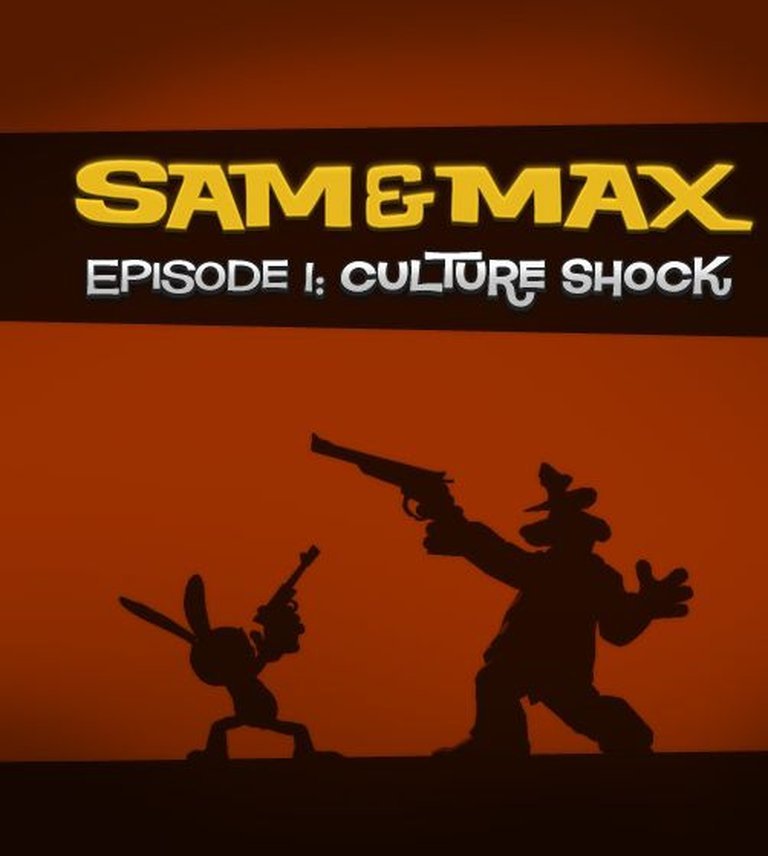
Sam and Max, the freelance police duo, return to stop a group of hypnotized former child stars causing chaos in the neighborhood, uncovering an evil plot by Brady Culture. This first episode of Telltale’s episodic series features classic point-and-click adventure gameplay in a fully 3D environment.
Gameplay Videos
Sam & Max: Episode 1 – Culture Shock Cracks & Fixes
Sam & Max: Episode 1 – Culture Shock Guides & Walkthroughs
Sam & Max: Episode 1 – Culture Shock Reviews & Reception
ign.com : Finally! Adventure gaming is back!
gameboomers.com : Sam & Max Episode 1: Culture Shock delivers a seamless blend of humor and mayhem.
mobygames.com (82/100): Finally, their creator, Steve Purcell, got back the licence about his characters and Telltale just begin to develop a new adventure for the sympathetic but evil rabbit Max.
eurogamer.net : Amazingly, it’s like it’s never been away. Hardly anything’s changed.
Sam & Max: Episode 1 – Culture Shock Cheats & Codes
PC
Hold [Ctrl] + [Shift] + D and double-click the menu arrow at the top of the screen.
| Code | Effect |
|---|---|
| [Ctrl] + [Shift] + D (double-click menu arrow) | Access Debug Mode, allowing you to instantaneously reach a specific area with all the required items |
Sam & Max: Episode 1 – Culture Shock: Review
A Triumphant Return to the Golden Age of Adventure Gaming
In 2006, after a 13-year absence that felt like an eternity to fans, the Freelance Police made their long-awaited return. Sam & Max: Episode 1 – Culture Shock wasn’t just a revival; it was a declaration that the spirit of classic LucasArts adventure gaming was alive and well, reimagined for a new era through the innovative lens of episodic content.
Development History & Context
The story of Culture Shock begins not with its release, but with its cancellation. In 2000, LucasArts officially pulled the plug on Sam & Max: Freelance Police, a 3D sequel that had been in development and was highly anticipated by fans. This decision, part of LucasArts’ strategic shift away from adventure games, sent shockwaves through the community. For years, the dream of a new Sam & Max game seemed dead.
Enter Telltale Games, founded in 2004 by former LucasArts employees, including veterans of the original Sam & Max Hit the Road. Their mission was clear: resurrect the adventure genre. After a successful test run with the episodic Bone series, Telltale secured the rights to Steve Purcell’s beloved characters. Culture Shock became the flagship title for their bold new distribution model—short, self-contained episodes released monthly, forming a complete “season” for a fraction of the cost of a traditional game.
This was a gamble. The episodic model was unproven for narrative-driven games, and the adventure genre itself was considered commercially unviable. Yet Telltale believed in the power of the franchise and the potential of their approach. Released initially on GameTap in October 2006 before wider distribution, Culture Shock was more than a game; it was a proof of concept for a potential renaissance.
Narrative & Thematic Deep Dive
Culture Shock wastes no time establishing its tone. The game opens with Sam attempting to shoot an apple off Max’s head—a perfect encapsulation of their dynamic: Sam, the laid-back, banjo-loving canine shamus, and Max, the “hyperkinetic rabbity thing” with a penchant for violence. The mundane quickly gives way to the bizarre when their phone is ransomed by Jimmy Two-Teeth, a rat living in their office wall, setting the stage for the absurdity to come.
The central plot is delightfully simple: former child stars known as the Soda Poppers (Specs, Whizzer, and Peepers) are wreaking havoc on the neighborhood, spray-painting buildings and distributing hypnotic videos by the enigmatic Brady Culture. The narrative is a parody of 70s culture, child stardom, and the quest for attention, wrapped in a detective story that never takes itself seriously. Brady Culture’s plan to hypnotize the world into loving him is less about world domination and more about the desperate need for validation—a theme that resonates with the characters’ backstories as forgotten child stars.
The writing is the game’s undisputed star. Every line crackles with wit, from Sam’s deadpan observations to Max’s gleefully psychotic non-sequiturs. The dialogue trees are packed with jokes, many of which are entirely optional, rewarding exploration with Easter eggs and absurdist humor. The game’s humor is relentless, finding comedy in the mundane details of its world—Bosco’s paranoid conspiracy theories, Sybil’s ever-changing career path, and the sheer lunacy of a dog and rabbit solving crimes.
Thematically, Culture Shock explores the nature of fame, the absurdity of consumer culture, and the power of media manipulation. Brady Culture’s hypnotic videos are a satirical jab at the influence of television and the cult of personality. Yet, beneath the surface-level parody, the game maintains a sense of warmth and affection for its characters, even the villains. The Soda Poppers are not evil; they’re misguided and brainwashed, a reflection of the game’s refusal to take its conflicts too seriously.
Gameplay Mechanics & Systems
Culture Shock is a love letter to the classic point-and-click adventure genre. The gameplay is intuitive and accessible: players control Sam, navigating him through pre-rendered 3D environments with a simple point-and-click interface. Objects of interest are highlighted with a green cursor, and interactions are limited to a handful of actions—look, talk, pick up, and use. This streamlined approach eliminates the frustration of older games with complex verb menus, making the experience smooth and user-friendly.
The puzzles are inventory-based and logic-driven, seamlessly integrated into the narrative. They range from straightforward (using cheese to lure a rat) to slightly more involved (creating a fake diagnosis to gain access to a restricted area). While not particularly challenging, they are satisfying to solve and never feel arbitrary. The game includes a driving sequence in the Desoto, a nod to Hit the Road, which adds variety but is implemented as a simple point-and-click affair rather than a full driving simulation. This choice, while potentially frustrating for some, maintains the game’s overall accessibility.
A notable addition is the conversational puzzle mechanic, reminiscent of Monkey Island‘s insult swordfighting. These sequences add a layer of depth to the dialogue interactions, requiring players to choose the right responses to progress. While not revolutionary, they are a welcome evolution of the traditional adventure game formula.
The episodic structure influences the gameplay design. Each episode is self-contained, with its own beginning, middle, and end, but also contributes to a larger seasonal arc. This allows for a tighter, more focused narrative experience, but also means that the game is relatively short, clocking in at around 3-4 hours for the first playthrough. However, the high replay value, driven by the wealth of optional dialogue and hidden jokes, extends the experience significantly.
World-Building, Art & Sound
Culture Shock is a visual and auditory feast that perfectly captures the tone of the Sam & Max universe. The game’s art direction is a triumph, translating Steve Purcell’s distinctive comic style into a vibrant 3D world. The environments are richly detailed and filled with sight gags, from the litter-strewn streets outside Sam and Max’s office to the surreal interior of Brady Culture’s home for former child stars. The character models, while not as charming as their hand-drawn counterparts, are expressive and full of personality.
The game’s aesthetic is a blend of gritty urban realism and cartoonish absurdity. The use of fixed camera angles, a hallmark of classic adventure games, enhances the cinematic feel and allows for carefully composed shots that highlight the humor and detail of each scene. The color palette is bright and saturated, reinforcing the game’s comedic tone.
The sound design is equally impressive. The voice acting is top-notch, with the new actors capturing the essence of Sam and Max while bringing their own interpretations to the roles. Sam’s voice is slightly more monotone than in Hit the Road, but it suits his deadpan delivery. Max’s voice is perfectly manic, conveying his unpredictable nature. The supporting cast is equally strong, with each character having a distinct and memorable voice.
The soundtrack is a standout element, featuring a jazzy, detective-movie-inspired score that perfectly complements the game’s atmosphere. The music is catchy and memorable, enhancing the sense of fun and adventure. The game’s presentation, from the opening credits to the ending sequence, is polished and professional, evoking the feel of a TV series.
Reception & Legacy
Upon its release, Culture Shock was met with critical acclaim. Reviewers praised its writing, humor, art direction, and faithfulness to the source material. It won GameSpot’s Funniest Game of 2006 award and was hailed as a triumphant return for the adventure genre. While some critics noted the game’s short length and relative ease, these were generally seen as minor issues, especially given the low price point and the promise of future episodes.
Commercially, the game was a success, proving that there was still a market for quality adventure games. More importantly, it validated Telltale’s episodic distribution model, paving the way for future series like Strong Bad’s Cool Game for Attractive People and, eventually, The Walking Dead. Culture Shock demonstrated that episodic content could work for narrative-driven games, offering a compelling alternative to traditional retail releases.
The game’s legacy extends beyond its immediate impact. It reignited interest in the Sam & Max franchise, leading to two more seasons of episodic adventures and, eventually, a remastered collection. It also inspired other developers to revisit classic adventure game IPs and experiment with new distribution models. Culture Shock is often cited as a key example of how to successfully revive a beloved franchise, balancing nostalgia with innovation.
Conclusion
Sam & Max: Episode 1 – Culture Shock is more than just a good game; it’s a cultural touchstone. It represents a pivotal moment in the history of adventure gaming, proving that the genre was far from dead and that there was still an audience for clever, character-driven narratives. It’s a game that understands its audience, delivering exactly what fans of Sam & Max and classic adventure games want: sharp writing, memorable characters, and a world that is both familiar and delightfully absurd.
While it may not be the most challenging or groundbreaking game in terms of mechanics, its strengths lie in its execution. The writing is consistently hilarious, the art direction is vibrant and engaging, and the voice acting is top-notch. The episodic format, while initially a point of contention, ultimately proves to be a strength, offering a digestible and satisfying experience that leaves players eager for more.
Culture Shock is a must-play for fans of adventure games, comedy, and the Sam & Max franchise. It’s a game that captures the spirit of a bygone era while embracing the possibilities of the future. It’s a reminder that sometimes, the best way to move forward is to look back, and that great characters and great writing are timeless. In the pantheon of adventure games, Culture Shock stands tall as a shining example of how to do it right.