
- Release Year: 2014
- Platforms: Linux, Macintosh, Nintendo Switch, PlayStation 4, Windows, Xbox One
- Publisher: Powerhoof Pty Ltd, Surprise Attack Pty Ltd
- Developer: Powerhoof Pty Ltd
- Genre: Action
- Perspective: Diagonal-down
- Game Mode: Online Co-op, Online PVP, Single-player
- Gameplay: Hack and Slash, RPG elements
- Setting: Fantasy
- Average Score: 79/100
Description
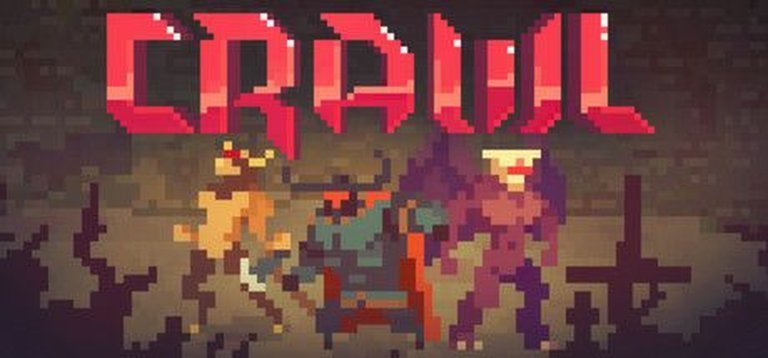
Crawl is a multiplayer dungeon crawler where up to four players compete in a frantic battle for survival. One player takes on the role of the adventurer, while the others become vengeful spirits working together to kill them, but also competing to be the one to deliver the final blow and take their place.
Gameplay Videos
Where to Buy Crawl
Crawl Cracks & Fixes
Crawl Patches & Updates
Crawl Guides & Walkthroughs
Crawl Reviews & Reception
metacritic.com (76/100): A thrilling and surprising mix of a roguelike game and a local multiplayer experience.
destructoid.com (80/100): Crawl isn’t the great party game you might remember if you played it a few years ago, or even six months ago. It’s better.
mobygames.com (84/100): A modern classic and a hell of a lot of fun.
opencritic.com (79/100): Crawl is a fast brawler with constantly shifting alliances that lead to excitement, confusion, and chaos all in equal measure.
playstationcountry.com : This adversarial turn is a great mechanic and it’s one the game hangs the flow of the game on.
Crawl Cheats & Codes
PC
Change your character name to the specified code to activate the cheat.
| Code | Effect |
|---|---|
| HL3 | Ga’ben will replace all of the deities |
| JED | Jed will replace all of the deities |
| SPN | SPNKr will replace all of the deities |
| MMM | Moonman will replace all of the deities |
| POO | Tur’dlog will replace all of the deities |
| GOD | Bryan will replace all of the deities |
| TNE | Tone’ will replace all of the deities |
Crawl: Review
In the crowded landscape of indie games, few titles manage to carve out a niche as distinct and compelling as Crawl. This asymmetrical dungeon crawler, developed by the Australian studio Powerhoof, is a masterclass in local multiplayer design, blending the tension of competitive play with the camaraderie of co-op in a way that feels both fresh and nostalgic. Released in 2014 after a successful stint on Steam Early Access, Crawl has since become a modern classic, celebrated for its innovative mechanics, polished presentation, and the sheer chaos it brings to the couch.
Development History & Context
Crawl began its life in 2013 as a spontaneous creation during a local multiplayer game jam among friends. Barney Cumming and David Lloyd, the duo behind Powerhoof, crafted a prototype that immediately resonated with players. The concept—a dungeon crawler where your friends control the monsters—was simple yet brilliant, and it quickly became the studio’s first major project. The game was built using Unity, a choice that allowed for rapid iteration and a focus on gameplay over technical complexity.
Released on Steam Early Access in August 2014, Crawl benefited from years of refinement and community feedback. The developers meticulously polished the game, adding new monsters, weapons, and features while maintaining the core loop that made it so addictive. By the time of its full release in April 2017, Crawl had already garnered a loyal following, and its transition to consoles like the PlayStation 4, Xbox One, and Nintendo Switch only expanded its reach.
Narrative & Thematic Deep Dive
While Crawl doesn’t boast a traditional narrative, its thematic depth is undeniable. The game’s premise—a group of adventurers trapped in a dungeon, vying for survival—evokes themes of betrayal, ambition, and the fragility of trust. The narrator, a sardonic wizard voiced by Adrian Vaughan, sets the tone with his dark humor and cryptic commentary, immersing players in a world where the line between friend and foe is constantly blurred.
Thematically, Crawl taps into the primal fear of being hunted by those closest to you. The constant role-switching—from hero to ghost to monster—mirrors the cyclical nature of power and the inevitability of downfall. It’s a game that thrives on tension, where every victory is tinged with the knowledge that your triumph could be fleeting.
Gameplay Mechanics & Systems
At its core, Crawl is a competitive multiplayer dungeon crawler where up to four players (or bots) take turns playing as the hero and the monsters. The hero explores randomly generated dungeons, battling enemies, collecting loot, and leveling up. Meanwhile, the other players control vengeful spirits, possessing traps and monsters to kill the hero and take their place.
The game’s mechanics are elegantly simple yet deeply strategic. As a hero, you must balance offense and defense, managing your resources and navigating the dungeon’s hazards. As a spirit, you must work with your teammates to create a gauntlet of traps and monsters, all while competing to land the killing blow and become the hero. This constant role-switching keeps the gameplay dynamic and ensures that no two sessions are alike.
The progression system adds another layer of depth. Heroes earn gold to purchase weapons, spells, and artifacts, while spirits gain wrath to unlock and upgrade monsters. This ensures that even players who spend most of the game as spirits have a chance to shine, as their upgraded monsters can become formidable threats.
World-Building, Art & Sound
Crawl’s aesthetic is a love letter to retro gaming, with its pixelated art style and chiptune soundtrack evoking the golden age of arcades. The dungeons are richly detailed, with each environment teeming with traps, monsters, and secrets. The monsters themselves are a highlight, ranging from skeletal warriors to grotesque demons, each with unique abilities and personalities.
The sound design is equally impressive. The narrator’s voice work is pitch-perfect, delivering lines that are equal parts menacing and humorous. The soundtrack, composed by Alex Yoder, is a standout, blending orchestral and chiptune elements to create a score that’s both atmospheric and memorable.
Reception & Legacy
Upon its release, Crawl was met with widespread acclaim, earning praise for its innovative mechanics, polished presentation, and sheer fun factor. Critics lauded its ability to balance competition and cooperation, with many noting that it was one of the best local multiplayer experiences in recent memory. The game’s success on Steam Early Access and its subsequent console releases cemented its status as a modern classic.
Crawl’s influence can be seen in the resurgence of local multiplayer games, inspiring developers to explore asymmetrical gameplay and competitive co-op. Its legacy is one of innovation and excellence, proving that even in a crowded market, a well-executed idea can stand the test of time.
Conclusion
Crawl is more than just a game; it’s an experience. Its unique blend of competitive and cooperative gameplay, coupled with its polished presentation and deep mechanics, makes it a standout title in the indie scene. Whether you’re playing with friends or honing your skills against bots, Crawl offers a level of engagement and excitement that few games can match.
In a world where online multiplayer often takes precedence, Crawl is a reminder of the joy of gathering around a screen with friends, sharing in the triumphs and defeats that only local multiplayer can provide. It’s a game that demands to be played, and one that will leave a lasting impression long after the credits roll. If you haven’t yet experienced the chaos of Crawl, now is the time to dive in—just be prepared for the inevitable betrayals and the laughter that follows.