
Description
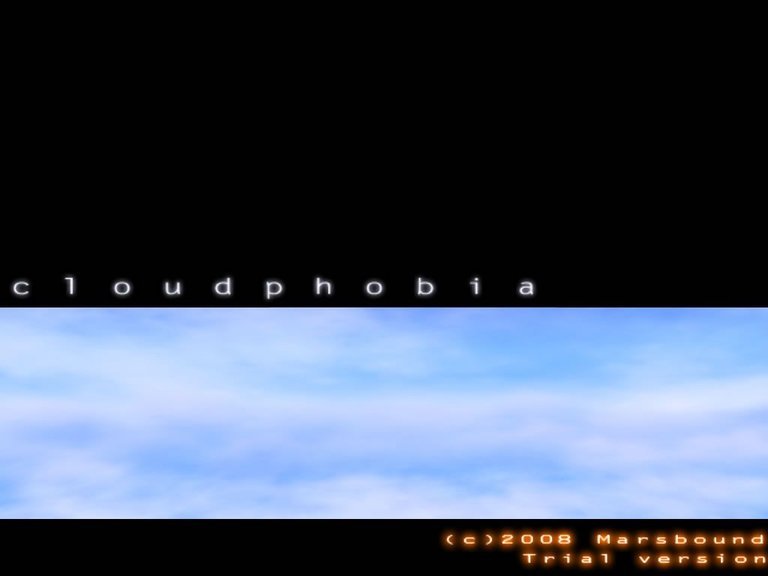
Cloudphobia is a side-scrolling doujin shooter where players must protect a mothership under attack by piloting one of two different robots to destroy an enemy prototype within a strict three-minute time limit per level.
Where to Buy Cloudphobia
PC
Cloudphobia Guides & Walkthroughs
Cloudphobia Reviews & Reception
mobygames.com (80/100): An outstanding game with stunning visuals and gameplay mechanics.
steambase.io (78/100): Cloudphobia has achieved a Steambase Player Score of 78 / 100.
indiedb.com (81/100): Nice look and “arcadey” feel. Fluid gameplay.
Cloudphobia: Review
In the annals of doujin gaming, few titles have captured the imagination of shoot-’em-up enthusiasts quite like Cloudphobia. Released in 2008 by the enigmatic Japanese studio Marsbound, this side-scrolling shooter arrived as a revelation—a game that fused blistering arcade action with a striking anime aesthetic and an innovative time-attack twist. For years, Cloudphobia existed only as a tantalizing demo, its full potential unrealized. Then, in a quiet Christmas release, the complete game emerged, and the indie scene was never quite the same. This is the story of a game that dared to be different, and in doing so, carved out a unique legacy in the crowded world of 2D shooters.
Development History & Context
Cloudphobia was born in the fertile soil of Japan’s doujin (indie) game scene, a community renowned for pushing the boundaries of creativity and technical prowess. Marsbound, the studio behind the game, was a small collective with a passion for mecha design and high-octane gameplay. Their vision was clear: to create a shooter that combined the adrenaline of arcade classics with the visual flair of modern anime, all while introducing a fresh gameplay hook.
The era was one of transition. The mid-2000s saw the decline of the arcade and the rise of digital distribution, allowing indie developers to reach global audiences. Cloudphobia was a product of this shift—a game that could have thrived in arcades but found its home on PC, distributed as freeware with the option for donations. The developers leveraged the power of 3D graphics engines to render lush, layered backgrounds, while keeping the core gameplay firmly rooted in 2D. This hybrid approach was both a technical and artistic statement, showcasing what a small team could achieve with limited resources.
The game’s development was marked by a long, mysterious gestation. For years, only a single demo level was available, leaving fans hungry for more. When the full game finally arrived in December 2008, it was a revelation—five stages of tightly designed action, each with its own challenges and visual identity. The timing was perfect: the indie scene was hungry for innovative experiences, and Cloudphobia delivered in spades.
Narrative & Thematic Deep Dive
At first glance, Cloudphobia‘s story might seem like standard sci-fi fare: a war between rebels and an oppressive empire, a rogue pilot, and a desperate last stand. But beneath the surface lies a narrative rich with themes of control, freedom, and the human cost of war.
The plot centers on EG-04 Mist, a telepathic girl raised in a military research facility. Her connection to the EAM-10P Englar, a powerful prototype aircraft, becomes both her prison and her weapon. When she loses control and turns against her creators, the rebellion sees a chance to strike back. The player takes on the role of a pilot in the EAF-06 Loftárása, tasked with stopping Mist before she can unleash another devastating attack.
This setup is more than just window dressing. It speaks to the game’s core tension: the struggle between individual agency and systemic control. Mist’s rebellion is born of trauma and manipulation, a reflection of the broader conflict between the empire and those seeking independence. The three-minute time limit on each stage is not just a gameplay mechanic—it’s a narrative device, underscoring the urgency and desperation of the rebellion’s mission.
Thematically, Cloudphobia explores the cost of freedom. The player must balance offense and defense, pushing forward to destroy the enemy while protecting their own mothership. This duality mirrors the moral ambiguity of war: every victory comes at a price, and every choice has consequences. The game’s title, Cloudphobia, hints at this tension—a fear of the unknown, of the skies that both shelter and threaten.
Gameplay Mechanics & Systems
Cloudphobia is a masterclass in focused, high-stakes design. At its core, it’s a side-scrolling shooter, but the game introduces several innovative twists that set it apart from its peers.
The most striking mechanic is the time limit. Each of the five stages must be completed in just three minutes, forcing players to balance speed and precision. This creates a constant tension: do you rush ahead to reach the boss, or do you take the time to clear out enemies and protect your mothership? The answer is rarely clear, and the game rewards careful risk assessment.
The player controls the Loftárása, a giant robot that can be equipped with one of two weapons: the PLG-90 laser rifle or the Núllpunktur vibroblade. Each weapon offers a distinct playstyle. The PLG-90 is a ranged option, encouraging players to keep their distance and pick off enemies methodically. The Núllpunktur, on the other hand, is a close-quarters weapon that rewards aggression and precision. This choice adds significant replay value, as each weapon changes the way you approach the game’s challenges.
Another key mechanic is the boost system. The Loftárása is equipped with powerful thrusters that allow for rapid movement, but using them drains energy and leaves you vulnerable. Mastering the timing of boosts is essential, as it allows you to dodge enemy fire, close the distance to bosses, and navigate the game’s intricate level design.
The game also features a robust scoring system. Destroying enemies in quick succession builds a combo chain, while using missiles triggers multipliers. Near-miss bonuses reward players for risky maneuvers, and the end-of-stage grading system provides additional incentives for perfection. This emphasis on scoring adds a layer of depth that will keep high-score chasers coming back for more.
However, Cloudphobia is not without its flaws. The game’s difficulty can be punishing, especially for newcomers. The three-minute time limit leaves little room for error, and the lack of power-ups means that players must rely on skill alone. Additionally, the game’s short length—just five stages—means that it can feel repetitive after repeated playthroughs.
World-Building, Art & Sound
Cloudphobia‘s visual design is nothing short of breathtaking. The game’s use of 3D graphics to render layered backgrounds gives it a sense of depth and dynamism rarely seen in 2D shooters. Each stage is a visual feast, from the rolling clouds of the first level to the claustrophobic corridors of the fourth. The game’s mecha designs are equally impressive, with a distinct anime aesthetic that feels both familiar and fresh.
The attention to detail is remarkable. The Loftárása’s animations are fluid and expressive, with subtle touches like momentum-based leg movement adding to the sense of weight and realism. The game’s special effects—explosions, laser beams, and missile trails—are rendered with a level of polish that belies its indie origins.
The sound design is equally strong. The game’s soundtrack, composed by Quietsix, is a mix of driving techno and atmospheric synth, perfectly complementing the on-screen action. The sound effects are crisp and impactful, from the roar of the Loftárása’s thrusters to the satisfying clang of the Núllpunktur’s blade.
Together, these elements create a cohesive and immersive experience. Cloudphobia is a game that demands to be played with the volume turned up, its visuals and audio working in harmony to draw players into its world.
Reception & Legacy
Upon its release, Cloudphobia was met with widespread acclaim. Critics praised its innovative mechanics, stunning visuals, and tight design. The game’s freeware status only added to its appeal, making it accessible to a wide audience. Over time, Cloudphobia has only grown in stature, becoming a touchstone for indie developers and a favorite among shoot-’em-up fans.
The game’s influence can be seen in numerous subsequent titles. Its emphasis on time-based challenges and risk-reward mechanics has been echoed in games like Ikaruga and Sine Mora. Its visual style has inspired a new generation of indie developers, many of whom have sought to capture the same blend of anime aesthetics and technical polish.
In 2013, Cloudphobia received an official English localization from Rockin’ Android, bringing it to a wider audience. The Steam release in 2016 introduced the game to a new generation of players, complete with improved controller support and online leaderboards. These updates ensured that Cloudphobia would remain relevant in an ever-changing gaming landscape.
Today, Cloudphobia stands as a testament to the power of indie game development. It is a game that defied expectations, proving that a small team with a clear vision could create something truly special. Its legacy is one of innovation, artistry, and enduring appeal—a legacy that continues to inspire to this day.
Conclusion
Cloudphobia is more than just a game; it is a landmark in the history of indie gaming. Its innovative mechanics, stunning visuals, and tight design have earned it a place among the greats of the shoot-’em-up genre. While its short length and punishing difficulty may deter some players, those who persevere will find a deeply rewarding experience that rewards skill, strategy, and perseverance.
In a world where games are often judged by their budgets and marketing campaigns, Cloudphobia is a reminder that true artistry can come from the most unexpected places. It is a game that dares to be different, and in doing so, has left an indelible mark on the medium. For fans of shoot-’em-ups, anime, or simply great game design, Cloudphobia is an essential experience—one that will continue to captivate and inspire for years to come.