
- Release Year: 2008
- Platforms: Macintosh, Windows
- Publisher: Akella, Crimson Cow GmbH, JoWooD Productions Software AG, Virtual Programming Ltd.
- Developer: Alcachofa Soft S.L.
- Genre: Adventure
- Perspective: 3rd-person (Other)
- Game Mode: Single-player
- Gameplay: Graphic adventure, Puzzle elements
- Setting: Europe, Fantasy, Medieval
- Average Score: 52/100
Description
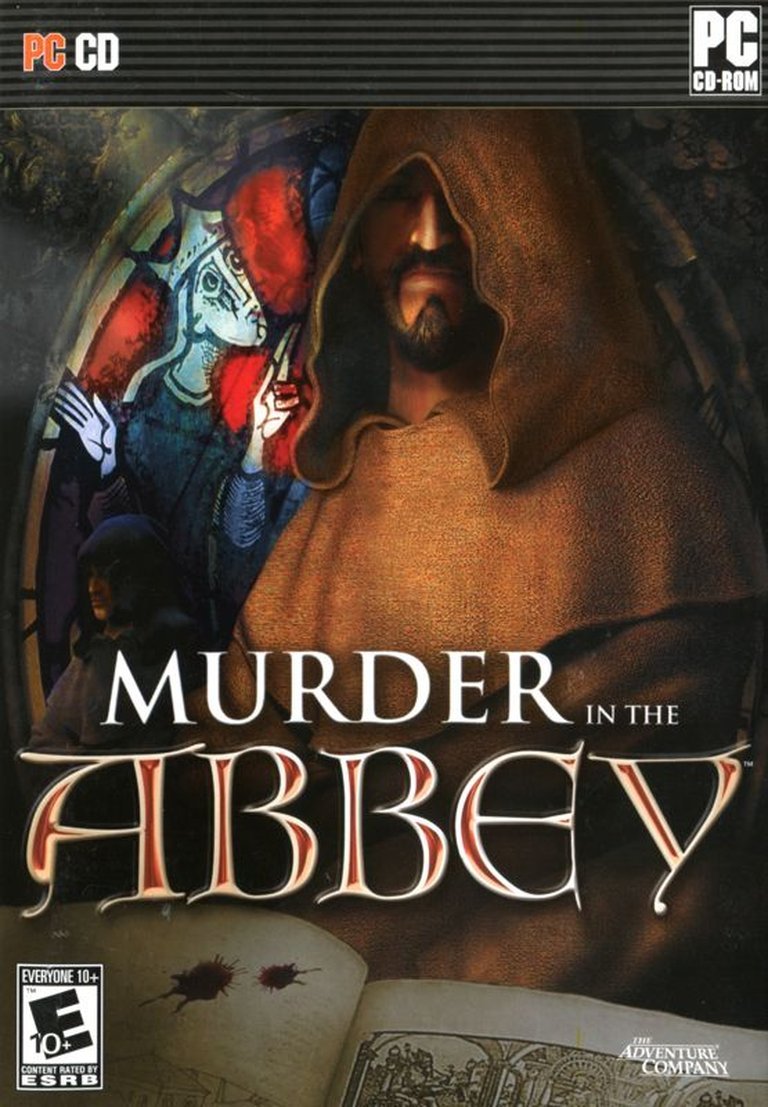
A classic point-and-click adventure set in a medieval abbey, where former royal consultant Leonardo and his apprentice Bruno investigate mysterious crimes, uncovering secrets and solving puzzles in a darkly atmospheric setting.
Gameplay Videos
Where to Buy Murder in the Abbey
PC
Murder in the Abbey Guides & Walkthroughs
Murder in the Abbey Reviews & Reception
metacritic.com (64/100): I highly enjoyed the story of Murder in the Abbey. It was well written and the dialogue is pretty good and the graphic blending of cel-shading, 2D and 3D graphics really make this title stand out from the rest of the crowd.
gamewatcher.com : There are no action sequences to detract from the puzzles and other game play so fans of pure adventure games should really enjoy this title
ign.com (35/100): Between the could’ve-been-awesome art, the never-could’ve-been-awesome-in-a-million-years voice acting, and the fact that monastery intrigue is a very niche proposition to begin with… Murder in the Abbey utterly fails to be something I can recommend to anyone
Murder in the Abbey: A Medieval Whodunit Marred by Execution
Introduction
In the twilight of the classic adventure game era, Murder in the Abbey emerged as a curious artifact—a Spanish-developed medieval mystery that promised the intrigue of Umberto Eco’s The Name of the Rose wrapped in a cartoonish aesthetic. Released in 2008 by Alcachofa Soft, this point-and-click adventure arrived during a genre drought, offering players a chance to don the robes of Leonardo de Toledo, a scholarly monk-detective investigating a string of murders in a remote abbey. While the game’s ambition and artistic vision shine through, its execution reveals the growing pains of a studio transitioning from comedic fare to serious storytelling.
Development History & Context
Alcachofa Soft, known primarily for their humorous Mortadelo y Filemón adventures, took a bold creative leap with Murder in the Abbey. The studio’s decision to pivot toward a darker, more mature narrative reflected both the influence of literary classics and the evolving expectations of adventure game enthusiasts. The development team, led by creative director Emilio de Paz, crafted a game that combined 2D pre-rendered backgrounds with 3D character models—a technique that was becoming increasingly common but still required significant technical finesse.
The game’s production values were notably high for an independent Spanish studio. The Prague Symphony Orchestra recorded over 70 minutes of original score, while professional voice actors (including JB Blanc as Leonardo in the English version) brought the script to life. However, these ambitions came with challenges. The initial German release was plagued by severe technical issues—crashes, inventory glitches, and even plot-stopping bugs that rendered the game unwinnable. A patch eventually addressed most problems, but the damage to the game’s reputation was done.
Narrative & Thematic Deep Dive
At its core, Murder in the Abbey tells a familiar story: a closed-circle murder mystery set in a medieval monastery, complete with suspicious monks, hidden passages, and religious intrigue. Leonardo and his novice companion Bruno arrive at Nuestra Señora de la Natividad Abbey only to find themselves embroiled in a deadly conspiracy that threatens to expose dark secrets within the Church itself.
The narrative structure follows classic detective fiction conventions—isolated setting, multiple suspects, escalating body count—but adds layers of theological and philosophical questioning. Leonardo, much like Eco’s William of Baskerville, represents rational inquiry in conflict with religious dogma. His investigations reveal that the abbey’s holy facade masks corruption, hypocrisy, and forbidden knowledge.
Character development is where the game truly excels. Each monk has distinct personality traits, motivations, and secrets that gradually unfold through conversation. The writing captures medieval speech patterns without becoming inaccessible, and the dialogue often carries subtle wit and wisdom. However, the game’s linearity undermines its investigative premise—no matter which dialogue options players choose, the story progresses identically, reducing player agency to a series of predetermined steps.
Gameplay Mechanics & Systems
The gameplay adheres to traditional point-and-click conventions: players explore environments, collect inventory items, solve puzzles, and interrogate suspects. The interface is straightforward but occasionally cumbersome. Hotspots must be discovered through pixel hunting, and the lack of a hotspot highlighter makes this process unnecessarily tedious. The inventory system, while functional, doesn’t allow for intuitive experimentation with item combinations.
Puzzle design represents both the game’s strengths and weaknesses. Many puzzles feel organic to the medieval setting—deciphering coded manuscripts, operating ancient mechanisms, or crafting alchemical solutions. However, others rely on arbitrary logic or require players to follow strict sequences without clear justification. The game’s linearity compounds these issues; players cannot progress until they’ve completed specific tasks in a predetermined order, often without understanding why certain solutions are required.
The inclusion of a fast-travel map system helps mitigate the tedium of backtracking, but Leonardo’s slow walking speed still makes exploration feel laborious. Some puzzles require extensive trial-and-error, particularly those involving the abbey’s complex layout and hidden passages.
World-Building, Art & Sound
Visually, Murder in the Abbey strikes a delicate balance between cartoon aesthetics and atmospheric realism. The cel-shaded 3D characters move against richly detailed 2D backgrounds that capture the texture and atmosphere of medieval architecture. The artistic direction successfully conveys the abbey’s dual nature—both a place of spiritual contemplation and potential danger.
The soundtrack, performed by the Prague Symphony Orchestra, elevates the entire experience. Orchestral arrangements blend seamlessly with Gregorian chants, organ music, and period-appropriate instrumentation to create an immersive medieval soundscape. Each location has distinct musical themes that enhance the mood, from the somber tones of the cemetery to the tense atmosphere of secret passages.
Sound design extends beyond music to include environmental effects and voice acting. While most performances are competent, Bruno’s voice acting—intended to be comic relief—often grates on the nerves with its exaggerated whining. The overall audio presentation demonstrates the production values that set this game apart from many contemporary adventures.
Reception & Legacy
Critical reception was decidedly mixed, reflecting the game’s uneven qualities. Adventure-focused publications praised its story, characters, and production values, with Adventure Classic Gaming awarding it a perfect score and calling it “an exceptional production of an outstanding story.” However, mainstream outlets were less forgiving. IGN’s scathing 3.5/10 review dismissed the game as a waste of time, while GameSpot acknowledged its personality but criticized its lack of originality.
Commercial performance data is scarce, but the game’s troubled release—particularly the buggy German version—likely hampered its market success. The Macintosh version released in 2009 suggests modest commercial viability, but Murder in the Abbey never achieved the cult status of other adventure game classics.
The game’s legacy is complicated. It demonstrated that Spanish developers could produce high-quality adventure games with international appeal, paving the way for future projects. However, its technical issues and design limitations also served as cautionary tales about the importance of thorough testing and player-friendly design choices.
Conclusion
Murder in the Abbey stands as a fascinating case study in adventure game development—a title that reached for greatness but fell short due to execution issues. Its strengths are undeniable: a compelling medieval mystery, memorable characters, beautiful art direction, and an exceptional musical score. The game’s ambition to combine literary depth with accessible gameplay was admirable, even if the results were imperfect.
The technical problems that plagued its release cannot be overlooked, nor can the design choices that frustrated players—linear progression, arbitrary puzzle solutions, and tedious exploration mechanics. Yet beneath these flaws lies a game with genuine heart and creativity, one that attempted to elevate the adventure game genre beyond simple puzzle-solving toward meaningful storytelling.
For dedicated adventure game fans, Murder in the Abbey offers a rewarding experience despite its imperfections. Its atmospheric setting, engaging narrative, and artistic achievements make it worth exploring, particularly for those interested in the evolution of the genre. However, casual players or those seeking polished, modern adventure game design may find the experience more frustrating than fulfilling.
Ultimately, Murder in the Abbey represents both the potential and the pitfalls of independent adventure game development in the late 2000s—a ambitious project that, while flawed, contributed to the genre’s ongoing renaissance and demonstrated that compelling stories could still be told within the point-and-click format.