
- Release Year: 2020
- Platforms: Nintendo Switch, PlayStation 4, Windows Apps, Windows, Xbox One, Xbox Series
- Publisher: Games Incubator sp. z o.o., No Gravity Games S.A., PlayWay S.A.
- Developer: Igrek Games
- Genre: Action
- Perspective: Top-down
- Game Mode: Single-player
- Gameplay: RPG elements, Shooter
- Setting: Fantasy, Futuristic, Sci-fi
- Average Score: 71/100
Description
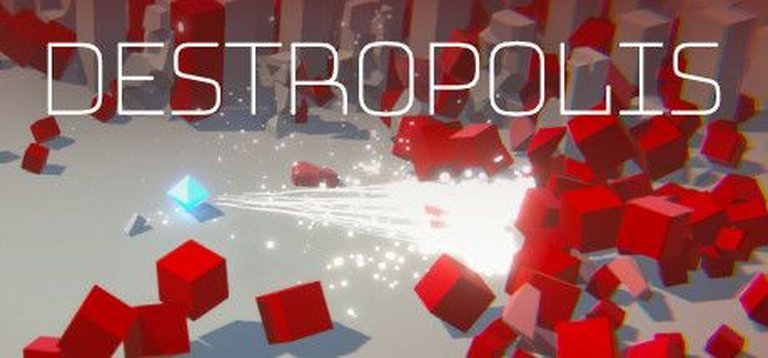
Destropolis is a top-down twin-stick shooter with roguelike elements, where players battle endless waves of red geometric enemies in a fully destructible futuristic city. The game features local co-op for up to three players, a variety of weapons and power-ups, and a synth-wave soundtrack, offering fast-paced action inspired by classics like Crimsonland and Nuclear Throne.
Gameplay Videos
Where to Buy Destropolis
Destropolis Cracks & Fixes
Destropolis Patches & Updates
Destropolis Guides & Walkthroughs
Destropolis Reviews & Reception
metacritic.com (67/100): When things start getting really explosive — which is to say, almost immediately — what you see is a game that’s a whole lot of fun.
monstercritic.com (66/100): Destropolis is a fun arcade game, that score chasers will adore.
mygamer.com (80/100): Destropolis has just about everything you want in an arena high-score based twin-stick shooter.
gamesandjunk.net : Destropolis may be minimalistic in its design, but I’ll be damned if it isn’t a blast to play.
Destropolis: Review
In the vast landscape of twin-stick shooters, Destropolis emerges as a minimalist yet explosive entry, proving that sometimes less truly is more. Developed by the solo developer Jacek Perzanowski under the banner of Igrek Games, and released on August 19, 2020, Destropolis is a top-down shooter that strips away excess to deliver pure, adrenaline-fueled action. With its stark geometric art style, synth-wave soundtrack, and fully destructible environments, the game offers a unique experience that is as stylish as it is chaotic. But does its simplicity elevate it to greatness, or does it leave players wanting more? Let’s dive into the heart of Destropolis and find out.
Development History & Context
Destropolis was born in an era when indie games were flourishing, and the twin-stick shooter genre was experiencing a renaissance. Inspired by classics like Crimsonland, Alien Shooter, and Nuclear Throne, developer Jacek Perzanowski set out to create a game that was both accessible and intense. Using Unity as the game engine, Perzanowski crafted a title that could run smoothly on a variety of platforms, from PC to Nintendo Switch, PlayStation 4, Xbox One, and Xbox Series X|S.
The game’s development was a solo endeavor, with Perzanowski handling everything from design to programming. The soundtrack, however, was a collaboration with LukHash, a well-known artist in the synth-wave and chiptune scene. This partnership resulted in a soundtrack that perfectly complements the game’s futuristic aesthetic, blending chiptune mastery with synthwave cyberpunk and EDM elements.
Released in 2020, Destropolis arrived during a time when players were seeking quick, engaging experiences that could be enjoyed in short bursts. Its low price point and addictive gameplay made it an attractive option for fans of the genre, and its fully destructible environments set it apart from other titles in the market.
Narrative & Thematic Deep Dive
Destropolis is not a game that relies on a deep narrative to drive its experience. Instead, it embraces a minimalist approach, focusing on the pure thrill of survival. The game’s setting—a futuristic city overrun by red, cube-like enemies—serves as a backdrop for the player’s struggle against overwhelming odds.
Thematically, Destropolis explores the concept of chaos versus order. The player, represented by a small blue octahedron, is thrust into a world where destruction is the only means of survival. The red cubes, with their aggressive colors and relentless attacks, symbolize the chaos that threatens to consume everything. The player’s goal is to carve out a space of order amidst the destruction, using an arsenal of weapons and power-ups to fend off the endless waves of enemies.
While the game’s narrative is sparse, its themes resonate through its gameplay and visual design. The stark contrast between the clean, white environment and the vibrant, destructive elements creates a sense of tension that drives the player forward. In Destropolis, the story is not told through dialogue or cutscenes but through the player’s actions and the ever-present threat of annihilation.
Gameplay Mechanics & Systems
At its core, Destropolis is a twin-stick shooter, and it executes this formula with precision. The controls are simple and intuitive: the left stick moves the player, the right stick aims, and the right trigger or bumper fires. This straightforward control scheme allows players to focus on the action without being bogged down by complex mechanics.
The game’s arsenal is diverse, featuring over a dozen weapons, each with its own unique feel. From shotguns and assault rifles to lasers and gauss guns, the weapons offer a variety of playstyles. Each weapon has a limited ammo count, encouraging players to constantly seek out new firepower. Additionally, weapons have a heat capacity, preventing players from holding down the trigger indefinitely. This mechanic adds a layer of strategy, as players must balance aggression with caution.
Power-ups play a crucial role in Destropolis, offering temporary boosts and offensive capabilities. With 12 different power-ups, including turrets, force fields, and nuclear explosions, players have a range of options to turn the tide of battle. However, power-ups must be picked up manually, adding a risk-reward element to their use. Do you risk running into a horde of enemies to grab that nuke, or do you play it safe and hope a more accessible power-up appears?
The skill system in Destropolis provides a sense of progression, albeit a temporary one. As players defeat enemies, they earn experience points and level up, unlocking new abilities. With 40 different skills to choose from, players can customize their playstyle, increasing health, damage, or movement speed, among other options. However, these skills are lost upon death, resetting the player to square one. This roguelike element keeps each run fresh and challenging, as players must adapt to new skill combinations with each attempt.
The game’s fully destructible environment is one of its standout features. Every object, from buildings to enemies, can be smashed into pieces, creating a dynamic and ever-changing battlefield. This mechanic not only adds to the visual spectacle but also provides strategic opportunities, as players can use the environment to their advantage.
World-Building, Art & Sound
Destropolis is a game that thrives on its minimalist aesthetic. The stark white environments, punctuated by the vibrant red of the enemies and the blue of the player, create a visually striking experience. The clean, geometric design ensures that players can easily distinguish between friend and foe, even in the heat of battle.
The game’s art style is complemented by its sound design. Each weapon has its own unique sound, adding to the sense of variety and immersion. The soundtrack, composed by LukHash, is a standout feature, blending chiptune, synthwave, and EDM to create a pulsating backdrop for the action. The music enhances the gameplay, driving the pace and adding to the overall intensity of the experience.
The destructible environments are not just a visual treat but also a key component of the game’s world-building. As players tear through the city, the landscape changes, reflecting the chaos of the battle. This dynamic environment adds a layer of immersion, making players feel like they are truly shaping the world around them.
Reception & Legacy
Upon its release, Destropolis received a mixed but generally positive reception. Critics praised its addictive gameplay, great value for money, and engaging co-op experience. The game’s minimalist design and challenging gameplay were also highlighted as strengths. However, some critics noted that the game’s content was limited, and the mechanics could become repetitive over time.
On Metacritic, Destropolis holds a score of 67/100 based on 8 critic reviews, indicating “mixed or average” reviews. On Steam, the game has an 87% positive rating from over 285 reviews, suggesting that players have embraced its unique charm. The game’s low price point and addictive gameplay have made it a popular choice for fans of the twin-stick shooter genre.
While Destropolis may not have achieved the same level of recognition as some of its contemporaries, it has carved out a niche for itself. Its fully destructible environments and minimalist design have influenced other indie games, and its success has demonstrated the potential of solo developers in the gaming industry.
Conclusion
Destropolis is a game that proves simplicity can be a strength. Its minimalist design, addictive gameplay, and fully destructible environments create a unique and engaging experience that stands out in the crowded twin-stick shooter genre. While it may not offer the depth or variety of some of its peers, it delivers a pure, adrenaline-fueled experience that is perfect for short bursts of action.
For fans of the genre, Destropolis is a must-play. Its low price point and polished gameplay make it a great value, and its co-op mode adds to its replayability. While it may not be a game that will keep you glued to your screen for hours on end, it is a delightful distraction that will keep pulling you back for just one more run.
In the end, Destropolis is a hidden gem—a game that may not have received the attention it deserves but has earned its place in the hearts of those who have experienced its chaotic charm. Whether you’re a seasoned twin-stick shooter veteran or a newcomer to the genre, Destropolis is a game that is well worth your time.