
- Release Year: 2022
- Platforms: Windows
- Publisher: Gamera Interactive Srl
- Developer: Gamera Interactive Srl, Pixel Quail
- Genre: Adventure
- Perspective: Side view
- Game Mode: Single-player
- Gameplay: Puzzle elements
Description
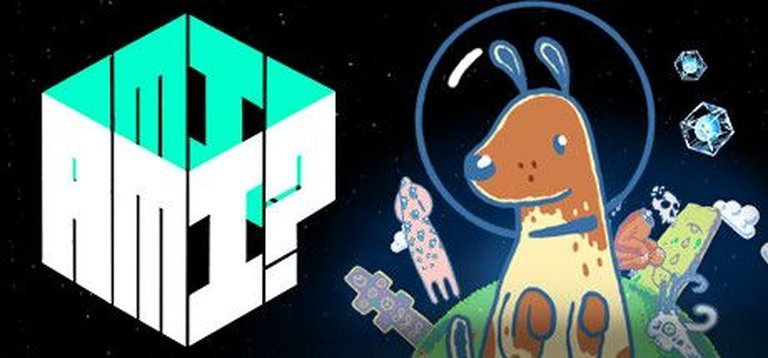
Am I? is an adventure game released for Windows in March 2022, featuring a side view perspective and point-and-select interface. Players solve puzzles and navigate through the game’s adventure elements.
Where to Buy Am I?
PC
Am I? Guides & Walkthroughs
Am I?: Review
Introduction
In the vast, ever-expanding cosmos of video games, few titles dare to pose the most fundamental questions of existence with the same unflinching, surreal intensity as Am I?. Released in March 2022 by the independent studios Gamera Interactive and Pixel Quail, this point-and-click adventure transcends mere entertainment, positioning itself as a philosophical odyssey through the nebulous borders between life, death, and identity. At its core, the game follows Laika—the Soviet space dog immortalized in history—as she drifts through a labyrinthine afterlife of asteroids, enigmatic characters, and cryptic puzzles. The central query, “Is she dead?” isn’t just a plot device but a narrative vortex, sucking players into a meditation on mortality and selfhood. While Am I? may lack the commercial heft of contemporaries like Elden Ring or God of War Ragnarök, its daring conceptual framework and artistic cohesion make it a forgotten gem in the indie landscape. This review argues that Am I? succeeds not as a traditional game but as an interactive allegory, where gameplay mechanics serve as metaphors for existential grappling, even if its execution occasionally stumbles under the weight of its ambition.
Development History & Context
Am I? emerged from the collaborative efforts of Gamera Interactive and Pixel Quail, studios operating on the fringes of the mainstream gaming industry in 2022. The era was dominated by AAA behemoths like Elden Ring (which redefined open-world storytelling) and narrative-driven epics such as Horizon Forbidden West, which tackled socio-political themes through polished, cinematic worlds. Against this backdrop, Am I? stood apart as a deliberate rejection of commercial pressures, embracing a lo-fi, stylized aesthetic reminiscent of classic 2D adventures like The Secret of Monkey Island.
The developers’ vision was rooted in pure conceptual experimentation, aiming to explore themes of isolation and existential doubt through Laika’s journey. Technological constraints were minimal—the game runs on Windows with modest specs—but this simplicity became a strength, allowing the team to focus on narrative cohesion over graphical fidelity. The point-and-click interface, a relic from the 90s adventure boom, was repurposed not for nostalgia, but as a metaphor for passive observation in a world beyond control. This choice reflected the gaming landscape’s growing acceptance of “walking simulators” and narrative-driven indies, where player agency is secondary to atmospheric immersion. Yet, while 2022 saw a surge in experimental storytelling (e.g., Immortality and Pentiment), Am I? flew largely under the radar, its niche release ensuring it remained a cult curiosity rather than a mainstream phenomenon.
Narrative & Thematic Deep Dive
At its heart, Am I? is a fragmented, non-linear narrative dressed in the trappings of science fiction. The game opens with Laika adrift in space, her body a conduit for a surreal exploration of the afterlife. The plot eschews traditional exposition, instead weaving through asteroid hubs populated by “weird characters”—abstract entities that embody existential archetypes. One might represent the futility of memory, another the pain of abandonment, while others serve as puzzle-gatekeepers, their cryptic dialogue hinting at Laika’s fractured psyche.
The central mystery—determining whether Laika is dead—unfolds through environmental storytelling rather than explicit monologues. Clues are embedded in the decaying machinery of derelict space stations, the gravitational anomalies of floating rocks, and the fleeting memories triggered by puzzle solutions. This structure mirrors the “string of pearls” narrative model, where linear sequences (puzzles) are punctuated by moments of player-driven discovery. Thematically, the game interrogates the fluidity of identity. Laika’s transformations—morphing between dog, human, and abstract forms—symbolize the dissolution of self in the face of death. The recurring question, “Am I?” becomes a mantra, challenging players to confront their own existential anxieties. Unlike games like Life is Strange, which use choice to drive character development, Am I? uses ambiguity as a narrative tool, leaving players to piece together meaning from a world where logic dissolves into dream logic. Its power lies not in answers, but in the unsettling realization that identity itself is a construct, easily lost in the void.
Gameplay Mechanics & Systems
Am I?’s gameplay is a masterclass in minimalism, built around a point-and-click interface that prioritizes observation over action. Players guide Laika through interconnected asteroid environments, clicking on interactive objects to solve environmental puzzles. These puzzles are thematically resonant: aligning celestial bodies mirrors the search for cosmic order, while reactivating broken machinery symbolizes the futility of mending what is irreparably broken. The game’s “crafting” system—though rudimentary—allows players to combine found items (e.g., a rusted gear and a shard of light) to create tools that unlock new pathways, reinforcing the theme of piecing together fragments of a lost self.
However, the mechanics are not without flaws. The point-and-click controls can feel sluggish, especially in tight spaces, and the lack of clear objectives may frustrate players accustomed to guided narratives. The game deliberately withholds direction, forcing players to embrace uncertainty—a choice that aligns with its themes but risks alienating those seeking traditional progression. Character progression is nonexistent, as Laika’s abilities remain static; instead, the game’s “progress” is purely narrative, with players gaining insights rather than power-ups. This approach innovatively inverts RPG tropes, positioning the player as a passive witness rather than an active hero. Yet, the absence of fail states or meaningful consequences makes the experience feel more like an interactive art installation than a game, a double-edged sword that enhances its philosophical depth but dilutes player engagement.
World-Building, Art & Sound
The world of Am I? is a triumph of atmospheric design, blending cosmic wonder with existential dread. Environments shift from sterile, metallic asteroids to bioluminescent voids, each location reflecting Laika’s deteriorating mental state. The art style, described as “stylized 2D or 2.5D,” employs muted color palettes and stark contrasts, evoking the silent isolation of space. Asteroids are not mere backdrops but characters in their own right—some pulsing with eerie light, others scarred by collisions that hint at violent pasts. The “weird characters” Laika encounters are rendered in abstract, painterly strokes, their faces often obscured or distorted, emphasizing the theme of unrecognizable truths.
Sound design amplifies the disorientation, with a minimalist score that blends haunting ambient drones with discordant electronic pulses. Footsteps echo hollowly in the void, while environmental sounds—the creak of metal, the hiss of escaping air—create a pervasive sense of decay. Voice acting is sparse, reserved only for pivotal moments, ensuring that silence remains a narrative tool. This synergy of art and sound crafts a world that feels both alien and intimately familiar, a dreamscape where beauty and horror coexist. It’s a testament to the developers’ vision that even without dialogue, the game communicates its themes through environmental storytelling, allowing players to infer Laika’s turmoil from the crumbling ruins around her.
Reception & Legacy
At launch, Am I? garnered little critical attention, buried beneath the hype of 2022’s blockbuster releases. MobyGames lists no critic reviews, and Adventure Gamers notes its absence of a demo, suggesting it struggled to find an audience. Commercially, it remains a footnote, with its $7.99 Steam price point underscoring its niche appeal. Yet, for those who discovered it, the game fostered a quiet reverence. Players on forums lauded its thematic bravery, comparing it to experimental works like The Stanley Parable or Outer Wilds, which prioritize introspection over action.
Legacy-wise, Am I? occupies a unique space in the indie canon. While it didn’t spawn sequels or imitators, its influence can be seen in the growing acceptance of games as vehicles for abstract philosophy. Titles like Immortality (2022), which uses FMV to dissect the horror of creation, share its commitment to narrative ambiguity. Over time, Am I? has been re-evaluated not as a “game” but as an interactive artifact, a digital equivalent of a surrealist painting. It remains a cult curiosity, discussed in retrospectives on 2022’s overlooked gems, and a reminder that video games can transcend entertainment to become explorations of the human condition. Though its legacy is modest, it endures as a testament to the medium’s potential for profound, if unconventional, storytelling.
Conclusion
Am I? is a paradox: a game that actively resists being “played” in the traditional sense, instead demanding contemplation and introspection. Its greatest strength lies in its unwavering commitment to its philosophical core, using Laika’s journey to craft a poignant meditation on death, identity, and the fragility of self. While its point-and-click mechanics may feel archaic and its lack of direction could alienate some, the game’s stylized art, haunting atmosphere, and thematic ambition make it a uniquely rewarding experience. It succeeds not by offering answers, but by asking the right questions—forcing players to confront the void within themselves.
In the grand tapestry of gaming history, Am I? will likely remain a niche footnote, overshadowed by its more bombastic contemporaries. But for those willing to embrace its surreal charm, it offers something rare: a game that doesn’t just entertain, but lingers in the mind like a half-remembered dream. It is, ultimately, a flawed masterpiece—an imperfect vessel for an idea that feels both ancient and urgently modern. For this reason, Am I? deserves a place not in the pantheon of great games, but in the annals of great interactive art.