
- Release Year: 1998
- Platforms: Windows
- Publisher: MVP Software
- Developer: Digital Storm
- Genre: Strategy, Tactics
- Perspective: Top-down
- Game Mode: Hotseat, LAN, Single-player
- Gameplay: Board game
Description
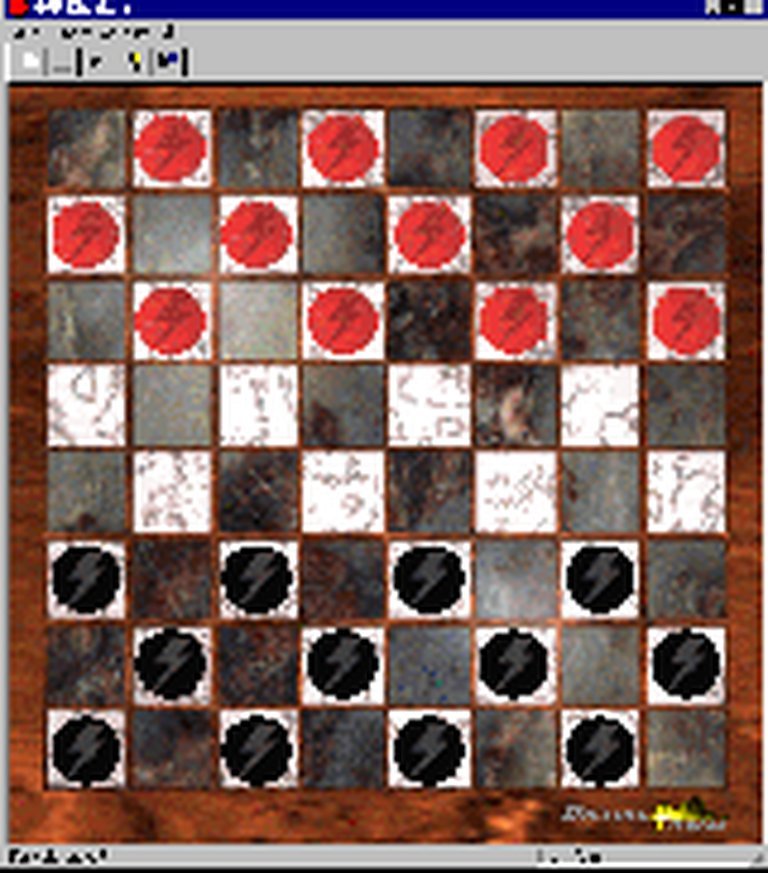
MVP Checkers is a shareware implementation of the classic board game Checkers, released in 1998 for Windows. It allows players to engage in traditional gameplay against a human opponent on the same device, over a network connection, or via nine AI opponents with varying difficulty levels divided into three tiers. The game features a top-down perspective, mouse-based controls, and supports 1-2 players offline, providing a digital adaptation of the timeless strategy game.
MVP Checkers Free Download
PC
MVP Checkers: Review
Introduction
In the pantheon of timeless games, checkers stands as a paragon of elegant simplicity and strategic depth. Its transition to digital form has yielded countless iterations, yet few capture the specific zeitgeist of late-90s PC gaming as distinctively as MVP Checkers. Released in 1998 by MVP Software and developed by Digital Storm, this shareware adaptation is more than a mere recreation of the classic board game—it is a cultural artifact, a product of an era when shareware dominated PC distribution and multiplayer gaming was burgeoning over nascent networks. This review examines MVP Checkers not only as a functional game but as a historical document, dissecting its development, mechanics, and legacy within the context of its time. Its thesis is clear: MVP Checkers exemplifies the ambitions and limitations of late-90s shareware, offering a polished yet mechanically straightforward experience that prioritizes accessibility and multiplayer connectivity over innovation, ultimately cementing its place as a niche but enduring curiosity in digital gaming history.
Development History & Context
MVP Checkers emerged from the creative ecosystem of Digital Storm, a small studio helmed by a core team of five individuals, including designer Emily Sun and artist duo John Versluis and Carolly Hauksdottir. The project was published under the umbrella of MVP Software, a purveyor of shareware classics like MVP Mancala and MVP Bridge Lite. The developers’ vision was pragmatic: to translate the tactile ritual of checkers into a digital format that leveraged the burgeoning capabilities of Windows 95/98, particularly its networking infrastructure.
Technologically, the game was a product of significant constraints. Released during an era when CD-ROMs were just beginning to overshadow floppy disks, MVP Checkers was astonishingly lean—its install size hovered between 2.7–2.9 megabytes, a testament to the era’s bandwidth limitations and the shareware model’s reliance on small, downloadable files. The team’s ambition was evident in its support for network play (LAN, modem, and early internet), a feature rare for board games of the time. However, graphical fidelity was sacrificed for functionality; the top-down board rendered via a fixed/flip-screen engine prioritized clarity over spectacle.
The gaming landscape of 1998 was pivotal. The PC market was transitioning from DOS to Windows, and shareware platforms like Tucows and Download.com were becoming gatekeepers for indie developers. Competitors included established titles like Hoyle Board Games and niche offerings such as Video Checkers (1980), but MVP Checkers carved a niche by emphasizing competitive multiplayer and a roster of nine AI opponents—three at each of three difficulty levels. Its “deluxe” branding (seen in alternate titles like MVP Checkers Deluxe for Windows95) underscored a commitment to offering a premium shareware experience, blending classic gameplay with modern connectivity.
Narrative & Thematic Deep Dive
As a pure strategy game, MVP Checkers intentionally eschews conventional narrative in favor of thematic immersion. The “plot” is distilled to the age-old conflict between two opposing forces, abstracted as red and black pieces vying for board dominance. Dialogue is nonexistent—there are no characters, cutscenes, or scripted moments—yet the game evokes a sense of rivalry through its competitive mechanics. The AI opponents, though unnamed, personify archetypes: the “Rookie” level suggests a greenhorn player, while “Master” implies a seasoned tactician.
Underlying themes revolve around strategic patience and resource management. Each move demands foresight, as pieces become “kings” upon reaching the opposite end, gaining new mobility—a metaphor for empowerment through perseverance. The multiplayer “death match” framing in ad copy (e.g., “challenge your friends to a Checkers ‘death match'”) injects a playful antagonism, transforming the cerebral game into a social spectacle. Though devoid of explicit storytelling, MVP Checkers implicitly explores the universal tension between order and chaos, as players balance defensive formations with aggressive gambits. Its simplicity is its strength: by stripping away narrative excess, it focuses the player’s attention on pure, unadulterated strategic conflict.
Gameplay Mechanics & Systems
At its core, MVP Checkers is a study in elegant constraint. The core loop adheres strictly to traditional checkers: diagonal moves, mandatory captures, and kinging. However, its implementation is defined by three key systems:
- AI Opponents: The game boasts nine AI adversaries, divided into three difficulty tiers (Rookie, Intermediate, Master). Each level features three uniquely programmed opponents, likely varying in aggression and tactical depth. While source material doesn’t specify AI algorithms, their existence provided crucial replay value in an era when human multiplayer was less accessible.
- Multiplayer Infrastructure: True innovation lies here. MVP Checkers supported LAN, modem, and internet play, allowing two players to compete remotely—a forward-thinking feature for 1998. The interface was streamlined: point-and-click piece selection via mouse, with visual cues highlighting valid moves.
- UI and Accessibility: The top-down view and fixed-screen layout ensured clarity, with a minimalist interface focusing on the board and a status bar for turn indicators. No complex menus or progression systems existed; the game was a “pure” experience, mirroring its analog origins.
Flaws are equally apparent. The AI, while varied, likely relied on scripted patterns rather than dynamic learning, leading to predictable challenges on higher difficulties. The lack of rule variants (e.g., forced captures or flying kings) limited strategic diversity. Yet these omissions align with the game’s philosophy: deliver a flawless, no-frills execution of a classic.
World-Building, Art & Sound
MVP Checkers’ “world” is the 8×8 checkerboard, rendered with functional clarity. Art direction prioritized readability over artistry: pieces were cleanly defined as red and black spheres, with kings distinguished by a subtle crown motif. Artwork credits to John Versluis and Carolly Hauksdottir suggest a stylized, if simple, aesthetic—likely warm, muted tones to evoke a wooden board ambiance.
Sound design is inferred from ad copy’s “wonderful music” claim, though no details survive. We can speculate ambient, looped MIDI tracks to complement the game’s pacing, alongside subtle click/clack sound effects for moves and captures. The absence of voice acting or dynamic audio underscores the era’s technical limits.
Collectively, these elements foster a cozy, focused atmosphere. The visual and audio cues create a “virtual game room” ambiance, transforming the solitary act of playing against AI into a ritualistic experience. It’s a world where the board itself is the protagonist, every move resonating with tactile satisfaction.
Reception & Legacy
MVP Checkers occupies a curious space in the historical record. Commercial success is undocumented, but its shareware model suggests modest popularity—likely sustained by niche appeal among board game enthusiasts and early multiplayer adopters. Critical reception is a void; no major reviews from 1998 survive, and Metacritic lists no scores. MobyGames aggregates a lone player rating of 1.0/5, though its lack of accompanying review renders it meaningless. This silence speaks volumes: MVP Checkers was not a mainstream hit but a specialized product for a discerning audience.
Its legacy endures in three forms:
– Preservation: The Internet Archive’s digital preservation of both the 1997 Deluxe and 1998 versions ensures its survival as a cultural artifact.
– Multiplayer Pioneer: Its support for network play predates widespread board game digitalization, foreshadowing titles like Chess.com or Tabletop Simulator.
– Studio Footnote: Digital Storm’s subsequent work on MVP Mancala and MVP Software’s broader catalog cement this game as part of a cohesive, if obscure, portfolio.
Yet its influence is limited. Unlike contemporaries such as Sid Meier’s Alpha Centauri, MVP Checkers did not innovate genre conventions; it perfected them within narrow confines. Its true legacy lies in embodying the shareware ethos: functional, accessible, and unpretentious.
Conclusion
MVP Checkers is a microcosm of late-90s PC gaming—ambitious within its limitations, technically competent, and culturally resonant in its niche. It eschews narrative flair and cutting-edge visuals for laser focus on gameplay and multiplayer, making it a time capsule of an era when digital adaptation meant honoring tradition rather than reinventing it. While its AI and lack of rule variants prevent it from being a “definitive” checkers experience, its networking features and polished execution justify its historical significance.
Final Verdict: MVP Checkers is not a masterpiece but a masterful execution of its vision. For historians, it’s a window into the shareware landscape; for players, it’s a functional, if dated, digital version of a classic. Its place in gaming history is secure—not as a trendsetter, but as a steadfast steward of a beloved game, reminding us that sometimes the most enduring innovations are the ones that simply work without fuss.