
- Release Year: 2018
- Platforms: Windows
- Publisher: OhWHATif Inc.
- Developer: OhWHATif Inc.
- Genre: Action
- Perspective: 1st-person
- Game Mode: Online Co-op, Single-player
- Gameplay: Shooter
- Setting: Fantasy
- Average Score: 89/100
- VR Support: Yes
Description
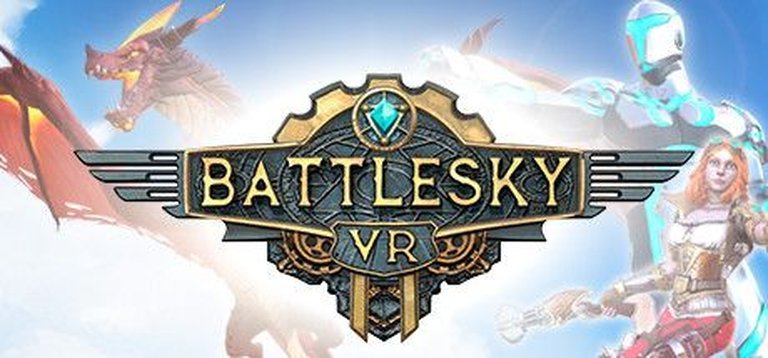
BattleSky VR is a multiplayer VR flying first-person shooter set in a fantasy sky realm, where players select unique heroes with distinct sizes, powers, and gameplay styles to engage in fast-paced aerial combat against opponents. The game features first-person perspective, direct control with tracked motion controllers, and supports up to four players in online PvP battles using flight mechanics for an immersive VR experience.
Where to Buy BattleSky VR
PC
BattleSky VR Cracks & Fixes
BattleSky VR Guides & Walkthroughs
BattleSky VR: Review
Introduction
In the nascent years of consumer virtual reality, a bold vision emerged: to translate the high-flying hero-shooter dynamics of a game like Overwatch into a fully immersive VR experience. BattleSky VR, released in Early Access on January 19, 2018, by the Taiwanese studio OhWHATif Inc., promised exactly that—a multiplayer aerial combat arena where players would embody uniquely powered heroes soaring through fantastical skies. While the game garnered attention for its ambitious premise and innovative motion controls, its journey from promising contender to historical footnote is a cautionary tale of Early Access ambition unfulfilled. This review deconstructs BattleSky VR through the lens of its development, gameplay, artistic design, and legacy, arguing that despite its technical achievements and niche appeal, it remains a fascinating but ultimately incomplete artifact of VR’s experimental frontier.
Development History & Context
BattleSky VR emerged from OhWHATif Inc.’s desire to create “a Multiplayer VR flying FPS game that will define a new generation of e-Sport.” As a small independent studio, the team leveraged Unity to build a title that tackled VR’s most persistent challenges: locomotion and motion sickness. Their approach was methodical, testing hyper-speed flying mechanics on over 1,300 beta testers to refine nausea-free traversal at speeds up to 250 km/h. The studio positioned the game as a community-driven project during its 6–12 month Early Access phase, promising iterative updates based on feedback.
The 2018 VR landscape was a Wild West of experimentation. While Beat Saber and Superhot VR were establishing mainstream appeal, multiplayer titles were still rare and often plagued by technical instability. BattleSky VR entered this milieu as a pioneer, not just in flight mechanics but also in its class-based hero system. Its inclusion in the Viveport Developer Awards (Arcade Category, 2nd place) and nomination at Casual Connect Singapore signaled industry validation. However, the studio’s ambitious roadmap—4 heroes, 6 maps, co-op missions, cross-platform play—quickly collided with resource constraints. After a flurry of updates in mid-2018 (adding hero Lady V and the Iceberg map), development stalled. The last official patch occurred over seven years ago, leaving the game in a state of perpetual Early Access, its grand unfulfilled.
Narrative & Thematic Deep Dive
While BattleSky VR prioritizes action over narrative, its world-building is sketched through hero backstories and mission contexts. The heroes represent archetypal fantasy archetypes:
– Draco: A fire-breathing dragon whose missions involve defending floating islands from invaders, symbolizing primal power and nature’s fury.
– Jet-9: A cybernetic soldier whose single-player mission centers on thwarting a corporate coup, embodying technological rebellion.
– Lady V: A gravity-wielding rebel introduced later, her mission hints at a resistance movement against an unnamed authoritarian force.
The overarching theme is one of liberation and resistance against oppressive forces, framed through the lens of aerial dominance. However, the narrative is delivered minimally—through mission briefings and environmental storytelling. The floating island setting evokes a sense of precarious freedom, while the heroes’ diverse abilities (fire, technology, gravity) suggest a world in flux. This thematic cohesion, though thinly developed, provides enough context to frame the competitive stakes without overwhelming the gameplay.
Gameplay Mechanics & Systems
BattleSky VR’s core innovation lies in its hero-specific locomotion, which transforms flying into a tactile, visceral experience:
– Jet-9: Rocket thrusters activated by aiming controllers downward, enabling quick bursts and agile maneuvers.
– Draco: Wing-flapping motions synced to controller swings, creating a rhythmic, soaring feel.
– Lady V: “Blink” teleportation via gravity gun pulls, offering strategic repositioning.
These systems were engineered to mitigate motion sickness, with over 90% of testers reporting comfort—a remarkable feat for high-speed VR flight.
Gameplay modes included:
– PvP Arena: Free-for-all, Team Deathmatch, and Team Escort (escort an airship). Maps like “Outpost” and “Jungle Isle” featured verticality and floating obstacles.
– Single Player: Missions teaching hero controls and basic combat (e.g., Jet-9’s corporate takedown).
– Co-op: Escort missions requiring teamwork to move an airship and defend against AI turrets.
– Racing: Time-based challenges through rings, though hampered by Draco’s slower flight style.
Combat relied on energy-based weapons (fireballs, railguns, lightning bolts) with reload mechanics. However, balancing was flawed: Draco’s tank-like health and area damage dominated PvP, while Jet-9’s agility was underutilized. The lack of AI bots in early multiplayer modes left sessions unplayable due to zero player population. Co-op missions were overly punishing for solo players, forcing reliance on teams. The UI was functional but marred by an obtrusive, deafening countdown timer that soured initial impressions.
World-Building, Art & Sound
BattleSky VR’s aesthetic is a blend of fantasy and sci-fi, realized through floating islands adorned with crumbling ruins, crystalline outcrops, and bioluminescent flora. The “Iceberg” map added aquatic subterranean zones, expanding the world’s verticality. While the environment design encouraged dynamic dogfights, the visual fidelity was rudimentary—textures and lighting resembled early 2000s console titles, lacking polish.
Sound design complemented the action: Jet-9’s thrusters roared, Draco’s wings flapped with visceral thumps, and Lady V’s gravity gun emitted satisfying hums. However, environmental ambience was sparse, and the aggressive countdown timer’s distorted beeping became a notorious flaw. The art direction prioritized functionality over spectacle, with heroes rendered as distinct silhouettes (dragon, robot, sorceress) to aid recognition in fast-paced combat. This simplicity, while pragmatic, failed to create a truly immersive atmosphere.
Reception & Legacy
At launch, BattleSky VR received a mixed-to-positive reception. On Steam, 85% of 21 reviews were positive, with players praising the “nausea-free” flying and hero variety. The VR-focused site The VR Grid awarded it 5.5/10, calling it a “demo” with “potential” but criticizing its content drought and dead multiplayer. Awards like the Viveport Developer Award highlighted its technical promise, while its nomination at Casual Connect underscored industry curiosity.
Commercially, the game underperformed, with only ~1,216 units sold as of 2025. Its legacy is twofold: as a technical proof-of-concept for VR flight, and as a cautionary tale of Early Access overreach. It influenced later titles like Aery VR by demonstrating that seamless locomotion was achievable, but its failure to deliver a complete product damaged trust in VR’s multiplayer viability. The abandoned roadmap—promised heroes, modes, and maps—serves as a reminder of the challenges facing small VR studios in a volatile market. Today, it survives as a niche curiosity on platforms like SideQuest, its ghost lobbies a testament to an unrealized vision.
Conclusion
BattleSky VR is a game of unfulfilled potential. Its hero-specific flight mechanics remain a benchmark for VR locomotion design, offering a glimpse into what aerial combat could feel like in virtual reality. The studio’s dedication to combatting motion sickness was commendable, and the core gameplay loop—soaring, dodging, and unleashing powers—was undeniably exhilarating in short bursts. Yet, its legacy is defined by what it lacked: content, balance, and a completed vision. The Early Access model, which should have fostered community growth, instead highlighted the risks of overpromising and underdelivering.
For history, BattleSky VR stands as a bold but flawed experiment—a snapshot of VR’s hopeful, chaotic adolescence. It is not a masterpiece, nor is it a failure; it is a question asked too early, answered too late. In the pantheon of VR’s pioneers, it occupies a curious space—celebrated for its innovations, remembered for its incompleteness, and ultimately, a reminder that ambition without execution is but a fleeting dream in the sky.