
- Release Year: 2002
- Platforms: Linux, Macintosh, Windows
- Publisher: Chronic Logic LLC
- Developer: Chronic Logic LLC
- Genre: Puzzle, Simulation
- Perspective: Side view
- Game Mode: Single-player
- Gameplay: City building, construction simulation
- Average Score: 84/100
Description
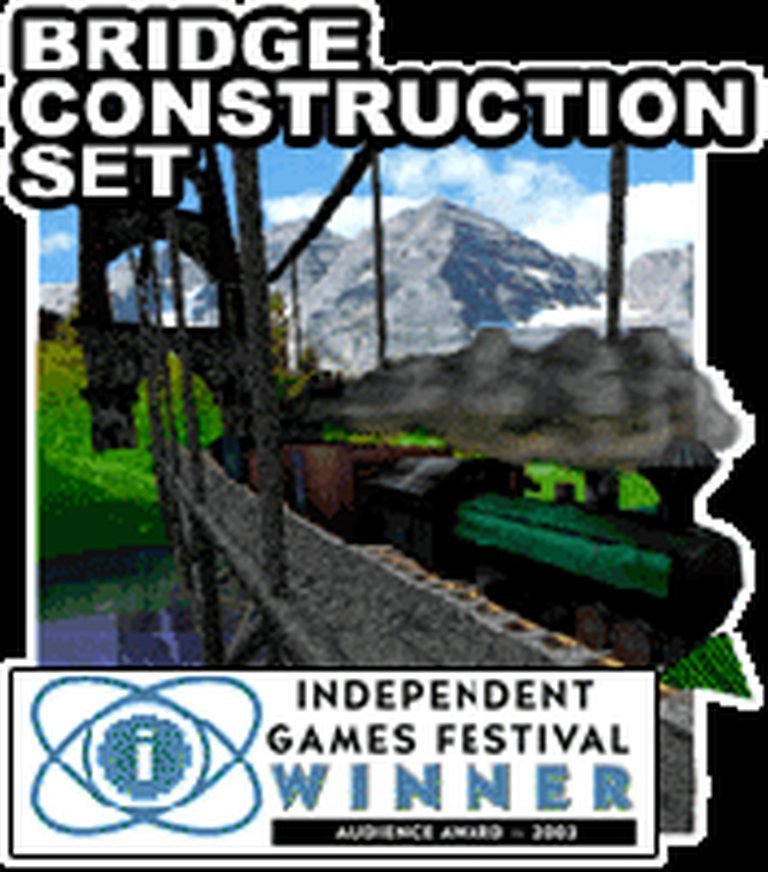
Pontifex 2, also known as Bridge Construction Set, challenges players to design and test bridges that can withstand the stress of passing trains. Building upon its predecessor, this puzzle and simulation game introduces new materials including suspension bridges and the ability to construct drawbridges, while intensifying the challenge by requiring structures to support multiple trains simultaneously. Set in a physics-driven virtual engineering environment, players combine creativity and structural principles to build bridges that must endure dynamic forces without collapsing.
Pontifex 2 Cracks & Fixes
Pontifex 2 Patches & Updates
Pontifex 2 Guides & Walkthroughs
Pontifex 2 Reviews & Reception
mobygames.com (84/100): More materials and bridge types make it a worthy sequel for seasoned players.
kotaku.com : The goal hasn’t changed, but there is much to discover for seasoned players.
Pontifex 2: Review
Introduction
In the hallowed halls of simulation gaming, few titles capture the raw, unadulterated thrill of structural engineering quite like Pontifex 2 (also released as Bridge Construction Set). Chronic Logic’s 2002 masterpiece stands not merely as a sequel but as a towering achievement in physics-based puzzle design—a game where triumph is measured in tons of steel defying gravity and disaster is a symphony of collapsing girders. As the follow-up to the cult classic Pontifex, this refines the original’s blueprint while introducing groundbreaking mechanics that would influence an entire genre. This review argues that Pontifex 2 represents a rare synergy of accessible design and profound depth, where the elegant simplicity of bridge construction masks a ruthlessly challenging, endlessly replayable experience that remains a benchmark for indie innovation. Its legacy is etched not in pixelated epics, but in the weight of every successfully traversed train.
Development History & Context
Born from the indie crucible of early 2000s PC gaming, Pontifex 2 was crafted by Chronic Logic LLC—a two-man powerhouse of Alex Austin and Josiah Pisciotta—augmented by a lean team of artists, programmers, and beta testers. Their vision was audacious in its simplicity: create a physics sandbox that democratized structural engineering, stripping away complex jargon to deliver pure, tactile problem-solving. Technologically, the game was a marvel of resourcefulness, leveraging open-source middleware (SDL, OpenGL, OpenAL) to deliver smooth 3D graphics and realistic physics on modest hardware. This was an era where AAA reigned supreme, yet Pontifex 2 thrived in the fertile soil of GarageGames’ indie-friendly ecosystem, later expanding to Linux and macOS platforms.
The gaming landscape in 2002 was dominated by mainstream hits like The Sims and Warcraft III, yet a burgeoning niche for cerebral sims existed. Chronic Logic capitalized on this by positioning Pontifex 2 as a budget-priced ($19.99) alternative to bloated triple-A titles. Its development was a testament to scrappy ingenuity—a 24-person credit list balancing core designers with community-driven beta testers and even a “thanks” to anti-piracy advocates. The result was a game that felt both meticulously crafted and authentically grassroots, embodying the DIY ethos of the era while pioneering physics simulations that would inspire giants like Bridge Constructor decades later.
Narrative & Thematic Deep Dive
While devoid of traditional characters or plot, Pontifex 2 weaves a compelling narrative through environmental storytelling and mechanical systems. The “plot” is one of silent triumph and catastrophic failure, where players act as anonymous engineers bridging chasms and ravines. Each level unfolds as a micro-drama: the tension of building within budget constraints, the suspense of the first test run, and the catharsis—or schadenfreude—of watching a train plummet into a river. Dialogue is minimal, serving only as objective text (“Build a bridge to cross this gap”), but the game’s true storytelling lies in its physics. The groan of stressed beams, the cascade of debris, and the triumphant chime of a successful crossing replace scripted lines, creating a visceral, emergent narrative.
Thematically, the game explores the duality of creation and destruction. It celebrates the ingenuity of human design while highlighting the unforgiving laws of physics. The introduction of drawbridges adds a layer of control and symbolism—structures that dynamically open and close, representing humanity’s tenuous relationship with nature. Underpinning all this is a playful subversion of authority: the game’s tagline, “More bridges coming down for you!”, frames engineering not as a solemn profession but as a joyous, anarchic playground. This irony—where failure is as rewarding as success—resonates with themes of iterative learning and embracing imperfection, turning every collapse into a lesson and every victory into a personal triumph.
Gameplay Mechanics & Systems
Pontifex 2’s core loop is a masterclass in intuitive complexity. Players begin with a fixed budget and a palette of materials (iron, wood, steel) with varying cost-to-strength ratios. Using a point-and-click interface in a 2D side-view, they construct trusses, cables, and supports, then test their creation by sending a train across. The physics engine—far more advanced than its predecessor—simulates stress, tension, and collapse in real-time, rewarding efficient designs and punishing hubris.
Key innovations define Pontifex 2:
– Material System: Expanded beyond the original, introducing steel for superior strength at higher cost, demanding strategic resource management.
– Suspension Bridges: Cable-based arches that enable longer spans but require precise tension balancing.
– Drawbridges: A revolutionary mechanic allowing retractable sections, adding dynamism and solving “ship-passing” challenges with mechanical flair.
– Multi-Train Stress: Later levels pit bridges against simultaneous train crossings, escalating the physics complexity.
– Level Editor: A robust tool enabling custom puzzles with adjustable terrain, budgets, and materials, fueling endless replayability and community-driven content.
The UI, while functional, shows its age with a utilitarian aesthetic. Progression is driven by escalating difficulty across “Simple,” “Medium,” “Hard,” and “Complex” level bins, where later stages demand creative solutions like asymmetrical designs or hybrid arch-suspension hybrids. Combat is nonexistent; instead, “combat” is waged against gravity itself, making every decision a high-stakes gamble. This blend of accessibility and depth creates a potent addiction, where players oscillate between frustration and elation with each test run.
World-Building, Art & Sound
The game’s world is a bucolic, yet unforgiving, landscape of rolling hills, deep ravines, and meandering rivers. Set in a stylized, low-poly 3D environment, the backdrops serve as both scenic relief and engineering canvases. The art direction prioritizes clarity over spectacle, with muted earth tones and distinct material colors (e.g., gray steel, brown wood) aiding readability. The 2D building view is starkly functional, while the 3D test mode offers dynamic camera angles—including a thrilling first-person train perspective—that immerse players in their creations.
Sound design is sparse yet evocative. Ambient chirping birds and flowing water set a tranquil tone, shattered by the train’s whistle and the cacophony of collapsing metal. The absence of a traditional score focuses attention on the physics, where every creak, crack, and crash provides critical feedback. This minimalist approach transforms audio into a diagnostic tool, heightening tension during stress tests. Together, the serene visuals and reactive soundscape create a paradoxical atmosphere—peaceful yet perilous—where beauty emerges from both success and spectacular failure.
Reception & Legacy
Upon release, Pontifex 2 was lauded as a niche triumph, earning an 84% average critic score. Publications like Game Tunnel and Game Chronicles awarded it 90%, praising its “addictive” loop and “perfect” blend of accessibility and challenge. It was hailed as a “Tetris for the engineer,” with reviews noting its appeal to Sim City and RollerCoaster Tycoon fans despite its divergent focus. While not a commercial blockbuster, its strong sales sustained Chronic Logic and fostered a loyal fanbase. Player reviews on MobyGames averaged 3.9/5, underscoring its status as a cult favorite.
Its legacy, however, extends far beyond launch. Pontifex 2 is widely regarded as the progenitor of modern bridge-building sims, directly inspiring Bridge Constructor (2011) and countless physics puzzle games. Its emphasis on realistic physics, user-generated content, and iterative design set a template for indie innovation. The game’s community remains active, with decades-old forums still hosting custom levels and strategies. Chronic Logic’s success paved the way for other garage-developed simulations, proving that complex, niche experiences could achieve enduring influence. Today, it stands as a cornerstone of gaming history—a testament to the power of focused design and the timeless appeal of watching a perfectly balanced structure bear weight.
Conclusion
Pontifex 2 is not merely a game; it is an ode to the marriage of art and science, a digital playground where physics is the ultimate collaborator. While evolutionary rather than revolutionary, its refinements—suspension bridges, drawbridges, and a polished physics engine—elevate it beyond its predecessor. The game’s genius lies in its duality: it is both a serene meditation on design and a heart-pounding test of engineering mettle. Its legacy is etched in the countless bridges that have risen and fallen in its virtual world and in the genre it continues to shape.
For all its dated visuals and utilitarian UI, Pontifex 2 remains a masterpiece of gameplay purity. It is a game that respects the player’s intellect, rewarding patience and creativity with moments of unadulterated triumph. In an industry often obsessed with scale and spectacle, Pontifex 2 stands as a monument to the power of simplicity, proving that the most compelling experiences can be built with just a few beams, a budget, and the relentless pull of gravity. It is, and will always be, a towering achievement in interactive design.