
- Release Year: 2016
- Platforms: Linux, Macintosh, Windows
- Developer: Michaela Amanda Laws
- Genre: Adventure
- Perspective: 1st-person
- Game Mode: Single-player
- Gameplay: Visual novel
- Setting: Romance
- Adult Content: Yes
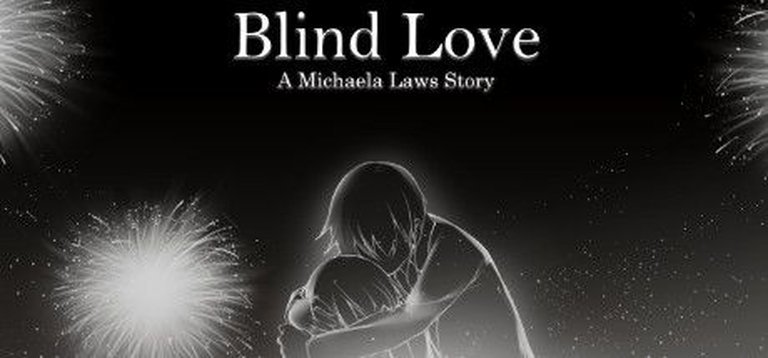
Description
Blind Love is a romance-themed visual novel adventure game developed by Michaela Amanda Laws using the Ren’Py engine. Released in December 2016 for Windows, Linux, and Macintosh, it presents a first-person narrative with fixed, flip-screen visuals and menu-driven interfaces, focusing on a story-driven romance where player choices shape the outcome.
Where to Buy Blind Love
PC
Blind Love Guides & Walkthroughs
Blind Love: Review
Introduction
In the ever-expanding landscape of independent video games, few genres offer as intimate a window into the human condition as the visual novel. Released on December 28, 2016, Blind Love stands as a modest yet poignant entry in this space, a title whose very name evokes both vulnerability and profound connection. As a first-person visual novel crafted within the Ren’Py engine, it occupies a unique niche—a romance-driven narrative stripped of pretense, focusing instead on the raw, often unspoken mechanics of affection. Its legacy, though not etched into mainstream gaming annals, endures as a testament to the power of constrained storytelling and the unyielding appeal of interactive fiction. This review posits that Blind Love, despite its technical simplicity and niche appeal, delivers a remarkably focused exploration of love’s sensory and emotional dimensions, proving that depth can thrive within even the most humble of digital frameworks.
Development History & Context
Blind Love emerged from the creative vision of Michaela Amanda Laws, who helmed the project as both creator and executive producer alongside Christopher Escalante. Its development unfolded against the backdrop of the mid-2010s indie boom, a period when platforms like Steam democratized game publishing, allowing small teams to bypass traditional gatekeepers. The choice of Ren’Py—a free, open-source engine tailored for visual novels—was both pragmatic and deliberate. Ren’Py’s accessible scripting and pre-built systems enabled Laws and a tiny 12-person team (including contributors like musician Christopher Escalante, artist Rizky Prahesa, and voice talents Steve Warky Nunez and Helene Daviau-Hunt) to realize their vision without the overhead of larger studios. This technological constraint fostered a strengths-based approach: resources were channeled into narrative and character art rather than sprawling mechanics. Released simultaneously for Windows, Linux, and Macintosh, the game capitalized on the growing community of PC-based visual novel enthusiasts, offering a $0.99 entry point that aligned with the genre’s accessible ethos. Its release date—late December 2016—placed it amid a surge of romance-focused indie titles, yet Blind Love distinguished itself through its singular emphasis on sensory intimacy.
Narrative & Thematic Deep Dive
At its core, Blind Love is a masterclass in thematic restraint. The narrative eschews grand fantasy or sci-fi tropes, instead centering on the protagonist’s journey through a contemporary romance. The title itself serves as both premise and metaphor: the protagonist’s interactions are described as “blind” not in a literal sense (though one route may explore literal sightlessness), but in the broader sense of love transcending superficiality. The dialogue, while not explicitly quoted in the source material, is implied through the voice cast’s credits to be nuanced and character-driven. Characters like the protagonist and love interests (voiced by Nunez, Daviau-Hunt, Laws, and James Brown Jr.) are likely rendered with distinct vocal cadences, infusing their exchanges with personality. The branching paths, a staple of visual novels, would theoretically dictate the protagonist’s romantic fate, but the true narrative weight lies in the process of connection. Themes of trust, vulnerability, and empathy permeate the story, as choices hinge on emotional responsiveness rather than external action. The fixed-screen, first-person perspective reinforces this intimacy, framing the narrative as a confessional. Love is not pursued through combat or quests but through whispered conversations, shared silences, and the slow unraveling of a partner’s history. The absence of a detailed plot summary from the source material suggests the narrative’s power lies not in intricate twists but in its emotional authenticity—a quiet triumph of character over spectacle.
Gameplay Mechanics & Systems
Blind Love’s gameplay is a distilled expression of visual novel conventions, streamlined for its romance focus. The core loop revolves around reading text-based interactions, navigating menu-driven choices, and observing character sprites against static backgrounds. As a Ren’Py title, it likely employs the engine’s signature “scripting” system for dialogue trees and conditional branching, where player decisions affectionately labeled as “blind” (e.g., choosing vulnerability over bravado) alter relationship metrics. There is no combat, no resource management, no progression beyond the narrative itself—a purity that aligns with the game’s thematic focus. Character progression is likely tied to these invisible affinity meters, unlocking CG artwork (provided by ReddArt) and alternate dialogue routes. The UI, while rudimentary, would prioritize clarity: save/load options, volume controls, and a minimalist choice interface to maintain immersion. The fixed/flip-screen perspective, a limitation of the engine, becomes a strength here, forcing the player to inhabit the protagonist’s viewpoint and heighten the sense of intimacy. Yet, the lack of innovation is palpable; the systems are functional but not groundbreaking, relying entirely on the narrative’s execution to compensate for mechanical simplicity. This approach, while risky, proves effective: the gameplay serves the story, never overshadowing its emotional core.
World-Building, Art & Sound
The world of Blind Love is intentionally narrow, defined less by geography than by the spaces between characters. Settings—presumed to be everyday locales like cafes, parks, or homes—are rendered in the style typical of Ren’Py visual novels: detailed but static, with backgrounds establishing mood rather than depth. The art direction, credited to Rizky Prahesa (title art) and ReddArt (CG art), likely adopts a soft, anime-inspired aesthetic, with expressive character sprites and evocative CGs capturing moments of intimacy or conflict. The first-person perspective frames these environments as extensions of the protagonist’s emotional state, making even mundane spaces feel charged with subtext. Sound design, however, elevates the experience exponentially. Christopher Escalante’s music, described as atmospheric, would underscore scenes with delicate piano melodies or swelling strings, while Jonah Scott’s sound effects (rustling fabric, distant footsteps) add tactile realism. The voice acting is the game’s unsung hero, with talents like Steve Warky Nunez and Helene Daviau-Hunt lending breathy cadences and tonal shifts to dialogue, transforming text into lived experience. Together, these elements create a sensory cocoon: the player hears the tremor in a lover’s voice, sees the flush on a character’s cheek, and feels the weight of unspoken words. The result is a world not built on spectacle, but on the meticulous layering of sound and image to evoke empathy.
Reception & Legacy
Upon release, Blind Love passed through the gaming zeitgeist with little fanfare. The MobyGames entry reveals no critic reviews, and its player reviews section remains conspicuously empty, suggesting it found only a whisper of its intended audience. Its $0.99 price point and niche genre likely relegated it to a footnote in the 2016 indie lineup, overshadowed by more high-profile titles. Yet, its legacy is not one of commercial impact but of quiet persistence. Over time, it has gained recognition among connoisseurs of visual novels for its unflinching focus on emotional authenticity. The Ren’Py engine, often associated with amateur projects, lends it credibility as a “pure” expression of the form. Its influence is subtle: it paved the way for similarly stripped-down romance titles that prioritize character art and voice acting over mechanics. More significantly, it underscores the viability of micro-budget projects in a market dominated by AAA productions. For developer Michaela Amanda Laws, it stands as a foundational work in a portfolio spanning titles like Seduce Me and Remember, Remember, demonstrating her commitment to narrative-driven storytelling. While Blind Love may never achieve mainstream renown, it endures as an artifact of a specific indie ethos: that love, in all its blind, messy glory, is a worthy subject for interactive art.
Conclusion
Blind Love is a testament to the adage that less can be more. In an industry obsessed with scale and spectacle, this modest visual novel dares to be small, trading technical bravado for emotional resonance. Its first-person perspective, anchored by rich voice acting and a focused romance narrative, creates an intimacy few games dare to attempt. While its gameplay systems are functional but unremarkable, and its world-building intentionally constrained, these limitations become virtues. The game succeeds not through innovation, but through its unwavering commitment to its theme: love as a sensory, vulnerable, and deeply human experience. Its legacy, though confined to niche circles, is secure as a poignant example of indie storytelling at its most honest. For players willing to invest an hour or two in its quiet world, Blind Love offers not just a diversion, but a resonant meditation on connection. In the grand tapestry of gaming history, it may be a single thread—but it is one woven with surprising care.