
- Release Year: 2020
- Platforms: Macintosh, Windows
- Genre: Role-playing (RPG)
- Perspective: Diagonal-down
- Game Mode: Single-player
- Gameplay: Japanese-style RPG (JRPG)
- Setting: Fantasy
- Average Score: 88/100
Description
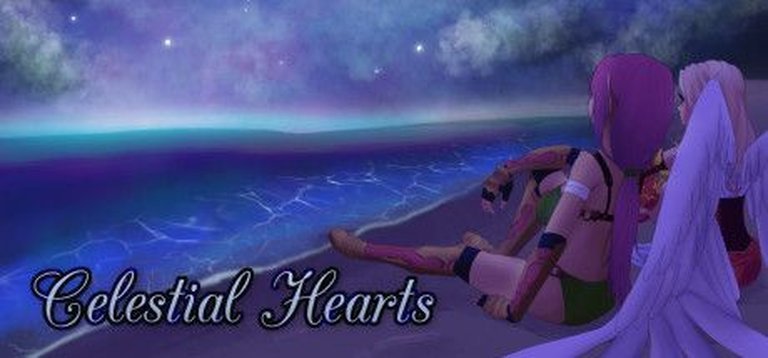
Celestial Hearts is a Japanese-style RPG set in the fantasy world of Belume, where players follow forest protectors Kayah and Sylvie after they are kidnapped by the Gravehart family to drain energy from their forest and its nymph inhabitants. During their escape, they rescue Helen, an imprisoned angel with amnesia, and must unite to thwart the Graveharts’ sacrificial scheme, restore peace to Belume, and uncover Helen’s forgotten past. Featuring 2D scrolling anime visuals, turn-based combat, and a narrative blending fantasy, romance, and adventure.
Gameplay Videos
Where to Buy Celestial Hearts
PC
Celestial Hearts Guides & Walkthroughs
Celestial Hearts Reviews & Reception
lifeisxbox.eu : This game shows you how pretty a pixel game can be and that it doesn’t all have to be 4k high-end stuff to be enjoyable. It has beautiful 2d pixel art but when your character speaks, you get to see them up close and those are just like anime.
howlongtobeat.com : Unfortunately, Celestial Hearts is a big step back in quality from Knight Bewitched and its sequel.
Celestial Hearts: A Celestial Embrace in the JRPG Constellation
Introduction
In the vast, often homogenous cosmos of Japanese Role-Playing Games (JRPGs), certain celestial bodies shine with a distinct and compelling light. Celestial Hearts, developed by Joshua Keith and Team Bewitched, is one such star. Released in 2021 as a standalone entry within the sprawling Knights of Ambrose saga, this indie gem distinguishes itself not through technical bravado or sprawling worlds, but through its intimate, heart-centered narrative and its unflinching embrace of LGBTQ+ themes. As the spiritual successor to Knight Bewitched 2, it takes place a century later on the continent of Belume, weaving a tale of trauma, found family, and burgeoning love between two women: Kayah, a heartbroken elf guardian, and Helen, an amnesiac angel seeking her forgotten purpose. While built upon the accessible yet sometimes limiting framework of RPG Maker MZ, Celestial Hearts transcends its engine constraints to deliver an emotionally resonant experience, proving that profound storytelling can flourish even within modest boundaries. This review delves into the game’s development, narrative depth, mechanical nuances, artistic identity, and lasting legacy to ascertain its true place in video game history.
Development History & Context
Celestial Hearts emerged from the independent studio of Joshua Keith, a developer already established within the niche yuri (lesbian romance) JRPG community through his earlier Knight Bewitched titles. The game’s development was significantly shaped by its humble origins and the technological affordances of its era. As a title utilizing RPG Maker MZ, Keith leveraged a powerful yet accessible engine that allowed for rapid prototyping and asset integration. This choice, while enabling a rich world and complex mechanics, also imposed inherent constraints, particularly in visual fidelity and system flexibility compared to bespoke engines. The development process was notably community-supported; Keith launched a Kickstarter campaign in late 2020, seeking a modest $1,200 goal primarily to fund additional in-game illustrations and art assets. This successful crowdfunding, alongside a presence on platforms like itch.io and Steam, underscores the game’s role within a vibrant indie scene where niche audiences directly support creators whose work resonates with them.
The gaming landscape surrounding Celestial Hearts‘ release in early 2021 was one of burgeoning indie diversity. While blockbuster JRPGs like Final Fantasy VII Remake dominated headlines, platforms like Steam and itch.io provided fertile ground for smaller, thematically focused titles. The ongoing growth of the LGBTQ+ gaming community created a receptive audience for narratives like Kayah and Helen’s, particularly as mainstream representation remained limited. Keith’s vision, drawing from his previous work and the established lore of the Knights of Ambrose timeline, aimed to craft a self-contained story accessible to newcomers while rewarding long-time fans with continuity nods. The game’s development, therefore, represents a microcosm of modern indie JRPG creation: leveraging accessible tools, securing direct community funding, and targeting specific, underserved audiences with heartfelt, character-driven stories.
Narrative & Thematic Deep Dive
The narrative of Celestial Hearts is its undisputed core, a tapestry woven with threads of trauma, resilience, love, and identity. The plot begins with a compelling premise: the idyllic Livia Forest, home to nymphs and fairies and guarded by the grieving elf Kayah, is violently disrupted by the Gravehart family, a wealthy and powerful dynasty with a veneer of benevolence. Kayah and her friend Sylvie, along with the kidnapped nymphs, awaken in an underground prison. Their desperate escape leads them to the discovery of Helen, a winged woman chained and unconscious. Nursed back to health, Helen exhibits a profound amnesia, possessing only a fragmented sense of a forgotten purpose. Kayah, deeply affected by Helen’s vulnerability and her own past heartbreak, vows to protect her, forging an immediate and tender bond.
The story quickly expands beyond a simple rescue mission. The Graveharts, led by the patriarch Edgar, are revealed to be conducting nefarious schemes: kidnapping people (including the poor of Port Khalim sold by the corrupt Primrose family) to drain their life energy, ostensibly to resurrect their matriarch Priscilla. This central conflict introduces themes of aristocratic corruption, the exploitation of the vulnerable, and the destructive lengths grief can drive individuals to. The narrative gains profound depth with the introduction of Helen’s true nature and antagonist: she is the reincarnation of Helena, a twin deity of the world, and her sister Lilith, a fallen angel consumed by envy. Lilith, stripped of free will for nearly a century by an evil deity, views Helen’s natural freedom as a profound injustice. Her motivation, revealed in the final confrontation, transcends grand apocalyptic schemes; it is a petty yet devastating jealousy, a critique of how trauma can metastasize into misplaced vengeance that threatens to drag the entire world into her personal darkness.
Characterization is exceptionally well-handled. Kayah’s journey from guarded loner, scarred by homophobia in her past homeland of Lestonia, to someone willing to open her heart again is central. Her relationship with Helen is the game’s emotional anchor, developing naturally from protective duty to genuine affection, culminating in a believable and moving romance. Sylvie provides crucial levity and complexity as a nymph initially distrustful of humans but fiercely loyal to Kayah. The supporting cast is equally rich: Gail and Matthias, descendants of heroes from previous games, represent legacy and moral grounding; Ash Gravehart, Edgar’s son, undergoes a compelling heel-face turn driven by familial love and disgust at his father’s methods; and Silnastra (revealed to be the reformed Lissandra from Knight Eternal), a morally grey witch whose arc culminates in a heroic sacrifice. The dialogue excels at balancing exposition with character-driven moments, teases between party members (especially Kayah and Helen), and poignant reflections on trauma, found family, and the courage to embrace love after loss. The underlying themes of LGBTQ+ representation, particularly Kayah’s experiences with prejudice and the normalization of her relationship with Helen, are integrated seamlessly without feeling didactic, contributing significantly to the game’s emotional authenticity.
Gameplay Mechanics & Systems
Celestial Hearts adopts a classic Active Time Battle (ATB) system, reminiscent of early Final Fantasy titles, where each character’s action bar fills up in real-time, allowing for strategic yet fluid combat. Players control a party of up to five heroes, a significant expansion beyond typical RPG Maker fare. The system is layered with several key mechanics:
- Character Roles & Synergy: Combat emphasizes party composition and synergy. Kayah acts as a versatile “Combat Medic,” using her “Magic Music” to heal allies while also being a potent physical attacker with her war horn. Helen, heavily armored, functions as a frontline fighter and cleric, providing direct damage and support. Sylvie possesses a unique system of “Enemy Essences,” allowing her to equip up to two defeated enemies’ skills, making her a highly adaptable wildcard. Other members like Gail (balanced ninja) and Matthias (support mage) round out the party. Roles are distinct, encouraging players to consider elemental resistances and status effects.
- Difficulty & Accessibility: The game offers multiple difficulty settings, including a “Story Mode” for casual players that reduces encounter difficulty and an “Hard” mode for veterans seeking a challenge. This inclusivity is commendable, lowering barriers for newcomers to the genre or JRPGs while providing depth for seasoned players. An “Auto-Battle” option further streamlines combat for those prioritizing narrative.
- Progression & Customization: Character progression involves traditional leveling, gaining HP, MP, and stats. Equipment (weapons, armor, accessories) is plentiful, with hundreds of items to discover and equip. A robust “Encyclopedia” tracks monsters, items, and equipment, appealing to completionists. The skill system, particularly for Sylvie via Essences and inherent character abilities, offers significant customization potential, though some minor bugs were reported (e.g., the Dragon Horn equip issue, Tail Swipe skill not appearing).
- UI & Presentation: The interface is clean and functional, typical of RPG Maker MZ titles. The side-view perspective during battles is effective, and the inclusion of beautiful, anime-style scene illustrations during key narrative moments provides visual breaks and enhances emotional impact.
While the ATB system is well-implemented and the party size adds tactical depth, it’s important to acknowledge the inherent limitations of the RPG Maker MZ engine. Some players noted that the combat, while functional, could feel generic compared to more bespoke systems. The reliance on auto-battle in Story Mode highlights a potential lack of depth for those seeking complex mechanics. Minor technical hiccups, like the aforementioned skill bugs or graphics initialization issues on some systems (requiring WebGL support), were also present. However, the core loop of exploration, discovery, and tactical combat remains engaging, especially with the support of the difficulty options.
World-Building, Art & Sound
The world of Celestial Hearts is a classic fantasy setting enriched by its specific lore and the emotional weight of its locations. Belume, the continent, is a land of diverse biomes: the serene but vulnerable Livia Forest, the bustling yet corrupt Hart City (built by the Graveharts and showcasing their villainous duality), the treacherous Deadwood, and the depths beneath Gravehart Manor hiding ancient secrets. The narrative effectively uses these environments to reflect the game’s themes: Livia represents sanctuary and fragile peace; Hart City is a facade hiding exploitation; the Gravehart dungeon represents captivity and the characters’ shared trauma.
The game’s visual direction is a masterclass in leveraging RPG Maker MZ’s capabilities. The 2D pixel art for character sprites and environments is charming, detailed, and consistent, creating a cohesive retro-inspired aesthetic. However, the true visual triumph lies in the beautiful, hand-drawn “in-game scene illustrations” that accompany pivotal story beats. These anime/manga styled illustrations break the pixel mold, providing expressive character close-ups, dramatic landscapes, and emotional tableaux that significantly elevate the narrative’s impact and visual variety. They transform static scenes into living artwork, making moments like Kayah meeting Helen, the party confronting the Graveharts, or Silnastra’s sacrifice visually resonant and memorable.
The sound design complements the visuals and narrative effectively. The music, composed with contributions from BurghRecords, is diverse and evocative. Upbeat, jazzy tunes enliven Hart City, while more somber, atmospheric tracks underscore moments of tension or reflection. Battle themes are energetic and engaging, setting the stage for combat. Sound effects are functional and appropriate, though less distinctive. The audio, while perhaps not groundbreaking, succeeds in creating an immersive atmosphere that supports the story’s emotional beats and the exploration of Belume’s varied landscapes. The overall artistic package, combining pixel art with striking illustrations and evocative music, creates a unique and visually appealing identity that punches well above its budget constraints.
Reception & Legacy
Upon its release in early 2021, Celestial Hearts garnered a largely positive reception from its target audience and indie gaming circles, particularly within the yuri and JRPG communities. On Steam, it maintained a “Very Positive” rating based on 31 reviews at the time of the sources, with 83% positive feedback. Critics and players frequently praised the game’s charming character dynamics, heartfelt and well-written romance between Kayah and Helen, the strong thematic integration of LGBTQ+ elements, and the effective use of art (especially the scene illustrations). The accessible difficulty options, particularly Story Mode, were lauded for making the genre approachable. The HowLongToBeat average completion time of around 7-8 hours for a main playthrough aligns with the developer’s stated 12-16 hour estimate (suggesting the average player didn’t 100% complete it). A standout review from LifeisXbox awarded it 85%, specifically praising the “cute conversations,” art style, music, and accessibility, while only cautioning about manual saving on harder difficulties.
However, reception wasn’t without critique. Some players, particularly those familiar with Keith’s earlier Knight Bewitched titles, felt Celestial Hearts represented a step back in narrative polish or asset originality, noting instances of reused RPG Maker sprites and dialogue that, while often charming, could sometimes feel generic when not directly serving the plot. The reliance on RPG Maker MZ’s core battle system was seen as a double-edged sword – functional but potentially less innovative than bespoke systems. Minor bugs, like the equipment and skill issues, were also reported and acknowledged by the developer.
Commercially, as a $4.99-$14.99 (depending on platform and bundle) indie title, it achieved modest success, becoming a cult favorite within its niche. Its legacy is cemented in several areas:
* Niche Representation: It stands as a significant and well-regarded example of yuri-focused JRPGs, offering a positive, central LGBTQ+ romance without exploitation, resonating strongly with its audience.
* RPG Maker Showcase: It demonstrates the potential of RPG Maker MZ for developers to create emotionally rich, visually distinct experiences with accessible tools and a focus on narrative over technical spectacle.
* Series Continuity: As part of the Knights of Ambrose saga, it successfully expanded the lore (introducing Lilith, Silnastra’s fate, the continent of Belume) while maintaining connections for fans, paving the way for the 2023 sequel Absinthia. Its story, while self-contained, leaves a clear hook for further adventures.
* Indie Developer Model: Its development path – successful Kickstarter, community engagement, multi-platform release (Windows, Mac, Linux) – exemplifies a viable model for niche indie developers to create and sustain their projects.
While unlikely to achieve mainstream blockbuster status, Celestial Hearts holds a revered place as a cult classic within the indie JRPG landscape, remembered for its heart, its beautiful artistry, and its authentic portrayal of love and resilience in a fantasy world.
Conclusion
Celestial Hearts is a testament to the power of focused storytelling and heartfelt character development within the often mechanics-driven JRPG genre. Joshua Keith and Team Bewitched, working within the constraints of RPG Maker MZ, crafted an experience that prioritizes emotional resonance and thematic depth over technical fireworks. The game’s narrative, anchored by the tender and believable romance between Kayah and Helen and elevated by compelling antagonists like Lilith, explores universal themes of trauma, recovery, found family, and the courage to love again, all while offering a positive and authentic LGBTQ+ perspective. Its ATB combat, while familiar, is made engaging through party synergy, varied character roles, and accessible difficulty options. The visual identity, blending charming pixel art with stunning anime-style illustrations, and the evocative soundtrack create a memorable atmosphere that complements the narrative beautifully.
Though not without its minor flaws – some generic dialogue, reliance on engine limitations, and occasional technical hiccups – these are largely forgivable given the game’s strengths and its indie roots. Its positive reception within its niche audience, particularly lauded for its writing and representation, solidifies its status as a cult classic. Celestial Hearts may not redefine the JRPG genre, but it carves out a distinct and valuable niche. It proves that a compelling story, well-realized characters, and genuine emotional authenticity can create an experience that resonates deeply with players. Its legacy lies in its contribution to diverse indie JRPGs, its effective use of accessible tools, and its place within the evolving Knights of Ambrose saga. For those seeking a JRPG where heartfelt storytelling takes center stage, Celestial Hearts is a luminous star worthy of exploration, a celestial embrace that lingers long after the final battle.