
- Release Year: 2022
- Platforms: PlayStation 4, PlayStation 5, Windows, Xbox One, Xbox Series
- Publisher: Techland S.A.
- Developer: Techland S.A.
- Genre: Action
- Perspective: First-person
- Game Mode: Single-player
- Gameplay: Open World, Sandbox
- Setting: Post-apocalyptic
- Average Score: 85/100
Description
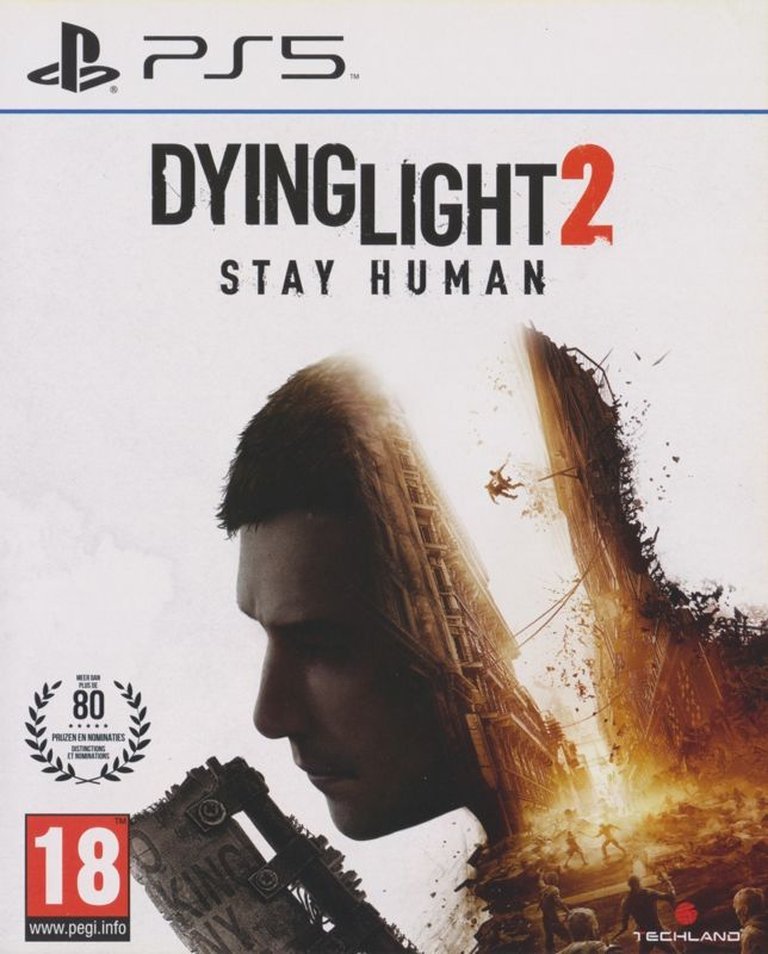
Dying Light 2: Stay Human is a first-person action game set in a post-apocalyptic world, offering an open-world sandbox environment where players navigate a city overrun by zombies. The game features intense combat, parkour mechanics, and a horror narrative, allowing players to explore vast landscapes and make choices that dynamically shape the world. As the sequel to the original Dying Light, it expands on the series’ foundation with more expansive gameplay and immersive storytelling.
Gameplay Videos
Where to Buy Dying Light 2: Stay Human
PC
Dying Light 2: Stay Human Free Download
Dying Light 2: Stay Human Patches & Updates
Dying Light 2: Stay Human Mods
Dying Light 2: Stay Human Guides & Walkthroughs
Dying Light 2: Stay Human Reviews & Reception
metacritic.com (100/100): My final thoughts on my overall experience with Dying Light 2: Stay Human remains positive.
ign.com (70/100): Packed with top-notch parkour, an awesome open world, and every painful bug in the book.
pcgamer.com : A underwhelming story but a massive, exciting sandbox of parkour and kinetic combat.
gameinformer.com : It is a triumph of storytelling, player choice, open-world design, cooperative play, character customization, and perhaps most importantly, dropkicking zombies off skyscrapers.
Dying Light 2: Stay Human: Review
Introduction
In the grim annals of survival horror, few franchises have redefined traversal and open-world chaos like Dying Light. Techland’s 2022 sequel, Dying Light 2: Stay Human, arrives not merely as a follow-up but as an audacious reimagining of the genre’s potential. Set 22 years after the Harran apocalypse, it thrusts players into the sprawling European city of Villedor—a neon-drenched tomb where humanity’s last stand plays out against a backdrop of political intrigue and ravenous hordes. While Dying Light 2 refines its predecessor’s parkour mastery into an unparalleled symphony of movement and expands player agency to staggering heights, it stumbles under the weight of a narrative ambition that rarely matches its gameplay brilliance. This review dissects Dying Light 2 as a landmark achievement in systemic design, a flawed but essential chapter in zombie-game history, and a testament to Techland’s relentless pursuit of player freedom.
Development History & Context
Techland’s journey to Dying Light 2 was as arduous as navigating Villedor’s rooftops. Announced at E3 2018 with the goal of creating a “narrative sandbox” where choices genuinely reshape the world (Ciszewski, Wikipedia), the project evolved through multiple delays—from a 2020 target to a February 2022 launch—reflecting the studio’s meticulous, if turbulent, vision. Under creative director Adrian Ciszewski, Techland sought to address the first game’s shortcomings by amplifying narrative depth and world interactivity. They recruited Chris Avellone (Wikipedia), celebrated for Fallout: New Vegas and Torment, to pen a reactive story, though his involvement ended amid misconduct allegations in 2020. Technologically, the game debuted the proprietary C-Engine and CityBuilder toolset, enabling unprecedented environmental dynamism. The result? A fourfold-larger map than Dying Light’s, broken into seven distinct districts, each designed to react organically to player decisions.
The gaming landscape in early 2022 was brutally competitive, with Dying Light 2 sandwiched between juggernauts like Elden Ring and Horizon Forbidden West. Yet Techland’s commitment to post-launch support—promising five years of updates—signaled a long-term vision. This gamble paid off, as patches (e.g., a day-one fix for 1,000+ issues) and free DLC like Bloody Ties (2022) salvaged technical rough edges, cementing the game’s evolution from a delayed curiosity to a genre-defining experience.
Narrative & Thematic Deep Dive
Dying Light 2’s narrative is a tapestry of moral grayness, its threads frayed by translation and tonal dissonance. Players assume Aiden Caldwell, an amnesiac Pilgrim infected by the Tachytransmissive Harran Virus (THV), searching for his sister Mia in Villedor. His quest intersects with three factions: the militaristic Peacekeepers, the anarchic Renegades, and the idealistic Survivors. Each alliance, determined by choices like who controls power grids or water towers, radically alters Villedor’s landscape and NPC allegiances—a system Techland calls “25% content loss per playthrough” (Wikipedia). This design fosters genuine impact: supporting the Survivors might erect zip lines and trampolines across a district, while backing the Peacekeepers triggers trap-laden patrols.
Yet the plot’s execution falters. The central mystery—Aiden’s past, Waltz’s experiments, Mia’s fate—unravels through clunky exposition and dialogue that oscillates between wooden and melodramatic. Characters like Lawan (voiced by Rosario Dawson) and Hakon (motion-captured by parkour founder David Belle) possess rich backstories, but their arcs often feel sidelined by faction politics. Thematic depth, however, shines through. The game posits Villedor as a microcosm of humanity’s collapse: temporary shanties perch atop skyscraper ruins, symbolizing a civilization scraping by on the bones of the old. Greed, betrayal, and the cost of survival permeate every quest, culminating in a finale where Aiden must choose between saving Mia or Lawan—a gut-wrenching dilemma that crystallizes the game’s core theme: what does it mean to “stay human” when survival demands monstrous compromises?
Gameplay Mechanics & Systems
Parkour remains the game’s beating heart, a ballet of momentum and verticality. With over 3,000 animations and new tools like the grappling hook and paraglider, Aiden’s movement is a revelation. Wall-running, dropkicks, and aerial takedowns flow seamlessly into traversal, turning Villedor into a playground of kinetic freedom. The day/night cycle elevates this further: daytime encourages faction skirmishes and rooftop parkour, while night transforms streets into hunting grounds for Volatiles—forcing players into tense stealth or desperate scrambles.
Combat is visceral but repetitive. Melee weapons degrade rapidly, demanding constant scavenging and crafting. Upgrades via blueprints and components add depth, but the loop risks tedium. Firearms (crossbows, shotguns) are limited, underscoring the game’s melee-first ethos. Character progression splits into Parkour and Combat skill trees, with Inhibitors boosting health/stamina. However, leveling feels slow, and late-game encounters rarely challenge mastered builds.
The faction system is Dying Light 2’s crown jewel. Choices like cutting off a district’s water to starve the Renegades ripple across the world. Environmental changes—Survivors adding gardens, Peacekeepers deploying UV lights—make Villedor feel alive. Four-player co-op amplifies chaos, but technical hiccups (NPC pathfinding bugs) occasionally mar the experience. Ultimately, gameplay triumphs over narrative, offering a loop so addictive that 500+ hour playtimes are common (Gamepressure).
World-Building, Art & Sound
Villedor is a character in its own right. Inspired by Central/Eastern European architecture (evident in Type E electrical outlets and Gothic spires), the city’s seven districts—each with unique landmarks—tell stories of decay. The Slums, a labyrinth of shacks and scrap, contrast with the opulent, skyscraper-draped Central Loop. Techland’s CityBuilder allowed intricate verticality: decayed highways crisscross rooftops, and bridges connect zones like skeletal fingers. The day/night cycle is masterful. Sunlight bleeds pastels across crumbling facades, while nights cast deep blues and neon glows, heightening the horror as infected swarms erupt from alleys.
Sound design complements this atmosphere. Olivier Derivière’s score blends melancholic piano with electronic dread, swelling during Volatile chases. Environmental audio—distant sirens, the crunch of infected bones—immerses players, though voice acting ranges from compelling (Dawson’s Lawan) to stilted. Small details—radio crackles, Lawan’s whispered warnings—elevate Villedor’s verisimilitude, making its desperation feel tangible.
Reception & Legacy
Upon release, Dying Light 2 scored a solid 78% on Metacritic (Wikipedia), praised for its parkour and world design but criticized for its story and technical flaws. PC Gamer lauded its “massive, exciting sandbox,” while Ars Technica slammed its “awkwardly translated” dialogue. Sales were robust—5 million units in the first month (Wikipedia), ballooning to 15 million by 2025 (Fandom). However, player reviews on Steam remain mixed (7.8/10), citing repetitive quests and narrative whiplash.
Legacy-wise, Dying Light 2 reshaped open-world design. Its faction-choice system influenced titles like Starfield, and its parkour remains a benchmark. Techland’s five-year support plan—with Nightmare Mode (2024), weapon repairs, and the standalone Dying Light: The Beast (2025)—ensured longevity. As of 2025, the game has sold 45 million copies (Fandom), fueled by continuous updates that addressed initial shortcomings. Yet its narrative shortcomings prevent it from unseating The Witcher 3 or Bloodborne as a storytelling landmark. Instead, it endures as a testament to gameplay’s primacy: a flawed masterpiece of motion and consequence.
Conclusion
Dying Light 2: Stay Human is a paradox—a towering achievement in systemic design constrained by an underdeveloped narrative. Its parkour is the gold standard for first-person traversal, its open world a reactive marvel, and its faction choices a masterclass in player agency. Yet the story, with its stilted dialogue and squandered potential, feels like a missed opportunity. Ultimately, Dying Light 2 earns its place in history not for its narrative depth, but for its unrelenting ambition. It’s a game where the joy of leaping between skyscrapers, the tension of a night raid, and the weight of a city-altering choice supersede its flaws. In a genre saturated with zombie fare, Dying Light 2 stands as a flawed, essential, and exhilarating evolution—a monument to the idea that sometimes, the journey matters more than the destination. Stay human? Absolutely. But don’t be surprised if you lose your soul to the rooftops of Villedor.