
- Release Year: 2009
- Platforms: Windows
- Publisher: 1C Company, ZOO Corporation
- Developer: Lesta Studio
- Genre: Simulation, Strategy, Tactics
- Perspective: Diagonal-down
- Game Mode: Single-player
- Gameplay: Character management, Diplomacy, Economic simulation, Empire building, Real-time strategy, Resource Management
- Setting: Age of Discovery, Enlightenment, Europe, Medieval
- Average Score: 60/100
Description
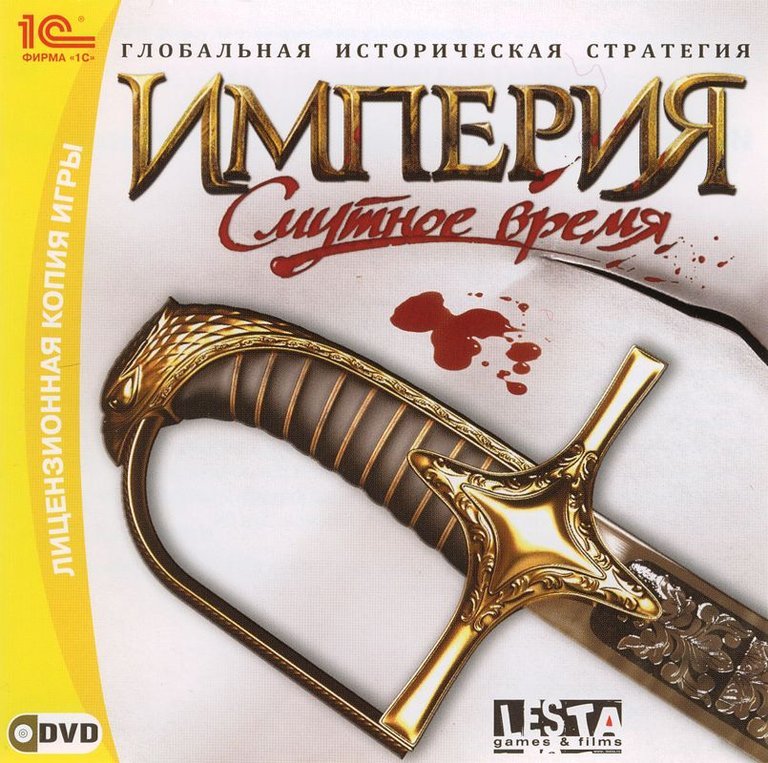
Reign: Conflict of Nations is a large-scale historical strategy game set in Eastern Europe during the Middle Ages (1350-1650), where players select one of 26 factions to build an empire through warfare, diplomacy, economics, and governance. Gameplay unfolds on a real-time, pausable world map where players manage resources, develop technology trees, and deploy specialized characters—such as monarchs, commanders, and spies—to influence territories, negotiate alliances, and simulate battles without direct visuals, requiring careful balance of military expansion with economic stability and political maneuvering.
Gameplay Videos
Where to Buy Reign: Conflict of Nations
PC
Reign: Conflict of Nations Cracks & Fixes
Reign: Conflict of Nations Patches & Updates
Reign: Conflict of Nations Guides & Walkthroughs
Reign: Conflict of Nations Reviews & Reception
metacritic.com (60/100): Reign isn’t a bad game at all, and it’s surprisingly well-balanced given the tremendous scope and ambition on show; but that’s a breadth that comes at a price, as none of the various elements in your kingdom ever feels completely well realised, leading to a lack of personality and ultimately forgoing that familiar Civ drive to play long into the night. If you want to test your management skills in one of the deepest strategy games of the year however, delve right in.
Reign: Conflict of Nations: Review
Introduction
Reign: Conflict of Nations thrusts players into the turbulent crucible of Eastern Europe during the Middle Ages (1350–1650), a period defined by the Black Death, the collapse of the Golden Horde, and the rise of emergent empires. Developed by Lesta Studio and published by 1C Company, ZOO Corporation, and Fulqrum Publishing, this grand strategy game ambitiously promises a 300-year sandbox of political maneuvering, economic development, and warfare across 26 unique factions. Yet, beneath its historically rich veneer lies a product of its time—a game that demands patience, rewards meticulous planning, and ultimately divides players with its uncompromising complexity. This review argues that while Reign excels in scope and historical fidelity, it falters in execution, making it a niche artifact for hardcore strategists rather than a mainstream masterpiece.
Development History & Context
Reign emerged from the Russian studio Lesta Studio, a developer with a portfolio blending historical simulations (e.g., Real Warfare: 1242) and RPG hybrids (King’s Bounty: Armored Princess). Released on December 11, 2009, the game arrived during a pivotal moment for strategy gaming, where giants like Europa Universalis III (2007) and Medieval II: Total War (2006) had set industry standards for depth and polish. Reign’s ambitions were clear: to focus on the underexplored history of Eastern Europe—a region often overshadowed by Western European narratives in gaming.
Technologically, the game was constrained by the era’s hardware, targeting DirectX 9.0-compatible systems with modest requirements (e.g., 512MB RAM for minimum specs). Its real-time-with-pause (RTwP) framework mirrored contemporaries like Hearts of Iron III (2009), but Lesta prioritized systemic breadth over visual spectacle. The studio’s vision, as articulated in credits and promotional material, was to create a “well-thought-out and historically accurate” simulation, leveraging input from historian Klim Zhukov to ground factions like the Polish-Lithuanian Commonwealth and the Teutonic Orders in authenticity.
However, Reign’s release coincided with a crowded market where accessibility often trumped complexity. While Paradox Interactive streamlined interfaces for broader audiences, Lesta doubled down on depth, inadvertently positioning Reign as a “hardcore” title—a label that would define its reception.
Narrative & Thematic Deep Dive
Reign’s narrative is not a scripted epic but an emergent tapestry woven from player agency and historical context. The game opens with the Black Death ravaging Europe, a framing device that underscores the era’s fragility and mortality. Players assume the role of a monarch guiding one of 26 factions, each with distinct starting positions, ideologies, and historical burdens. The Polish-Lithuanian Commonwealth, for instance, must balance the Teutonic Knights’ aggression with territorial expansion, while Muscovy faces the existential threat of the Golden Horde.
Character-driven mechanics anchor the narrative. Players recruit agents across six professions—monarch, commander, governor, priest, alchemist, spy—each with skill trees that evolve through use. A monarch’s political influence stabilizes regions, while a commander’s ability to train soldiers or build barracks shapes military viability. Specialized agents, like ambassadors for diplomacy or assassins for covert ops, add RPG-like depth. These characters, drawn from historical figures and archetypes, function as extensions of the player’s will, their skills unlocking nuanced strategies (e.g., converting populations to exploit religious advantages).
Thematically, Reign grapples with the paradox of power: empires thrive on stability yet perpetually teeter on collapse. Random events—famine, revolts, plagues—force players to adapt, embodying the precariousness of medieval rule. The absence of traditional dialogue or cutscenes shifts focus to systemic storytelling, where a city’s shield color change on the map signifies a conquest, and a diplomatic betrayal alters borders. This abstraction, while historically resonant, risks reducing human drama to spreadsheet calculations. Yet, for players immersed in its cycles, Reign transforms history into a visceral, consequence-laden saga.
Gameplay Mechanics & Systems
Reign’s core loop is a masterclass in macro-strategy, albeit one burdened by micromanagement. The game unfolds on a 3D map of Eastern Europe, where players manage resources (gold, food, population) via invisible city structures—no sprawling metropolises are shown, only functional icons. Technology trees drive progress, with choices like investing in siege engines or economic alliances shaping long-term viability.
Character & Agent System:
– Agents cap at 12 on the map, each exerting influence based on proximity to cities. A governor’s presence boosts morale, reducing revolt risks.
– Skill investment is permanent; a spy’s assassination proficiency improves with each kill, creating a sense of progression.
– Limited slots force strategic prioritization, adding tension to deployments.
Warfare & Diplomacy:
– Combat is abstracted: battles resolve via AI simulations, with player directives (“target weakest units,” “retreat”). This mirrors Total War’s strategic layer but lacks tactile satisfaction.
– Diplomacy is equally systemic: envoys negotiate treaties, merchants forge economic pacts, and religious preachers convert populations—each tying into broader strategies.
– Resources are perpetually scarce. Over-expansion invites bankruptcy; underinvestment invites invasion.
Flaws and Innovations:
– Micromanagement Hell: As empires grow, managing cities, agents, and events becomes tedious. A single province may require toggling between a priest for conversion, a governor for morale, and an alchemist for tech research.
– UI & Controls: The interface, designed by Eugene Lazutkin, is dense and unintuitive. Critics like GameStar (52%) lamented its “clunkiness,” while Game.cz (50%) cited “príšerná umělá inteligence” (terrible AI), citing erratic enemy behavior.
– Innovation: The agent system and tech integration were forward-thinking. Unlike Civilization’s unit stacks, Reign’s characters feel like living assets, their deaths or defections carrying narrative weight.
World-Building, Art & Sound
Reign’s setting is its greatest strength. Spanning 300 years, it meticulously reconstructs Eastern Europe’s geopolitical landscape, from the Baltic states to the Volga basin. Factions like Novgorod, Bohemia, and the Livonian Order are not mere reskins; each has unique historical goals, reflected in starting positions and event chains. The inclusion of the Golden Horde and Ottoman Empire adds geopolitical texture, framing conflicts as part of a larger Eurasian drama.
Artistically, the game prioritizes functionality over flair. The 3D map features “authentic landscapes”—forested hills, river deltas—but textures are dated. Unit models, while historically accurate (e.g., Polish hussars, Russian druzhina), lack the dynamism of Medieval II: Total War. Animations are minimal; armies move as cohesive blocks, and cities are symbolized by static icons. This austerity reinforces the game’s focus on strategy over spectacle, but at the cost of immersion.
Sound design is functional. The soundtrack, described by Blacknut LeMag as “captivating,” blends somber folk melodies with martial overtures, effectively evoking medieval dread. Yet, ambient effects are sparse, and voice acting is absent, reducing interactions to text-based event logs.
Reception & Legacy
Reign’s reception was a study in dichotomy. Critics praised its ambition but lamented its accessibility. Metacritic aggregated a score of 60, with praise for depth (Absolute Games: 78, “a good excuse to get familiar with the grand strategy sub-genre”) and criticism for execution (GameStar: 52, “unapproachable games, totally missing the international market”). MobyGames’ critic average was 58%, with 4Players.de (76%) highlighting its appeal to “ganz Strebsame” (very diligent players), while GamesWEB (35%) deemed it overpriced and niche.
Players echoed this divide. Steam’s “Mixed” rating (46% positive) reflects enduring appeal for grand strategy veterans, who lauded its “historical focus” and “replayability” per GamePressure’s AI analysis. Yet, the majority cited “excessive micromanagement,” “random combat outcomes,” and “stability issues” as dealbreakers. Forum threads like “Has anyone WON?” underscored the game’s punishing difficulty.
Legacy-wise, Reign remains a cult favorite rather than an industry influencer. It never reached the sales heights of Total War or Europa Universalis, but its focus on Eastern European history carved a unique niche. The 2012 1C Strategy Collection bundle preserved it for posterity, and its spiritual parallels can be seen in modern titles like Crusader Kings III, which prioritize character depth but streamline UI. For historians and strategy purists, Reign is a time capsule—an earnest if flawed attempt to simulate the intricate dance of medieval power.
Conclusion
Reign: Conflict of Nations is a game of paradoxes: historically ambitious yet mechanically archaic, deeply rewarding yet relentlessly punishing. It captures the essence of medieval statecraft—the fragile balance between war and peace, faith and pragmatism—with a scope few games attempt. Yet, its unforgiving learning curve, opaque systems, and dated presentation relegate it to the realm of niche artifacts.
For the patient strategist, particularly those fascinated by Eastern Europe’s medieval past, Reign offers a uniquely dense, emergent narrative where every decision echoes across centuries. But for mainstream audiences, the tedium of micromanagement and the absence of hand-holding will extinguish any spark of engagement. In the pantheon of grand strategy, Reign is not a titan, but a curious footnote—a testament to the era’s experimental spirit and a cautionary tale about ambition without accessibility.
Verdict: Reign: Conflict of Nations is a historically rich, intellectually stimulating challenge best suited for hardcore strategy enthusiasts. Its place in video game history is secure as a bold, if flawed, experiment in simulating the complex dance of empire. For all others, the path to glory is likely paved with frustration.