
- Release Year: 2020
- Platforms: Windows Apps, Windows, Xbox Cloud Gaming, Xbox One, Xbox Series
- Publisher: Humble Bundle, Inc.
- Developer: Endlessfluff Games
- Genre: Strategy, Tactics
- Perspective: Diagonal-down
- Game Mode: Single-player
- Gameplay: RPG elements, Summoning mechanics, Turn-based strategy (TBS)
- Setting: Fantasy
- Average Score: 76/100
Description
Fae Tactics is a turn-based tactical RPG set in a vibrant fantasy world with anime-inspired art, following a compelling narrative and a unique battle system centered around summoning mechanics. The game stands out for its inventive structure, high level of variety, and challenging, smartly-designed encounters, making it a must-play for fans of the genre.
Gameplay Videos
Where to Buy Fae Tactics
Fae Tactics Free Download
Fae Tactics Guides & Walkthroughs
Fae Tactics Reviews & Reception
metacritic.com (77/100): A unique narrative framework, distinct focus on summoning mechanics, high level of variety, and smartly-designed challenge makes Fae Tactics a near must-play for fans of tactical RPGs.
pcgamer.com : Fae Tactics takes an enjoyable swing at streamlining a complex genre, but doesn’t reinvent it in the process.
kakuchopurei.com : The biggest appeal of its lovingly-crafted nod to 90s RPGS like Tactics Ogre and Final Fantasy Tactics is its minimalist user interface and its simplified controls.
opencritic.com (76/100): Fae Tactics has only a few bumps in its lengthy and magical road, but these are mere speedbumps along the vast and enjoyable journey full of deep technical strategy, colorful fae and characters, and winding stories.
indiegamewebsite.com : It all comes together to make Fae Tactics one of the most interesting and enjoyable tactics games of the last few years.
Fae Tactics: Review
Introduction
In the crowded landscape of tactical RPGs, Fae Tactics emerges as a luminous gem, a loving homage to 90s classics like Final Fantasy Tactics and Tactics Ogre reimagined for a modern audience. Developed by the small New York studio Endlessfluff Games (creators of Valdis Story: Abyssal City) and published by Humble Games, this indie title arrives with a deceptively simple premise: guide a young witch named Peony through a world fractured by magic and machine. Yet beneath its charming anime veneer lies a remarkably sophisticated and inventive tactical experience. Fae Tactics distinguishes itself through its streamlined, menuless combat, deep creature-summoning mechanics, and a world brimming with quirky characters and moral complexity. While it occasionally stumbles under the weight of its own ambition, its strategic depth and heartfelt narrative make it an essential addition to the genre’s canon—a testament to how passion and innovation can elevate familiar formulas into something refreshingly new.
Development History & Context
Endlessfluff Games, founded by Carolina Moya and Kyron Ramsey, crafted Fae Tactics as a labor of love, drawing inspiration from their own experiences with the golden age of Japanese tactical RPGs. Working within the constraints of the GameMaker engine, the team prioritized accessibility and clarity, aiming to distill the genre’s essence without overwhelming players with labyrinthine menus or complex stat systems. Their vision was to create a game that felt like a “toolbox” of tactical options—streamlined yet strategically rich—where every decision mattered. Released on July 31, 2020, Fae Tactics arrived during a notable resurgence of tactical RPGs, with indie titles like Into the Breach and Disgaea 5 redefining the genre. In this climate, Fae Tactics carved its niche by emphasizing creature collection and elemental strategy over traditional class customization. Published by Humble Games, the title benefited from the indie publisher’s reputation for curating bold, experimental experiences, though its modest budget meant the team had to carefully balance ambition with technical feasibility. The result is a game that feels both a homage to its influences and a bold step forward, proving that even small teams can deliver genre-defining innovation.
Narrative & Thematic Deep Dive
Fae Tactics unfolds in a world irrevocably altered by the catastrophic merging of magic and nature—a cataclysm triggered by the breaching of ancient Elemental Gates. This apocalyptic event tore continents asunder, decimating both human and fae populations and leaving survivors to navigate a land of ruins and rising tensions. At the heart of this chaos is Peony, a young witch searching for her missing mother, Claudia. Her personal quest for familial closure becomes entangled with larger conflicts: the persecution of fae by the technologically advanced Holy Empire of Grunhold, which enforces its bigotry through Magitek weaponry, and the apocalyptic schemes of the primal elementals—Each-Uisge (Pestilence), Each-Kikin (Famine), Each-Mot (Death), and Each-Rhyfel (War). These beings, named after mythological horsemen, seek to reset the world through annihilation, embodying the game’s exploration of cyclical destruction and rebirth.
The narrative excels in its secondary characters and side quests, which often eclipse the main plot in charm and depth. Orowantus, the last centaur, mourns her slaughtered tribe and aids Peony in recovering a stolen heirloom; Payachin, a bird-dragon hybrid, navigates a love triangle between a draconic protector and a wealthy suitor; and Erisolde, a defector from the empire, seeks redemption after her comrade is executed for uncovering its secrets. These arcs explore themes of loss, prejudice, and resilience, with a side quest involving a boxing chicken battling a corrupt mafia bookie exemplifying the game’s signature blend of whimsy and stakes. The dialogue, while occasionally rote, is elevated by its earnestness and the subtle world-building—like the bilingual puns in character names (e.g., Each-Uisge, a Scottish “water horse”; Croix-Mer, meaning “Sea Cross”). Ultimately, Fae Tactics uses its fractured world to explore how societies rebuild in the shadow of trauma, questioning whether coexistence is possible or if the past’s scars inevitably doom the future.
Gameplay Mechanics & Systems
Fae Tactics revolutionizes tactical combat through its elegant, menuless design. Battles are governed by a triad of systems: Leaders (permanent characters like Peony), Summoned Fae (temporary allies), and Spell Cards. Peony, as the sole summoner, must lead a party of three Leaders while deploying up to three Fae—each governed by an elemental affinity (Fire, Water, Wind, Earth, Light, or Dark) that dictates strengths, weaknesses, and innate abilities (e.g., Water types heal, Wind types grant Haste). This elemental rock-paper-scissors system encourages dynamic team composition, forcing players to adapt to environmental hazards like poison fields or water-boosted enemies.
Combat actions are distilled to four core choices: Attack (standard strikes), Assist (set up combos for follow-up strikes), Wait (grants buffs like HP regeneration or status immunity), and Reaction (triggered when attacked). Spell Cards, equipped before battle, charge passively and can be cast once per turn to manipulate the field. This simplicity belies profound strategic depth, as positioning, terrain, and elemental interactions create emergent moments of brilliance—like using flying Fae to bypass water hazards or baiting enemies into traps. Leaders level up via Trait Points, which can be freely allocated to Offense (attack/critical), Defense (HP/MP caps), or Special (movement/accuracy), with every five points unlocking a passive perk. Fae, collected by defeating enemies, are more disposable but customizable through gear, though their lack of deep progression intentionally discourages over-reliance on a single roster.
Yet the system is not without flaws. Difficulty spikes, particularly in boss battles marked by purple skulls, can feel punishing and opaque, with no clear indicators of a fight’s complexity. Multi-stage missions forbid mid-saves, exacerbating frustration when AI-controlled allies (e.g., in escort quests) behave erratically. Additionally, the lack of equipment customization for Leaders beyond one weapon and accessory may disappoint veterans of the genre seeking deeper progression. Despite these issues, the combat’s rhythm—emphasizing quick, decisive turns over menu-tedium—makes each engagement feel strategic and rewarding.
World-Building, Art & Sound
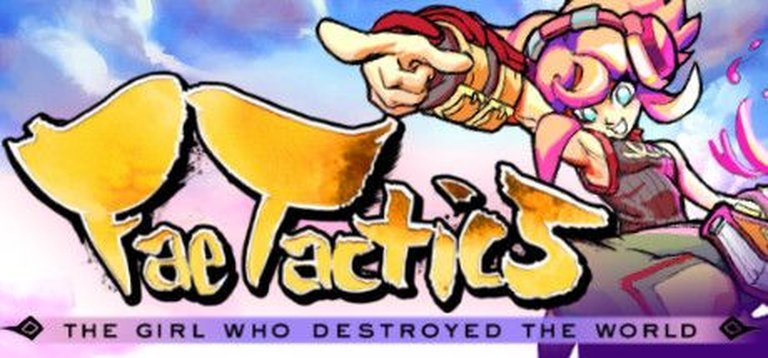
Fae Tactics’ world is a character in its own right, a vibrant post-apocalyptic fantasy where magic and technology collide. Ruined cities float on islands, enchanted forests hide ancient secrets, and wastelands bear scars of the cataclysm. This setting is explored through an isometric perspective, with richly detailed environments—from sun-drenched deserts to bioluminescent caves—that feel alive with personality. The art style, inspired by anime and pixel art, uses bold colors and expressive sprites to convey emotion; characters like Chico (Peony’s loyal dog) or the fiery demon Asmodeus animate with idiosyncratic charm, while fae designs range from whimsical (tiny sprites) to menacing (skeletal horsemen).
The sound design amplifies this atmosphere. Sam English’s score blends orchestral melodies with chiptune accents, evoking both grandeur and nostalgia—battle themes escalate dynamically, while quieter moments underscore the world’s melancholy. Sound effects, handled by Hyperduck Soundworks, are crisp and impactful, from clashing swords to the subtle hum of Peony’s manacycle. Voice acting is absent, but the written dialogue compensates with distinct voices: Peony’s earnest narration contrasts with Orowantus’ poetic lamentations, and villains like the Each-Uisge whisper with chilling authority. Together, art and sound forge an immersive experience that balances whimsy and gravity, making exploration as rewarding as combat.
Reception & Legacy
Upon its 2020 release, Fae Tactics was met with widespread critical acclaim, averaging 77 on Metacritic based on 13 reviews. Critics lauded its “near must-play” status for tactical RPG fans (RPG Site, 90%), praising its inventive combat, art direction, and narrative charm. PC Gamer noted its “enjoyable swing at streamlining” the genre, while Indie Game Website hailed it as “one of the most interesting tactics games of the last few years.” Player reviews on Steam were equally enthusiastic, with 86% positive responses highlighting the strategic depth and character appeal. However, some detractors cited frustrating difficulty spikes (Samvell, 2025) and repetitive boss themes (PC Gamer) as drawbacks.
Commercially, Fae Tactics performed respectably, particularly during Humble Bundle sales, becoming a cult favorite in the indie tactics sphere. Its legacy lies in its influence on the genre’s indie revival, demonstrating that streamlined design could coexist with complexity. It inspired comparisons to Final Fantasy Tactics and Disgaea, but carved its identity through its summoning focus and modular epilogies, where player choices affect character fates. Notably, patches addressed launch issues like missing Water-element days, refining the experience post-launch. Today, it is remembered as a hidden gem—a testament to Endlessfluff Games’ vision and a benchmark for how passion and creativity can elevate tactical RPGs in the modern era.
Conclusion
Fae Tactics stands as a masterful fusion of reverence and innovation, a tactical RPG that honors its 90s roots while charting a bold new path. Its streamlined combat, centered on elemental strategy and creature summoning, offers strategic depth without overwhelming complexity, while its world—brimming with charm and moral ambiguity—elevates a familiar quest narrative. Though marred by occasional design hiccups—namely punishing difficulty spikes and unforgiving multi-stage missions—it remains an essential experience for genre enthusiasts. As a love letter to tactical RPGs past and a beacon for indie innovation, Fae Tactics proves that even in a crowded market, a small team with a clear vision can deliver something truly magical. It is not merely a game to be played, but a world to be savored—a testament to the enduring power of turn-based strategy in an age of fleeting trends.