
- Release Year: 2024
- Platforms: Windows
- Publisher: Flyover Games
- Developer: Cuppa Games, Flyover Games, Lilycore Games LLC
- Genre: Compilation
- Perspective: Not specified
- Game Mode: Single-player
- Setting: Space
Description
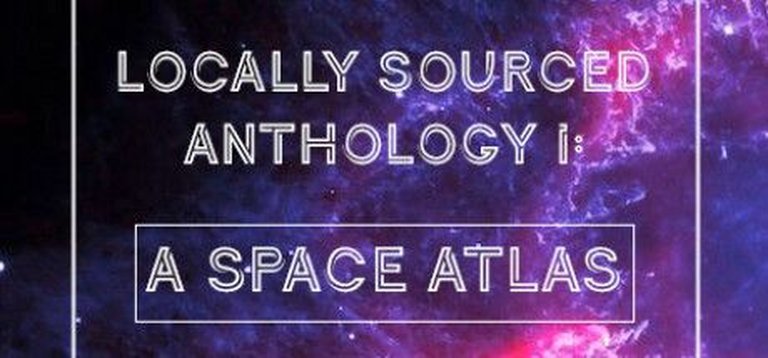
Locally Sourced Anthology I: A Space Atlas is an innovative compilation of 8 experimental indie games developed by different teams, taking players on a journey across our Solar System. The collection offers diverse experiences including growing tea on the Moon in a cozy base-builder, exploring the dangerous depths of Titan’s frozen sea in a horror simulation, fishing for escape on Neptune, surviving in a base orbiting Uranus, escaping a looping day on Mars in a turn-based RPG, befriending cats on Halley’s Comet in a puzzle platformer, and more. Each game presents unique gameplay mechanics while maintaining a cohesive sci-fi theme across our cosmic neighborhood.
Gameplay Videos
Where to Buy Locally Sourced Anthology I: A Space Atlas
PC
Locally Sourced Anthology I: A Space Atlas: Review
Introduction
In an era dominated by AAA spectacle and iterative sequels, Locally Sourced Anthology I: A Space Atlas emerges as a defiantly unconventional offering—a curated compendium of eight experimental games, each a microcosm of indie creativity. Released on July 22, 2024, by the Michigan-based Locally Sourced collective, this anthology redefines the anthology format by weaving together diverse planetary vignettes into a cohesive cosmic tapestry. What begins as a simple premise—eight games set across our solar system—unfolds into a profound exploration of humanity’s relationship with space, blending cozy simulation, existential horror, and poetic abstraction. This review posits that while its structural ambition risks fragmentation, the anthology’s unwavering commitment to experimental storytelling and collaborative artistry elevates it to a landmark achievement in independent game design, proving that the most profound journeys often come in bite-sized doses.
Development History & Context
Born from the collaborative ethos of the Locally Sourced collective—a Michigan-based coalition of indie developers (Flyover Games, Lilycore Games LLC, FEYXUAN, and Cuppa Games)—Locally Sourced Anthology I: A Space Atlas is as much a manifesto as a game product. The collective’s mission—to foster regional game development through shared knowledge, mutual support, and collaborative projects—is the bedrock of this anthology’s creation. Released amidst the 2024 indie renaissance, where anthology projects (e.g., Signalis, Outer Wilds DLC) gained traction for their thematic depth, the game sidestepped technological constraints by leveraging a polyglot of engines: Godot, RPG Maker, Unity, and Visual Novel Maker. This intentional diversity allowed each developer to choose tools tailored to their vision, from the pixel-art whimsy of Halleyfolk Odyssey to the atmospheric dread of Ligeia.
The collective’s geographic roots in Michigan—a state with a burgeoning but often overlooked indie scene—infuse the project with a sense of place-based authenticity. Their press kit emphasizes collaboration over competition, framing the anthology as a “turbulent process” of making, where shared struggles yield unique results. This approach contrasts sharply with the homogenized outputs of larger studios, reflecting a deliberate resistance to industry trends in favor of niche, community-driven art. The July 22, 2024, release on Steam and itch.io (priced at $14.99) capitalized on growing demand for experimental, bite-sized experiences, positioning the anthology as both a commercial venture and a cultural statement.
Narrative & Thematic Deep Dive
The anthology’s narrative strength lies not in linear plots but in its thematic exploration of space as a mirror for human emotion. Each entry distills a facet of the solar system into a self-contained narrative microcosm:
- The Quiet Moon (Moon): A serene base-builder where players cultivate tea in lunar greenhouses. Its narrative is environmental storytelling—expanded modules, hydroponic whispers, and silent vistas evoke solitude and resilience in the face of cosmic isolation.
- Ligeia (Titan): An immersive horror set on Saturn’s methane moon. Players navigate subterranean seas, with dialogue fragments hinting at corporate greed (“The data… they want the data“) and humanity’s hubris in exploiting alien environments.
- Neptunalia: Reel Lost (Neptune): A fishing simulator where angling for mythical “void-fish” becomes a metaphor for escape. Minimalist dialogue (“Is this a way out? Or just another cage?“) underscores themes of hope and futility.
- U-Base-1 (Uranus): A survival game orbiting the ice giant. Logs reveal dwindling resources and crew mutinies, framing space as a crucible for human fragility.
- don’t sing me the blues, please, sing me a BRIGHT RED SONG OF LOVE (Mars): A turn-based RPG where players relive a looping Martian day. Its witty, anachronistic dialogue (“Again? I swear the sun is laughing at me“) contrasts with poignant themes of love and temporal purgatory.
- Halleyfolk Odyssey (Halley’s Comet): A puzzle-platformer where befriending comet cats unlocks interstellar travel. Narrative is environmental—cat lore and comet physics blend into a fable about connection across voids.
- SOL (Sun): An arcade-puzzle where players fuse atoms to stave off solar collapse. Absurd dialogue (“Don’t touch the plasma!—Too late“) masks existential stakes about cosmic responsibility.
- The Wishmaker From Saturn (Saturn): A haunting poem-game where Saturn’s rings frame grief. Text fragments (“Did I break the sky when I wished for you?”) weave a lyrical elegy for loss.
Collectively, the anthology interrogates space’s dual nature: a canvas for wonder and a theater of terror. Themes of isolation, cyclical time, and ecological exploitation recur, unified by the cosmic sublime. The absence of a unifying plot is not a flaw but a deliberate choice—each game stands as a philosophical fragment, inviting players to assemble their own cosmic narrative.
Gameplay Mechanics & Systems
The anthology’s gameplay is a masterclass in genre diversity, with each entry offering a distinct mechanical core:
- The Quiet Moon: A base-builder centered on tea cultivation. Players expand lunar modules, manage resources, and unlock new tea varieties, blending resource management with zen-like progression. Its loop is meditative, rewarding patience over action.
- Ligeia: A horror sim with light-puzzle elements. Players explore Titan’s depths using sonar and oxygen tanks, with tension derived from limited visibility and sudden threats (e.g., leviathan shadows).
- Neptunalia: Reel Lost: A fishing game where timing and patience yield rare “void-fish.” Each catch unlocks narrative snippets, turning gameplay into a slow-burn mystery.
- U-Base-1: A space survival sim. Players balance oxygen, power, and morale while repairing modules. Its systems are unforgiving—failure means a slow, icy death.
- don’t sing me the blues: A turn-based RPG with a time-loop mechanic. Players navigate Mars’ red landscapes, making choices that subtly alter the loop’s parameters. Its innovation lies in how combat and dialogue interact with cyclical time.
- Halleyfolk Odyssey: A narrative puzzle-platformer. Players solve environmental puzzles (e.g., redirecting comet tails) while bonding with cats, whose abilities unlock new paths.
- SOL: An arcade-puzzle/shooter. Players fuse atoms while dodging solar flares, blending reflexes with strategic resource allocation. Its escalating difficulty demands mastery.
- The Wishmaker From Saturn: An interactive poem. Players “click” through text and visuals, with choices altering poetic imagery—a testament to minimalist interactivity.
Character progression varies wildly: The Quiet Moon offers module upgrades, while don’t sing me the blues uses RPG stat-gains. Combat is sparse, confined to SOL and Ligeia. The UI, though not detailed in sources, is tailored to each game’s needs—e.g., Saturn’s stark text contrasts with Mars’ vibrant HUD. Flaws are minimal but notable: U-Base-1’s resource drain may frustrate, while Neptunalia’s fishing lacks mechanical depth. Yet these inconsistencies are forgivable; the anthology’s strength is its willingness to prioritize concept over polish.
World-Building, Art & Sound
Each game’s setting is a character in its own right, realized through distinct art and sound palettes:
- The Quiet Moon: Soft, pastel pixel art depicts lunar dust domes and tea fields. Sound design features gentle chimes and ambient hums, evoking tranquility.
- Ligeia: Dark, 3D-rendered subterranean seas with bioluminescent flora. Audio—creaking ice and distorted whale calls—creates oppressive dread.
- Neptunalia: Neon-lit fishing boats against Neptune’s cerulean atmosphere. Synthwave soundtrack underscores its retro-futuristic melancholy.
- U-Base-1: Cold, metallic corridors with flickering terminals. Static-laden radio chatter and oxygen hisses heighten isolation.
- don’t sing me the blues: Vibrant, 16-bit Mars vistas with looping animations. Jazzy soundtrack and witty voice acting inject life into its temporal loop.
- Halleyfolk Odyssey: Whimsical 2D art with comet cats and starry backdrops. Plinky-plonky melodies and feline meows foster whimsy.
- SOL: Abstract, particle-heavy visuals with solar flares. Pulsating electronic rhythms and atomic fusion sounds energize its arcade chaos.
- The Wishmaker From Saturn: Minimalist, ink-wash illustrations of Saturn’s rings. Haunting, wordless ambient drones evoke sorrow.
These elements synergize to craft immersive micro-worlds. The Moon’s coziness contrasts with Titan’s terror, while Mars’ looping narrative is visually mirrored in its art. Sound design is particularly effective—Saturn’s silence and Neptune’s dissonance prove that space isn’t just a void but an acoustic landscape. The anthology’s visual diversity—pixel art, 3D, abstraction—mirrors the solar system’s own contrasts, making each entry feel unique yet thematically cohesive.
Reception & Legacy
At launch, Locally Sourced Anthology I: A Space Atlas received cautious optimism. Steam’s 91% positive rating (based on 12 reviews) praised its ambition and variety, with one player calling it “a love letter to indie experimentation.” Critics, however, noted uneven polish—U-Base-1’s survival mechanics drew mixed reactions. Commercially, it sold modestly ($14.99 on Steam/itch.io), appealing to niche audiences seeking narrative depth over spectacle. Its legacy is still nascent, but its influence is evident: the anthology format has inspired Michigan’s Locally Sourced collective to pursue future volumes, while its collaborative model offers a blueprint for region-based indie collectives. Games like don’t sing me the blues have garnered cult followings for their time-loop innovations, and Ligeia’s horror sim elements predate larger titles like Trepang2. Long-term, it may be remembered as a testament to indie games’ potential to explore cosmic themes with intimacy and daring—a far cry from Hollywood’s bombastic space epics.
Conclusion
Locally Sourced Anthology I: A Space Atlas is a triumph of vision over uniformity. By entrusting eight distinct voices to interpret our solar system, the collective creates a mosaic that is as fragmented as it is unified. Its gameplay—ranging from serene tea farming to atomic fusion—demands adaptability, rewarding players willing to embrace its experimental spirit. Thematically, it transcends its sci-fi trappings to explore universal human experiences: love, grief, resilience, and the sublime terror of the void. While not without flaws—uneven polish and niche appeal may limit its audience—these are mere specks against the cosmic canvas it paints. As a landmark in collaborative indie development, the anthology proves that the most profound space odysseys need not be grand; they need only be heartfelt. For players seeking a game that challenges conventions, celebrates creativity, and reminds us why we gaze at the stars, Locally Sourced Anthology I: A Space Atlas is not just a collection—it’s a constellation of unforgettable moments, forever orbiting the edge of the known.