
- Release Year: 2006
- Platforms: PlayStation 2, Wii, Windows, Xbox
- Publisher: 1C Company, AQ Interactive, Inc., Atari, Inc., Ubisoft Entertainment SA
- Developer: Reflections Interactive Limited
- Genre: Action, Driving, Free-roaming, Open World, Racing, Sandbox
- Perspective: Third-person
- Game Mode: Single-player
- Gameplay: Automobile, Crafting, Moral choices, Open World, Shooter, Vehicular
- Setting: 1970s, 2000s, New York
- Average Score: 69/100
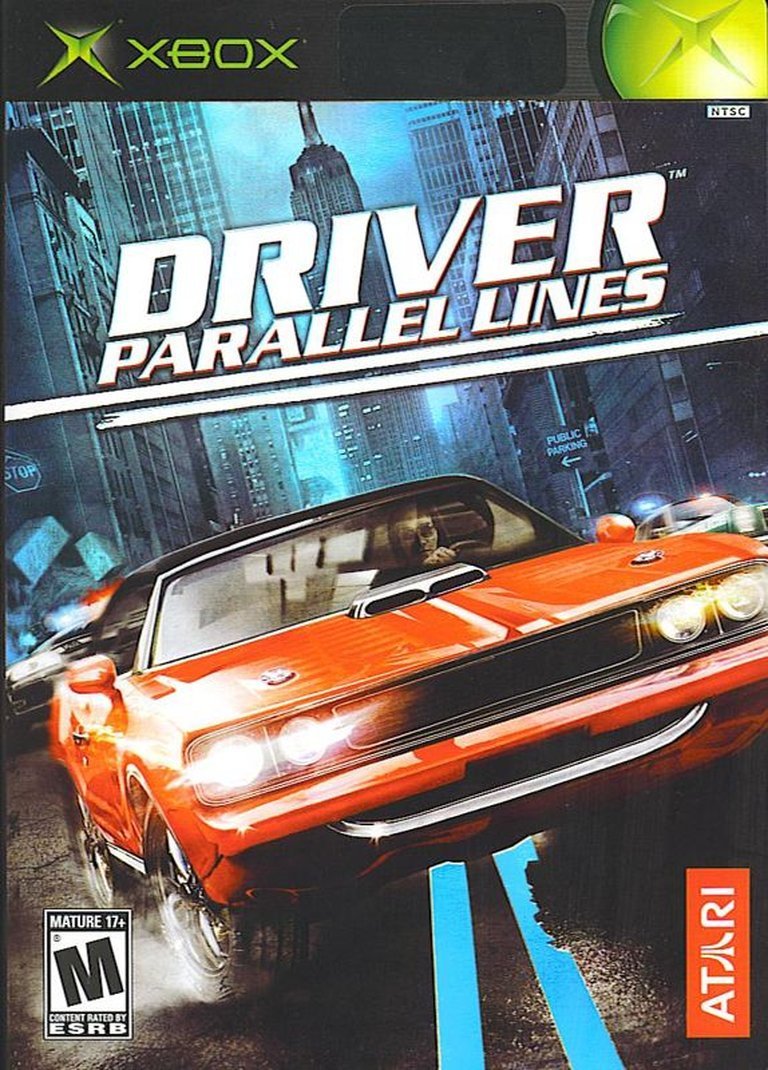
Description
Driver: Parallel Lines is the fourth installment in the Driver series, following protagonist TK who wrongfully serves 28 years in prison from 1978 to 2006. After his release, he vows revenge against the corrupt police that framed him. The game alternates between two eras: the disco-infused streets of 1978 and the modern, high-tech metropolis of 2006, featuring period-accurate vehicles, architecture, and soundtracks. Gameplay emphasizes vehicular combat and open-world exploration, with most missions involving intense car chases, though limited on-foot combat is available.
Gameplay Videos
Where to Buy Driver: Parallel Lines
Driver: Parallel Lines Free Download
Driver: Parallel Lines Cracks & Fixes
Driver: Parallel Lines Patches & Updates
Driver: Parallel Lines Mods
Driver: Parallel Lines Guides & Walkthroughs
Driver: Parallel Lines Cheats & Codes
PC
Pause the game and navigate to Options > Cheats. Enter codes in capital letters.
| Code | Effect |
|---|---|
| IRONMAN | Invincibility |
| ROLLBAR | Indestructible Cars |
| GUNBELT | Infinite Ammo |
| ZOOMZOOM | Infinite Nitro |
| KEYSTONE | Weak Cops |
| TOOLEDUP | Zero Cost |
| GUNRANGE | All Weapons |
| CARSHOW | All Vehicles |
| FAR OUT | Slow Motion |
| NIGHT NIGHT | Permanent Night |
| SHORTEST DAY | Shorten Day |
| BODY SNATCHERS | Steal Appearance |
| UNLIMITED | Unlimited Mission Time |
| Limit | Unlimited All Missions |
PlayStation 2
Pause the game, go to Settings, then Cheats. Enter codes in capital letters.
| Code | Effect |
|---|---|
| IRONMAN | Invincibility |
| ROLLBAR | Indestructible Cars |
| ROOLBAR | Indestructible Cars |
| GUNBELT | Infinite Ammo |
| ZOOMZOOM | Infinite Nitro |
| KEYSTONE | Weak Cops |
| TOOLEDUP | Free Garage |
| TOOLEUP | All Upgrades Free |
| GUNRANGE | All Weapons |
| CARSHOW | All Vehicles |
| FLIPFLOP | Change Clothes |
| ZERO COST | Nothing Costs Anything |
Xbox
Enter codes under Settings -> Cheats.
| Code | Effect |
|---|---|
| IRONMAN | Invincibility |
| ROLLBAR | Invincible Cars |
| GUNBELT | Unlimited Ammo |
| ZOOMZOOM | Unlimited Nitro |
| KEYSTONE | Weaker Cops |
| TOOLEDUP | Free Garage |
| GUNRANGE | All Weapons |
| CARSHOW | All Vehicles |
Wii
Pause the game and select Settings, then Cheats.
| Code | Effect |
|---|---|
| STEELMAN | Invincibility |
| CARSHOW | All Cars |
| ROLLBAR | Indestructible Cars |
| ZOOMZOOM | Infinite Nitro |
Driver: Parallel Lines: Review
1. Introduction
In the annals of video game history, few series embody the thrilling chaos of cinematic car chases quite like Driver. By 2006, the franchise was at a crossroads. The critically drubbed Driv3r (2004) had alienated fans with its broken on-foot mechanics and technical shortcomings. Driver: Parallel Lines emerged not just as a course correction but as a bold reimagining, stripping away the series’ iconic undercover cop Tanner to introduce a new protagonist: TK, a gritty getaway driver caught in a 28-year saga of betrayal and vengeance across two distinct eras of New York City. This review will argue that while Parallel Lines carries the scars of its troubled development and faces the daunting shadow of Grand Theft Auto, it stands as a flawed yet fascinating entry—a nostalgic, atmospheric, and mechanically ambitious chapter that redefined the series’ identity amidst a saturated open-world landscape.
2. Development History & Context
Developed by Reflections Interactive, the studio behind the original Driver, Parallel Lines was born from necessity. Following Driv3r‘s catastrophic reception, which earned it a reputation as one of gaming’s greatest failures, Reflections undertook a radical reassessment. The vision was clear: return to the series’ roots. As sources note, the game “listened to fans” by refocusing on driving-centric gameplay, excising the reviled on-foot sections entirely. The development team, led by director Tanner Harvey, aimed to blend the series’ signature car-chase intensity with the open-world sandbox pioneered by Grand Theft Auto III.
Technologically, the game was constrained by its 2006 release on last-gen platforms (PlayStation 2, Xbox), with later ports to Windows and Wii in 2007. The engine, critics observed, felt “built on the DRIV3R engine with a slightly different graphics package,” resulting in dated visuals by contemporary standards. Ambitions for online multiplayer were scrapped early, as the team prioritized a polished single-player experience. Against a gaming landscape dominated by Rockstar’s GTA: San Andreas (2005), Parallel Lines positioned itself as a more focused alternative—one that traded GTA’s breadth for a deeper, more authentic driving simulation. Atari published the initial release, but Ubisoft later acquired the franchise for the PC and Wii ports, underscoring the title’s transitional status within the series.
3. Narrative & Thematic Deep Dive
Parallel Lines weaves a classic revenge narrative across two temporal bookends, anchored by its protagonist, “The Kid” (TK). In 1978, an 18-year-old TK arrives in New York, eager to climb the criminal ladder using his unparalleled driving skills. He joins a crew led by the duplicitous cop Corrigan, including enforcers Slink, Bishop, The Mexican, and the cunning Candy. Their plan to kidnap Colombian drug lord Rafael Martinez unravels when Corrigan betrays TK, framing him for the murder and sentencing him to 28 years in Sing Sing.
The narrative pivot in 2006 is the game’s masterstroke. Released as a hardened, middle-aged man, TK discovers his former partners have prospered: Corrigan is Police Chief, Slink runs a drug empire, Bishop dominates the underworld, and Candy operates a prostitution ring. TK’s quest for revenge is a symphony of violence and strategy, culminating in the brutal elimination of his betrayers. The story culminates in a twist: Ray, TK’s loyal mechanic, was a double agent working for Corrigan, and Maria, TK’s ally, is Martinez’s daughter seeking justice.
Thematically, the game explores the corrosive nature of time and betrayal. The 28-year gap isn’t just a narrative device; it’s a gut-punch, with TK’s youth and idealism curdling into cynicism. The 1970s era pulses with gritty optimism (disco, muscle cars, the nascent punk scene), while 2006 reflects a digital, corporate decay. Dialogue is sparse but effective, with TK’s terse lines (“Didn’t waste a single one [day in prison]”) underscoring his trauma. The narrative’s simplicity is its strength—a lean, propulsive tale of retribution that mirrors the cinematic ethos of films like Ronin and Bullitt.
4. Gameplay Mechanics & Systems
Parallel Lines revives the series’ core tenet: driving is paramount. Missions prioritize vehicular mayhem, with TK executing death-defying getaways, precision deliveries, and high-speed chases. The open world of New York is a playground for over 80 vehicles, ranging from 1970s muscle cars like the “Venom” (DeTomaso Pantera-inspired) to 2006 supercars like the “Teramo” (TVR Sagaris-inspired). Customization at Ray’s Autos allows tuning for speed, armor, nitrous, and aesthetics, though critics noted that only a handful of cars were truly mission-viable.
On-foot combat, though present, feels secondary. Auto-aim simplifies shootouts, but controls are clunky, and the camera struggles in tight spaces. A “felony system” adds depth: police attention can be shed by switching vehicles or holstering weapons, but persistent pursuit escalates into city-wide manhunts. Side jobs—assassinations, street races, taxi missions—provide variety and income, though mission design often relies on trial-and-error frustration, with frequent restarts required.
The era-switching mechanic, unlocked post-campaign, is a triumph. Players can freely toggle between 1978 and 2006, retaining all unlocked vehicles and replaying missions. This meta-narrative choice celebrates nostalgia while letting players experience the full breadth of TK’s journey. However, controls remain divisive. As one review noted, “Above 80mph, any direction change has your tail waving like mad,” making high-speed navigation a test of patience rather than skill.
5. World-Building, Art & Sound
New York City in Parallel Lines is a character unto itself. The game meticulously renders iconic landmarks—the Empire State Building, Times Square, Central Park—while omitting others like the World Trade Center (present in 1978, demolished by 2006). The city is condensed but alive, with vendors selling donuts, pedestrians conversing, and traffic patterns reflecting each era. Art direction sharply distinguishes the two timelines: 1978 bathes the city in sepia tones, with chrome-detailed HUDs and vintage aesthetics, while 2006 adopts a cooler, blue-tinted palette with digital interfaces.
The sound design elevates the atmosphere. The 1978 soundtrack is a funk-disco goldmine, featuring licensed tracks from Roy Ayers, Blondie (“One Way or Another”), and David Bowie (“Suffragette City”), alongside original session recordings. The 2006 era shifts to alternative rock and rap, with Public Enemy, TV on the Radio, and Yeah Yeah Yeahs providing a modern counterpoint. Radio chatter and ambient sounds—from the rumble of subway trains to the screech of tires—immersion. Yet, visual fidelity suffers. Textures are bland, pop-in is frequent, and animations are stiff. As critics lamented, “The graphics look dated,” failing to compete with contemporaries like GTA: San Andreas.
6. Reception & Legacy
At launch, Driver: Parallel Lines received mixed-to-positive reviews, with a Metacritic average of 69% for PS2/Xbox. Critics praised its driving mechanics, era-splitting concept, and soundtrack but lamented its derivative nature and technical flaws. IGN commended its “return to form,” calling it “solid if not spectacular,” while GameSpot dismissed it as a “competent GTA clone.” Player reviews were kinder, with a MobyGames user rating it 3.4/5, noting its “sweet and addictive” appeal despite “terrible car control.”
Commercially, it underperformed against GTA clones, finding a niche among series loyalists. Its legacy is one of redemption: it salvaged the Driver brand after Driv3r‘s collapse, paving the way for Driver: San Francisco (2011). The era-switching mechanic influenced later titles, though its impact was overshadowed by Rockstar’s dominance. Today, it’s remembered fondly for its 1970s nostalgia and thrilling chases, even as its shortcomings—awkward controls, repetitive missions—keep it from classic status. As one retrospective noted, “It’s not as bad as Driv3r, but that’s faint praise.”
7. Conclusion
Driver: Parallel Lines is a flawed jewel in the Driver crown—a game torn between its ambition and its limitations. It successfully refocuses the series on its core strengths, delivering a visceral, time-spanning revenge story wrapped in a lovingly realized New York City. The era-switching mechanic remains a standout concept, blending nostalgia with gameplay freedom, while the 1970s soundtrack and car-chase sequences are undeniably exhilarating. Yet, its technical shortcomings, derivative open-world design, and uneven mission structure prevent it from transcending its “GTA clone” label.
Ultimately, Parallel Lines is more than a mere apology for Driv3r. It’s a testament to Reflections’ resilience, a snapshot of mid-2000s gaming ambition, and a compelling chapter in a series defined by speed and cinematic flair. For fans of vintage driving games or 1970s gangster aesthetics, it remains a rewarding ride—one best enjoyed with the radio cranked and the memory of its wasted potential in mind. Verdict: A flawed but essential entry in the Driver saga, worth revisiting for its atmosphere and audacity.