
- Release Year: 2006
- Platforms: Macintosh, Windows
- Publisher: Hirameki International Group Inc.
- Developer: TWOFIVE, Inc.
- Genre: Adventure
- Perspective: Visual novel
- Game Mode: Single-player
- Gameplay: Choice-based, Visual novel
- Setting: Fantasy
Description
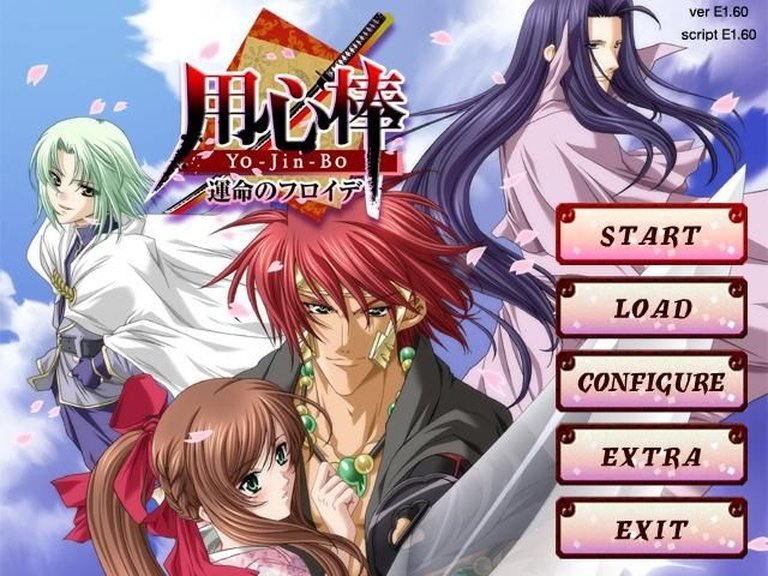
Yo-Jin-Bo is a Japanese-style anime adventure visual novel set in medieval Japan long after the warring states period. The player assumes the role of Sayori, a modern high school student who acquires a mystical jade pendant, transporting her back in time to inhabit the body of Princess Hatshusime. Trapped in the past with her bodyguards and allies, Sayori must evade ninja assassins hired by the treacherous Chief Inspector Harumoto while navigating relationships and making critical choices that shape the story’s multiple endings.
Yo-Jin-Bo Guides & Walkthroughs
Yo-Jin-Bo Reviews & Reception
rpgfan.com : The Japanese voice acting is exquisite across the board with a cast of experienced voice actors who have been in many popular anime.
Yo-Jin-Bo: Review
Introduction
In the annals of video game history, few titles embody the spirit of early 2000s otome localization quite like Yo-Jin-Bo: The Bodyguards. This 2005 Japanese visual novel, later localized by Hirameki International for Windows and Mac in 2006, stands as a cultural time capsule—an audacious fusion of historical samurai drama, time-traveling romance, and anachronistic humor that broke new ground as one of the first officially translated non-hentai otome games to reach Western shores. Its legacy lies not in technical perfection but in its unapologetic embrace of “Working Designs-style” cheekiness, where a 19th-century princess might reference Pokémon or a ninja wields a katana while spouting modern slang. This review argues that Yo-Jin-Bo is a quintessential artifact of its era, a flawed but fascinating experiment that laid groundwork for future otome localizations by proving that culturally specific narratives, when delivered with infectious personality, could find a global audience despite mechanical simplicity.
Development History & Context
Yo-Jin-Bo emerged from the creative crucible of TWOFIVE Inc., a Japanese sound company renowned for its expertise in voice acting and audio production—a background that heavily influenced the game’s strengths. Initially released in Japan on July 29, 2005, for Windows and later ported to PlayStation 2 on October 26, 2006, the game was part of a wave of visual novels seeking international appeal. Hirameki International, a key pioneer in bringing Japanese games to the West, handled the localization through its AnimePlay PC line, opting for a CD-ROM format (unlike their DVD-based titles) to maximize accessibility. This decision reflected the technological constraints of the era: the game relied on static visuals and voice acting, with minimal interactivity beyond text choices.
The development team, led by director Saegusa Yoshitaka and scenario writer Ayu, envisioned a narrative that blended historical fiction with contemporary humor. Character designer Kawai Masaki brought the ensemble cast to life, while composer Don McCow crafted an eclectic score that defied period conventions. The 2006 release landscape was pivotal: visual novels were gaining niche traction in the West, but faced skepticism due to cultural barriers. Hirameki bet on Yo-Jin-Bo’s unique tone—a calculated risk that paid off in cult adulation, though it couldn’t replicate the commercial success of later titles like Hakuoki. The game’s title itself is a pun: “Yo-Jin-Bo” (用心棒) means “bodyguards,” and three protagonists (Yo, Jin, Bo) embody this term, cementing the narrative’s focus on protective loyalty.
Narrative & Thematic Deep Dive
At its core, Yo-Jin-Bo is a tale of redemption across time. The modern protagonist, Sayori—a reluctant high school history club member—discovers a jade pendant during an archaeological dig. That night, it transports her to the body of Princess Hatsuhime, a tomboyish 150-year-old noblewoman marked for assassination by her scheming uncle, Harumoto. Sayori must navigate feudal Japan’s political intrigue while evading Harumoto’s ninja assassin, Kasumimaru, and aided by six bodyguards: Yo (a playful ninja), Jin (a hot-headed swordsman), Bo (an elegant, androgynous samurai), Muneshige (Hatsuhime’s loyal but joke-prone retainer), Mon-Mon (a Buddhist monk with a mysterious past), and Ittousai (a scarred, morally ambiguous warrior).
The narrative thrives on anachronistic juxtaposition. Hatsuhime’s assassination attempt is interrupted by bodyguards who crack jokes about Men in Black and reference Star Wars, blurring the line between historical authenticity and modern parody. This self-awareness extends to Sayori herself, whose internal monologue often lampshades the absurdity of her situation. Thematic richness lies in its exploration of identity: Sayori must impersonate Hatsuhime while retaining her modern sensibilities, while the bodyguards struggle with past trauma (e.g., Ittousai’s bloodlust, Jin’s awkwardness around women). The romance arcs—each tied to a character’s “good,” “bad,” or “forgotten dream” endings—prioritize emotional vulnerability over physical attraction, particularly in Ittousai’s redemption arc, where he confronts his murderous past through Sayori’s influence. Dialogue is a highlight, blending puns (e.g., Muneshige’s groan-worthy wordplay), fourth-wall breaks, and heartfelt declarations (“Call my name,” Ittousai’s anguished plea in his good ending). Voice acting, featuring industry stalwarts like Masakazu Morita (Yo) and Hiroki Takahashi (Jin), elevates the characters, turning even minor exchanges into memorable moments.
Gameplay Mechanics & Systems
As a visual novel, Yo-Jin-Bo emphasizes narrative over mechanics. Gameplay is a linear progression of timed choices that branch into multiple endings. Each chapter presents 1-3 decisions, often under a countdown timer, forcing players to act swiftly. Failure to choose defaults to a neutral option, while wrong answers can trigger abrupt “Game Over” screens—a feature that, while tense, feels punishing given the lack of hints. Choices dictate which bodyguard Sayori bonds with, unlocking one of three endings per character:
– Good Endings: Sayori averts Hatsuhime’s fate and stays in the past with her chosen partner (e.g., Muneshige marrying Sayori after convincing Hatsuhime’s father).
– Bad Endings: The pendant pulls Sayori back to her time before a relationship can fully blossom (e.g., Jin departing abruptly after Sayori’s confession).
– Forgotten Dream Endings: Sayori returns with fragmented memories, leaving the romance unresolved.
The bodyguard dynamic is the gameplay’s centerpiece. Paths require specific choices early on (e.g., spending time with Jin unlocks his route), but these are poorly signposted, leading to frustrating trial-and-error. Combat is text-based, with action sequences resolved through narrative descriptions rather than player input. While the timer creates urgency, it also limits meaningful reflection, undermining character development. Unlockable content—music tracks, character art, and a post-credits “host club” scene—rewards replayability, but the lack of a flowchart or decision markers makes full completion tedious. Ultimately, the gameplay serves as a vehicle for storytelling, prioritizing emotional payoff over engagement—a trade-off typical of the genre but magnified here by the game’s brevity (a single playthrough takes 4-6 hours).
World-Building, Art & Sound
Yo-Jin-Bo’s world-building is a deliberate anachronistic stew. Set in “medieval Japan long after the warring states period,” it references real historical figures (Abe no Seimei, Oda Nobunaga) through dialogue, yet populates feudal landscapes with characters who behave like modern teens. This juxtaposition defines the atmosphere: a castle under siege by ninjas becomes a stage for jokes about Peter Pan and Dragon Ball Z. The setting, though fantastical, grounds the narrative in a recognizable feudal power struggle, with Harumoto’s coup attempt reflecting real clan politics.
Art direction, by Iwai Harue and Yamashita Kouji, leans into anime tropes with vibrant, expressive character designs. Hatsuhime’s pink kimono symbolizes her princess status, while Ittousai’s fur-trimmed jacket and leather pants evoke a lone wanderer. Backgrounds are painterly but static, evoking traditional Japanese art without depth. The visual highlight is the hot spring scene, where optional peeping offers fanservice amid comedic misunderstandings (e.g., Mon-Mon’s chain mail saving him from a kunai).
Sound design elevates the experience. Two-Five’s audio expertise shines: the Japanese voice cast delivers nuanced performances, from Ittousai’s chilling smirk to Muneshige’s upbeat inflections. The soundtrack defies period expectations, blending shamisen with rock (e.g., the opening theme “Go Way” by Morita Masakazu) and even Western influences. Sound effects, like sword clashes and water dripping, enhance immersion, though the English localization occasionally replaces Japanese honorifics with awkward English terms (“miss” instead of onee-sama). This sonic richness makes Yo-Jin-Bo a standout auditory experience, even as visuals remain static.
Reception & Legacy
Upon its 2006 Western release, Yo-Jin-Bo polarized audiences. RPGFan awarded it 89/100, praising its “infectious fun” and voice acting but noting its niche appeal, while MobyGames highlighted its status as a “pioneering otome game.” Critics lauded its humor and localization but lamented its simplistic gameplay; one player review on English Otome Games called it “the worst visual novel ever,” citing its “annoying” anachronisms, while another celebrated it for making them “cry.” Commercially, it achieved cult status rather than blockbuster success, selling modestly through J-List and JAST USA.
Its legacy is twofold: it democratized otome games for Western audiences, proving that non-romance-centric narratives could resonate, and it became a touchstone for localization debates. Hirameki’s bold choice to retain the game’s Japanese humor (e.g., Mickey Mouse impressions) rather than “sanitize” it influenced later titles like Code: Realize. Conversely, its mechanical flaws—punishing choices, linear paths—highlighted the genre’s growing pains. Yo-Jin-Bo inspired a manga adaptation and drama CDs but remains a footnote compared to genre titans like Hakuoki. Yet its anachronistic charm and memorable characters ensure it endures in fan memory, often cited as a “guilty pleasure” that exemplified the risks and rewards of cultural translation.
Conclusion
Yo-Jin-Bo: The Bodyguards is a flawed masterpiece—an unapologetic time capsule where historical fiction collides with pop-culture chaos. Its strengths lie in its audacious narrative, stellar voice acting, and heartfelt character arcs, particularly Ittousai’s redemption. Yet its minimalist gameplay and punishing choice system limit accessibility, underscoring the challenges of adapting niche Japanese genres. As a piece of history, it remains culturally significant: a bold experiment by Hirameki that pushed the boundaries of localization, proving that otome games could thrive outside Japan without pandering to Western sensibilities. While its legacy is overshadowed by more polished successors, Yo-Jin-Bo’s enduring appeal lies in its infectious personality—a testament to the idea that sometimes, a game’s greatest strength is its unapologetic weirdness. For historians and otome aficionados, it is not merely a game but a landmark: a quirky, heartfelt reminder of how far the genre has come, and how much of its spirit can be traced back to this very bodyguard.