
- Release Year: 2012
- Platforms: Android, Browser, iPad, iPhone, Linux, Macintosh, Windows
- Publisher: Waz
- Developer: Waz
- Genre: Role-playing, RPG
- Perspective: Side view
- Game Mode: Single-player
- Gameplay: Auto-mapping, Hunger, Permadeath, Roguelike, Thirst, Turn-based
- Setting: Fantasy
- Average Score: 87/100
Description
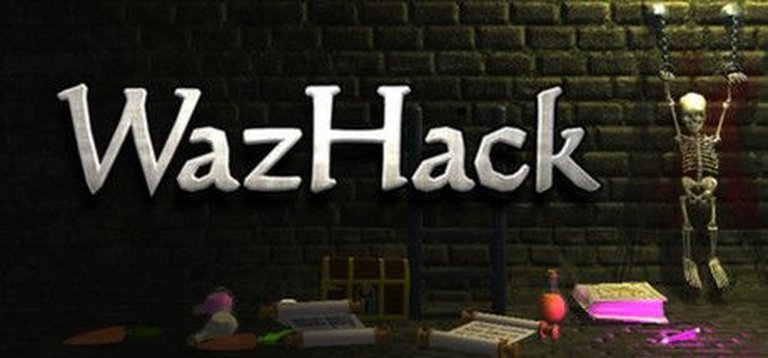
WazHack is a semi turn-based 3D roguelike where players explore procedurally generated dungeons in search of the legendary Amulet of Zaw. The game features 16 unique character classes, each with distinct talents and pet companions, along with an intricate skill system that allows for deep customization. Players must navigate through interconnected rooms and floors, dealing with unidentified items that may be blessed or cursed, while managing hunger and encumbrance. The combat system emphasizes strategic planning with turn-based mechanics influenced by character speed, weapon proficiency, and equipment weight. With permadeath and randomly generated environments, each playthrough offers a unique challenge in this fantasy RPG inspired by the classic Rogue.
Gameplay Videos
Where to Buy WazHack
WazHack Free Download
PC
WazHack Patches & Updates
WazHack Mods
WazHack Guides & Walkthroughs
WazHack Reviews & Reception
metacritic.com (72/100): This game is pure roguelike. There are lots of options as you descend the dungeon, and the difficulty is great! The dungeon changes and introduces new monsters now and then. If you’re looking for a basic game with a challenge, look no further! One of the best indies in the genre!
steamcommunity.com : Really fun game, i can see how to double my score next time, think i’ll start a White Witch run.
moddb.com (100/100): It may be the best rougelike out there that few know about or don’t give it a fair chance.
WazHack: Review
Introduction
In the sprawling, often insular world of roguelikes, where ASCII tiles and punishing permadeath are sometimes seen as prerequisites for authenticity, WazHack emerged in 2012 as a quiet revolutionary. Developed by Warwick Allison (Waz), a veteran with roots in the original graphical NetHack (GEM NetHack), WazHack dared to translate the dense, complex mechanics of its forebears into a visually distinct, semi-turn-based 3D framework. It wasn’t merely a graphical update; it was a fundamental reimagining. My thesis is that WazHack represents a masterclass in roguelike design, achieving a rare equilibrium between the genre’s traditional depth and the accessibility demanded by a modern audience. It honors the legacy of discovery and consequence inherent in titles like Rogue and NetHack while streamlining interfaces and leveraging contemporary technology to create an experience that remains endlessly replayable, intellectually stimulating, and unexpectedly charming nearly a decade after its initial browser release. WazHack is not just a game; it’s a testament to the enduring power of procedural generation and the joy of solving problems with your wits and an ever-shifting inventory.
Development History & Context
WazHack is the brainchild of Warwick Allison, operating under the pseudonym “Waz.” His prior work on GEM NetHack provided him with a deep, foundational understanding of the roguelike genre’s intricacies and the challenges of translating complex systems into a graphical format. Released initially for browsers on March 13, 2012, WazHack leveraged web technologies to reach a broad audience without requiring complex installations. This browser-based launch was significant, positioning it alongside other accessible roguelikes gaining traction during the early 2010s, such as Spelunky, coinciding with a period where the genre was experiencing a renaissance beyond its niche origins.
The development process was notably collaborative, especially for a primarily solo project. Allison engaged in extensive beta testing, involving over 2000 players during its initial phase. This wasn’t just bug-hunting; the credits explicitly namecheck communities like Reddit, YOGSCAST and their subscribers, and Touch Arcade players, indicating a strong reliance on community feedback for balancing and refinement. Names like Sharon A, Robin L, Paul R, Carl M, David Sauter, Oscar N, Villike, Kyo, Essegi, Ted P, Ari & Beth, and Duncan B appear in the credits, representing dedicated testers whose input shaped the game’s balance and feel. This community-centric approach mirrored the iterative development ethos common in indie games of the era and particularly resonant within the roguelike community.
Technologically, WazHack faced the constraints of browser-based gaming in 2012, requiring efficient code to render 3D environments on potentially limited hardware. This likely influenced its focus on clear, functional visuals over high-fidelity graphics. The later port to Steam (February 2014) and subsequent releases for Windows, macOS, Linux, iOS, and Android (2013-2014) expanded its reach significantly. The Steam release also marked a shift towards a more traditional PC/Mobile distribution model, leveraging platforms like Steam Workshop (added in version 1.4) for mod support, extending the game’s lifespan and fostering player creativity. The underlying engine was also updated to support modern hardware, ensuring continued playability. Waz Games served as both publisher and developer, maintaining control over the project’s vision and evolution.
Narrative & Thematic Deep Dive
While WazHack eschews elaborate cutscenes or explicit character-driven narratives, it embodies the core thematic pillars of the classic roguelike genre with remarkable potency: The Perilous Descent, The Weight of Discovery, and The Inevitability of Death.
The narrative is archetypal: the player descends into the procedurally-generated dungeons of Wazhack, navigating labyrinthine depths measured in feet, seeking the legendary Amulet of Zaw. This objective is presented as a classic MacGuffin, a symbol of ultimate power or status. The true narrative emerges not from a pre-written story, but from the emergent storytelling born of each descent. The thrill comes from uncovering a unique combination of items – a blessed wand of cold, a cursed ring of teleportation, a pet monkey successfully stealing a giant’s club – and the escalating tension as depth increases. The game masterfully reinforces the theme of The Weight of Discovery through mechanics like unidentified items. Every potion, scroll, or weapon is a gamble. Is that glowing vial Healing, or is it Poison? Is this scroll of Identify safe, or will it summon a horde of demons? This uncertainty transforms exploration into a constant, thrilling risk-reward calculation, making each discovery feel earned and potentially catastrophic.
The theme of The Perilous Descent is reinforced visually and mechanically. As stated in the official description, “The further down, the stronger the monsters,” creating a palpable sense of escalating dread. Depth is explicitly displayed (“e.g. 300 feet”), turning the abstract into a quantifiable pressure. The constant threat of permadeath (The Inevitability of Death) is not a narrative device but a fundamental gameplay loop. Death is not an ending point, but the inevitable consequence of failure, a teacher that informs future attempts. The “Boneheaded Tutor” in-game, whose tips can be reset, serves as a thematic stand-in for the lore and knowledge passed down through the roguelike tradition, emphasizing that understanding the game’s systems is the narrative. The journey back to the surface after obtaining the Amulet of Zaw is a tense, triumphant epilogue, a final gauntlet run where carrying the prize makes the player a target. WazHack’s genius lies in how its mechanics are its narrative, creating a deeply personal story of survival, adaptation, and often, glorious failure.
Gameplay Mechanics & Systems
WazHack’s gameplay is a dense, interconnected web of systems that define the player experience. Its core is semi-turn-based movement and combat. Time progresses only when the player acts, allowing for careful consideration of each move. However, the resolution of actions (combat, movement) is governed by a speed system: “turns take place depending on the speed of a character, pet, or enemy, as well as the speed of the weapon being used and encumbrance.” This creates a dynamic flow where faster characters and lighter weapons grant more actions per “real-time” segment, making speed a crucial tactical consideration even within the turn-based framework. Combat itself is direct: melee involves bumping into enemies and holding to attack, while ranged/magic uses targeting.
Character progression is multifaceted. The game offers 16 distinct character classes, each with unique starting equipment, stats, beliefs, and access to a selection of 9 possible Talents. Talents are class-specific perks that can be upgraded to three levels, offering significant gameplay variations. For example, the Rogue’s “Trap” talent evolves from detection to creation (daggers, then any weapons), defining their playstyle. Beyond classes, progression relies heavily on Skills. Weapon skills (Knives, Swords, Greatswords, Backswords, Axes, Clubs, Polearms, Bow) and Magic skills (Life, Light, Death, Dark) level up organically through use. Players can then invest points to make these increases permanent. A fascinating design choice is the opposing magic skill limitation: investing in Life magic, for instance, limits the maximum level of Death magic, forcing meaningful specialization. Bards possess the unique Music skill, mesmerizing enemies into temporary minions but requiring them to be weaponless.
The Item System is the heart of WazHack’s depth and replayability. With “over 300 unique items” (later cited as 350), discovery is constant. Items are frequently Unidentified, requiring risky trial-and-error, identification spells, or expensive shopkeeper services. Properties can be Cursed (negative) or Blessed (positive), adding another layer of uncertainty. Hunger/Thirst mechanics force players to manage food resources, preventing endless hoarding. Encumbrance penalizes heavy gear, affecting speed and combat effectiveness. Wands are crucial tools, with the Wand of Wishing being a game-changer for late-game acquisition. Scrolls (Identify, Enchant, Charging, Teleportation, Taming) offer powerful effects that can be copied if a Quill and Potion of Ink are found, multiplying their utility. Crafting via the Blacksmith allows combining weapons with rings to create powerful, immutable “Mighty Weapons,” enabling dual-wielded builds with multiple ring effects.
Pets add significant tactical and emotional depth. Each class starts with a specific companion: Fighters get dogs (strong, but ladder-impaired), Mages get cats (weaker, but can climb), Rogues/Thieves get monkeys (specialize in stealing weapons). Pets level independently, can die permanently, and offer unique advantages, making their preservation a key strategic goal.
World-Building, Art & Sound
WazHack creates a distinct Atmosphere of Gothic Fantasy. The setting is a classic dungeon crawl, but the 3D Perspective and Side-view presentation give it a unique visual identity compared to its top-down or isometric roguelike brethren. The environment is a series of connected rooms and corridors, descending ever downwards, connected by ladders. The ability to view up to three floors simultaneously on screen enhances spatial awareness and anticipation. The Procedural Generation ensures each descent feels unique, with varied room layouts, trap placements, and monster encounters. Locations like shops and wine cellars provide moments of relative safety and interaction amidst the peril.
The Art Direction prioritizes Clarity and Charm. While not aiming for photorealism, the 3D models for characters, monsters, and items are distinct and readable, avoiding the clutter that can plague complex roguelike visuals. The color palette effectively distinguishes different item types (e.g., glowing potions, metallic weapons), and the overall aesthetic leans towards a slightly stylized, almost playful darkness that complements the game’s occasional whimsy without undermining its tension. The 3D view, while not revolutionary, successfully translates the grid-based logic of traditional roguelikes into a more modern, navigable space, making it far more approachable for newcomers than pure ASCII or tile-based alternatives.
Sound Design is functional and atmospheric, primarily utilizing assets from Freesound.org. Sounds like sword clashes (Erdie), metal impacts (Dan Oberbauer / DJ Chronos), door creaks (Eric Hopton / ERH), footsteps (swuing), creature sounds (Stuart Parker / harri, kalifornia), swishes (Iwan Gabovitch / qubodup), whistles (Ben Boncan), and steam effects (Herbert Boland) create a cohesive auditory environment. While not a bespoke orchestral score, the sound effects effectively punctuate actions (combat, movement, item use) and contribute to the dungeon’s atmosphere without being intrusive. The lack of a constant musical score, aside from the Bard’s music skill, actually enhances the sense of isolation and focus, making environmental sounds and the tactical silence more impactful. The overall presentation successfully creates an immersive dungeon environment that is both visually distinct and sonically evocative.
Reception & Legacy
At launch and in the years following, WazHack carved out a respectable niche. The Critical Reception was notably positive. Critic Shoost awarded the game a consistent 90% score across multiple platforms (Linux, Windows, Macintosh, iPhone, iPad, Android), praising it as a “resounding success among the many recent roguelike games,” highlighting its “wit, charm, and seemingly endless replayability” and its ability to captivate “both veterans and newcomers.” This high critical score was particularly impressive given its competition in the burgeoning roguelike scene. However, the Player Reception at the time was more mixed. Metacritic reported a “Mixed or Average” User Score based on 5 ratings (7.2/10), reflecting the genre’s inherent difficulty curve and potential accessibility hurdles for some. The MobyGames player average was a low 3.2/5 based on a single rating, though this data point is statistically insignificant.
WazHack’s* Legacy is one of quiet influence and sustained community engagement. Its primary contribution lies in demonstrating how roguelike mechanics could be successfully translated into a visually accessible 3D framework without diluting the core depth. It proved that semi-turn-based action, clear visuals, and robust systems could coexist, paving the way for similar approaches in titles that followed. Its longevity is remarkable, supported by continuous updates (including the significant v1.4 update adding mod support and engine upgrades) and availability across an impressive range of platforms (Browser, Windows, Mac, Linux, iOS, iPad, Android). The Steam release (Feb 2014) amassed 722 reviews with a “Very Positive” overall score (89%), indicating a significant cult following grew over time. The active Steam Community Hub and Workshop demonstrate ongoing player engagement. While it may not have the mainstream impact of a Rogue Legacy or the critical darling status of a Caves of Qud, WazHack remains a highly respected title within the roguelike community, admired for its elegant design, depth, and the sheer joy of emergent problem-solving it provides. Its DNA – the blend of classic mechanics, accessibility, and visual clarity – continues to resonate.
Conclusion
WazHack stands as a landmark achievement in roguelike design. Warwick Allison, drawing from decades of experience in the genre, created a game that doesn’t just pay homage to Rogue and NetHack; it reinvigorates them for a contemporary audience. Its genius lies in its masterful balance: it retains the punishing permadeath, the thrill of unidentified loot, the strategic depth of character builds, and the emergent storytelling that define classic roguelikes, yet presents it all within a visually clear, semi-turn-based 3D framework that is significantly more approachable than its predecessors. The interconnected systems – from the class and talent synergies to the intricate dance of item identification, hunger management, and pet companionship – create a gameplay loop of unparalleled depth and replayability. Its art direction, while not cutting-edge, serves the gameplay perfectly, and its functional sound design effectively immerses the player in the dungeon atmosphere.
Despite its niche appeal and the inherent challenges of the roguelike genre leading to mixed initial player scores, WazHack has earned its place as a cult classic. Its longevity, fueled by cross-platform availability, continuous updates, and community features like modding, speaks volumes. It successfully bridges the gap between hardcore accessibility and traditional roguelike complexity. For newcomers seeking a challenging yet fair entry point into the genre, and for veterans craving a fresh take on familiar systems, WazHack remains an exceptional experience. Its legacy is not one of revolutionizing the industry single-handedly, but of perfecting a formula, demonstrating that the core appeal of roguelikes – discovery, consequence, and the thrill of mastering a complex system – can be delivered with remarkable charm and depth in a modern, visually engaging package. Verdict: A Masterclass in Roguelike Design – Timeless, Deep, and Endlessly Replayable.