
- Release Year: 2014
- Platforms: Macintosh, Windows
- Publisher: Proton Studio, Inc.
- Developer: Proton Studio, Inc.
- Genre: Action
- Perspective: 1st-person
- Game Mode: Single-player
- Gameplay: Shooter
- Setting: Fantasy
- Average Score: 87/100
- VR Support: Yes
Description
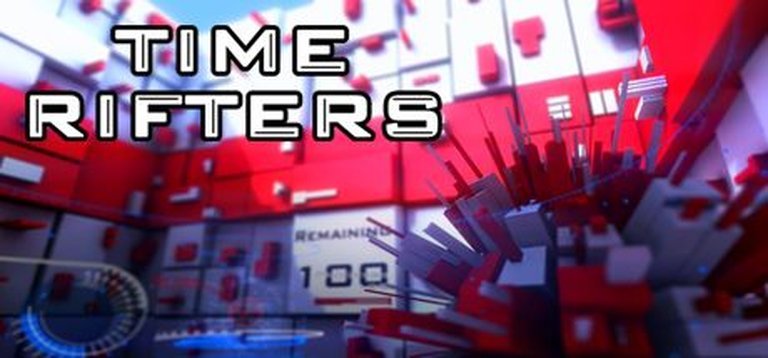
Time Rifters is an innovative first-person shooter set in a fantasy world where players battle alongside their past attempts to destroy cubes moving along predetermined paths, utilizing time-manipulation mechanics to overcome challenges. The game supports motion controls and VR headsets, features asynchronous multiplayer where players can share recordings to cooperate with ghostly avatars, and includes user-generated levels for endless replayability.
Where to Buy Time Rifters
PC
Time Rifters Cracks & Fixes
Time Rifters Mods
Time Rifters Guides & Walkthroughs
Time Rifters Reviews & Reception
metacritic.com (86/100): Every aspect of VR in this arcade FPS is a solid 10.
reddit.com : It is facinating to watch your previous attempts play out as you destroy the cubes you remember missing.
Time Rifters: Review
Introduction
In the pantheon of innovative indie games that bend the rules of interactivity, few concepts are as beguiling as the one at the heart of Time Rifters. Released in October 2014 by Calgary-based studio Proton Studio Inc., this deceptively simple first-person shooter asks players to perform a temporal paradox: to be their own teammates. Its legacy lies not in sprawling narratives or graphical spectacle, but in a brilliant, elegantly executed mechanic that transforms solitary gameplay into a cooperative experience with past and future selves. This review argues that Time Rifters is a masterclass in constrained design, where a single, potent idea—time-echoed self-cooperation—is leveraged into a compulsive, endlessly replayable arcade experience that remains criminally underappreciated a decade later. While its narrative is minimal, its gameplay systems, VR integration, and asynchronous multiplayer forged a unique niche that continues to inspire developers exploring time manipulation and emergent narrative.
Development History & Context
Time Rifters emerged from the crucible of mid-2010s indie development, a period marked by the rise of Unity, the democratization of game creation, and VR’s nascent resurgence. Proton Studio Inc., a two-person team comprising programmer Doug Wolanick and producer Jackie Taylor, operated from Calgary, Canada—a hub fostering a tight-knit indie community. Their vision was laser-focused: to create a “single-player co-op” shooter that distilled the chaos of multiplayer matches into a solitary, logical loop. The technological constraints were significant but embraced. Built on Unity 4, the game targeted modest hardware (Windows XP/Vista/7, 2GB RAM, DirectX 9/OGL 3 GPUs) while also pioneering early Oculus Rift DK2 integration—a risky move given VR’s infancy. This dual focus on standard monitors and VR headsets reflected a forward-thinking desire to maximize accessibility while pushing experimental boundaries. The gaming landscape of 2014 was dominated by AAA blockbusters, but indie titles like Bioshock Infinite and Hotline Miami had proven that innovative mechanics could thrive. Time Rifters aligned with this ethos, prioritizing a novel core loop over scale, and its eventual release as a $9.99 Steam title positioned it as a boutique experiment—one that would later be remembered for its prescient blend of time manipulation and asynchronous play.
Narrative & Thematic Deep Dive
Time Rifters narrative is intentionally abstract, serving as a thematic framing device rather than a detailed plot. Players assume the role of an unnamed operative thrust into a series of surreal “arenas” where geometric cubes—the primary enemies—traverse predetermined paths. The setting is a minimalist dreamscape: void-like spaces punctuated by glowing platforms, floating weapon lockers, and distant, monolithic structures. Dialogue is nonexistent, replaced by environmental storytelling through the game’s core mechanic. The true narrative unfolds in the player’s repeated attempts, where each “ghost” of a previous run represents a past version of the self, cooperating in a silent, perpetual dance. This creates a powerful theme of self-as-teammate, exploring isolation and collaboration through temporal recursion. The “Let’s Replay” feature amplifies this, allowing players to coexist with strangers’ past actions, transforming the game into a shared, asynchronous story of trial and error. While lacking traditional character development or dialogue, Time Rifters uses its absence to emphasize the player’s relationship with time and their own agency, turning every run into a micro-drama of improvement and consequence.
Gameplay Mechanics & Systems
At its core, Time Rifters is a tower-defense-inspired FPS with a time-bending twist. Players begin with four lives in each arena, tasked with destroying cubes before they reach their goal. With each subsequent life, a “ghost” of their previous attempt joins them, executing the exact actions they performed in that prior run. This creates a dynamic where players must strategically coordinate with their past selves—leading one ghost into position while another fires, or timing shots to avoid friendly fire. The loop is deceptively simple: attempt, observe, optimize, repeat. Combat focuses on six upgradable weapons, each with distinct behaviors (e.g., a sniper rifle for distant targets, a shotgun for clusters). Upgrades are purchased mid-run with coins dropped by destroyed cubes, creating a risk-reward calculus: prioritize survival or currency? The UI is minimalist, a floating HUD displaying ammo, lives, and score, designed to avoid cluttering the first-person view. The “Let’s Replay” system allows players to upload ghost recordings to the Steam Workshop, enabling asynchronous co-op with strangers’ past attempts—a brilliant solution for multiplayer in a single-player game. The level editor, initially rudimentary but refined in updates, empowers community creation, extending the game’s lifespan. However, depth is limited; core progression is linear, and later arenas demand precision over strategy, leading to occasional frustration. Yet, these flaws are overshadowed by the elegance of the core loop—a puzzle of self-cooperation that feels as fresh today as it did in 2014.
World-Building, Art & Sound
Time Rifters world-building is impressionistic, favoring atmosphere over exposition. The arenas are abstract, dreamlike spaces: geometric platforms float in voids, bathed in stark, neon lighting that shifts between blues, purples, and electric yellows. Cubes—primary enemies—are rendered in vibrant, high-contrast colors (reds, greens, yellows), making them pop against the monochrome backgrounds. This visual clarity is functional, ensuring targets are instantly identifiable. The art direction leans into a retro-futuristic aesthetic, with weapon lockers and structures resembling minimalist arcade cabinets. The sound design is equally purposeful: a pulsing, dubstep-infused soundtrack (composed by ArtIss, Kloud, and Matthew L. Fisher) drives the pace, while crisp, arcade-like sound effects (sourced from freesfx.co.uk) provide satisfying audio feedback for shots and cube destruction. VR integration enhances immersion, with the headset allowing players to physically turn and aim, ghost movements syncing with head tracking for a seamless spatial experience. Together, the art and sound create a hypnotic, arcade-like atmosphere—part retro shooter, part time-warping labyrinth—that makes the repetitive gameplay feel meditative rather than monotonous.
Reception & Legacy
Upon release, Time Rifters garnered immediate praise for its innovation, particularly among VR enthusiasts. On Steam, it maintains a “Very Positive” rating (87% of 395 reviews), with users lauding its “solid” VR implementation and “polished” controls. Critics highlighted its “original ideas” and seamless integration of time mechanics, though some lamented its brevity and lack of narrative depth. Metacritic’s user score (8.6) reflects this, with reviewers calling it a “must buy” for DK2 owners but noting its appeal was limited without VR. Commercially, it achieved modest success, buoyed by frequent sales and a $2.49 price point that made it accessible to “patient gamers.” Its legacy, however, has grown over time. It is often cited as a spiritual predecessor to games like Quantum League (which adopts its time-echoed PvP concept) and Superhot (which uses time manipulation for strategic depth). The “Let’s Replay” system anticipated modern asynchronous multiplayer trends, while its VR compatibility demonstrated early head-tracking versatility. Today, it remains a cult favorite, celebrated for proving that complex time mechanics could thrive in a small, focused package. Its community-driven content and Steam Workshop integration ensure it remains a niche but enduring experiment in interactive time.
Conclusion
Time Rifters is a testament to the power of singular focus. In a gaming landscape often obsessed with scale and spectacle, Proton Studio Inc. crafted an experience where a single, audacious idea—playing alongside your past selves—becomes the foundation for profound engagement. While its narrative is threadbare and its progression linear, the game compensates with gameplay that is both innovative and addictive, a masterclass in emergent storytelling through mechanics. Its VR integration, though primitive by modern standards, was remarkably forward-thinking, and its asynchronous “Let’s Replay” system remains a brilliant solution for multiplayer loneliness. Visually and aurally, it creates a hypnotic arcade world that amplifies its core loop. Initially met with critical enthusiasm but commercial obscurity, Time Rifters has since earned its place as an underappreciated gem—a game that didn’t just break new ground but offered a glimpse into a future where time itself could be the ultimate cooperative partner. For those seeking a unique blend of strategy, reflexes, and temporal paradox, Time Rifters is not merely a game; it is a time capsule of brilliant, unheralded design. Verdict: An essential, albeit niche, artifact of indie innovation that rewards players willing to dance with their own echoes.