
- Release Year: 2012
- Platforms: PlayStation 3, PS Vita, Windows, Xbox 360
- Publisher: ak tronic Software & Services GmbH, Electronic Arts, Inc.
- Developer: Criterion Software Ltd.
- Genre: Driving, Racing
- Perspective: 1st-person, Behind view
- Game Mode: Online PVP, Single-player
- Gameplay: Arcade, Open World, Vehicle simulator
- Setting: Urban
- Average Score: 46/100
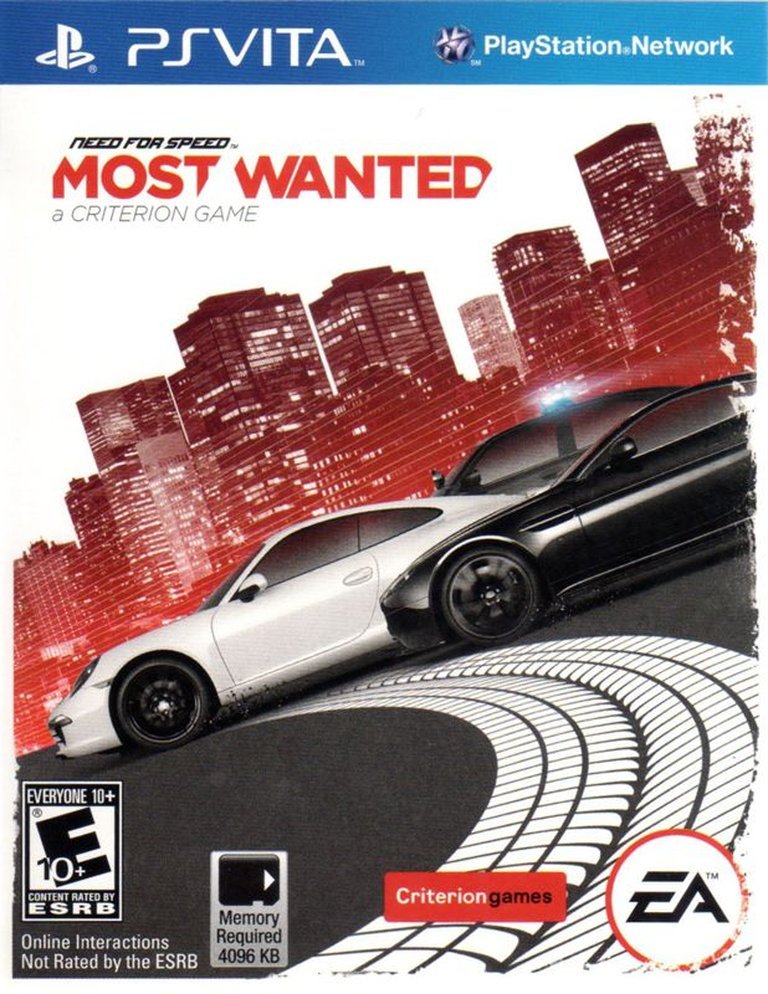
Description
Need for Speed: Most Wanted is an open-world racing game set in the fictional urban environment of Fairhaven, where players explore a bustling city surrounded by docklands and industrial parks. The game emphasizes aggressive street racing and high-speed pursuits, featuring a point-based progression system where players earn SpeedPoints by winning races, takedowns, and completing challenges to upgrade vehicles, evade escalating police heat levels, and climb the Most Wanted List to become the top racer.
Gameplay Videos
Where to Buy Need for Speed: Most Wanted
PC
Need for Speed: Most Wanted Free Download
Need for Speed: Most Wanted Cracks & Fixes
Need for Speed: Most Wanted Patches & Updates
Need for Speed: Most Wanted Mods
Need for Speed: Most Wanted Guides & Walkthroughs
Need for Speed: Most Wanted Reviews & Reception
metacritic.com (82/100): I’m having an absolutely fabulous time playing Need For Speed Most Wanted. It’s not the deepest racer in the world, but I’ve never felt that arcade racers need to come with loads of depth as they’re all about just driving cars you’ll never be able to afford, going fast as you can, and rapid-firing “that was awesome” moments: Three things Most Wanted totally nails in my book.
vgtimes.com : Surprisingly, the creators of Hot Pursuit (2010) failed to deliver energetic, long races of 20 kilometers and spectacular, heated chases with explosions and dozens of wrecked police cars. All the player gets from Most Wanted (2012) is limited to dull races with “rubberbanding” and relentless cops, from whom it’s nearly impossible to escape.
ign.com : The first thing that impresses you about Most Wanted – and there are many highlights to choose from – is the sheer quality and craftsmanship of the game. It’s evident in most aspects of the game. It’s been constructed with a fastidious attention to detail.
imdb.com (10/100): Most Wanted (2005) features memorable, if somewhat corny, characters and a solid storyline-not just an open-world racing experience. It offers some of the best racing and police chases in the genre. This newer game, however, lacks all of that.
Need for Speed: Most Wanted Cheats & Codes
PC
Enter codes at the Main Menu.
| Code | Effect |
|---|---|
| burgerking | Unlocks the Burger King Challenge |
| castrol | Unlocks a Castrol SYNTEC themed Ford GT |
| givemethegto | Unlocks the Pontiac GTO (Demo) |
| Iammostwanted | unlocks all cars |
PlayStation 2
Enter codes at the start screen.
| Code | Effect |
|---|---|
| Up, Down, Up, Down, Left, Right, Left, Right | Unlocks the Burger King Challenge |
| Left, Left, Right, Right, Up, Down, Up, Down | Unlocks a Castrol SYNTEC themed Ford GT |
| Up, Up, Down, Down, Left, Right, Up, Down | Extra Marker for Shop |
| L1, R1, R1, R1, Right, Left, Right, Down | Unlocks the Porsche Cayman S (Demo) |
Xbox & Xbox 360
Enter codes at the start screen.
| Code | Effect |
|---|---|
| LT, RT, RT, RT, Right, Left, Right, Down | Unlocks the Porsche Cayman S (Demo) |
| Up, Down, Up, Down, Left, Right, Left, Right | Unlocks the Burger King challenge |
| Left, Right, Left, Right, Up, Down, Up, Down | Unlocks a Castrol SYNTEC themed Ford GT |
| Up, Up, Down, Down, Left, Right, Up, Down | Free upgrades |
GameCube
Enter codes at the start screen.
| Code | Effect |
|---|---|
| Up, Down, Up, Down, Left, Right, Left, Right | Unlocks the Burger King challenge |
| Left, Right, Left, Right, Up, Down, Up, Down | Unlocks a Castrol SYNTEC themed Ford GT |
| Up, Up, Down, Down, Left, Right, Up, Down | Free upgrades |
Need for Speed: Most Wanted: Review
Introduction
In the pantheon of racing game franchises, Need for Speed: Most Wanted stands as a title synonymous with high-octane rebellion and cinematic police chases. While the 2005 original remains a benchmark for arcade racing, Criterion Games’ 2012 reboot reimagined the concept for a new generation, blending the series’ street-racing DNA with the studio’s signature Burnout chaos. Yet, this “Most Wanted” is not a sequel but a spiritual successor—a vibrant, open-world romp through the fictional city of Fairhaven that prioritizes player freedom and social competition over narrative depth. This review dissects Criterion’s ambitious revival, examining how it carved its own legacy by straddling the line between Need for Speed tradition and Burnout innovation, ultimately delivering a thrilling albeit divisive entry in the franchise.
Development History & Context
Developed by Criterion Games—the architects of the beloved Burnout series—Most Wanted (2012) emerged from a critical juncture for the NFS franchise. After the underwhelming reception of 2011’s The Run, Electronic Arts tasked Criterion with revitalizing the brand. The studio’s mandate was clear: recapture the essence of the 2005 classic while leveraging its expertise in seamless open-world design and vehicular mayhem. Development commenced in late 2011, with Criterion’s creative director, Craig Sullivan, teasing a “BIG” announcement via social media. The game was officially unveiled at E3 2012, where its fusion of licensed cars, dynamic police pursuits, and Burnout-style takedowns generated significant buzz.
Technically, the game pushed the boundaries of the seventh-generation consoles. Criterion utilized its proprietary Chameleon engine to render Fairhaven’s sprawling urban landscape, balancing detailed car models with fluid physics. The studio prioritized accessibility, ensuring smooth performance across platforms including PC, PlayStation 3, Xbox 360, and even a near-identical PlayStation Vita port—a feat lauded for preserving the core experience despite hardware limitations. Wii U support arrived later in 2013, introducing unique features like off-TV play and cooperative “Co-Driver” mode. However, the development was not without friction. Cut content, including a planned story-driven sequel to the 2005 game (featuring characters like Mia and pursuit breakers), hinted at creative constraints. As Criterion’s Alex Ward admitted, the team “built multiplayer first,” sidelining traditional single-player narratives in favor of social competition—a decision that would polarize players.
Narrative & Thematic Deep Dive
Unlike its predecessor, Most Wanted (2012) is devoid of a traditional plot. The game opens with a minimalist voiceover guiding players to Fairhaven, a city framed as the “street-racing capital of the region.” There are no rival crews, no betrayals, no cinematic cutscenes—only the relentless pursuit of becoming the “Most Wanted” driver. The narrative is reduced to a loose framework: conquer ten rivals on the “Most Wanted List” (a nod to the 2005 “Blacklist”) to claim their cars. This stripped-down approach reflects Criterion’s philosophy, where gameplay and player agency supersede storytelling.
Characters are similarly skeletal. The protagonist is a silent, customizable avatar, and rival drivers lack personality beyond their monikers and cars. DLC packs like Movie Legends and NFS Heroes injected thematic depth by tying vehicles to iconic films (e.g., the Fast & Furious-esque Dodge Charger) or NFS history (e.g., the BMW M3 GTR from 2005), but these feel like nostalgic add-ons rather than narrative anchors. The absence of a story, however, serves a thematic purpose: it transforms Fairhaven into a blank canvas, emphasizing freedom and competition. The city’s industrial zones, highways, and hidden shortcuts become the real characters, with pursuits symbolizing the eternal tension between anarchy and order. While this approach frustrated fans craving the revenge-driven drama of the original, it aligned with Criterion’s vision of racing as pure, unadulterated fun.
Gameplay Mechanics & Systems
Most Wanted’s gameplay is a masterclass in accessible, high-stakes racing. Three core event types dominate:
– Sprint Races: Point-to-point dashes requiring mastery of shortcuts.
– Circuit Races: Lap-based contests on varied tracks.
– Speed Runs: Courses navigated at maximum average speed.
Ambush races, where players escape police from a surrounded start, add unpredictability.
The true innovation lies in integration. Police pursuits are seamlessly woven into races, transforming a simple circuit into a desperate evasion. A dynamic “heat level” system (1–6) scales police aggression, from local cruisers to SWAT trucks, with each level introducing new tactics like spike strips and roadblocks. Evading pursuits requires “cooldown”—a mechanic involving hiding from sight—heightening tension. Takedowns, lifted from Burnout, reward aggressive driving but risk arrest if mishandled.
Progression revolves around Speed Points, earned through races, stunts (smashing billboards, hitting speed cameras), and pursuits. These points fuel a SpeedLevel system with 71 ranks, unlocking cars, mods, and Most Wanted challenges. Critically, almost all vehicles are discoverable in Fairhaven via “Jack Spots”—hidden locations allowing instant car swaps—a radical departure from the 2005 game’s linear progression. Upgrades focus on performance (nitrous, tires, suspension) rather than cosmetic tuning, with the EasyDrive menu enabling modifications mid-race without pausing.
Multiplayer, accessed via Autolog 2.0, is the game’s crown jewel. Friend challenges, global leaderboards, and seamless transitions between single-player and multiplayer sessions foster relentless competition. The CloudCompete feature allowed cross-platform progression—a forward-thinking concept for 2012. Yet, flaws persist: event repetition, rubber-band AI, and a lack of depth in single-player challenges. As Eurogamer noted, it’s “not quite NFS, not quite Burnout,” but a “very entertaining Hochglanz-Raser” nonetheless.
World-Building, Art & Sound
Fairhaven is a meticulously crafted open world, blending urban grit with scenic vistas. Inspired by Boston and Pittsburgh, it features a dense downtown, industrial docks, and a beachfront, all interconnected by the highway-like I-92. The city’s design rewards exploration, with hidden shortcuts, jump ramps, and collectibles encouraging off-road deviations. Landmarks like the Managio Hotel’s ring structure and the Hughes International Airport (added via the Terminal Velocity DLC) serve as both set pieces and playgrounds for stunts.
Visually, Most Wanted shines. Car models are photorealistic, from the Lamborghini Aventador to the humble Ford Fiesta, with damage systems that deform vehicles dynamically. Fairhaven’s day-night cycles and weather effects enhance atmosphere, though the Vita version’s reduced traffic and draw distance were necessary compromises. The art direction prioritizes spectacle over realism, with HDR lighting lending a vibrant, almost comic-book sheen to high-speed chases.
Sound design is equally potent. The engine roars of Koenigseggs and Porsches are authentic, while crash effects channel Burnout’s signature crunch. The soundtrack, dominated by dubstep (Skrillex), techno (Deadmau5), and rap (Dizzee Rascal), amps up the adrenaline. Criterion even resurrected tracks from Burnout Crash!, playing over parked cars—a subtle nod to its heritage. The minimalist voiceover, however, lacks the charisma of the 2005 game’s cast, leaving Fairhaven feeling slightly impersonal.
Reception & Legacy
Most Wanted (2012) was a critical and commercial triumph, scoring 77% on Metacritic and selling over 500,000 copies in its first month. Reviewers lauded its “seamless” world (Edge), “exhilarating” police chases (IGN), and Autolog integration. The Wii U version earned praise for its enhanced visuals, while the Vita port was hailed as a “remarkable feat of engineering” (Darkstation). However, criticism centered on its narrative void and repetitive events. GameStar lamented it was “not quite NFS,” while PC Gamer argued it felt like “Burnout Paradise with licensed cars.”
Awards followed, including Spike’s “Best Driving Game” and BAFTA nominations for “Best Online Multiplayer.” Its legacy is twofold: it revitalized the NFS series post-The Run, proving Criterion’s formula could sustain a franchise. Yet, it also set a template prioritized social competition over single-player depth—a path followed by later entries like Rivals. The game’s reputation has since solidified as a high-water mark for arcade racing, with its seamless world and pursuit mechanics still referenced in modern titles.
Conclusion
Criterion’s Need for Speed: Most Wanted is a study in contrasts. It is both a loving homage to the 2005 classic and a radical reimagining, trading story for spectacle and structure for freedom. Its blend of NFS’s licensed cars and pursuits with Burnout’s chaotic, physics-based gameplay created an unparalleled arcade experience. While its lack of narrative and repetitive events hold it back from perfection, its seamless world, innovative multiplayer, and sheer adrenaline-fueled joy cement its place in racing history. As The Guardian declared, it “set a new standard for arcade-style racing games” that wouldn’t be surpassed until the next console generation. For players seeking pure, unfiltered speed, Most Wanted remains not just a game, but a benchmark of open-world racing excellence.