
- Release Year: 2011
- Platforms: Android, iPad, iPhone, Windows
- Publisher: Hullabu, Inc., I-play, S.A.D. Software Vertriebs- und Produktions GmbH
- Developer: Oberon Media Russia (Kenjitsu)
- Genre: Puzzle
- Perspective: Fixed / flip-screen
- Game Mode: Single-player
- Gameplay: Hidden object, Point and select
- Average Score: 79/100
Description
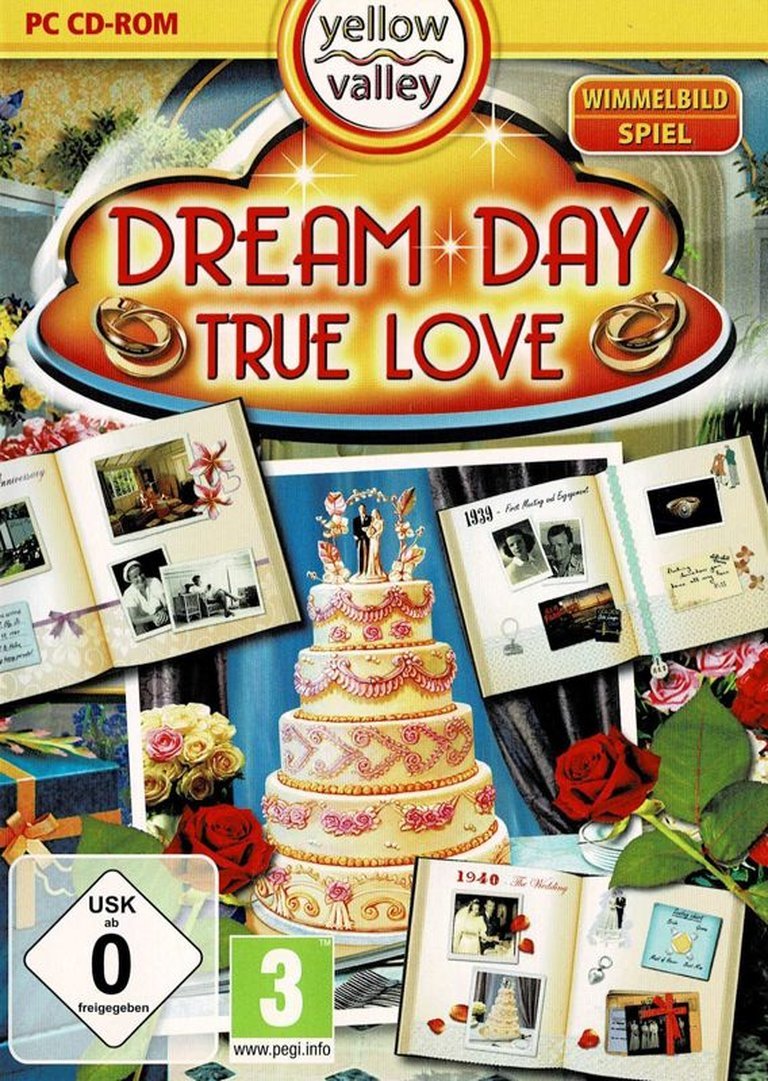
Dream Day: True Love is a hidden object puzzle game that follows the real-life romance of Bill and Helen, whose love story began during World War II and blossomed across seven decades of marriage. Players sift through authentic photographs, letters, and keepsakes to uncover their journey through special moments, family milestones, and adventures, exploring gorgeous historical settings and celebrating their enduring relationship.
Gameplay Videos
Dream Day: True Love Guides & Walkthroughs
Dream Day: True Love Reviews & Reception
gamevortex.com (80/100): I loved the hidden object screen in Paris; that was great fun and the scenery was fantastic.
killerbetties.com (71/100): On the one hand, the concept is brilliant and the story is told very well. On the other, the game itself is a disappointment.
Dream Day: True Love: A Scrapbook of Timeless Devotion
1. Introduction
In the often formulaic world of casual hidden object games, Dream Day: True Love emerges as a profoundly personal anomaly. Released in January 2011 as the seventh installment in I-play’s successful Dream Day series, this title transcends its genre’s typical lighthearted escapism. It weaves a deeply moving narrative drawn not from fiction, but from the actual 70-year romance of game designer Cara Ely’s grandparents, Bill and Helen. This game is less about frantic puzzle-solving and more about experiencing history through the intimate lens of a lifelong love story. While the series previously focused on fictional couples (Jenny & Robert) or glamorous destination weddings, True Love carves a unique path by prioritizing authenticity and emotional resonance over pure gameplay mechanics. My analysis posits that Dream Day: True Love stands as a significant, if imperfect, artifact in casual gaming history, demonstrating the power of personal narrative within a genre often dismissed as trivial. It succeeds as a heartfelt tribute and a bold narrative experiment, even as its gameplay reveals the inherent challenges of translating a deeply personal, linear life story into engaging interactive moments.
2. Development History & Context
Dream Day: True Love was developed by Oberon Media Russia (under the Kenjitsu label) for publisher I-play, a division of Oberon Media Inc. – the era’s leading multi-platform casual games publisher. The project was spearheaded by series creator Cara Ely, who served as both Created and Designed. This personal investment is paramount; Ely explicitly stated, “I don’t think I can fully express how special this project is to me,” highlighting her desire to share her grandparents’ remarkable story. The development team was substantial, encompassing 89 credited individuals, including a dedicated lead programmer (Alexander Ryabinin), a large art team led by Daria Almametova, and technical game design by Ilya Mikhailov.
Technologically, the game operated firmly within the established conventions of early 2010s casual games. Its release on Windows (January 2011), followed by iOS (2013) and Android (2015), utilized a point-and-click interface on fixed/flip-screen scenes. The core engine relied on FMOD for sound. The visual style, while polished, adhered to the hidden object standard of clear, slightly stylized environments. The development context is crucial: the casual gaming market was booming, driven by accessible downloads (CD-ROM initially, then digital) and platforms like Big Fish Games and Zylom. The Dream Day series itself was a major franchise, generating over 60 million downloads since its 2007 debut. True Love represented a conscious shift – the press release framed it as an “all-new chapter” exploring “real-life love stories,” moving beyond the series’ previous fictional or destination-focused arcs. The technological constraints (limited interactivity, linear structure) were inherent to the genre, but Ely leveraged them by integrating actual photographs, letters, and mementos from the Ely family archives, a feature made possible by the era’s ability to handle digital assets efficiently. The game was a deliberate attempt to inject emotional depth and historical authenticity into a market often saturated with generic themes.
3. Narrative & Thematic Deep Dive
The narrative of Dream Day: True Love is its undeniable core and greatest strength. It eschews the series’ typical wedding crisis plots to chronicle the real-life epic of Bill and Helen Ely, spanning from 1939 to the present day (circa 2010). The story unfolds through the framing device of the player, a recurring wedding planner from previous games, being hired by Bill and Helen’s son, Richard (referred to as George in some sources), to plan their 70th anniversary celebration at the family farmhouse in Pennsylvania. The player’s journey begins by exploring this farmhouse, which acts as a physical repository of the couple’s history.
The primary narrative mechanism is the scrapbook. As players progress through restoration tasks (cleaning, redecorating, preparing food, restoring a quilt, designing invitations), they delve into the scrapbook’s pages. Each chapter corresponds to a decade of Bill and Helen’s lives, offering glimpses into their story. Key events include their whirlwind romance: meeting in San Francisco during Bill’s WWII military leave, getting engaged just two weeks later, enduring the separation during the war, raising a family, and traveling together (to places like Hawaii and Paris). The narrative is delivered through voice-over narration by Bill and Helen themselves (voiced by actors, not the real individuals), layered over gameplay. This clever design ensures players receive the story without interrupting the core activity. Crucially, the game is “Based on a True Story”, incorporating actual photographs, letters, postcards, newspaper clippings, and keepsakes from the Ely family. This authenticity imbues the narrative with a palpable warmth and gravitas absent in fictional counterparts.
Thematic exploration is rich and multifaceted. Enduring Love is paramount, depicted not as a fairytale, but as a resilient force surviving war, distance, and the passage of decades. The narrative emphasizes Shared History and Family Legacy, with the farmhouse and scrapbook serving as physical anchors to this collective memory. Nostalgia is a constant companion, evoked by the period settings and genuine artifacts. Resilience is subtly highlighted, particularly through the lens of Bill’s wartime service and the couple’s ability to maintain their bond across continents. The theme of Memory Preservation is also central, as the player actively participates in restoring and organizing these mementos. While the framing device (the anniversary party) provides a clear goal, the emotional weight comes from witnessing the profound, mundane, and beautiful moments of a life shared over an extraordinary length of time. The script, crafted by Cara Ely and Michael Ely with input from family memories (William J. Ely), prioritizes authenticity and emotional truth over dramatic conflict, resulting in a story that feels earned and deeply personal.
4. Gameplay Mechanics & Systems
Dream Day: True Love adheres to the established Dream Day formula but integrates it with the unique narrative structure. The gameplay loop primarily revolves around preparation tasks for the anniversary party, seamlessly blending Hidden Object (HO) scenes with a wide variety of mini-games and puzzles. The split is roughly 50/50, a notable departure from earlier series titles which often leaned more heavily on HO scenes.
- Core Loop & Tasks: Players navigate the farmhouse and associated locations (triggered by the scrapbook), performing tasks like cleaning clutter, decorating rooms, preparing food (mint juleps, crepes), restoring items (a bench, a quilt), and designing invitations. These tasks often involve finding specific items or completing puzzles to unlock the next step.
- Hidden Object Scenes: These are presented as lists of items to find within detailed, static scenes. The aesthetic is clear and pleasant. A signature element is the inclusion of “Blue Birds” – three hidden birds per scene. Finding all three unlocks anniversary gifts presented to Bill and Helen at the game’s conclusion. Hint systems and a “walkthrough” (revealed progressively) are available to assist players. Some reviewers noted items could be trickyly placed (e.g., partially obscured by clouds), though generally considered manageable.
- Mini-Games & Puzzles: This is where the game shows both variety and inconsistency. Examples include:
- Photo Restoration/Jigsaw: Piecing together torn photographs.
- Spot the Difference: Comparing two images.
- Pattern Filling: Logic puzzles like coloring a dress pattern without adjacent colors matching.
- Seating Arrangement: Strategic placement based on character preferences.
- Inventory Sorting: Arranging items by color, style, or type.
- Memory Matching: Various card-matching games.
- Creative Design: Customizing banners or layouts.
- Contextual Tasks: Designing photo collages, fixing a fountain (with a humorous flood consequence), even a brief golf game.
Critically, some mini-games felt “random and forced” (GameVortex) or “not very compelling” (Killer Betties), struggling to organically represent aspects of the couple’s life. The golf puzzle was cited as particularly skippable. Others, like the Paris HO scene or pattern puzzles, were praised for creativity and engagement. Most puzzles could be skipped at the cost of time.
- Difficulty Modes: Two main modes are offered:
- First Love (Easy): More time, faster hint recharge, standard item lists/puzzles.
- Soulmates (Hard): Less time, longer item lists, potentially harder puzzles, no tutorials. Unlocked upon completing First Love.
- CareFree Mode: Disables the timer entirely for a relaxed experience.
- UI & Mechanics: The interface is straightforward point-and-click. Progress is saved, allowing players to revisit specific scenes or scrapbook pages. Upon completion, players unlock Soulmates mode and additional background art. Reading the love letters within the scrapbook is a bonus feature. The core gameplay loop is functional and provides structure, but the balance between HO scenes and puzzles, combined with the occasional disconnect of the mini-games from the narrative, creates a gameplay experience that, while varied, lacks the consistent engagement of the series’ strongest entries. The “crisis” levels from earlier games are largely absent, replaced by more mundane restoration tasks and narrative progression.
5. World-Building, Art & Sound
Dream Day: True Love distinguishes itself through its unique approach to world-building and presentation, directly tied to its true-story foundation.
- Setting & Atmosphere: The primary setting is the Ely Family Farmhouse in Pennsylvania, lovingly recreated from the real home. Exploration of this house triggers memories and scrapbook entries, making it a tangible link to the past. The narrative transports players through decades and continents: 1940s San Francisco, wartime separation, post-war domesticity, exotic locales like Hawaii and Paris. The atmosphere is overwhelmingly warm, nostalgic, and romantic. The farmhouse acts as a cozy, slightly time-worn sanctuary, while the scrapbook pages offer vivid, evocative snapshots of different eras. The goal of planning the anniversary celebration reinforces a feeling of anticipation and celebration.
- Visual Direction & Art: The art style is polished and fits the casual genre – clear, detailed, and slightly stylized. However, its defining feature is the integration of authentic historical materials. Scenes are adorned with actual photographs of Bill and Helen, their children, their home, and their travels. Letters penned by the couple are displayed within the scrapbook. Postcards, newspaper clippings, and other keepsakes provide tangible evidence of their lives. Lead Artist Daria Almametova and her team (including Andrey Egorov, Anton Chizhov, Stanislav Sakharov) masterfully blended these real assets with illustrated background elements, creating a unique collage effect. The farmhouse restoration tasks involve cleaning digital representations of these real objects. This authenticity gives the visuals an unparalleled sense of history and personal connection compared to purely fictional HO games. The character designs for the narrating Bill and Helen are pleasant but generic, serving as vessels for the real voices and stories.
- Sound Design: The audio significantly enhances the immersive experience.
- Voice Acting: Bill and Helen’s narrations are central. While one review noted the son’s (George/Richard) voice could feel “forced” or “too much,” the core performances by the actors voicing Bill and Helen are generally described as “charming” and effectively convey warmth and nostalgia. The script’s authenticity, crafted with family input, helps the performances land.
- Music: The score is largely period-appropriate and atmospheric, shifting subtly based on the location depicted (e.g., more romantic for Paris, nostalgic for the farmhouse). It successfully evokes the different eras without being intrusive. Some reviewers noted the inclusion of “cliched wedding themes” in the soundtrack, feeling they were overused and detracted from the unique story.
- Sound Effects (SFX): These are well-integrated, providing satisfying feedback during interactions (clicking, object placement, cleaning sounds) and ambient noise that reinforces the settings. The overall soundscape complements the visual and narrative experience, grounding the player in the world of the farm and the memories it holds.
6. Reception & Legacy
Dream Day: True Love received a generally positive, though mixed, reception upon its release, primarily for its unique narrative approach, even as critiques of its gameplay surfaced.
- Critical Reception: Critics praised the game’s heart and authenticity. Gamezebo awarded it 80/100, stating, “if you’re even the tiniest bit of a romantic at heart, True Love is worth a look,” specifically lauding the moving true story. GameVortex also scored it 80%, highlighting the use of real photographs and the emotional weight. Zylom echoed this positive sentiment. However, Killer Betties offered a more critical view, scoring it 7.1/10, arguing that the gameplay “is lacking” and that the “lack of hidden object scenes” made it “hard to recommend it on its merits,” lamenting missed opportunities to tell more story through HO gameplay. A common critique was the imbalance and occasional arbitrariness of the mini-games. The game’s legacy isn’t defined by groundbreaking mechanics, but by its narrative courage.
- Commercial Performance: While specific sales figures aren’t readily available, the game’s release across multiple platforms (Windows, iOS, Android) and inclusion in the broader successful Dream Day franchise (over 60 million downloads) suggests it performed adequately within the casual market. Its availability on major portals like Big Fish Games, Zylom, and GameHouse ensured wide accessibility.
- Legacy and Influence: Dream Day: True Love holds a unique place in the Dream Day series and casual gaming history. It stands as a pioneering example of integrating deeply personal, non-fictional narratives into a mainstream casual game genre. Cara Ely’s decision to use her grandparents’ story set a precedent for authenticity and emotional depth. While the series didn’t continue this specific “true love story” path immediately, it demonstrated the viability of moving beyond generic wedding or honeymoon plots. It highlighted the potential for hidden object games to serve as vessels for genuine human experience and historical memory. Its legacy lies in its emotional resonance and its role in expanding the thematic boundaries of casual gaming. It proved that a heartfelt, true story could be a compelling driver of engagement, even within the structural limitations of the genre. It remains a touchstone for games seeking to blend genre conventions with personal or historical authenticity. Its influence is more felt in the ongoing discussion about narrative potential in casual titles than in direct gameplay imitators.
7. Conclusion
Dream Day: True Love is a fascinating and ultimately significant entry in the history of casual gaming. It succeeds brilliantly as a deeply personal and emotionally resonant tribute, leveraging the unique power of the medium to tell a true story across seven decades. The integration of real family photographs, letters, and the farmhouse setting creates an unparalleled sense of authenticity and nostalgia that elevates it above many of its genre contemporaries. Cara Ely’s heartfelt vision, realized by the Oberon Media Russia team, crafts a narrative about enduring love, family legacy, and the preservation of memory that is genuinely moving.
However, the game is not without its flaws. The gameplay, while varied, often feels like a means to an end rather than an integral part of the storytelling experience. The 50/50 split between hidden object scenes and mini-games results in moments where the puzzles feel disconnected from the profound narrative they serve. Some mini-games are uninspired or arbitrary, lacking the organic connection to the couple’s life that the strongest HO scenes possess. The reliance on a point-and-click interface within a rigid structure also limits the depth of player agency.
Ultimately, Dream Day: True Love’s place in video game history is secured not by its gameplay innovation, but by its narrative ambition and emotional authenticity. It stands as a testament to the potential of casual games to explore genuine human stories beyond simple puzzle-solving or time management. It demonstrates that a deeply personal, true-to-life romance can be powerfully conveyed within the genre’s constraints. While its gameplay may be uneven, its story – Bill and Helen’s remarkable love, preserved and shared through a digital scrapbook – is unforgettable. It is a flawed but profoundly valuable artifact, a reminder that at its best, the casual game landscape can offer experiences as rich and human as any other medium. For players seeking a genuinely touching journey through time and love, rather than just a series of puzzles, Dream Day: True Love remains a uniquely worthwhile and historically significant experience.