
- Release Year: 2011
- Platforms: iPad, iPhone, Macintosh, Windows
- Publisher: My Interactive Limited, P2 Games Limited
- Developer: Childish Things Ltd.
- Genre: Sports
- Perspective: Top-down
- Game Mode: Single-player
- Gameplay: Management, Simulation
- Setting: Real-world
- Average Score: 75/100
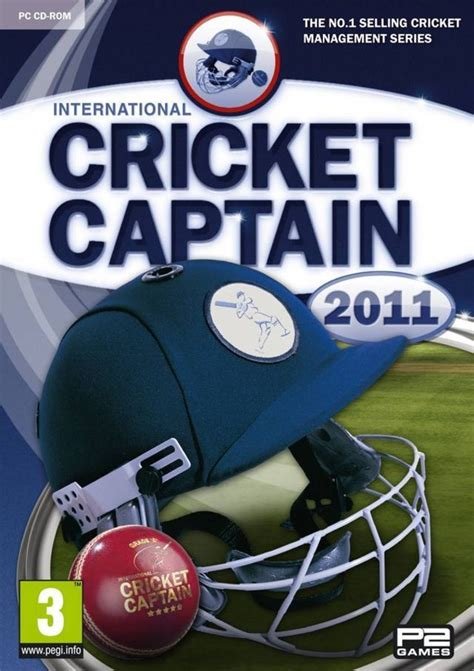
Description
International Cricket Captain 2011 is a detailed cricket management simulation game where players take control of an English County Cricket squad (or a Test-playing nation) with the goal of leading them to domestic and international success through strategic player coaching, scouting opposition, transferring players, and analyzing comprehensive statistics. Developed by Childish Things Ltd. and released in 2011 across Windows, Mac, iOS, and Android platforms, the game offers a realistic experience of team management, tactical match decisions, and career progression within the cricket world.
Gameplay Videos
International Cricket Captain 2011 Free Download
International Cricket Captain 2011 Cracks & Fixes
International Cricket Captain 2011 Mods
International Cricket Captain 2011 Guides & Walkthroughs
International Cricket Captain 2011 Reviews & Reception
mobygames.com (75/100): A good game, but it can be frustrating at times. For cricket fans only
International Cricket Captain 2011: A Definitive Review for the Digital Cricketing Connoisseur
Introduction
In the hallowed annals of sports gaming, few niches are as fiercely contested yet culturally specific as cricket management simulations. For decades, International Cricket Captain (ICC) has stood as the undisputed titan of this genre, offering a deep, stats-driven alternative to the glitz of mainstream sports titles. As the series entered its fourteenth iteration in 2011, International Cricket Captain 2011 arrived not as a revolutionary leap, but as a meticulous refinement of a formula honed over a decade. This review posits that while ICC 2011 may not have broken new ground, its masterful blend of accessibility, depth, and forward-thinking features cemented it as a quintessential cricket management experience. It remains a benchmark for how a niche series can evolve iteratively while retaining its core identity, proving that sometimes, the most significant innovations come not from reinvention, but from perfecting the known.
Development History & Context
The story of International Cricket Captain 2011 is intrinsically tied to the survival of its developer, Childish Things Ltd. Following the collapse of publisher Empire Interactive in 2009, series veteran Chris Child—originally the creator of the franchise as a university project in 1998—stepped to lead development alongside co-designer Brian Walker. This transition marked a critical shift, freeing the series from corporate constraints and allowing Childish Things to prioritize community feedback and iterative improvements over annual superficial updates. Technologically, ICC 2011 operated within the familiar confines of PC gaming but ambitiously expanded its reach, launching simultaneously on Mac OS X and iOS (iPhone/iPad) platforms. This multi-platform strategy was bolstered by pioneering features like cloud saves, enabling seamless progression across devices—a rarity in 2011. The gaming landscape of 2011 saw sports management sims dominated by annualized giants like Football Manager, but ICC 2011 carved its space by offering unparalleled specificity. It competed not with the mainstream, but with niche rivals like the Cricket Coach series, leveraging its established database integrity (courtesy of Peter Griffiths from CricketArchive.com) and Jonathan Agnew’s authoritative commentary to maintain its position as the sport’s definitive management simulation.
Narrative & Thematic Deep Dive
ICC 2011’s narrative is an emergent tapestry woven from player decisions rather than a scripted plot. The core storyline follows the archetypal sports-management journey: ascending from obscurity to glory. Players begin their odyssey as the manager of an English county side (e.g., Yorkshire or Surrey) or an Australian state team (like the New South Wales Blues), tasked with navigating the grueling domestic seasons—the County Championship, Clydesdale Bank 40, and Twenty20 Cup in England, or the Sheffield Shield and KFC Big Bash in Australia. Success here is measured in silverware, player development, and accumulating “points” that eventually unlock the pinnacle role: England National Team Manager. This progression is thematically rich, embodying the tension between immediate domestic pressures and the deferred dream of international acclaim. The narrative gains dramatic weight through media scrutiny; managing England brings intensified expectations, with headlines reflecting tactical gambles (e.g., dropping a veteran spinner for an unproven youth). Beneath this surface lies a deeper theme of legacy. Players nurture young talents through youth academies, build dynasties through shrewd transfers, and chase historical records—from breaking a century drought to forging legendary partnerships. The absence of a linear plot is intentional, substituting it with a profoundly personal narrative of triumphs, rivalries, and the weight of expectation that resonates deeply with cricket’s traditionalist ethos.
Gameplay Mechanics & Systems
ICC 2011’s brilliance lies in its deceptively complex yet accessible management systems. The core loop revolves around three pillars: squad management, tactical depth, and long-term strategy.
Squad Management
Players juggle squad dynamics through a robust transfer market. Each team can sign one primary overseas player, a reserve overseas star, and two T20 specialists, mirroring real-world regulations. Contract negotiations involve balancing financial constraints with player loyalty and form. The database, featuring over 3,000 active players, is impressively comprehensive, with updated stats from the 2011 season capturing the rise of stars like India’s Virat Kohli and Australia’s rebuild under young talent. Player progression is organic; form slumps, injuries, and aging factors necessitate constant scouting.
Tactical Depth
This is where ICC 2011 shines. The match engine, though still text-based with schematic highlights, received significant upgrades. A refined one-day algorithm creates more realistic scoring rates and wicket patterns, while player ability generation improved to better reflect individual strengths (e.g., a “slogger” vs. a “technician”). The standout addition is the custom field-setting mode. Players can design bespoke field placements for any bowling phase, saving them as quick-switch templates—a godsend for tailoring defenses to aggressive batsmen or defensive bowling spells. Field positioning is critical; a misjudged slip cordon or an overly aggressive deep square leg can turn a match.
Long-Term Strategy
Career mode extends indefinitely, with dynamically generated fixtures ensuring no two seasons feel identical. New for 2011 is the Twenty20 International Championship and player ratings, adding silverware to pursue beyond traditional Tests and ODIs. Financial management involves balancing wage bills with stadium revenues, while training regimens focus on specific skills (e.g., batting technique or seam bowling). The UI underwent quality-of-life improvements: widescreen support, netbook compatibility, and a streamlined online lobby. Speaking of online, cross-platform play between PC, Mac, and iOS users was revolutionary for 2011, allowing seamless head-to-head matches.
World-Building, Art & Sound
ICC 2011’s world-building is a triumph of authenticity. The game meticulously reconstructs three interconnected cricketing ecosystems: the English County circuit, the Australian domestic scene, and the international Test/ODI/T20 arena. Grounds are modeled with nuances—Lord’s’ slope at Nursery End, the Gabba’s pace—while kits are updated annually. This immersion is enhanced by Patrick Eagar’s evocative backdrop photography, lending a timeless, photojournalistic quality to menus and loading screens.
Visually, the game prioritizes functionality over flair. The UI is a model of clarity: color-coded player statuses (green for fit, red for injured), intuitive navigation of statistics (career averages, recent form), and clean match screens with wagon wheels and pitch maps. The schematic match engine uses minimalist 2D pitch diagrams and text commentary (“Smith drives through covers for four!“) to convey action, forcing players to visualize the drama—a clever design choice that emphasizes strategy over spectacle.
Sound design is sparse but effective. Jonathan Agnew’s commentary, recorded in character, provides gravitas during key moments—his dry wit delivering palpable tension during a last-over chase. The absence of dynamic crowd noise is a minor omission, but it reinforces the game’s cerebral focus.
Reception & Legacy
Upon release, ICC 2011 received mixed but generally positive reviews. Critics like GameSpot acknowledged its “solid management sim” appeal and praised the “wealth of real-life statistics,” noting it didn’t “break any new ground.” Player reviews on platforms like CNET were warmer, with one user praising the “much improved gameplay” and bug-free online features, though lamenting the desire for “more leagues.” Commercially, it sustained the series’ loyal fanbase, buoyed by its multi-platform release. Its legacy, however, lies in its influence. The cloud-save system and cross-platform play set a precedent for mobile integration in sports sims, a concept later adopted by mainstream titles like Football Manager. While the series’ annual update cycle drew criticism for incrementalism (a critique leveled since 2006), ICC 2011’s refinements—especially custom fields and T20 leagues—kept it relevant. It exemplified Childish Things’ philosophy: iterative evolution over revolution. The series continues today as Cricket Captain, with DNA tracing directly back to 2011’s innovations.
Conclusion
International Cricket Captain 2011 is a testament to the power of refinement. In an era of blockbuster reboots, it dared to perfect rather than reinvent, offering a cricket management experience that was both accessible and deep. Its emergent narratives, tactical complexity, and forward-thinking features like cloud saves and cross-platform play ensured it resonated with hardcore fans and newcomers alike. While it may lack the graphical panache of modern sports games, its strength lies in its simulationist soul—a digital recreation of cricket’s strategic heart. As a historical artifact, it represents the zenith of a niche series’ evolution, proving that in gaming, as in cricket, mastery often lies in the subtle art of fine-tuning. For any student of sports gaming history, ICC 2011 is not just a game; it’s a meticulously crafted love letter to the sport’s strategic soul, and a landmark title that continues to bat for the long game.