
- Release Year: 2016
- Platforms: Linux, Macintosh, Windows
- Publisher: Starwind Games
- Developer: Starwind Games
- Genre: Action, Puzzle
- Perspective: Side view
- Game Mode: Single-player
- Gameplay: Platform, Point and select, RPG elements
- Setting: Fantasy
- Average Score: 66/100
Description
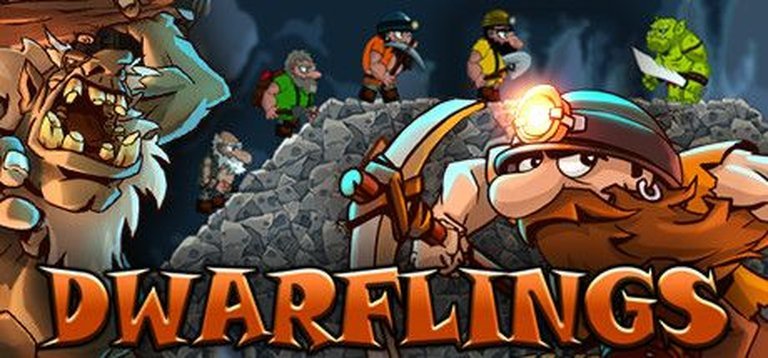
Dwarflings is a challenging action-puzzle game set in a dark, sunless fantasy gold mine, where players indirectly control up to five unique dwarflings in real-time. Using each dwarf’s special abilities and managing their speed, players must solve intricate puzzles, avoid enemies, and overcome obstacles to guide the resilient miners to freedom from an orc prison.
Where to Buy Dwarflings
PC
Dwarflings Guides & Walkthroughs
Dwarflings: Review
Introduction
In the crowded landscape of indie puzzle-platformers, few titles dared to merge the chaotic real-time chaos of Lemmings with the strategic character-switching of Lost Vikings. Released on December 14, 2016, Dwarflings by Starwind Games arrived as a self-proclaimed “hardcore classic,” promising a cerebral gauntlet for players willing to endure its merciless design. Yet, beyond its ambitious premise lies a game both brilliant and broken—a testament to the perils of ambition in the indie development scene. This review dissects Dwarflings as a historical artifact, examining its creation, mechanics, and lasting impact in an unforgiving genre.
Development History & Context
Starwind Games, a small Ukrainian studio helmed by producer Daniel Stakhovskiy, emerged from the fertile ground of 2010s indie experimentation. With a team of just 16 individuals—wearing hats ranging from programming to art—Dwarflings was crafted with remarkable efficiency. Its development coincided with the peak of Steam’s Greenlight and Early Access eras, where community feedback directly shaped its trajectory. The game’s initial Windows release in December 2016 was followed by Linux and Mac ports in 2017, reflecting a commitment to cross-platform accessibility despite limited resources.
Technologically, Dwarflings eschewed modern engines for a custom-built framework, prioritizing 2D simplicity over graphical fidelity. This choice aligned with the retro-inspired puzzle boom of the mid-2010s, where titles like Fez and Braid proved that pixelated aesthetics could carry profound gameplay. However, the constraints of a small team and budget became evident: the game’s codebase, while functional, lacked the polish of AAA titles, leading to the technical flaws that would haunt its legacy. The gaming landscape of 2016–2017, saturated with puzzle-platformers, demanded both innovation and execution—Dwarflings had the former but faltered on the latter.
Narrative & Thematic Deep Dive
Dwarflings narrative is a minimalist fable of resilience. Players guide five dwarflings—bearded, helmet-clad miners—through the “grim corridors of a gold mine that never saw the light of the sun,” essentially an orc prison. The story unfolds through environmental storytelling and sparse character interactions: one dwarf, Figli, falls into a pit; another provokes a cave troll by dropping a stone on its toe. The tone is darkly comedic, leaning into absurdist humor (“your most threatening weapon is a shovel”) and underdog triumph.
Thematic depth lies in its metaphor for teamwork. Each dwarf embodies a role—climber, digger, faller—forcing players to manage their collective survival. The mine itself symbolizes oppression, with escape as a cathartic release. Dialogue, though fractured by translation quirks (e.g., “call Mommy” for despair), reinforces the game’s lighthearted tone amid adversity. Yet, the narrative remains secondary to gameplay—a conscious choice that aligns with puzzle traditions but leaves emotional resonance underdeveloped.
Gameplay Mechanics & Systems
At its core, Dwarflings is a real-time puzzle-platformer where indirect control defines its challenge. Players guide up to five dwarflings simultaneously, adjusting their speed and activating unique abilities (e.g., digging pitfalls, climbing walls) to navigate hazards. This mirrors Lemmings’ directional commands but adds Lost Vikings-like character specialization, demanding split-second coordination.
The gameplay loop deceptively simple: direct dwarflings to the exit while avoiding enemies (orcs, trolls) and environmental traps. Combat is minimal, relying on wit over brawn. The UI, a point-and-select interface, is intuitive but unforgiving—missteps often result in irreversible failure. Difficulty spikes sharply: early levels teach basic mechanics, but later stages introduce complex multi-dwarf puzzles requiring pixel-perfect timing.
However, the game’s systems are undermined by technical flaws. Persistent crashes—especially in the final level—render it unfinishable for many, as documented in Steam forums. Linux compatibility is spotty, with crashes upon launch. Windows 10 users report black screens and instability in fullscreen mode. These issues stem from rushed optimization, turning triumph into frustration. The absence of a pause button exacerbates real-time chaos, making “hardcore” feel less like a design choice and more like a technical compromise.
World-Building, Art & Sound
Dwarflings world is a character in itself: a claustrophobic, subterranean realm of earthen tunnels, skeletal remains, and flicking torchlight. The art direction, led by Daniel Stakhovskiy, adopts a cartoonish 2D style that contrasts with the mine’s grim tone. Textures are rudimentary yet expressive—dwarflings’ beards bristle with personality, while cave trolls loom as hulking, pixelated menaces. Color palettes shift from earthy browns to ominous purples, heightening the oppressive atmosphere.
Sound design, composed by Scott F. Thompson, is functional but atmospheric. Ambient sounds echo through tunnels, while jaunty, folk-inspired melodies underscore the dwarflings’ pluck. Voice acting is absent, replaced by grunts and exaggerated sound effects that amplify the game’s humor. Yet, the audio lacks depth, failing to immerse players in the mine’s vastness. Overall, the art and sound create a cohesive, charming aesthetic, one that elevates the gameplay despite technical limitations.
Reception & Legacy
Upon release, Dwarflings garnered mixed-to-positive reviews. Steam’s “Mostly Positive” badge (73% of 34 reviews) praised its clever puzzles and humorous tone, with one curator calling it “a brain-bending delight.” However, negative reviews targeted its unforgiving difficulty and bugs: “crashes on the last level make it unfinishable” lamented user Necrolophous[PL] in 2023. Linux users like oldrocker99 reported fatal crashes, while Windows 10 players endured instability.
Commercially, Dwarflings achieved modest success, bundled in indie compilations like the Brain Bundle 4-in-1. Its legacy is defined by its niche appeal and technical imperfections. Completionist.me data shows a 56% average completion rate, with dedicated players clocking 5–10 hours to overcome its hurdles. Though it never spawned a sequel, Dwarflings influenced indie puzzle design by demonstrating how real-time mechanics could heighten tension—a lesson refined in later titles like Loop Hero and Inscryption. Its flaws also serve as a cautionary tale about Early Access optimization.
Conclusion
Dwarflings is a game of paradoxes: brilliant in concept, flawed in execution. Its blend of Lemmings chaos and Lost Vikings strategy remains a standout achievement in indie puzzle design, offering moments of euphoric problem-solving. Yet, technical debt—crashes, poor optimization, and a lack of polish—prevents it from reaching its potential. For patient players, it is a rewarding, albeit frustrating, journey. For history, it stands as a snapshot of 2010s indie ambition, where creativity often outpaced resources.
Verdict: A flawed gem worth revisiting. Dwarflings earns 3.5/5 stars—commendable for its bold design but docked for its technical failings. It belongs in the canon of experimental puzzle-platformers, a reminder that even the best ideas can be buried under the weight of unpolished code.