
- Release Year: 2023
- Platforms: Nintendo Switch, Windows
- Publisher: Spike Chunsoft Co., Ltd., Spike Chunsoft, Inc.
- Developer: Millennium Kitchen Co., Ltd., Toybox Inc.
- Genre: Adventure
- Perspective: Behind view
- Game Mode: Single-player
- Gameplay: Life, Open World, Sandbox, Social simulation
- Setting: Contemporary, Futuristic), Japan (Modern
- Average Score: 79/100
Description
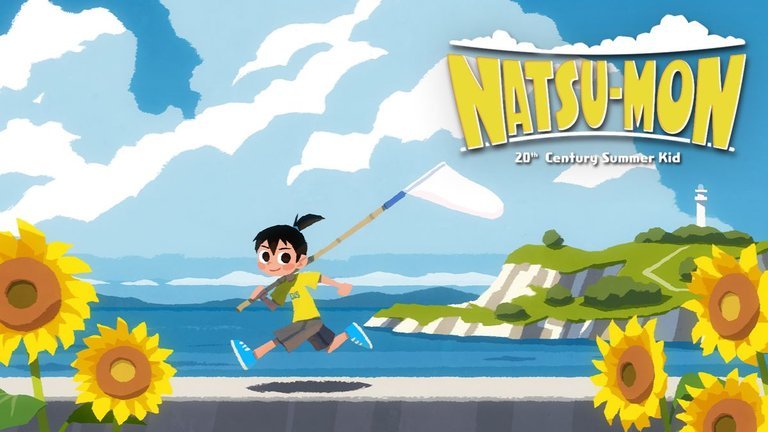
Natsu-Mon: 20th Century Summer Kid is a life/social simulation adventure set in contemporary Japan, offering an open-ended sandbox experience where players navigate a vibrant summer vacation. With its anime-inspired art style and real-time pacing, the game encourages exploration of friendships, activities, and emergent narratives, mirroring the fleeting, nostalgic essence of summer days through its non-linear gameplay.
Gameplay Videos
Where to Buy Natsu-Mon: 20th Century Summer Kid
PC
Natsu-Mon: 20th Century Summer Kid Free Download
Natsu-Mon: 20th Century Summer Kid Mods
Natsu-Mon: 20th Century Summer Kid Guides & Walkthroughs
Natsu-Mon: 20th Century Summer Kid Reviews & Reception
opencritic.com (77/100): While light on visuals and variety, Natsu-Mon’s comforting world makes it a delightful summer escape.
metacritic.com (81/100): Natsu-Mon: 20th Century Summer Kid offers distilled Summer Break happiness in video game form, with its vast open world, boundless activities, and magnetic rural charm.
pcgamer.com : While light on visuals and variety, Natsu-Mon’s comforting world makes it a delightful summer escape.
purenintendo.com : Summer playin’, had me a blast.
Natsu-Mon: 20th Century Summer Kid: A Nostalgic Ode to Childhood Freedom
Introduction
In an era dominated by high-octane action and competitive multiplayer, Natsu-Mon: 20th Century Summer Kid emerges as a poignant counterpoint—a gentle, immersive simulation of childhood innocence. Directed by Kaz Ayabe, the visionary behind the beloved Boku no Natsuyasumi (My Summer Vacation) series, and developed by the combined talents of Millennium Kitchen and Toybox Inc. (with Spike Chunsoft publishing), this game transports players to a meticulously crafted rural Japan. Set against the backdrop of a 1999 summer vacation, it promises a unique blend of open-world exploration, slice-of-life storytelling, and nostalgic charm. This review argues that while Natsu-Mon occasionally stumbles under the weight of its own ambition—particularly in technical execution and repetitive loops—it ultimately succeeds as a masterful, emotionally resonant experience that redefines the cozy life-sim genre.
Development History & Context
- Origins and Vision:
Natsu-Mon began as a collaboration between Toybox Inc. (founded by Harvest Moon creator Yasuhiro Wada) and Millennium Kitchen. Wada approached Ayabe with a proposal to create an open-world summer vacation game for the Nintendo Switch, providing initial funding before Spike Chunsoft joined as publisher. Ayabe, a veteran of the Bokunatsu series, viewed this as a spiritual successor—dubbing it “Bokunatsu 5“—and a long-held dream to realize a 3D open world, a vision previously unattainable due to technological limitations in his earlier titles. The choice to set the game in August 1999 was deliberate, aiming to evoke a universally relatable pre-digital era free from modern distractions like smartphones, tapping into a collective sense of natsukashii (bittersweet nostalgia) for childhood summers.- Technological Constraints and Design Choices:
Built using Unreal Engine 4, the game faced budget constraints typical of mid-sized projects, leading to compromises in graphical fidelity compared to AAA open worlds. Ayabe drew inspiration from The Legend of Zelda: Breath of the Wild for its accessible open-world design, layering it with cozy mechanics from his own work and indie titles like A Short Hike. The development spanned 1.5 years for the Japanese Switch release (July 28, 2023), followed by a year of refinement for the international version (August 6, 2024). This extra time allowed for improvements like expanded insect collection modes and smoother controls, effectively making the English version a polished iteration. The game’s emphasis on non-violent exploration—no combat, no failure states—reflects Ayabe’s philosophy of prioritizing discovery over challenge.
- Technological Constraints and Design Choices:
Narrative & Thematic Deep Dive
- Plot and Characters:
Players assume the role of 10-year-old Satoru, the son of a traveling circus ringmaster. Stranded in the rural seaside town of Yomogi while his parents negotiate the troupe’s financial struggles, Satoru spends his summer days exploring, helping locals, and gradually bonding with the community. Key characters include the troupe’s eccentric members: the fortune-telling trapeze artist Love, the high-wire performer Tokotoko, and the juggler Nagase. Townsfolk like innkeeper Kyoko and her bookish niece Junko provide heartwarming interactions, each with subtle storylines—such as uncovering who vandalizes a pigsty or restoring a lighthouse’s glow—that unfold organically over the 31-day vacation.- Themes of Fleeting Time and Innocence:
The narrative’s core revolves around the ephemeral nature of childhood. Satoru’s diary, filled with crayon-drawn entries and stickers, serves as a metaphor for memory-making. Activities like chasing cicadas, attending a summer festival with Bon dances, or directing circus performances underscore themes of community, curiosity, and harmony with nature. A subtle layer of folklore emerges through encounters with Zashiki-warashi (ghostly spirits), blending supernatural wonder with childhood imagination. This duality—grounded realism woven with whimsy—elevates the story beyond simple simulation, evoking a profound sense of nostalgia for summers past.
- Themes of Fleeting Time and Innocence:
Gameplay Mechanics & Systems
- Core Loop and Freedom:
Natsu-Mon rejects traditional objectives, offering instead a sandbox experience centered on daily routines. Each day begins with breakfast and morning radio calisthenics at the shrine, followed by free exploration until dinner and a 10 p.m. curfew. Players can fish in rivers, catch over 200 insect species, recycle trash for money, or embark on quests like solving minor mysteries. The stamina system—upgradable via “stickers” earned from tasks—gates progression without punishing failure; Satoru can climb any surface or swim indefinitely but tires after exertion.- Innovative Systems and Minor Flaws:
The game’s emergent storytelling shines when player choices create unique narratives—e.g., bonding with townsfolk unlocks collaborative activities. Crafting mechanics (e.g., using crabs as fishing bait) and the circus management minigame (directing shows for funds) add depth. However, the lack of guidance early on can frustrate, as players must discover mechanics like bedtime timing through trial and error. On Switch, controls occasionally feel clunky during platforming, and the 30-day structure risks repetition, though New Game+ mitigates this by retaining progression.
- Innovative Systems and Minor Flaws:
World-Building, Art & Sound
- Setting and Atmosphere:
Yomogi Town, nestled between mountains and the sea, is a living, breathing world. Its open design includes beaches, forests, caves, and a neighboring town accessible by train. Environmental storytelling—abandoned toys, overgrown fields, and rustic buildings—reinforces the 1990s setting, complete with analog technologies like landline phones and cassette players.- Visual and Audio Design:
The art style blends vibrant, cartoonish 3D environments with character designs reminiscent of Studio Ghibli. While terrain textures occasionally lack detail on Switch, the use of dynamic lighting (e.g., sunset hues casting long shadows) and particle effects (cicadas, fireflies) immerses players. Sound design is exceptional: the constant buzz of cicadas, train whistles, and festival music create an authentic auditory landscape, complemented by full Japanese voice acting that preserves cultural authenticity. The diary’s crayon aesthetic and the in-game map’s diorama-like presentation further enhance the nostalgic charm.
- Visual and Audio Design:
Reception & Legacy
- Critical and Commercial Response:
Natsu-Mon earned a Metacritic score of 81/100 and OpenCritic’s “Strong” classification (79/100). Critics praised its emergent storytelling and emotional depth; Digitally Downloaded called it “the best example of emergent narrative in years,” while Hey Poor Player lauded its “distilled summer break happiness.” However, some noted technical issues on Switch—frame rate drops and blurry visuals—and repetitive pacing. Commercially, it sold 18,267 units in its first week in Japan but remains a niche title in the West, sustained by positive word-of-mouth and DLC (Broadcast Over Sunset).- Genre Influence and Legacy:
The game revitalized the life-sim genre by merging open-world exploration with cozy mechanics, influencing titles like Animal Crossing. Its emphasis on player-driven discovery over rigid objectives sets a precedent for future relaxation-focused games. Ayabe’s vision—capturing the “fleeting magic of childhood”—resonates globally, proving that niche experiences can achieve universal appeal.
- Genre Influence and Legacy:
Conclusion
Natsu-Mon: 20th Century Summer Kid is a flawed yet transcendent experience. Its technical shortcomings and occasional pacing issues are overshadowed by its emotional core—a heartfelt tribute to childhood wonder. By blending open-world freedom with intimate storytelling, it offers a rare alternative to mainstream gaming: a game not to be “beaten,” but to be lived. For players seeking respite from digital noise, Natsu-Mon is more than a game—it’s a nostalgic journey that lingers like a summer memory. In the pantheon of life-sims, it stands as a vital, innovative chapter, proving that the most adventures often happen in the simplest of places.
Final Verdict: A must-play for fans of cozy games and narrative-driven exploration, Natsu-Mon is a triumph of heart over spectacle. 8.5/10.