
- Release Year: 2017
- Platforms: Windows
- Publisher: Cornutopia Software
- Developer: Cornutopia Software
- Genre: Action, Role-playing (RPG)
- Perspective: Top-down
- Game Mode: Single-player
- Gameplay: Open World, Sandbox, Shooter
- Setting: Futuristic, Sci-fi
- Average Score: 65/100
Description
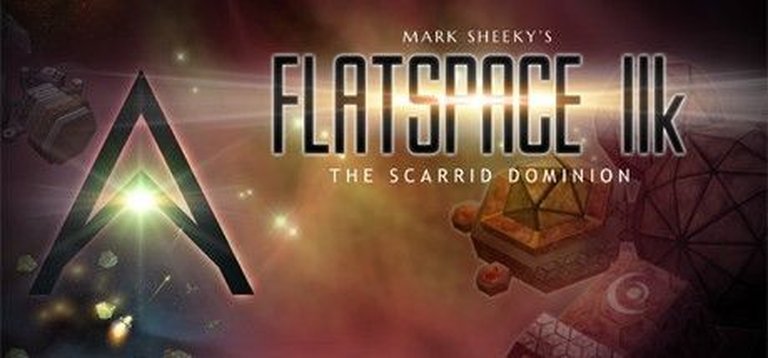
Flatspace IIk is a sci-fi space sandbox simulation offering a top-down, open-world experience where players explore, trade, and engage in combat. As the third installment in the Flatspace series and an updated re-release of Flatspace II, it features direct controls and the unique ability to edit existing in-game items—such as weapons, cargo, and upgrades—or create entirely new ones, enhancing its sandbox gameplay within a futuristic universe.
Gameplay Videos
Where to Buy Flatspace IIk
PC
Flatspace IIk Patches & Updates
Flatspace IIk Guides & Walkthroughs
Flatspace IIk: Review
Introduction
In the vast cosmos of video game history, certain titles shine not as blockbuster behemoths, but as cult artifacts—labor-intensive love letters to niche genres that resonate deeply with a dedicated few. Flatspace IIk, the third entry in Cornutopia Software’s enduring space simulation series, is precisely such a game. Emerging from the shadows of its 2003 predecessor and 2005 sequel, this 2017 Steam re-release represents a decade of iterative refinement, transforming a cult classic into a moddable sandbox for a new generation. Yet, its journey is as much a reflection of indie perseverance as it is a product of its influences: the cosmic grandeur of Elite and the emergent storytelling of Nethack. This review argues that Flatspace IIk stands as a flawed yet profound testament to the power of open-ended design, where technical roughness is redeemed by unparalleled freedom and the passionate stewardship of its creator, Mark Sheeky. It is less a game to be “won” and more a universe to be lived, rewarding patience and curiosity in equal measure.
Development History & Context
Cornutopia Software, essentially a one-man studio helmed by Mark Sheeky, represents the epitome of indie tenacity. Sheeky’s vision for Flatspace IIk was born from a desire to recapture the “sense of wonderment and discovery” he experienced with early 1980s Rogue-likes like Larn and Nethack. As he stated, the game was meant to be “more like an alternative life, or a universe simulation, than a game,” emphasizing freedom over rigid narratives. Technologically, Flatspace IIk is a product of its lineage: built on DirectX 9, it inherits the top-down, 2D-scrolling perspective and real-time mechanics of its predecessors. The 2012 original version (Flatspace IIk) expanded upon Flatspace II (2005) by introducing item-modding capabilities, allowing players to tweak weapons, cargo, and upgrades—a feature later enshrined in this Steam release. By 2017, when the game arrived on Valve’s platform, the space sim genre had waned from its 90s heyday, overshadowed by AAA titles and survival games. Yet, a vocal fanbase, long captivated by Flatspace’s depth, petitioned Sheeky to bring the classic into the modern era. The result is a title that bridges eras—a relic of yesteryear’s complexity, yet buoyed by Sheeky’s dedication, which has seen it receive continuous updates (as recent as 2025), ensuring its survival against the tides of industry trends.
Narrative & Thematic Deep Dive
Flatspace IIk eschews traditional linear storytelling in favor of emergent narratives, where the player’s choices script their own odyssey. The core plot—a galactic war against the alien Scarrid race—serves as a backdrop rather than a driver. True narrative depth arises from character creation: players choose between Human and Scarrid races, each with unique classes (Trader, Scavenger, Bounty Hunter, Assassin, or even niche roles like “Space Masseuse”). These choices are enriched by “Training” (e.g., Medical) and “Specialty” (e.g., Massage) attributes, which add flavor—though their mechanical impact remains subtle, a clever nod to roleplay over function. Dialogue is sparse and functional, limited to hailing ships, requesting docking, or issuing distress calls. The real narrative unfolds through player action: a scavenger stumbling upon a derelict freighter, a trader manipulating market trends to build an empire, or a bounty hunter tracking a notorious captain across sectors. Thematic elements revolve around freedom and consequence. The default “one life” mode creates high stakes—death is permanent, and fallen players are memorialized in a graveyard, reinforcing the game’s brutal realism. Meanwhile, the ability to mod items and generate random universes underscores themes of player agency and infinite possibility, turning the galaxy into a canvas for personal stories. As Sheeky notes, it’s about “the experience and wonder of exploration, discovery, and excitement”—a philosophy that makes each playthrough feel like a unique space opera.
Gameplay Mechanics & Systems
At its core, Flatspace IIk is a sandbox of staggering depth and granularity. Players begin with a ramshackle vessel and a scattering of random weapons, tasked with survival and advancement in a procedurally generated galaxy. The gameplay loop revolves around three pillars: exploration, trade, and combat. Exploration is navigated via a galactic map, where sectors are connected by hyperlanes. Plotting jumps requires managing hyperdrive charge times, creating tension during pursuits. The map’s fog of war gradually reveals sectors filled with stations (Trader, Police, Outlaw), anomalies, and thousands of AI-driven ships, fostering a constant sense of discovery.
Trade is a meticulous economic simulation. Players use import/export scanners to exploit price trends, buying low at one station and selling high at another. The game cleverly tracks historical averages, allowing informed decisions, though the UI demands tedious item-by-item comparisons—a known flaw. Missions—ranging from cargo delivery to assassination—provide lucrative shortcuts, with rewards scaling by distance.
Combat is unforgiving and tactical. Real-time dogfights require precise mouse control: rotate to aim, thrust forward, and fire energy-based weapons that deplete and reload. Accidental firing on stations or police vessels can trigger instant death, demanding caution. Bounty hunters thrive here, scanning for wanted ships, while pirates can lure targets with fake distress calls.
Progression is ship-centric. Credits earned from trade or bounties fund larger vessels, better equipment (weapons, engines, scanners), and crew quarters. Eventually, players may own multiple ships or even stations, though the latter is hampered by clunky UI. Moddability is a standout feature, allowing players to create custom weapons, cargo, or upgrades, effectively enabling endless replayability. Custom game options further tailor the experience, from peaceful trading universes to “cops and robbers” scenarios. Yet, the game’s age shows: controller support is inconsistent, Alt-tabbing causes hang times, and the HUD lacks modern polish. These issues, while frustrating, are mitigated by Sheeky’s commitment to patches and the community’s willingness to mod.
World-Building, Art & Sound
Flatspace IIk’s universe is a character unto—a vast, breathing sandbox teeming with life. The setting is a classic sci-fi milieu: corporate stations, pirate outposts, and nebula-dusted sectors, all rendered in a top-down, 2D aesthetic. The visual style is functional rather than flashy, prioritizing clarity over spectacle. Space stations are represented as rotating hubs, while ships are distinct silhouettes, instantly recognizable by factional colors. The galactic map, though abstract, uses symbols to denote sector types, though its clarity is inconsistent—a minor frustration for navigators.
Atmosphere is built through systemic depth. The galaxy feels alive: ships patrol routes, pirates ambush traders, and police respond to distress calls, creating emergent stories. Environmental storytelling abounds—strange sounds hint at hidden dangers or treasures, encouraging players to investigate. This sense of wonder is Flatspace’s greatest strength, turning routine jumps into moments of serendipity.
Sound design is Sheeky’s domain, as he composed the original soundtrack. The audio is minimalist but evocative: thrumming engines, laser blasts, and ambient hums reinforce the isolation of space. While not groundbreaking, the soundscape effectively complements the visuals. Notably, the game allows players to import custom music, a nod to Sheeky’s appreciation for modding. In essence, the world of Flatspace IIk is less a polished cinematic experience and more a believable, reactive cosmos where players carve their own legends.
Reception & Legacy
Upon its Steam release in 2017, Flatspace IIk received a mixed reception, reflecting its niche appeal. On Steam, it holds a “Mixed” rating (64% positive from 26 reviews), with praise for its depth and moddability balanced by complaints about its dated UI and technical quirks. Critics like Old Man Mordaith awarded it a 7/10, lauding its replayability and freedom while noting “quality of life” issues. Players in forums debate the game’s harsh mechanics—some revel in its unforgiving nature, while others yearn for modern conveniences.
Yet, Flatspace IIk has thrived as a cult classic. Its longevity stems from Sheeky’s relentless support; as of 2025, the game receives regular updates, demonstrating a rare commitment from a solo developer. The modding community, encouraged by Sheeky, has created custom ships, UI tweaks, and gameplay balance patches, extending the game’s lifespan. Culturally, it bridges the gap between old-school space sims like Elite and modern sandbox games, influencing indie developers who prioritize systems over spectacle. Its legacy is one of passion: a testament to how a small, dedicated team can sustain a niche title for over a decade, turning it into a beloved artifact for a devoted audience.
Conclusion
Flatspace IIk is a paradox—an artifact of gaming’s past that feels both archaic and refreshingly modern. Its strengths lie in its boundless freedom, emergent storytelling, and Sheeky’s unwavering commitment to his vision. The game transforms the player into an author, crafting tales of survival, ambition, and discovery in a galaxy indifferent to their struggles. While its UI is clunky, its combat unforgiving, and its visuals dated, these flaws are overshadowed by the game’s soul: a universe alive with possibility. For those willing to invest time, Flatspace IIk offers rewards few games can match—the thrill of charting unknown sectors, the satisfaction of building an empire from scrap, and the poignant weight of a single life in an infinite void. It stands not as a perfect game, but as a perfect example of indie resilience, a cult classic that continues to echo in the hearts of those who dare to explore its depths. In the pantheon of space simulations, Flatspace IIk is a constellation—dimly lit by mainstream standards, but brilliant to those who know where to look.